Working a Gas Well Pad Clearing for Deer
Hunting deer in West Virginia often means navigating dense timber and rugged terrain, but sometimes the most overlooked opportunities lie in the modern landscape. Many hunters struggle to pinpoint exactly how to effectively hunt the clearings created by gas well pads and their associated infrastructure, often dismissing them as too open or disturbed. This guide will take a deep dive into understanding how whitetails use these unique clearings, providing you with actionable strategies for scouting, stand placement, and hunting methods to turn these industrial footprints into productive deer hunting hotspots in the Mountain State.
Decoding Gas Well Pads as West Virginia Deer Habitat
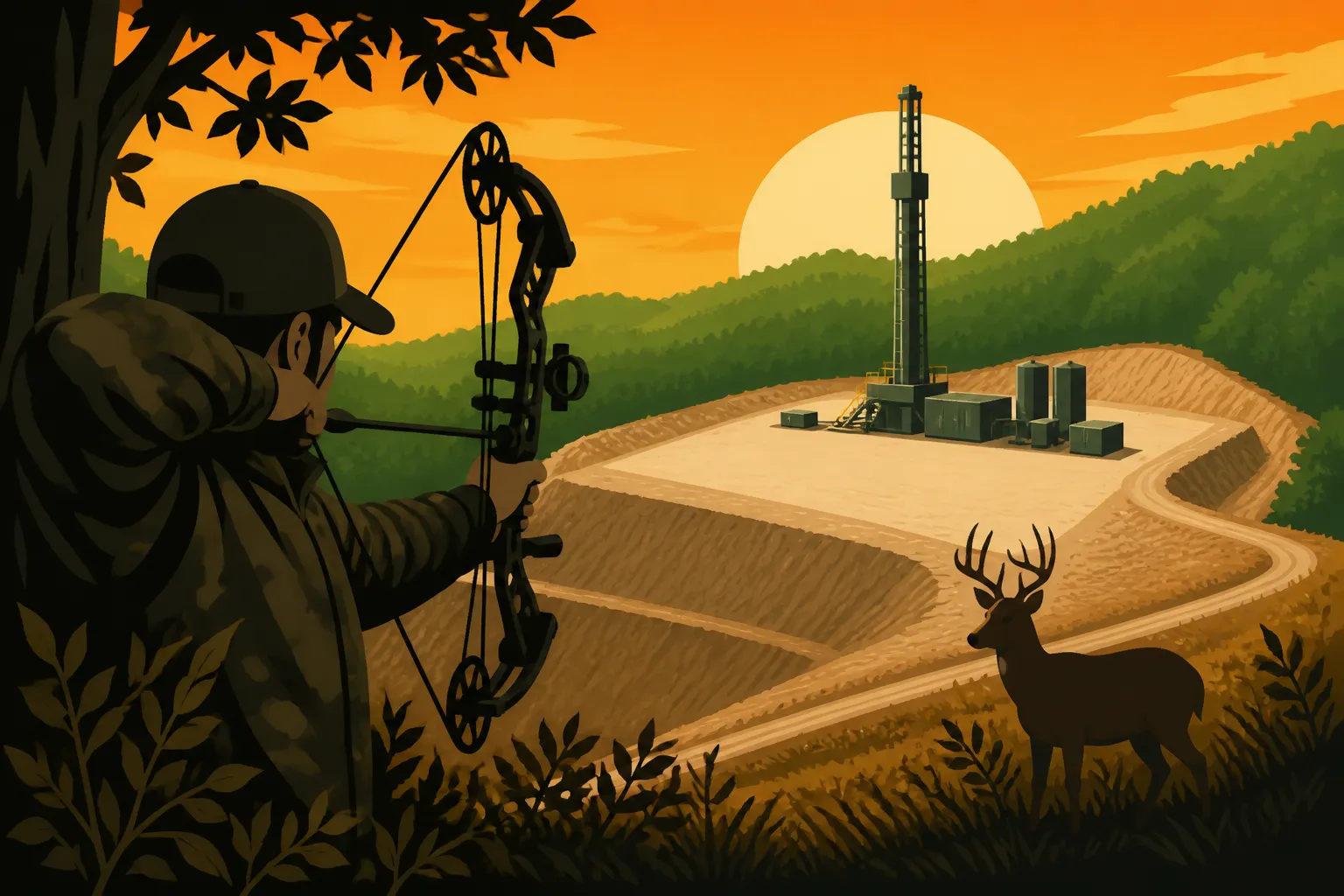
Gas well pads, and the vast network of access roads and pipelines that connect them, might seem like an intrusion into the wild, but for West Virginia deer, they often create invaluable habitat enhancements. These clearings, especially those reclaimed with natural grasses, clover, or young browse, can draw deer from surrounding timber, offering both food and travel corridors they wouldn't otherwise utilize. Understanding the dynamics of these man-made openings is key to unlocking their potential.
The Draw of Edge Habitat and Early Successional Growth
Deer are creatures of the edge. They thrive where different habitat types meet, and gas well pads are, by their very nature, massive edges. The abrupt transition from mature forest to an open, sunny clearing creates a diverse ecosystem. The sunlight penetrating to the forest floor along these edges spurs vigorous growth of briars, forbs, and young woody plants that deer absolutely love to browse.
Think about it: a mature West Virginia forest canopy can be so thick that the forest floor gets very little light, limiting palatable deer food. But around a well pad, sunlight floods in. This means a rapid explosion of early successional plants – things like blackberry, greenbrier, sumac, and young saplings that are high in nutrition for whitetails. These areas become natural food plots, especially after the initial construction disturbance subsides and reclamation efforts take hold. Deer will often browse these edges heavily, especially during dawn and dusk. This transition zone also provides excellent cover for fawns and a place for deer to "stage" before entering more open areas.
Identifying Natural Funnels and Travel Corridors
While well pads create open spaces, the access roads and the linear clearings for pipelines that connect them can act as superhighways for deer movement. Whitetails, being efficient travelers, will often use the path of least resistance. Instead of fighting through dense laurel thickets or steep, brushy hillsides, they'll often opt for the relatively clear and easier travel offered by a pipeline right-of-way or an old gas well road.
These linear features can funnel deer movement between bedding areas and feeding sites, or connect different parts of their home range. Imagine a gas line cutting through a long ridge. Deer moving from one side of the ridge to the other, or from a secluded hollow up to a mast-producing bench, will frequently cross or walk along that pipeline clearing. Similarly, the points where these clearings cross streams, benches, or saddles become pinch points that concentrate deer activity. When you're Hunting a Funnel Between Two Hollows in West Virginia, consider how a gas well pad or pipeline might create or enhance such a funnel, making it an even more predictable travel route.
Scouting and Interpreting Sign on West Virginia Well Pads
Just like any other prime hunting spot, effective hunting on gas well pads starts with thorough scouting. This isn't just about finding fresh tracks; it's about understanding the nuances of how deer interact with this specific type of habitat. You'll need to adapt your usual scouting techniques to these unique environments.
Pinpointing Feeding and Bedding Areas Around the Perimeter
When you're Scouting West Virginia Public Land Before Season or even private parcels, well pads are prime candidates for finding deer activity. Deer rarely bed directly on the well pad itself, especially if it's still actively maintained, noisy, or barren. Instead, they’ll bed in the dense cover immediately adjacent to the clearing. Look for thickets of multiflora rose, mountain laurel, hemlock, or regenerating clearcuts along the edges of the pad. These areas provide security and thermal cover, allowing deer to quickly access the pad for feeding.
Their feeding behavior will be evident by heavy browsing on the early successional growth around the edges. Look for nipped twigs, scraped bark on young sumac or sassafras, and areas where grasses or clover have been grazed down. Sometimes, the pad itself, especially if it’s been reclaimed and seeded with a diverse mix, can become a feeding destination. Pay close attention to fresh tracks entering and exiting these browse lines, particularly where the vegetation is thickest near the timber. A good tool like the GoHunt app can help you mark these potential bedding and feeding areas on a topo map, allowing you to visualize movement patterns before you even step foot in the woods.
Reading Rubs, Scrapes, and Tracks Along Access Roads
The access roads leading to and from gas well pads are often hotspots for buck sign. Bucks, especially during the pre-rut and rut, will use these easier travel routes to cruise for does. This means you'll often find prominent rub lines and scrape lines along the edges of these roads, particularly where they intersect with thicker cover or where a small sapling stands out as a potential rub tree.
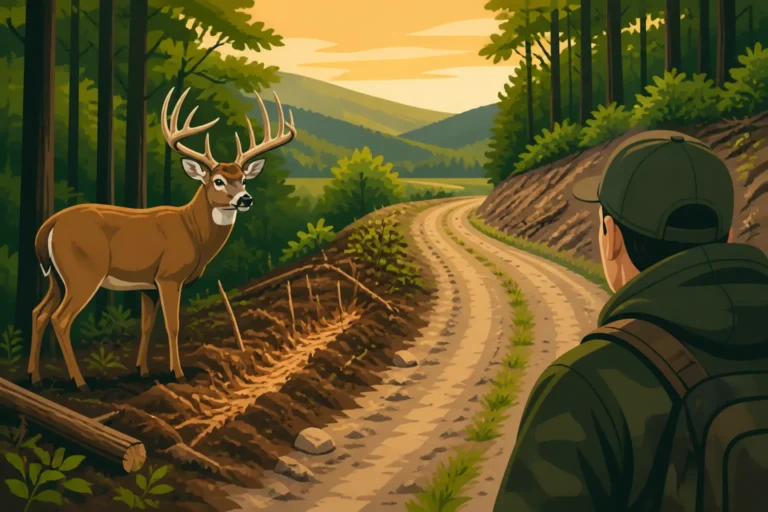
When you're Reading West Virginia Mud for Fresh Deer Movement, these dirt roads provide a perfect canvas. Look for fresh tracks, especially larger buck tracks, paralleling the road or crossing it. Pay attention to the direction of travel and the frequency. Is there a dominant travel direction in the morning versus the evening? Are bucks making scrapes on specific low-hanging branches or pawing out areas on the road shoulder? These signs tell a story about deer movement and where to focus your efforts. If you find a series of large rubs running along an access road that leads into a dense bedding area next to a well pad, you've likely found a major travel corridor for a mature buck.
Hunting Strategies for West Virginia Gas Well Pad Clearings
Hunting gas well pads requires a blend of traditional West Virginia hunting tactics with adaptations for the unique characteristics of these industrial clearings. From stand placement to understanding thermals, every detail counts.
Optimal Stand Placement for Wind and Thermals
Just like Wind and Thermals on a Steep Ridge are critical, they are equally, if not more, important when hunting open clearings like well pads. Because well pads are open, wind currents can be unpredictable, swirling and eddying, especially if the pad is situated on a hillside or near a significant topographical feature. Your scent can be carried in multiple directions, quickly alerting deer.
The best strategy is to set up downwind of the anticipated deer travel routes and feeding areas. This often means placing your stand inside the treeline, just off the edge of the clearing, rather than right on the edge. This allows you to observe the pad and its edges without being silhouetted and gives you a buffer against swirling winds. Pay close attention to the prevailing wind direction for the time of day you plan to hunt. For morning hunts, deer will often be moving towards bedding areas, so setting up on the leeward side of the clearing, where thermals might be rising, could be effective. In the evenings, as thermals drop, setting up on the higher ground overlooking the pad might be better. A good rule of thumb is to envision your scent cone and ensure it's not drifting across the areas where deer are likely to approach or feed. Considering a treestand setup? Take cues from expert advice on Treestand Setups in Monongahela National Forest, and apply those principles to the well pad environment, focusing on concealment and escape routes.
Utilizing Ground Blinds and Natural Cover
Sometimes, a treestand isn't practical or allowed, especially on some private land parcels or in areas with limited suitable trees. This is where a well-placed ground blind becomes invaluable. Gas well pads often lack large, sturdy trees right on the edge for a treestand, or the few good trees might be too exposed.
When Using a Ground Blind on West Virginia Public Land, or private property with permission, consider tucking it into the thickest cover along the edge of the pad. Look for clumps of rhododendron, a dense briar patch, or even a fallen log that can help break up your outline. Natural cover is your best friend. Brush in your blind extensively, making it disappear into the surroundings. This will make deer less likely to notice it. A ground blind offers excellent concealment for movement, scent control, and protection from the elements, which can be a huge advantage during a long sit. You can also strategically place your blind to cover multiple potential entry points or feeding lanes along the clearing's perimeter, giving you more shot opportunities.
Incorporating Deer Drives on Larger Clearings
For larger well pads or extensive pipeline clearings that offer a good mix of thick cover and open ground, deer drives can be an incredibly effective tactic, especially later in the season when deer are pressured. While you might typically think of Deer Drives With Three or Four Hunters in dense timber, these linear clearings or open areas can be ideal.
The key is to use the natural funnels created by the clearing itself. Position standers at strategic points where deer are likely to exit the clearing and dive back into heavy cover. Drivers can then slowly push through the adjacent thickets, nudging deer out into the open or along the clear-cut edges where standers are waiting. The access roads or pipeline clearings can serve as excellent boundaries or routes for drivers, making the drive more organized and predictable. This tactic works particularly well when combined with an understanding of where deer might bed during the day, allowing drivers to focus their efforts on pushing deer out of specific cover pockets near the pad.
Safety and Regulations When Hunting Gas Well Pads
Hunting around industrial sites like gas well pads isn't just about deer movement; it's also about respecting private property, understanding regulations, and prioritizing safety. These areas come with unique considerations that every responsible hunter must be aware of.
Obtaining Permission and Understanding Landowner Rules
The vast majority of gas well pads and their associated infrastructure, even those on public land leases, are situated on private property. This means that obtaining explicit permission from the landowner is absolutely paramount. Do not assume that just because you see a well pad, it's open for hunting, even if it's visible from a public road.
The West Virginia Department of Natural Resources (WVDNR) is very clear: you need permission to hunt private land. When you are Getting Private Land Permission in West Virginia, be upfront about your intentions to hunt near the gas infrastructure. Some landowners might have specific concerns about safety or liability. It's also wise to understand West Virginia Trespass and Permission Law, which dictates specific requirements for written or verbal permission, and how land must be posted. If granted access, inquire about any specific rules the gas company or landowner has. Are there certain areas to avoid? Are there active work zones? Are you permitted to drive on the access roads? Always err on the side of caution and maintain clear communication. Using mapping apps like GoHunt can help you identify land ownership boundaries, which is crucial for determining who to contact for permission.
Adhering to Setback Distances and Equipment Regulations
Hunting near active industrial sites carries inherent safety risks and specific regulations. You must be aware of any setback distances from active gas equipment, buildings, or residences that are in place for both safety and legal compliance. Discharging a firearm too close to a dwelling or an active wellhead is not only illegal but extremely dangerous.
Beyond state laws, gas companies often have their own safety protocols and restricted areas. Look for signs posted by the gas company indicating "No Trespassing," "Danger," or "Restricted Access." These signs override any general hunting permission you might have. Always carry your firearms and bows safely, pointed in a safe direction, and be hyper-aware of your surroundings. Understand all current West Virginia hunting regulations for your chosen weapon, especially if you're considering special seasons like West Virginia Muzzleloader Tactics. Ensure your equipment, whether a rifle, bow, or muzzleloader, meets all legal requirements for the species and season you are hunting. Safety always comes first, both for yourself and for those working on or living near these sites.
Disclaimer
Please remember that hunting regulations and land access rules can change. Always consult the most current West Virginia Department of Natural Resources (WVDNR) hunting regulations and secure explicit landowner permission before hunting on any private land, including areas with gas well pads. This guide is for informational purposes only and does not supersede official regulations or private property laws.