Hunting a Green Field Planted for Deer
Hunting a green field planted for deer in West Virginia can feel like a game of hide-and-seek, where the deer are experts at hiding and you're left wondering if you're even in the right spot. Many of us have spent countless hours overlooking a beautiful, lush food plot only to see deer pop out after legal shooting light or never show at all. It's incredibly frustrating when you know the deer are using it, but you just can't seem to intercept them during hunting hours. This comprehensive guide is designed to cut through that frustration, providing practical, actionable strategies for effectively scouting, setting up, and successfully hunting these productive deer magnets in the Mountain State.
The Allure and Reality of West Virginia Green Fields
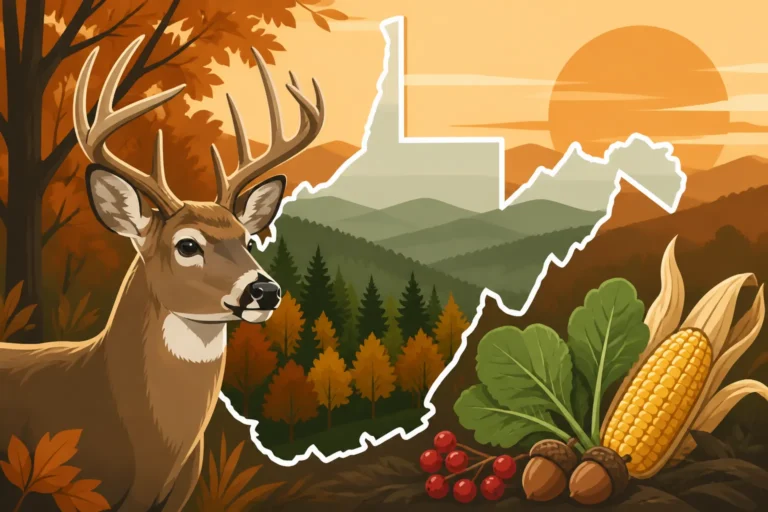
Green fields, often referred to as food plots, are specifically planted agricultural areas designed to attract and hold wildlife, primarily deer. In West Virginia, where rugged terrain and vast timber stands often make locating consistent food sources a challenge, these plots can be absolute game-changers for hunters. They offer a concentrated, high-quality food source that deer will travel to, especially as natural forage diminishes.
What Makes a Green Field a Deer Magnet?
The magic of a green field lies in its carefully selected plantings. Unlike natural browse that can be sparse or nutritionally inconsistent, these plots are cultivated to provide essential nutrients and palatable forage over an extended period. Common plantings you’ll find across West Virginia include various clovers, brassicas (like rape, turnip, or kale), oats, wheat, and sometimes even soybeans or corn, depending on the season and specific goals of the landowner or wildlife manager.
Deer are constantly seeking easily digestible, nutrient-rich foods, and a well-maintained green field offers just that. During the spring and summer, lush clover plots provide vital protein for antler growth and fawn development. As fall approaches and temperatures drop, brassicas become incredibly attractive after a few frosts convert their starches to sugars, making them sweeter and highly palatable. Cereal grains like oats and wheat offer consistent forage through the colder months, a critical energy source when other food options are scarce. These plots essentially create a "deer cafeteria," concentrating animals from a wider area and making them a focal point of their daily routines.
How Deer Utilize Green Fields Throughout the Season
Understanding when and how deer use a green field is paramount to hunting success. Their patterns aren't static; they shift dramatically throughout the hunting season, driven by food availability, breeding instincts, and hunting pressure.
- Early Archery Season (Late September/October): During these warmer months, deer are often still somewhat dispersed, relying on a mix of natural browse and early green field plantings. They might hit fields more frequently at dawn and dusk, but often just after legal light fades or before it arrives. Bachelor groups of bucks might still be together, but they're typically very cautious. The primary draw is consistent nutrition.
- The Rut (Late October/November): This is when things get exciting. While deer might not be eating as much, green fields become crucial social hubs. Bucks will cruise the perimeter, scent-checking for does, pushing them, and occasionally engaging in scrapes or rubs nearby. Does will still visit for food, but their primary purpose here is often to socialize and find mates. A green field during the rut is less about nutrition and more about congregation. If you're wondering about Hunting the Rut in Mid-November, these fields are key locations to consider.
- Late Season (December/January): As winter settles in and natural food sources are either depleted or buried under snow, green fields truly shine. Brassicas that have sweetened with cold weather, or remaining cereal grains, become incredibly important for deer to maintain body condition. This is often when you'll see increased daylight activity in the fields, as deer are more desperate for calories and willing to take risks. A green field can become a late-season lifeline for deer, making it a prime location for hunters focused on Late-Season Food Sources for West Virginia Whitetails.
Knowing these seasonal shifts helps you anticipate deer movement and plan your hunting efforts accordingly.
Strategic Scouting and Stand Placement
You can't just plop down on the edge of a green field and expect success. These open areas demand meticulous scouting and thoughtful stand placement to intercept deer without alerting them. It's all about understanding how deer approach, enter, and exit the field, and then setting up to take advantage of those patterns.
Pre-Season Reconnaissance and Trail Camera Use
Effective green field hunting starts long before opening day. Get out there in the summer and early fall when deer activity is less pressured. Scouting West Virginia Public Land Before Season is always a good idea, and this applies doubly to private land green fields. Look for well-worn trails leading into and out of the field. These are your primary travel corridors. Are there thickets, benches, or saddles nearby that deer might use as staging areas before committing to the open field? These transition zones are often more productive than hunting directly over the field, especially during early season or high-pressure periods.
Trail cameras are your best friends here. Set them up on those key entry/exit points or along trails leading to the field. Don't just face them directly at the field; position them to capture deer moving along the edges or through funnels. Pay close attention to the time stamps on your photos. Are deer using the field primarily after dark? Are certain bucks showing up at consistent times? This data is invaluable for predicting daylight movement. Some hunters even use advanced mapping tools, such as those found on platforms like GoHunt, to mark potential stand sites, scout access routes, and analyze terrain features to get a leg up on their pre-season planning. These tools can reveal subtle elevation changes or cover types that influence deer movement, which might not be obvious from the ground.
Reading the Wind and Thermals for Optimal Setup
When hunting an open green field, scent control and understanding wind direction are not just important; they are absolutely critical. Deer have an incredible sense of smell, and a single whiff of human scent will send them scattering. Before every hunt, check the wind. A good rule of thumb is to set up so your scent is blowing away from where you expect deer to approach or enter the field.
In West Virginia's hilly and mountainous terrain, you also need to factor in thermals. Thermals are air currents caused by temperature changes throughout the day. In the morning, as the sun rises and warms the earth, thermals tend to rise uphill. In the evening, as the air cools, thermals often fall downhill. This means if you're set up on a hillside overlooking a green field, your scent will likely rise with morning thermals and fall with evening thermals. This constant shift requires careful consideration. For more on navigating these complex air currents, you might want to review Wind and Thermals on a Steep Ridge. A seemingly perfect setup can be ruined if you don't account for these subtle, yet powerful, air movements. Always plan your approach and exit routes to avoid pushing deer out of the area or contaminating their travel paths with your scent.
Choosing the Right Stand or Blind Location
Deciding between a treestand or a ground blind, and where exactly to place it, depends heavily on the specific green field and surrounding cover.
- Treestands: These are generally preferred for their elevated vantage point, which helps with scent dispersal and offers a wider field of view. Look for a sturdy tree at the edge of the field, preferably one that provides good cover (like pines or thick hardwoods with dense canopy). Aim to be positioned downwind or crosswind of the most likely deer entry points. Make sure your backdrop is dense enough to break up your silhouette, especially against a bright sky. Consider setting up 20-30 yards off the actual field edge, near a major trail, rather than right on the lip. This allows you to intercept deer as they feel secure enough to leave the heavy cover but before they are fully exposed in the field.
- Ground Blinds: If suitable trees are scarce or if you prefer a more concealed approach, a ground blind can be an excellent option. When using a ground blind, brush it in thoroughly with natural vegetation from the area to help it blend into its surroundings. This is crucial for success, as a stark black silhouette will stick out like a sore thumb to wary deer. For deeper insights on how to make these work, check out Using a Ground Blind on West Virginia Public Land. Place your blind where you have good shooting lanes, but also where deer won't easily pick up your movement. Position it against a dark background or in the shade to further aid concealment. Remember, deer will often circle a new object, so give your blind a few days (or even a week) to "melt" into the landscape before hunting from it.
Regardless of your choice, always ensure your setup allows for a quiet approach and departure without disturbing the field or the surrounding woods. Many hunters using mapping programs like GoHunt will carefully plot out their entry and exit routes, sometimes even walking them at night with a headlamp to ensure they can be done silently and without alerting game.
Hunting Tactics for Different Scenarios
Just like deer behavior changes throughout the season, so too should your hunting tactics when focusing on green fields. What works in October might be completely ineffective in December. Adapting your approach to the specific time of year and deer movement patterns is key to filling your tag.
Early Season Strategies: Patience and Perimeter Hunting
In the early archery season, when the weather is still mild and deer aren't as pressed for calories, they often use green fields primarily during the nighttime hours. During the day, they might be bedding close by and only venturing into the open field at the last vestiges of daylight or after dark. Trying to hunt directly over the field too aggressively at this time can quickly educate deer and push them entirely nocturnal.
Instead, focus your efforts on the "staging areas" or transition zones immediately surrounding the green field. These are the thicker pockets of cover, perhaps a clear-cut regrowth edge or a dense patch of laurel, where deer will mill around, browse, and wait for darkness before stepping out into the open. Position your stand or blind 50 to 100 yards back from the field edge, along a well-used trail that leads directly to the field. Look for sign like fresh droppings, rubs, or even small scrapes in these staging areas. Be patient. Deer may not appear until the last 15-30 minutes of legal shooting light, so staying vigilant until the very end is crucial. Remember, the goal isn't necessarily to catch them feeding in the wide open, but to intercept them on their way to or from the primary food source.
Rut-Phase Hunting: Intercepting Cruising Bucks
When the rut kicks into high gear, green fields transform from simple food sources into social centers. Bucks, driven by the urge to breed, will actively cruise these areas, scent-checking for receptive does. Does, in turn, will still visit the fields for sustenance but also to encounter bucks. This is an excellent time to be aggressive with your calling.
While you should still be mindful of the wind, setting up directly on a field edge or even within the field (if you can achieve good concealment) can be productive. Bucks might not spend long feeding, but they'll often walk the perimeter, nose to the ground, checking for estrous does. This behavior makes rattling and grunting incredibly effective. A series of aggressive grunt calls followed by some light rattling can often pique a buck's curiosity and pull him into range. Keep your eyes peeled on all sides of the field, as a buck might appear from an unexpected direction, especially if he's been cruising with his nose to the wind. Think about how Rattling and Grunting in West Virginia can be amplified by these open field settings, allowing your calls to carry further and potentially pull in bucks from adjacent timber.
Late Season Gold: Cold Weather and Nutritional Needs
As the late season grinds on and the bitter cold sets in, green fields become an absolute lifesaver for West Virginia deer. Natural browse is often depleted or covered by snow, and deer are desperate to find calories to fuel their metabolism and stay warm. This is often the best time to catch deer feeding in a green field during full daylight hours.
Focus on the warmest parts of the day, particularly midday when the sun might be out and deer are more willing to move. In some cases, all-day sits can be incredibly productive, as deer might move in and out of the field multiple times. Prioritize fields planted with cold-hardy brassicas or cereal grains, as these will be providing the most palatable forage. Look for fields that offer easy access to thick thermal cover nearby, such as a south-facing slope with a dense stand of evergreens, where deer can quickly retreat to warm up after feeding. The hungrier the deer, the more risks they'll take, making your odds of a successful harvest much higher. Considering Hunting the Late-Season December Lull can definitely be enhanced by focusing on these high-value food plots.
Common Pitfalls and Adaptations
Hunting green fields can be incredibly rewarding, but it also comes with its own set of challenges. Wary West Virginia deer, especially those on private lands where food plots are common, can quickly become educated to hunting pressure. Understanding common mistakes and knowing how to adapt your strategy can make all the difference between an empty stand and a successful hunt.
Avoiding Over-Pressuring Green Fields
One of the biggest mistakes hunters make with green fields is over-hunting them. These are high-traffic areas for deer, and repeated human disturbance, whether from scent contamination, excessive calling, or frequent walks in and out, will quickly make deer nocturnal or push them to entirely abandon the field during daylight hours. This is a critical factor to consider, as Hunting Pressure on West Virginia Public Land can be intense, and private land deer can be just as wary.
Think of a green field as a delicate resource. Limit your hunts to high-odds days – those with favorable winds, approaching cold fronts, or during peak rut activity. Avoid hunting the field every single day, even if you're seeing deer. Give the deer a chance to feel secure. If you do hunt it, ensure your entry and exit routes are meticulous and stealthy. Use terrain features, ditches, or dense cover to conceal your approach and departure. If you've hunted a field hard and the deer have seemingly disappeared during the day, it's time to back off and let it rest. They'll eventually return once the pressure subsides.
When Deer Aren't Cooperating: Adapting Your Approach
So, you've done all your scouting, set up perfectly, and the deer just aren't showing up during legal shooting hours. It happens! Don't get discouraged, but don't keep doing the same thing. It's time to adapt.
First, reassess your initial assumptions. Are deer still using the field, but only after dark? Your trail camera data should give you a clue. If so, where are they coming from, and where are they staging? Shift your focus from the field edge to those staging areas or the bedding cover itself. Perhaps the deer are getting to the field, but they are holding up in a dense thicket 50-100 yards away, waiting until it's completely dark. This is when hunting deeper into the timber, closer to where the deer are bedding, might be more effective. Consider scouting for bedding areas and travel corridors that are parallel to the field but within thicker cover. Learning Where Monongahela Forest Bucks Bed can provide valuable insights into typical deer bedding behaviors that apply across different terrains, including areas near green fields.
Second, consider if there's a more attractive food source nearby. While green fields are designed to be prime attractants, nature sometimes provides a better buffet. If it's an excellent acorn year, for instance, deer might prefer natural mast over your meticulously planted green field. Understanding Hunting After a Poor Acorn Year can tell you how deer shift their patterns based on available natural forage. If they're not hitting the green field, go find the acorns! Similarly, if another landowner has a newly harvested cornfield or a booming apple orchard, deer might be temporarily drawn to those locations. Don't be afraid to adjust your strategy and move to where the deer actually are.
Integrating Technology for Better Decisions
Modern hunting technology can significantly enhance your green field strategies, helping you make more informed decisions and adapt quickly. Gone are the days of relying solely on paper maps and intuition.
- Mapping Apps: Tools like the GoHunt app or the WVDNR's Go Wild West Virginia Map Tool are invaluable. Use them to analyze terrain, mark potential stand sites, plot wind-friendly entry/exit routes, identify property lines (especially crucial if your green field is near a boundary), and even pinpoint areas of dense cover or natural funnels adjacent to the field. You can zoom in on aerial imagery to spot subtle deer trails or identify specific trees suitable for a stand. These apps allow for detailed Reading Aerial Photos for Eastern Panhandle Deer, helping you visualize the deer's world from above.
- Weather Apps: Always check detailed weather forecasts, paying close attention to wind direction, speed, and temperature changes. These dictate thermals and deer movement. Many apps provide hourly wind direction forecasts, allowing you to plan your hunt for specific windows of opportunity.
- Cellular Trail Cameras: If you have permission and cell service, cellular trail cameras are a game-changer for green fields. They allow you to monitor deer activity in real-time without having to disturb the area. You can see when deer are hitting the field, which bucks are present, and adjust your hunting schedule accordingly, minimizing pressure. This immediate feedback helps you decide if a hunt is worth the intrusion or if you should wait for a better wind or a different time of day.
By leveraging these tools, you can stay one step ahead of the deer and make smarter, more effective decisions when hunting green fields in West Virginia.
Green Field Plantings: A Quick Reference
Understanding the different types of forage planted in green fields and their primary appeal can help you better anticipate deer movement.
| Planting Type | Primary Appeal | Peak Attraction Season | Key Benefits | Common Location Use |
|---|---|---|---|---|
| Clover | Protein, Palatability | Spring, Summer, Fall | High protein, drought tolerant, perennial | Year-round food source, often mixed with chicory |
| Brassicas | High Energy, Winter Hardiness | Late Fall, Winter | Sweetens after frost, critical winter food | Cold-weather plots, holds deer late season |
| Oats/Wheat | Carbohydrates | Fall, Early Winter | Fast growing, palatable, cold tolerant | Early season attractant, holds deer through early winter |
| Soybeans | Protein (leaves/pods) | Summer, Early Fall | High protein, pods last into winter | Summer food source, late fall emergency food (pods) |
| Corn | Energy, Calories | Fall, Winter | High energy, provides cover | Late season food, provides bedding/security |
Disclaimer
Always check the latest West Virginia hunting regulations and local laws before hunting any private or public land. Ensure you have proper licenses and permissions. Safety should be your top priority in the field.