Wool Versus Synthetics in Mountain Cold
There are few things more frustrating than being caught unprepared for a sudden temperature drop or an unexpected rain shower when you're deep in the West Virginia woods. One minute you're sweating on a steep climb, the next you're shivering on a cold, windy ridge top, wondering if you picked the right gear. Choosing the right clothing system, especially your base layers, is crucial for comfort and safety in our unpredictable mountain environment. This guide will help you understand the age-old debate between wool and synthetic fabrics, so you can build a layering system that keeps you warm, dry, and focused on the hunt.
The Core Challenge: West Virginia's Volatile Mountain Weather
Hunting in West Virginia means facing a diverse and often rapidly changing climate. What starts as a mild morning can quickly become a blustery, bone-chilling afternoon, especially as you gain elevation or drop into shaded hollows. Understanding these weather patterns and their impact on your body is the first step to choosing the right gear.
From Crisp Autumn to Frigid Winter
Our hunting seasons stretch across a wide range of weather conditions. Archery season opens when the leaves are still mostly green, with warm, humid days often giving way to cooler, dewy nights. By the time Hunting the Rut in Mid-November rolls around, you're looking at crisp mornings, but afternoons can still be surprisingly pleasant, only to be followed by brutal cold snaps. Then, as December ushers in muzzleloader and late archery seasons, true winter weather often settles in, bringing prolonged periods of freezing temperatures, ice, and snow.
This wide swing means that a single "perfect" outfit doesn't exist. You need a system that adapts. One day you might be sweating buckets dragging a deer out of a ravine, the next you're hunkered down in a tree stand during a Cold-Weather Sitting Strategy in the Mountains, trying to stay warm against a biting wind. The key is recognizing that you'll experience a spectrum of conditions, and your clothing needs to be versatile enough to handle it all without adding unnecessary bulk.
Navigating Moisture: Rain, Snow, and Sweat
Moisture, whether it comes from the sky or from your own body, is the enemy of warmth in the mountains. Our West Virginia terrain often means strenuous climbs and descents, like when you're on Hunting Steep Allegheny Ridges or trying to get to a remote stand in the Monongahela National Forest Hunting. This physical exertion inevitably leads to sweat, and that sweat, if not managed, will quickly chill you once you stop moving.
Couple that internal moisture with the external moisture of typical West Virginia weather – from a sudden autumn drizzle to a heavy December snowfall – and you have a recipe for being miserably cold. When your clothes get wet, they lose their ability to trap insulating air. This is why the saying "cotton kills" exists; cotton absorbs moisture and holds it against your skin, rapidly drawing heat away from your body. A good base layer, whether wool or synthetic, is designed specifically to prevent this chilling effect by managing moisture effectively.
Understanding Merino Wool: Nature's Performance Fabric
Merino wool has been a staple for outdoor enthusiasts for decades, and for good reason. It’s a natural fiber with a remarkable ability to keep you warm and comfortable, even in challenging conditions. Many of us grew up thinking wool was itchy and heavy, but modern merino wool is a completely different beast, offering soft, fine fibers that are a joy to wear.
The Magic of Warmth, Even When Wet
One of wool's most touted benefits is its ability to insulate even when it's damp or wet. This isn't magic, it's science. Wool fibers have a complex crimp structure that creates millions of tiny air pockets, trapping warm air next to your body. Even when the fiber itself absorbs moisture, which it can do up to 30% of its weight, it continues to generate a small amount of heat through a process called "heat of sorption." This means if you're sweating profusely climbing up a hollow or get caught in a light rain, your merino wool base layer will still work to keep you from getting a deep chill once you stop moving.
Imagine hiking through a thick rhododendron patch to reach your spot, working up a good sweat. With a synthetic base layer, that sweat might evaporate quickly, but the sudden chill from the evaporation can be jarring. With merino, while it still wicks moisture, its insulating properties tend to smooth out that temperature shock, making the transition from active to static much more comfortable. This is a huge advantage when you're trying to stay still and quiet for hours in a tree stand.
Unmatched Odor Resistance and Quiet Movement
Another significant advantage of merino wool, especially for hunters, is its natural odor resistance. Unlike synthetics, which can develop a persistent "funk" after a few uses, wool fibers have natural antimicrobial properties. The complex structure of the fibers traps odor-causing bacteria, preventing them from multiplying and creating that tell-tale human scent. This means you can wear a merino base layer for multiple days in the field, like during a multi-day backcountry hunt in Cranberry Wildlife Management Area, without washing it, and still maintain a relatively low scent profile.
Beyond scent, wool is also incredibly quiet. It has a soft, supple drape that doesn't rustle or make noise when you move, even subtly. This quietness is absolutely critical when you're trying to remain undetected by wary whitetails or keen-eared gobblers. When you're trying to sound natural with your calls or even just shifting your weight to get a better view, every little sound matters. Whether you're trying Rattling and Grunting in West Virginia or simply moving your rifle into position, wool helps you do it silently.
Durability, Care, and Cost Considerations
While modern merino wool is far more durable than its predecessors, it still requires a bit more care than some synthetics. The fine fibers can be susceptible to abrasion and snags, especially if you're bushwhacking through dense cover. However, many quality merino garments today are blended with a small percentage of nylon or other synthetic fibers to enhance their strength and longevity, while retaining the wool's key benefits.
When it comes to care, most merino wool garments are machine washable on a cold, gentle cycle, but air drying is generally recommended to preserve the fibers and prevent shrinking. It's an investment, no doubt; quality merino wool typically costs more upfront than most synthetic options. However, for many hunters, the benefits of warmth, odor control, and comfort justify that higher price tag, especially when considering how many hunts you can get out of a good piece of merino.
Diving into Synthetics: The Engineered Advantage
On the other side of the spectrum are synthetic fabrics, engineered marvels designed to optimize specific performance characteristics. These modern fabrics, typically made from polyester, nylon, or polypropylene, have revolutionized outdoor apparel with their lightweight properties and rapid moisture management.
Superior Wicking and Rapid Drying Capabilities
Synthetics truly shine when it comes to actively moving moisture away from your skin and drying incredibly fast. The fibers themselves are hydrophobic, meaning they don't absorb water like wool does. Instead, they're designed to "wick" sweat along the surface of the fabric through capillary action, effectively pulling it away from your body where it can then evaporate. This makes them ideal for high-exertion activities where you're generating a lot of sweat, or in conditions where you anticipate getting thoroughly soaked and need to dry out quickly.
Imagine a situation where you're on a Run-and-Gun Turkey Tactics on Public Land hunt, covering miles of ground, constantly moving and sweating. A synthetic base layer will excel at keeping that moisture off your skin, helping to prevent chafing and making sure that when you stop to set up, you're not sitting in a puddle of your own sweat. The quick-drying nature also means if you get caught in a downpour, your synthetic layers will shed water and dry out much faster than wool once the rain stops.
Lightweight, Packable, and Variable Performance
One of the standout features of synthetic fabrics is their incredible versatility in terms of weight and packability. Manufacturers can engineer synthetics in a vast array of weaves, thicknesses, and textures, from ultra-lightweight mesh base layers perfect for early season to heavy-duty fleece mid-layers designed for extreme cold. This variety means you can dial in your layering system with precision, choosing exactly the right weight for your anticipated activity level and temperature.
Synthetics are generally lighter per warmth than wool, making them a great choice when every ounce in your pack counts, such as during a long day's trek with Packs for a Monongahela Forest Day Hunt. They compress well, taking up minimal space, which is also a benefit for extended trips or when you need to carry extra layers. This engineered adaptability means you can find a synthetic solution for almost any hunting scenario, from scorching early fall to bitter late winter.
Potential Drawbacks: Odor and Static
While synthetics excel in many areas, they do have a couple of noticeable drawbacks. The most common complaint is the tendency to retain body odor. Because synthetic fibers don't have the natural antimicrobial properties of wool, bacteria can proliferate more easily on the fabric, leading to a distinct "synthetic stink" that can be difficult to wash out completely over time. Many modern synthetics include antimicrobial treatments to combat this, but their effectiveness can diminish with repeated washing and wear. For hunters who prioritize scent control, this is a significant consideration.
Another minor but sometimes present issue with synthetics is static electricity, especially in dry conditions. This can manifest as clingy clothing or even small shocks. Some stiffer synthetic outer fabrics can also be slightly noisier than wool, producing a subtle rustling sound with movement. While advancements in fabric technology have significantly reduced these issues, they are still something to consider when making your gear choices, particularly if stealth is paramount for your style of hunting.
Crafting Your Layering System for West Virginia Hunts
The magic of staying comfortable in variable conditions isn't about one single piece of clothing, but how you combine different layers. A well-thought-out layering system allows you to adapt to West Virginia's unpredictable weather, keeping you warm when it's cold and cool when you're active.
The Critical Base Layer Decision
Your base layer is the foundation of your entire clothing system, and it's perhaps the most critical choice you'll make. This is the garment that sits directly against your skin, and its primary job is to manage moisture. It needs to wick sweat away from your body efficiently to prevent the chilling effect of evaporation, and ideally, provide some insulation even when damp. The decision between wool and synthetic for this layer often comes down to your expected activity level and personal preference for feel and odor control.
When planning your hunt, consider the terrain and the amount of exertion. Are you going to be scaling steep ridges all day, or primarily still-hunting a valley bottom? If you're doing a lot of climbing, a highly wicking synthetic might be your first thought to move sweat rapidly. However, if you know you'll be stopping frequently, or sitting for long periods after exertion, the insulating properties of a merino wool base layer, even when damp, can be a game-changer. Using detailed mapping tools, like those available through GoHunt, can help you analyze the topography of your hunting area and anticipate your activity levels, which then directly informs your base layer choice.
Integrating Mid-Layers and Outer Shells
Once your base layer is set, you build upon it with mid-layers for insulation and outer shells for protection from the elements. The base layer effectively manages moisture, while the mid-layers provide warmth by trapping air. Common mid-layers include fleece jackets (often synthetic), down or synthetic puffy jackets, or heavier wool sweaters. The idea is to have easily removable layers that you can add or shed as your activity level or the temperature changes.
Finally, an outer shell protects you from wind and precipitation. This layer should be waterproof and windproof but also breathable enough to prevent moisture buildup from the inside. When you're dealing with conditions like those found when hunting after a cold front or spending hours exposed on a ridge, having a strong shell combined with effective base and mid-layers is non-negotiable. Remember, each layer needs to work in harmony; a great base layer won't do much good if your outer shell isn't allowing moisture vapor to escape. The goal is to create an adaptable system for a variety of weather.
Adapting to Dynamic Conditions with Intelligent Choices
The key to success in West Virginia's dynamic environment is intelligent adaptation. This means not just bringing the right gear, but knowing when to put it on, take it off, or adjust it. Always check the forecast before heading out, but be prepared for it to change. Tools like GoHunt can provide incredibly detailed weather overlays for specific regions and elevations, helping you predict conditions like Wind and Thermals on a Steep Ridge or where snow might accumulate, allowing you to tailor your clothing choices precisely.
For instance, you might start your morning walk into your stand wearing only a light base layer and a windproof shell. As you reach your stand location and cool down, you add a puffy mid-layer. If the sun comes out and warms things up, you might shed the puffy. If a squall rolls in, you zip up your waterproof shell. This constant micro-management of your layers is what keeps you comfortable and prevents you from overheating or chilling. Pack smart, carry extra layers in your pack (consider a synthetic puffy for its light weight and compressibility), and don't hesitate to adjust as the day unfolds.
The Final Verdict: Blending the Best of Both Worlds
So, after all this, which is better: wool or synthetics? The truth is, there's no single "better" answer. The optimal choice, or combination, depends entirely on your specific hunting style, the conditions you expect to face, and your personal preferences. Many experienced West Virginia hunters find success by leveraging the strengths of both materials.
When to Lean on Wool's Strengths
Wool really shines in situations where consistent warmth, even with some moisture, and odor control are paramount. If your hunting involves long periods of low activity, like an all-day sit during Hunting the Late-Season December Lull, or if you anticipate being relatively static in cold weather, merino wool is an excellent choice for your base layer. Its insulating properties, even if you work up a light sweat, will help prevent that deep chill when you stop moving.
Furthermore, for multi-day backcountry hunts where laundry isn't an option, or when you simply want to minimize your human scent profile, wool's natural antimicrobial properties are unbeatable. This makes it a go-to for many serious deer hunters. The quietness of wool also lends itself well to situations where stealth is absolutely essential, allowing for silent movements and adjustments without giving away your position.
When Synthetics Are Your Go-To
Synthetics excel when rapid moisture management, quick drying, and lightweight packability are your top priorities. If your hunt involves high levels of exertion, frequent movement, or exposure to heavy, continuous rain where rapid drying is crucial, then a synthetic base layer might be your preferred option. Think active pursuits like scouting for Scouting West Virginia Public Land Before Season or tracking game across challenging terrain.
They are also a fantastic choice for mid-layers due to their excellent warmth-to-weight ratio and compressibility. A synthetic puffy jacket or fleece offers incredible warmth without bulk, making it easy to carry in your pack and pull out when needed. For hunters who prioritize shedding water and quick recovery from getting wet, synthetics provide peace of mind that you'll dry out fast.
Hybrid Systems: The Smart Hunter's Advantage
For many West Virginia hunters, the smartest approach is a hybrid system, combining the best attributes of both wool and synthetics. This might look like a merino wool base layer for its comfort, warmth-when-wet, and odor resistance, paired with a synthetic mid-layer for its superior compressibility and quick-drying properties. Alternatively, you might opt for a lightweight synthetic base layer for high-output activity, and then quickly throw on a wool overshirt when you stop to provide natural insulation and quietness.
Experimentation is key here. Consider your individual physiology – do you tend to run hot or cold? What type of terrain will you be covering? How long will you be out? By thinking through these questions, and perhaps even using GoHunt's detailed maps to visualize your routes and elevation changes, you can strategically choose which material best suits each layer of your system. There's no single answer, but by understanding the strengths of each, you can build a truly effective Layering for a West Virginia Deer Stand or a mobile, active hunting setup.
Here’s a quick comparison to help you weigh your options:
| Feature | Merino Wool | Synthetic Fabrics |
|---|---|---|
| Warmth When Wet | Excellent (retains insulation) | Good (wicks, but can feel clammy) |
| Odor Resistance | Superior (natural antimicrobial) | Moderate (often treated, but can build odor) |
| Drying Speed | Moderate to Slow | Excellent (rapidly wicks and dries) |
| Weight & Packability | Moderate (can be heavier than comparable synthetics) | Excellent (very lightweight and compressible) |
| Noise | Very Quiet (soft drape) | Good to Moderate (some can be slightly noisy) |
| Feel Against Skin | Very Soft and Comfortable | Variable (can be very soft or slightly slick) |
| Durability | Good (can be susceptible to snags, modern blends enhance) | Excellent (resistant to abrasion and tearing) |
| Cost | Generally Higher | Generally Moderate |
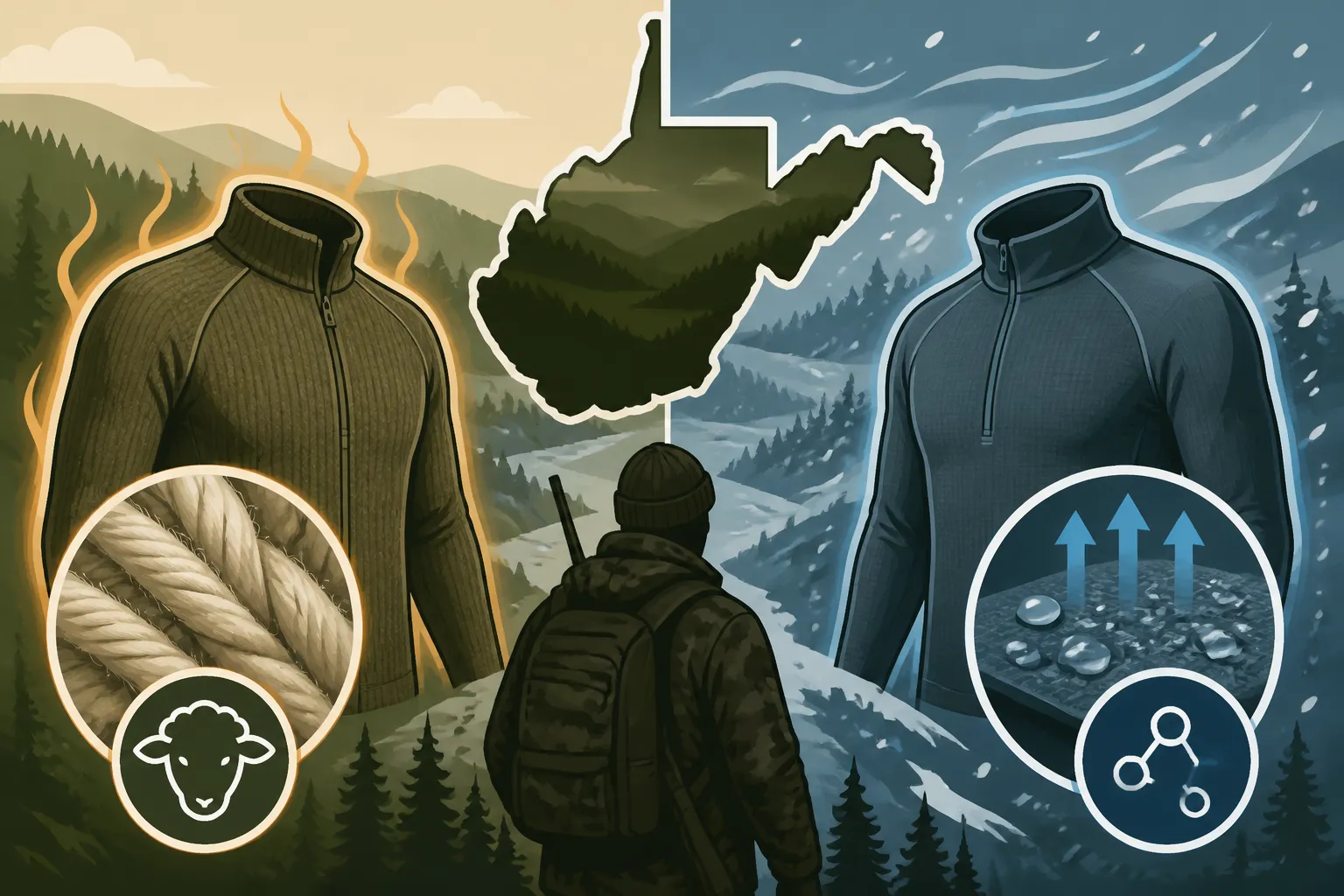
| Best Use Scenarios | Static sits, multi-day hunts, cold/damp conditions | High-exertion, wet weather, fast & light packing, mild cold |
Disclaimer
This article is for general informational purposes only and does not constitute professional advice. Laws, prices and regulations vary by location and change over time. Consult a qualified professional for guidance on your specific situation.