Crossbows Under West Virginia Rules
For many hunters in West Virginia, understanding the ever-evolving rules around crossbows can feel like navigating a dense thicket without a compass. It's a common frustration to want to use a piece of equipment, only to be unsure if you're truly within the bounds of the law, or how best to leverage it for success in our rugged Appalachian terrain. This comprehensive guide will untangle the specifics of crossbow regulations, seasons, gear, and best practices, ensuring you're confident and compliant the next time you head afield.
The Evolution of Crossbow Regulations in West Virginia
It wasn't always a straightforward path for crossbows in the Mountain State. Like many places, West Virginia has seen its hunting regulations adapt to new technologies and changing hunter demographics. What was once a niche or specialized tool has become a much more common sight in our woods, bringing with it a need for clarity on its legal standing.
A Look Back at Historical Rules
Historically, crossbows faced significant restrictions in West Virginia, often limited to hunters with specific physical disabilities or during a very short, specific season. The perception, right or wrong, was that they offered an "unfair" advantage over traditional archery equipment, or that their use might impact the challenge and tradition of bowhunting. For a long time, if you saw a hunter carrying a crossbow, it was a clear sign they had a special permit. This era created a bit of a divide and a lingering confusion that still crops up today. Many long-time hunters remember a time when if you mentioned a crossbow, you'd likely get a skeptical glance or a lecture about "real bowhunting."
Current Legal Status and Definitions
Thankfully, those days of strict limitations are largely behind us. Today, crossbows are fully legal for hunting during West Virginia's established archery seasons for deer, bear, and turkey. This means that if the archery season is open, and you possess the proper licenses and stamps, you can hunt with a crossbow. The West Virginia Division of Natural Resources (WVDNR) defines a crossbow as a horizontal bow, drawn and held by a mechanical means, with a minimum draw weight, and capable of firing a bolt or arrow. There are often specific requirements regarding bolt length, broadhead type, and even minimum kinetic energy, though the main takeaway is that they are considered an "archery" weapon. This inclusion has opened up bowhunting to a wider audience, including those who may no longer be able to manage the draw weight of a traditional compound or recurve bow, or those simply looking for a different challenge. You can always confirm the most up-to-date definitions and regulations on the WVDNR website, and many hunters find services like GoHunt invaluable for keeping track of these details.
The Impact of Modern Crossbow Technology on Regulations
Modern crossbows are a far cry from the clunky, heavy devices of yesteryear. Today's models are lighter, more powerful, incredibly accurate, and often equipped with advanced optics. This technological leap has certainly played a role in their broader acceptance. As crossbows became more user-friendly and reliable, it became harder to argue against their inclusion in general archery seasons. Manufacturers have continued to innovate, offering models that are quieter, faster, and more compact, making them practical for navigating dense West Virginia cover. These advancements have solidified their place as a legitimate and effective hunting tool, prompting regulatory bodies to integrate them fully into the existing archery framework. It's a prime example of how gear innovations can influence how we hunt and how regulations evolve with the times. For more on equipment, you might check out Crossbow Equipment Requirements.
Navigating West Virginia's Crossbow Seasons and Opportunities
Understanding when and where you can hunt with a crossbow is just as important as knowing that you can. West Virginia offers a generous archery season, which means plenty of opportunity for crossbow hunters to pursue various game animals.
General Archery Season Participation
The great news for crossbow enthusiasts is that you can participate in West Virginia's general archery season. This means that from the opening day in late September, usually around the last Saturday, all the way through the end of December, you can be in the woods with your crossbow pursuing deer and bear. This long season provides ample opportunity to scout, hunt the early season food sources, target the rut in November, and even brave the late-season chill. When West Virginia's Archery Season Opens is an excellent resource for exact dates. This broad inclusion allows crossbow hunters to enjoy the same flexibility and opportunities as those using vertical bows, whether they prefer a quiet morning sit in a treestand or a slow still-hunt through a secluded hollow.
Special Considerations for Youth and Disabled Hunters
Crossbows have been a game-changer for many youth and disabled hunters, long before their general inclusion. For youth, a crossbow can be an easier and safer entry point into bowhunting, as it removes the physical strength barrier of drawing a vertical bow and allows them to focus on aiming, shot placement, and ethical hunting practices. Similarly, for hunters with physical limitations or injuries that prevent them from drawing and holding a traditional bow, crossbows offer a pathway back to the archery woods. West Virginia has specific provisions and mentored youth hunting rules that can apply, and in many cases, a crossbow allows these hunters to continue their passion with minimal hindrance. It's all about accessibility and ensuring that hunting remains a possibility for everyone who wants to participate. You can find more details on general youth hunting rules in West Virginia through guides like West Virginia Youth Deer Weekend Rules.
Overlap with Other Hunting Seasons
One of the often-overlooked benefits of West Virginia's archery season, which includes crossbows, is its significant overlap with other hunting opportunities. While you're primarily focused on deer or bear with your crossbow, you might also find yourself in the woods during the early squirrel season or other small game seasons. This means your time afield can be even more productive. Imagine waiting patiently for a whitetail, and while you wait, a legal squirrel presents itself, or a coyote wanders into range. For those with the appropriate licenses, these overlapping seasons can offer a truly immersive hunting experience. However, always be acutely aware of weapon restrictions for each specific season and game animal. Just because you're carrying a crossbow for deer doesn't mean you can use it for small game if the rules for that specific species restrict it to shotguns or rimfires. Always double-check the regulations for every species you intend to pursue. The long archery season often overlaps with portions of the fall turkey season as well, though specific rules for taking turkeys with crossbows must be noted. West Virginia Deer Season Structure Explained will give you a broader view of how these seasons intertwine.
Essential Gear and Setup for West Virginia Crossbow Hunters
Just like with any hunting method, having the right gear and setting it up properly makes all the difference for crossbow hunting in West Virginia. Our state's varied terrain, from steep mountains to dense river bottoms, demands thoughtful consideration of your equipment.
Choosing the Right Crossbow and Accessories
Selecting a crossbow is a personal journey, but a few key factors should guide West Virginia hunters. First, consider the power and speed. While sheer speed isn't everything, a crossbow capable of shooting around 350-400 feet per second will provide flatter trajectories and more kinetic energy for clean kills, especially if you anticipate shots out to 40 or 50 yards. Weight and balance are also crucial. You'll be carrying this through uneven terrain, possibly up and down ridges, so a lighter, well-balanced model will reduce fatigue. Look for features like anti-dry fire mechanisms, adjustable stocks, and noise suppression. Quality strings and cables are non-negotiable for safety and performance. You'll also want a good quiver that holds your bolts securely and silently. Many brands offer complete packages that include a scope, quiver, and bolts, which can be a great starting point. Remember, it's not just about the crossbow itself; accessories like a cranking device for drawing the string can make a huge difference, especially if you're out of practice or have any shoulder issues. They allow for silent, effortless cocking, which is a real advantage in the field.
Optic Choices for Mountain and Wooded Terrain
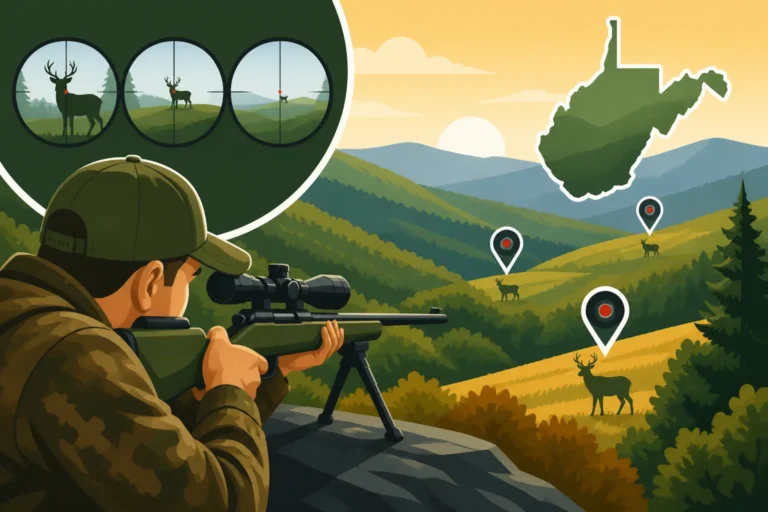
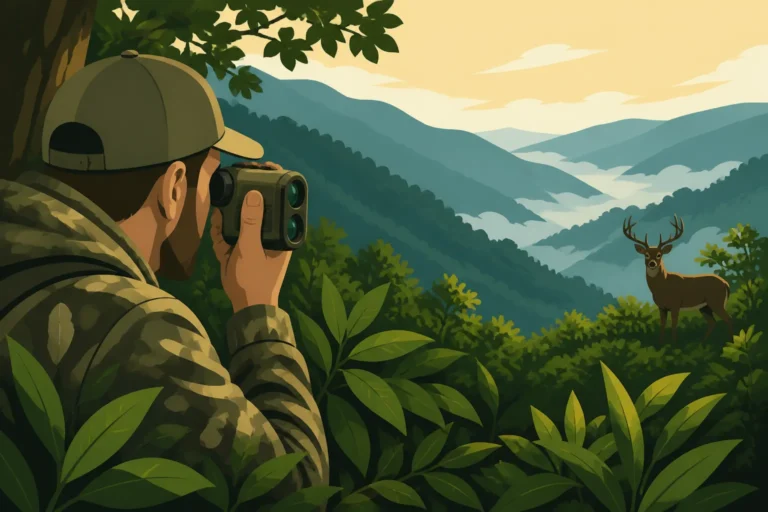
The right optic can truly unlock the potential of your crossbow, especially in West Virginia's dense woods and steep hollers where shots can be at close range or across a narrow valley. Most crossbows come with a multi-reticle scope, featuring multiple aim points for different distances. It's absolutely critical to sight this in meticulously at various ranges – 20, 30, 40, and 50 yards – to understand your hold points. For those hunting in low-light conditions, common in our deep woods at dawn and dusk, a scope with good light-gathering capabilities and an illuminated reticle can be a huge advantage. These allow you to pick out your aim point against a dark background or on a dark animal. Many hunters also find a compact, lightweight rangefinder indispensable. Even if your crossbow is sighted in, knowing the exact distance to your target is crucial for precise shot placement. You don't want to estimate 30 yards only to find out it was 45. A quality rangefinder can confirm those distances instantly, especially when you're perched in a treestand overlooking a small clearing. Consider the benefits of rangefinding binoculars as well for situations where you want to identify and range game quickly.
Ammunition and Broadhead Selection
Your bolts and broadheads are arguably more critical than the crossbow itself, as they are what actually harvest the animal. For bolts, consistency is key. Purchase quality carbon bolts that are straight and uniformly weighted. Fletching should be intact and consistent. Spine stiffness should match your crossbow's power. Broadhead selection often sparks passionate debates among hunters, but the reality is that both fixed-blade and mechanical broadheads can be highly effective when chosen and used correctly.
- Fixed-blade broadheads are known for their rugged durability and reliability. They have no moving parts, so they fly consistently if properly tuned with your crossbow. They excel at penetrating tough hide and bone. For thick West Virginia deer, a quality fixed blade can be incredibly effective.
- Mechanical broadheads typically fly with more precision, similar to a field point, at higher speeds. They deploy on impact, creating a larger cutting diameter. This can lead to massive blood trails. However, they rely on moving parts and can sometimes fail to deploy or lose energy on very hard impacts.
The key is to select a broadhead that matches your crossbow's kinetic energy and your hunting style. Always practice with your chosen broadheads (or equivalent practice heads) to ensure they fly true from your specific setup. A poorly flying broadhead, no matter the type, won't get the job done. For a deeper dive into broadheads, check out Fixed Versus Mechanical Broadheads.
| Feature | Crossbow | Vertical Bow (Compound/Recurve) |
|---|---|---|
| Draw/Hold | Drawn mechanically, held at full draw until fired. | Drawn manually, held at full draw by hunter. |
| Physical Effort | Low; easy to cock and hold steady. | Higher; requires strength and endurance. |
| Accuracy (Avg.) | Generally higher out of the box due to rifle-like mechanics. | Highly accurate with practice, skill-dependent. |
| Speed/Power | High (often 350-450 fps+), good kinetic energy. | High (often 280-350 fps), good kinetic energy. |
| Learning Curve | Shorter; focus on aiming, not drawing form. | Longer; mastering form, draw, and release. |
| Maneuverability | Can be bulkier, less agile in dense cover. | More compact, easier to maneuver in tight spots. |
| Reload Speed | Slower; requires recocking device, more steps. | Faster; simpler nock and draw. |
| Cost | Can be higher for quality models (crossbow + optics). | Varies widely, competitive with crossbows. |
License Requirements and Compliance for Crossbow Use
Hunting in West Virginia is a privilege that comes with the responsibility of understanding and adhering to all license requirements and regulations. Crossbow hunting is no different; you need the correct paperwork to be legal in the field.
Standard Hunting Licenses and Archery Stamps
To hunt with a crossbow in West Virginia, you must possess a valid hunting license. For residents, this typically means a Class A (basic hunting) license, or a Class X (combination hunting/fishing) license. Non-residents will need the appropriate non-resident hunting license. In addition to a general hunting license, you absolutely must purchase an archery stamp. This stamp designates your legal right to hunt with archery equipment, which, as we've discussed, now includes crossbows. Without both the general hunting license and the archery stamp, you are not legally permitted to hunt with a crossbow during the archery season. It's a fundamental step that often gets overlooked by new hunters or those transitioning from gun hunting. Always carry your licenses and stamps with you, either physically or digitally through the Go Wild West Virginia app, which can make checking in and out of WMAs or reporting harvests a breeze. You'll want to ensure you know about West Virginia Hunter Education Requirements too, as these apply to all new hunters.
Reporting Your Harvest and CWD Zones
Compliance doesn't end when you pull the trigger or release the bolt. Every deer and bear harvested in West Virginia must be legally checked in. This is critical for wildlife management and is strictly enforced. You can report your harvest online via the WVDNR website, through the Go Wild West Virginia app, or by calling a toll-free number. Make sure you understand the deadline for reporting – usually within 24 hours of harvest. In certain parts of the state, specifically those designated as Chronic Wasting Disease (CWD) containment areas, there are additional rules and requirements for carcass transportation and mandatory CWD testing. If you plan to hunt in counties like Hampshire, Hardy, or Mineral, you must familiarize yourself with these regulations. Failing to comply can lead to significant penalties. Checking a deer in properly contributes to vital data that helps manage the state's deer herd. For more information, read Reporting a Deer Through West Virginia's App.
Understanding Public vs. Private Land Rules
Whether you're hunting on public land, like the vast tracts of the Monongahela National Forest, or on private property, the rules for crossbow use remain consistent during the general archery season. However, accessing and navigating these lands have their own distinct requirements. On private land, you must always have permission from the landowner. While verbal permission is often sufficient, having written permission is always a safer bet to avoid any misunderstandings or trespassing issues. On public lands, such as Wildlife Management Areas (WMAs) or National Forests, you generally have open access for hunting, but specific rules regarding vehicle use, camping, and stand placement can vary. For example, some WMAs might have sign-in procedures, or specific rules about cutting vegetation for shooting lanes. Always consult the WVDNR WMA regulations or National Forest guidelines for the specific area you plan to hunt. Using mapping tools, especially those that layer land ownership, can be invaluable for staying on the right side of property lines. Scouting West Virginia Public Land Before Season is an excellent resource for planning your public land adventures.
Crossbows vs. Vertical Bows: A Comparative Analysis for WV Hunters
The debate between crossbows and traditional vertical bows (compound or recurve) is as old as the hills we hunt. Each has its merits and drawbacks, and understanding these can help West Virginia hunters choose the right tool for their individual circumstances and preferences.
Advantages and Disadvantages in the Field
When we talk about crossbows in West Virginia's rugged environment, there are clear pros and cons.
Crossbow Advantages:
- Ease of Use: This is perhaps the biggest draw. A crossbow can be cocked before heading out, and then fired with a trigger pull, much like a rifle. This eliminates the need for drawing strength and holding a bow at full draw, which can be difficult in cold weather or after a long sit. It significantly reduces movement at the moment of truth.
- Accuracy: For many hunters, especially those new to archery or with less practice time, achieving consistent accuracy with a crossbow is quicker. The rifle-like stock and trigger mechanism make it inherently stable for many people.
- Steadier Aim: Because you don't have to hold a heavy draw, you can take your time to aim precisely, which is a huge benefit when a deer presents a tight window in thick timber.
- Weather Tolerance: While any equipment needs care, a crossbow can be less affected by cold hands or bulky clothing than a vertical bow, where grip and drawing form are paramount.
Crossbow Disadvantages:
- Bulk and Weight: Crossbows are generally heavier and wider than vertical bows, making them cumbersome to carry through dense laurel thickets or when climbing into a tree stand. Maneuvering in tight ground blinds can also be challenging.
- Reload Time: If you miss or need a follow-up shot, recocking a crossbow (often requiring a cranking device) takes much longer and involves more movement than nocking another arrow on a vertical bow.
- Noise: While modern crossbows are quieter than older models, the mechanical release can still be louder than a well-tuned compound bow, which some argue can alert game more easily.
- Cost: Quality crossbow setups, especially with good optics, can sometimes be more expensive upfront than a comparable vertical bow.
Skill and Practice Requirements
While crossbows are often perceived as requiring less skill than vertical bows, this is a bit of a misconception. They require different skills. Yes, you don't need to master drawing and holding a heavy poundage bow, but you still need to be proficient in shooting.
For vertical bows, the skill lies in consistent form, drawing smoothly, anchoring correctly, and executing a clean release under pressure. This takes immense practice and physical conditioning. Bow Draw Weight for West Virginia Whitetails delves into some of these considerations for vertical bow users.
For crossbows, the skill shifts to precise aiming, range estimation, and trigger control, much like rifle shooting. You still need to practice regularly to become proficient with your specific setup, understand your bolt's trajectory, and be able to make quick, ethical shots. Neglecting practice with a crossbow is just as detrimental as neglecting it with a compound bow. Ethical hunting demands proficiency, regardless of the weapon.
Ethical Considerations and Shot Placement
Regardless of whether you choose a crossbow or a vertical bow, ethical hunting demands a clean, humane kill. This means knowing your limitations and understanding shot placement. With either weapon, the goal is to hit the vital organs – heart and lungs – to ensure a quick and ethical harvest.
For West Virginia deer, this typically means aiming for the "pocket" behind the shoulder. Because crossbows fire a heavy, fast bolt, they deliver excellent penetration. However, the exact trajectory can still be affected by brush, wind, and distance, so clear shooting lanes and accurate rangefinding are paramount. Hunters should always strive for broadside or slightly quartering-away shots to maximize the chances of hitting both lungs. Quartering-to shots should generally be avoided with any archery equipment, as they severely reduce the chances of a vital hit and increase the risk of a wounded animal. Understanding deer anatomy and practicing on 3D targets is crucial for ethical hunting with any archery equipment. For further tactical insights, consider Hunting a Funnel Between Two Hollows.
Common Misconceptions and Best Practices for Crossbow Hunting
Crossbows, like any hunting tool, are often surrounded by myths and misunderstandings. Addressing these and adopting best practices will not only make you a more effective hunter but also help maintain a positive image for all archery sports.
Dispelling Myths About Crossbow Difficulty and Fair Chase
One persistent myth is that crossbows are "too easy" and somehow diminish the "fair chase" aspect of hunting. This idea often stems from the early days when crossbows were seen as a step removed from traditional archery. However, as we've discussed, crossbows require distinct skills and still present significant challenges.
Hunting with any archery equipment demands getting within close range of your target, typically 50 yards or less for ethical shots. This requires extensive scouting, understanding animal behavior, stealth, patience, and precise shot execution. A crossbow doesn't eliminate these challenges. It simply changes how the projectile is launched. Wind, thermals, animal movement, and hunter error are still very much in play. Many seasoned hunters who transition to crossbows find themselves rediscovering the nuances of close-range hunting, which is anything but "easy." It's a different discipline, but equally challenging and rewarding.
Safety First: Handling and Transporting Your Crossbow
Safety is paramount with any firearm or archery equipment, and crossbows are no exception. Because they are mechanically cocked and held under tension, they can be incredibly dangerous if mishandled.
- Always treat a crossbow as if it's loaded and ready to fire. Keep the safety on until you are ready to shoot.
- Keep your fingers and thumb below the string path when cocking and firing. "Thumb over bore" is a common error with traditional firearms, but with a crossbow, placing your thumb too high can lead to severe injury when the string flies forward.
- Never dry fire a crossbow. Firing without a bolt can severely damage the string, cams, and limbs, and create dangerous shrapnel.
- Transport your crossbow uncocked and uncased when possible. Many states, including West Virginia, have specific rules about transporting loaded or cocked firearms/archery equipment in vehicles. Check the regulations, but generally, it's safer and legally sound to transport it in a secure case or uncocked.
- Be mindful of your surroundings. The wider limbs of a crossbow require more space, so be careful when moving through brush or climbing into a stand to avoid snagging it and potentially discharging it or damaging the limbs.
These best practices ensure a safe hunt for yourself and those around you.
Pre-Season Preparation and Scouting Tips
Success with a crossbow, especially in West Virginia, heavily relies on thorough pre-season preparation and scouting. Don't wait until opening day to get your gear ready or to locate prime hunting spots.
- Tune Your Crossbow: Spend ample time at the range ensuring your crossbow is sighted in perfectly at various ranges with your chosen broadheads. Understand your drop at different distances. This is a crucial step that GoHunt can help you with in terms of finding nearby ranges.
- Practice from Hunting Positions: Don't just shoot from a bench. Practice shooting from a kneeling position, sitting, and from your treestand or ground blind if possible. This simulates real-world hunting scenarios.
- Scout, Scout, Scout: West Virginia's terrain is complex. Use maps and boots on the ground to identify bedding areas, food sources, and travel corridors. Look for natural funnels, saddles, and pinch points where deer are likely to travel. Knowing Where Monongahela Forest Bucks Bed or where to find Scrape Lines Along a Logging Road can be invaluable.
- Set Up Stands Early: If using a treestand, hang it well in advance of the season to allow deer to get used to its presence. Pay close attention to wind direction for your chosen stand locations. Don't forget your blaze orange for safety while scouting, especially if other hunters are out. For more on safe climbing, see Treestand Setups in Monongahela National Forest.
By embracing these best practices, you'll be well on your way to a successful and ethical crossbow hunting experience in the wild and wonderful state of West Virginia.
Disclaimer
This article is for general informational purposes only and does not constitute professional advice. Laws, prices and regulations vary by location and change over time. Consult a qualified professional for guidance on your specific situation.