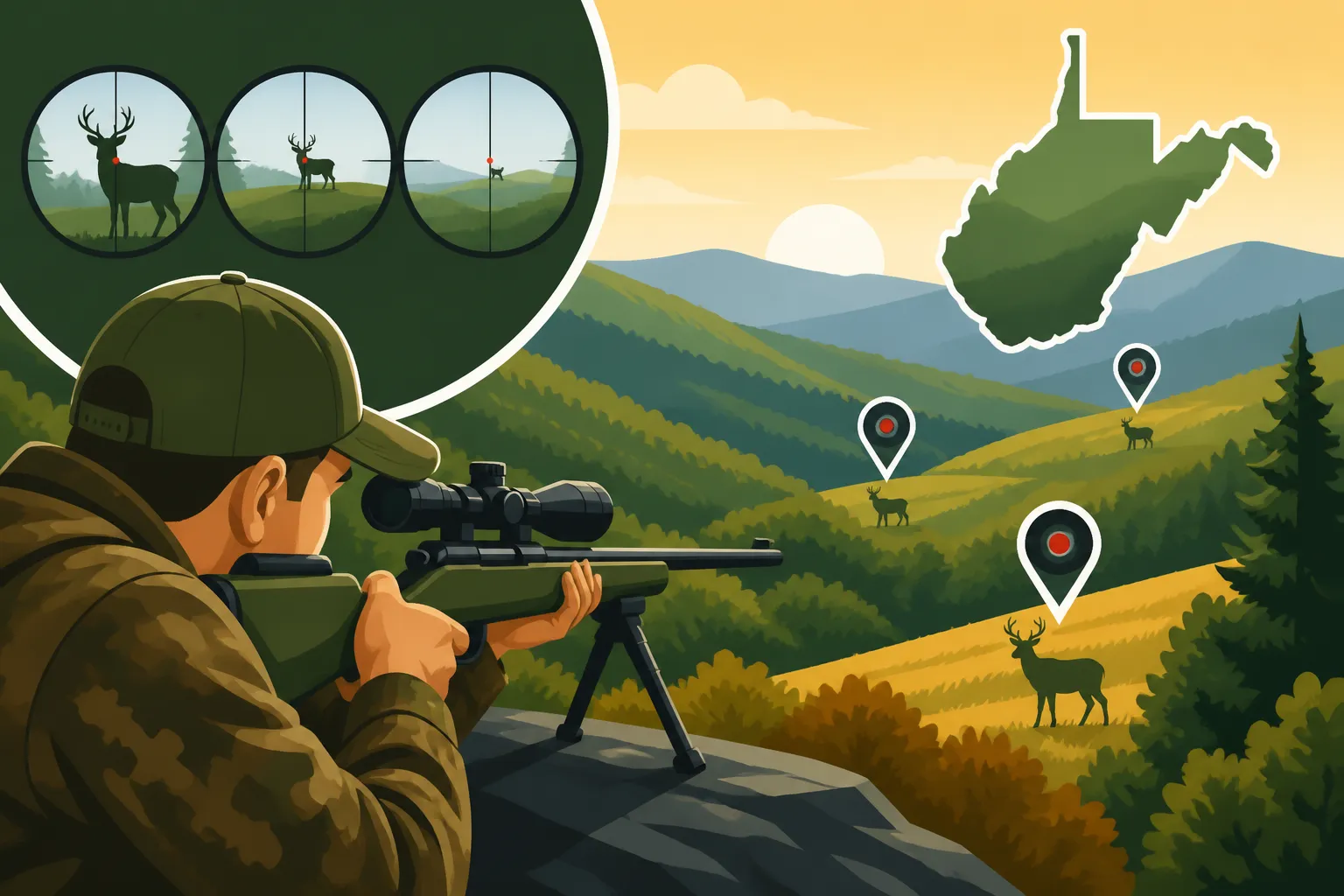
Zeroing a Rifle for Mixed Distances
One of the biggest headaches for West Virginia hunters, especially those of us who venture into the mountains, is dealing with shots at wildly varying distances. You might spot a deer at a mere 50 yards in a thick hollow, then moments later see another across a clear-cut at 300 yards. This guide is all about tackling that challenge head-on, helping you understand how to effectively zero your rifle for those unpredictable, mixed-distance hunting scenarios common in our beautiful, rugged state.
Understanding the Challenge of Mixed Distances in West Virginia
Hunting in West Virginia is rarely a flat-range affair. Our terrain is a constant series of ups and downs, thick timber, and unexpected clearings. This topographical dance means that the perfect zero for a flatland field edge might leave you frustrated and missing when that shot opportunity presents itself on a steep Allegheny ridge. We've all been there, second-guessing our hold, wondering if that buck standing just beyond the last bend is 150 or 250 yards away.
The "Mountain Gap" Phenomenon
Imagine you're hunting in the Monongahela National Forest, maybe working a logging road or slowly still-hunting through some mature hardwoods. The visibility might be limited to 75-100 yards in the dense cover. Then, suddenly, you crest a rise and look down into a vast, open hollow or across a powerline cut that stretches for what feels like forever. That deer you're after could be anywhere from 40 yards under your nose to 300 yards across the way. This drastic shift in potential shot distances is what I call the "mountain gap" phenomenon.
What makes this so tricky isn't just the distance itself, but the speed at which it can change. You might have your rifle perfectly zeroed for a 100-yard shot, but then that monster buck steps out at 280 yards. If you haven't accounted for that range difference, even a slight miscalculation in holdover can mean the difference between a clean harvest and a disappointing miss. It’s not like deer stay put in one type of terrain; they move fluidly between dense cover and more open areas, forcing us hunters to be ready for anything. This is why a one-size-fits-all zero often falls short when you're truly hunting West Virginia.
Why a Flat Zero Isn't Enough
Many hunters learn to zero their rifles at a single, comfortable distance, say 100 yards, and call it good. While a 100-yard zero is an excellent starting point and perfectly adequate for many close-range timber hunts, it quickly becomes insufficient when those longer shots present themselves. Bullet trajectory isn't a straight line; it's a parabolic arc. Past your zero distance, gravity takes over, and your bullet begins to drop. The further out you go, the more it drops, and the more significant the holdover becomes.
A rifle zeroed dead-on at 100 yards might be several inches low at 200 yards and over a foot low at 300 yards, depending on your cartridge. If you haven't practiced with those specific drops, or don't have a reliable way to estimate them in the field, you're essentially guessing. Our West Virginia whitetails and bears deserve better than a guess. A flat zero simplifies things for close encounters, but it punishes you severely when presented with anything beyond its effective point-blank range, which in our mountains, happens more often than not. We need a system that gives us confidence from 50 to 300 yards, sometimes even further depending on the specific location and caliber. Rifle Ranges Realistic in Steep Terrain delves into this challenge more.
Common Zeroing Distances and Their Practical Applications
When it comes to zeroing, there's no single magic number that works for every hunter and every setup. It's a personal decision based on your rifle, cartridge, hunting style, and the terrain you'll be covering. However, a couple of distances stand out as popular choices, each with its own set of advantages and disadvantages for the West Virginia hunter.
The 100-Yard Zero: Pros and Cons
The 100-yard zero is perhaps the most traditional and widely used zeroing distance. It’s straightforward to achieve at most shooting ranges, and it gives you a precise point of impact at a very common hunting distance, especially in the thick woods and hollows of West Virginia. For many cartridges, if you're dead-on at 100 yards, your bullet will be slightly high at 50 yards and slightly low at 150 yards, often within a couple of inches, which for a deer's vital zone is often forgiving enough for quick shots.
However, the major downside, as touched upon earlier, is how quickly the bullet drops beyond that 100-yard mark. If you find yourself needing to take a shot at 200 yards or more, you’ll need to apply significant holdover. This requires a good understanding of your specific cartridge's ballistics and the ability to estimate distances and apply that holdover quickly and accurately under hunting pressure. For hunting deep timber or areas where shots are reliably under 150 yards, a 100-yard zero is fantastic. But for those mixed-distance scenarios, it asks a lot of the hunter in terms of real-time ballistic compensation. Zeroing at 100 Yards for Woods Hunting provides more specific tactics for this zero.
The 200-Yard Zero: Extending Your Reach
For many West Virginia hunters who might encounter longer shots, especially in more open areas like pipeline cuts, agricultural fields in the Eastern Panhandle, or across wide mountain draws, a 200-yard zero offers a significant advantage. With a 200-yard zero, your bullet will typically rise a few inches above the line of sight between 100 and 150 yards, peaking around 125-150 yards, and then fall back to zero at 200 yards. This creates a longer "point blank range" where your bullet stays within a +/- 3-inch vital zone window without requiring significant holdover.
For example, a .30-06 zeroed at 200 yards might be about 2-3 inches high at 100-150 yards, and then only a few inches low at 250 yards. This means that for a vast majority of West Virginia deer hunting shots, which often fall between 50 and 250 yards, you can aim dead-on at the vitals with confidence. The main disadvantage is that you’ll be a few inches high at closer ranges (like 100-150 yards), so you need to be aware of where your bullet actually hits within that point blank range. For precise close-range shots, you might need to aim slightly low, but generally, aiming center-mass is still effective. This zero really shines when you anticipate a wider range of shot opportunities.
Ballistics Basics for Mountain Hunting
Understanding how your bullet travels through the air is paramount to becoming proficient at mixed-distance shooting, especially in the unique conditions of West Virginia's mountains. It's not just about pointing and shooting; it's about predicting where that projectile will land.
Bullet Drop and Velocity
The fundamental principle governing long-range shooting is bullet drop. As soon as a bullet leaves the muzzle, gravity starts pulling it towards the earth. The longer the bullet is in the air, the more it drops. The speed (velocity) of your bullet plays a huge role here. A faster bullet gets to the target quicker, meaning gravity has less time to act on it, resulting in less drop. This is why flat-shooting cartridges are often favored for longer range applications.
However, velocity isn't constant. As the bullet travels, it encounters air resistance, which causes it to slow down. This slowdown (also known as drag) accelerates the bullet's drop over distance. Different bullets have different ballistic coefficients (BCs), which describe how aerodynamically efficient they are at overcoming air resistance. A higher BC bullet retains more velocity and therefore drops less over longer distances. Knowing your specific cartridge's velocity, bullet weight, and BC is the bedrock for accurate long-range shooting. This information is usually available from the ammunition manufacturer and is critical for Reading a West Virginia Harvest Report where you might want to compare performance.
Environmental Factors: Elevation, Temperature, and Angle
While bullet drop is predictable under standard conditions, West Virginia's rugged environment throws in a few curveballs. Elevation, temperature, and shot angle all subtly influence your bullet's trajectory.
- Elevation: Higher elevations mean thinner air. Thinner air offers less resistance to the bullet, so it maintains velocity better and therefore drops less than it would at sea level. If you zero your rifle at a lower elevation range and then hunt high up on Spruce Knob, your bullet might impact slightly higher than anticipated. The difference isn't usually dramatic for typical hunting ranges, but it's something to be aware of for very precise long shots.
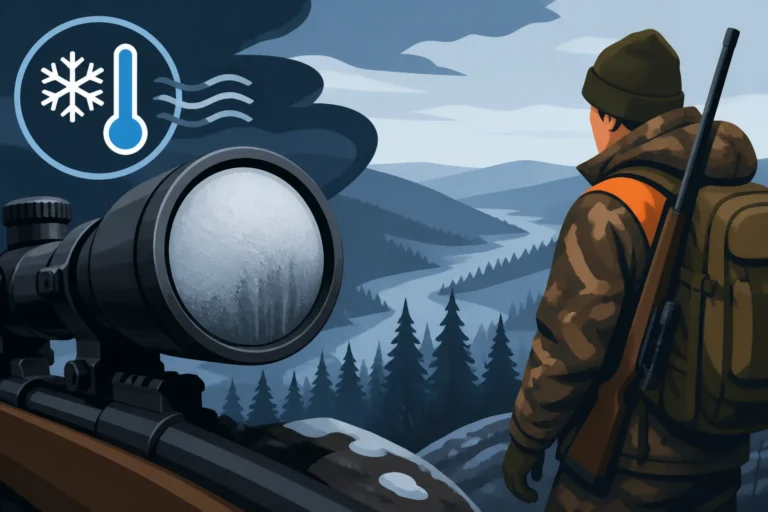
- Temperature: Air density is also affected by temperature. Colder air is denser, increasing drag and causing slightly more bullet drop. Hotter air is less dense, reducing drag and resulting in slightly less drop. Again, for common hunting distances, these effects are usually minor but become more relevant as ranges increase.
- Angle: This is perhaps the most critical factor in West Virginia's steep terrain. When shooting uphill or downhill, gravity acts on the bullet differently. The effect is that the bullet drops less than it would on flat ground for the same horizontal distance. This is because the bullet is traveling a shorter horizontal distance against gravity, even if the actual line-of-sight distance is the same. Many rangefinders (we'll discuss those later) have a built-in angle compensation feature, which provides an "effective horizontal distance" for you to use in your ballistics calculations. Ignoring angle compensation on steep shots is a common mistake that leads to over-holding and shooting high. Wind and Thermals on a Steep Ridge can also impact your bullet's flight path, especially in crosswinds.
Techniques for Effective Mixed-Distance Zeroing
Mastering mixed-distance shooting isn't just about understanding ballistics; it's about developing practical techniques that you can reliably apply in the field when that moment of truth arrives. You need strategies that work under pressure, allowing for quick and accurate shots.
Point Blank Range Method
One of the most practical approaches for deer hunting in West Virginia is the Maximum Point Blank Range (MPBR) method. The idea behind MPBR is to zero your rifle at a distance that ensures your bullet never rises or falls more than a specified amount (typically +/- 3 inches, which covers the vital zone of most deer) out to the farthest possible distance. This means you can aim dead-on at the center of the animal's vitals without having to think about holdover or holdunder, within that specific range.
To achieve this, you often zero your rifle to be a couple of inches high at 100 yards. For many common deer cartridges, this might place your first zero around 30-40 yards, peak at +2 to +3 inches high around 125-150 yards, and then hit its second zero around 200-250 yards. Your MPBR would then extend out to the point where the bullet drops 3 inches below the line of sight, which for a typical deer rifle, could be anywhere from 275 to 325 yards. This method simplifies shooting greatly within that range envelope, allowing for faster target acquisition and less guesswork, which is crucial when Hunting the West Virginia Rut in November and bucks are on the move. You can see a table below illustrating this.
| Zero Distance (Yards) | Bullet Path at 50 Yards | Bullet Path at 100 Yards | Bullet Path at 150 Yards | Bullet Path at 200 Yards | Bullet Path at 250 Yards | Bullet Path at 300 Yards |
|---|---|---|---|---|---|---|
| 100 (Dead On) | +0.5" | 0" | -3.0" | -8.5" | -16.5" | -27.5" |
| 200 (Dead On) | +1.5" | +2.5" | +1.5" | 0" | -4.0" | -10.0" |
| MPBR (+/- 3") | +1.0" | +2.5" | +2.0" | +0.5" | -2.0" | -6.5" |
Note: This table is a generic example for a common .30-06 180-grain hunting round, assuming a 2700 fps muzzle velocity. Actual numbers will vary significantly with different calibers, bullet weights, and muzzle velocities. Always verify with your specific rifle and ammunition.
Holdover/Holdunder Calculations
For shots beyond your effective point-blank range, or if you prefer a more precise approach, understanding holdover and holdunder is essential. Holdover is aiming above your target to compensate for bullet drop, while holdunder is aiming below for very close shots where your bullet might be high with an MPBR or 200-yard zero. This method relies heavily on knowing your rifle's ballistic data for your specific ammunition.
There are a few ways to manage holdover:
- "Kentucky Windage" (Estimation): This is the old-school method where, through extensive practice, you learn to instinctively know how much to aim high or low based on the distance. While it can work for experienced shooters, it's far less precise than modern methods.
- Reticle Holdovers: Many modern rifle scopes feature specialized reticles with hash marks, dots, or a Christmas tree pattern that represent specific holdover points for various distances. These are often BDC (Bullet Drop Compensating) reticles, or those marked in MOA (Minute of Angle) or MRAD (Milliradian). Once you've established your zero, you simply use the appropriate mark in your reticle for the estimated distance. This is incredibly fast and effective in the field.
- Turret Adjustments (Dialing): For very precise, longer-range shooting, you can "dial" your scope's elevation turret to match the bullet drop for a specific distance. This is slower than using reticle holdovers but offers the most precision. You'd typically range your target, consult a ballistic chart (or an app), and then turn your turret. This is more common in Western open-country hunting but can be useful in West Virginia for long shots across large clearings or canyon-like terrain. Rifle Scopes for Low-Light Hollows explores reticle options in more detail.
Using a Ballistic Calculator
In today's age, ballistic calculators are invaluable tools for hunters looking to master mixed-distance shooting. These apps and devices take your rifle, cartridge, and environmental data, and instantly spit out precise holdover/holdunder solutions. Many seasoned West Virginia hunters rely on these.
A good ballistic calculator, whether it's an app on your smartphone or a dedicated device, will ask for details like:
- Muzzle Velocity: Crucial for accurate calculations.
- Bullet Ballistic Coefficient (BC): Determines how efficiently your bullet cuts through the air.
- Bullet Weight: Affects kinetic energy and drop.
- Sight Height: The distance from the center of your bore to the center of your scope.
- Zero Distance: Where your rifle is sighted dead-on.
- Environmental Data: Temperature, humidity, barometric pressure (or simply current elevation), and wind speed/direction.
Many of these apps can even factor in shot angle. By inputting this data, the calculator will provide a custom firing solution, showing you exactly how many inches (or MOA/MRAD clicks) to hold over or dial for any given distance. This dramatically reduces guesswork. Tools like GoHunt can integrate ballistic data with mapping features, allowing you to plot shots and understand trajectories over specific terrain. It’s like having a miniature supercomputer in your pocket, making complex calculations simple and quick in the field.
Practicing and Verifying Your Zero for Real-World Scenarios
Having the right zeroing technique and understanding ballistics is one thing, but being able to apply it under the unpredictable conditions of a West Virginia hunt is another entirely. This is where consistent practice and verification become absolutely crucial. You can't just sight in at a flat range and expect perfection in the mountains.
Range Time vs. Field Practice
Range Time: This is where you establish your primary zero. Whether you choose a 100-yard or 200-yard zero, dedicate time at a proper shooting range to get it absolutely dead-on. Use a solid bench rest, take your time, and shoot multiple groups to confirm consistency. This is also the ideal place to gather initial ballistic data, chronoing your loads if possible, and shooting at various distances (e.g., 50, 100, 150, 200, 250, 300 yards) to see your actual bullet drop. Record these drops diligently; they are priceless data points. This information will feed your ballistic calculator and help you understand your chosen reticle.
Field Practice: This is where the real learning happens for West Virginia hunters. Take your rifle and rangefinder out into terrain that mimics your hunting grounds. Find an area where it's safe to shoot, and practice ranging targets at various distances and angles. Set up targets at unknown distances, just like you would encounter a deer. Practice estimating range without your rangefinder, then verify. Practice quick target acquisition, aiming with your chosen holdover method, and breaking a clean shot from various field positions (standing, kneeling, sitting, prone), not just from a bench. This is particularly important for Hunting Steep Allegheny Ridges or Hunting Potomac Highlands Ridgelines, where stable shooting positions are rarely easy to find. Practicing shooting uphill and downhill is vital; this reinforces the angle compensation principles discussed earlier.
Verifying Your Zero in Varied Terrain
Before opening day, it’s always a good idea to perform a final verification. If possible, take a day to visit a WMA or public land that has characteristics similar to where you’ll be hunting, ensuring you are following all local regulations for shooting outside of designated ranges. This isn't about re-zeroing, but about confirming your zero and your ability to apply holdovers in a realistic setting.
- Practice with cold bore shots: Your first shot from a cold barrel often behaves slightly differently than subsequent shots. This "cold bore shift" can be critical for hunting, as your first shot at an animal is almost always from a cold bore.
- Simulate hunting scenarios: Carry your rifle as you would hunt. Take shots after a short hike. Practice finding stable shooting positions quickly. Use your rangefinder, consult your ballistic data (or app), and make the shot. Are your holdovers consistent? Is your scope's adjustment (if dialing) repeatable? This kind of verification builds confidence, and confidence is a huge factor in ethical, successful hunting. Think about how you would approach Hunting a Funnel Between Two Hollows – would you be ready for a close shot or one across the gap?
Considering Technology: Tools for Mixed-Distance Shooting
Modern technology has revolutionized how we approach mixed-distance shooting, taking much of the guesswork out of the equation. While traditional skills will always be paramount, these tools can dramatically enhance your precision and confidence in the field.
Laser Rangefinders
A laser rangefinder is arguably the most essential piece of gear for mixed-distance hunting in West Virginia. Gone are the days of relying solely on guesswork or vague estimates. A good rangefinder will give you an accurate line-of-sight distance to your target with the press of a button.
More advanced rangefinders offer:
- Angle Compensation: As discussed, this is critical for uphill and downhill shots, providing you with the "shoot-to range" or "effective horizontal distance" rather than the raw line-of-sight. For the mountains of West Virginia, this feature is invaluable.
- Ballistic Solvers: Some high-end rangefinders integrate a basic ballistic calculator, allowing you to input your rifle and ammo data. They will then not only give you the range but also suggest holdover in inches, MOA, or clicks.
- Scan Mode: Useful for ranging multiple animals in a group or quickly determining distances to various objects in your field of view.
When choosing a rangefinder for West Virginia, look for one that is rugged, waterproof, and has good optical clarity, especially useful when paired with Binocular Choice for West Virginia Whitetails. You need it to perform in all conditions, from dense fog in a river bottom to bright sun on a ridgetop. Rangefinders in Thick Highlands Cover can be particularly challenging, so clarity and reliability are key.
Reticle Choices: BDC, MOA, and MRAD
Your scope's reticle is your aiming point, and choosing the right one can make mixed-distance shooting much more intuitive.
- BDC (Bullet Drop Compensating) Reticles: These reticles feature multiple aiming points (dots, lines, or circles) calibrated to represent specific bullet drops at certain distances for a particular cartridge. They are very fast to use: range the target, find the corresponding aiming point, and shoot. The downside is that they are calibrated for a specific load and velocity; if you change ammunition, the holdover points will shift. Some BDC reticles can be custom-tuned, but generally, they are "set it and forget it" for one load.
- MOA (Minute of Angle) and MRAD (Milliradian) Reticles: These are angular measurement systems. MOA reticles (and turrets) adjust in roughly 1-inch increments at 100 yards, while MRAD (or Mil) adjusts in roughly 3.6-inch increments at 100 yards. They are universal, meaning the subtensions (the space between the marks) always represent the same angular value, regardless of your caliber. This allows you to use a ballistic calculator to determine the exact MOA/MRAD holdover needed for any distance and any load. While they require a bit more understanding and calculation than BDC, they offer supreme versatility and precision. Many hunters find these systems incredibly useful, especially when combined with a good ballistic app.
- First Focal Plane (FFP) vs. Second Focal Plane (SFP): This is another consideration for reticles with holdover marks. In an FFP scope, the reticle shrinks and grows with magnification, meaning the holdover marks are always accurate regardless of zoom setting. In an SFP scope, the reticle stays the same size, so the holdover marks are only accurate at a specific magnification setting (usually the highest or a marked setting). For hunting, SFP is often preferred for its brighter, larger reticle at lower magnifications, but FFP offers consistent holdover at any zoom.
Ballistic Apps and On-Demand Data
Smartphone ballistic apps have become indispensable for precision hunters. As mentioned with GoHunt, these applications allow you to store profiles for multiple rifles and loads, instantly calculate bullet trajectories, and provide real-time firing solutions.
Features often include:
- Customizable Profiles: Enter your rifle, scope, and ammunition data once.
- Environmental Inputs: Manually enter or automatically pull in local weather data (temperature, pressure, humidity).
- Angle Compensation: Many apps will integrate with your phone's inclinometer or allow manual input of shot angle.
- Output in Various Formats: Receive holdover suggestions in inches, MOA, MRAD, or clicks for your turrets.
- Reticle Matching: Some apps can overlay your ballistic solution onto an image of your specific reticle.
Before heading into the field, always download the ballistic data for your specific load so it's accessible offline. Cell service can be spotty, if not entirely absent, in many parts of West Virginia's public lands, such as Monongahela National Forest Hunting or Cranberry Wildlife Management Area. Having your data ready to go, perhaps even printed on a small laminated card and attached to your rifle stock or bino harness, ensures you’re never caught without the crucial information needed for a confident shot.
Disclaimer
This article is for general informational purposes only and does not constitute professional advice. Laws, prices and regulations vary by location and change over time. Consult a qualified professional for guidance on your specific situation.