West Virginia Copperhead Encounters Afield
Many of us cherish the quiet solitude of West Virginia's woods, whether chasing a gobbler in spring or a whitetail in fall. But that peaceful walk can sometimes bring us face-to-face with an unexpected resident: the copperhead. These venomous snakes are a part of our wild ecosystem, and encountering one can be startling, even dangerous, if you're not prepared. This guide is here to equip you with the knowledge to identify, avoid, and react safely to copperhead encounters while you're afield, ensuring your hunting trips remain focused on the pursuit of game, not emergency room visits.
Understanding West Virginia Copperhead Habitats and Behaviors
Copperheads are pretty widespread across West Virginia, and while they prefer certain types of terrain, you can genuinely bump into them almost anywhere, from the lowest river bottoms to the higher mountain slopes. It’s not just about knowing they exist; it’s about understanding where and when you're most likely to cross paths with them. Their incredible camouflage allows them to blend in almost perfectly with fallen leaves and undergrowth, making them particularly difficult to spot until you're very close.
Where Copperheads Like to Hide
Think about places that offer cover, warmth, and a good ambush spot for small prey – that’s prime copperhead country. They love rocky outcrops, particularly those with plenty of crevices and ledges where they can bask in the sun or retreat from predators. Abandoned logging roads, old stone walls, and brush piles are also favorite hangouts. These areas provide perfect camouflage and a steady supply of mice, voles, and frogs. When you're Hunting Steep Allegheny Ridges or exploring any of our more rugged public lands, keep an extra vigilant eye on your footing, especially around these types of structures. They might be coiled up, barely visible against the leaf litter, patiently waiting for their next meal, often relying on their camouflage to remain undetected until something steps too close.
Furthermore, they're often found along the edges of fields and forests, especially where tall grass meets denser woods. That transitional zone is a buffet for their prey, and the varied cover offers both sunning spots and hiding places. During the spring and fall, when temperatures are milder, they might be more active during the day, sunning themselves to regulate their body temperature. But once the brutal summer heat truly sets in, they become much more nocturnal, doing most of their hunting in the cooler hours of dusk, night, and dawn. This is particularly important to remember during early season archery hunts or Bowhunting West Virginia's Long Archery Season when you might be heading to or from your stand in dim light, potentially moving through areas where they are just starting to become active.
You'll also find them near sources of water, although they aren't considered truly aquatic like some other snake species. Creek bottoms, marshy areas, and even damp spots in otherwise dry woods can attract their prey, and thus, the copperheads themselves. Any area where debris collects, such as downed timber or old equipment, can also be a magnet. They are true masters of blending into their surroundings, often remaining perfectly still, making detection difficult.
Seasonal Activity and Movement Patterns
Copperhead activity fluctuates significantly with the seasons, directly impacting your chances of an encounter. As the weather warms up in spring, typically starting in April and May, they emerge from their brumation sites – a reptile's version of hibernation – often congregating in sunny, rocky areas to warm up their bodies after the long winter. This is a crucial time for hunters to be aware, especially during spring turkey season when you're often moving through thick underbrush, scrambling up hillsides, and calling birds, often without the same level of ground awareness you might have in open timber. They'll also be seeking mates during this period, which can increase their movement.
As summer progresses and temperatures climb, especially into July and August, they become more dispersed, moving to find food and mates across their range. They might seek out cooler, shadier spots during the hottest parts of the day, making them harder to spot and increasing the chances of an accidental step-on in shaded, dense cover. Their activity typically shifts to evenings and nights to avoid the peak heat. This nocturnal behavior means that early morning or late evening hunts, common for West Virginia's Buck Gun Season and Hunting West Virginia's Long Archery Season, might put you in their active window.
When fall rolls around, a period many of us live for, copperheads become very active again. They're trying to pack on calories and build up fat reserves before retreating for the winter. You might find them in unexpected places, moving through fields, along logging roads, or even into suburban yards adjacent to wild areas as they search for food or suitable winter dens. This heightened activity coincides with many deer and small game seasons, meaning hunters are more likely to be sharing the woods with them. Understanding these seasonal shifts helps you anticipate where and when you're most likely to encounter them, allowing you to adjust your approach and vigilance accordingly. It's a key piece of information when you're planning your West Virginia Deer Season Structure Explained or your West Virginia Small Game Season Rules adventures.
Identifying Copperheads: Know Your Pit Vipers
One of the most critical aspects of staying safe in the woods is knowing what you're looking at. West Virginia is home to several non-venomous snake species that are often mistaken for copperheads, leading to unnecessary fear or, worse, complacency when dealing with the real thing. Proper identification can literally be a lifesaver, allowing you to react appropriately without panicking or taking unnecessary risks.
Key Characteristics of a Copperhead
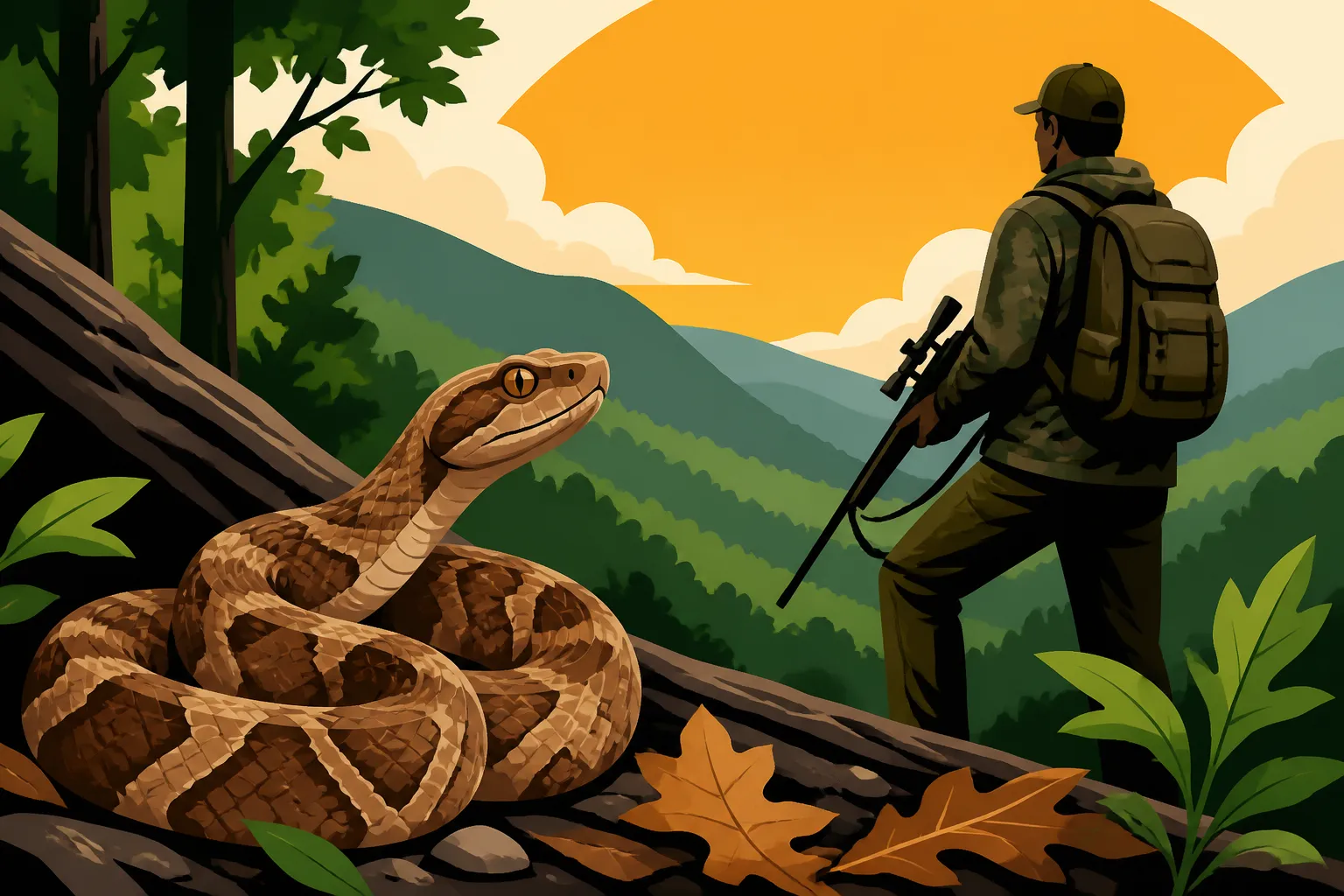
Copperheads, like all pit vipers found in North America, have some distinct features that set them apart. The most obvious is their coloring and pattern. They typically have a reddish-brown or copper-colored head – a direct inspiration for their common name – and their bodies are marked with a series of dark, hourglass-shaped bands. These bands are usually copper, hazel, or reddish-brown, often outlined in a darker shade, and they're typically wider on the sides of the snake's body than on top of its back. This hourglass pattern is very distinctive and provides incredible camouflage, allowing them to blend seamlessly into leaf litter, fallen branches, and rocky terrain. Imagine trying to spot that pattern amongst a pile of dried leaves; it's astonishing how well they disappear.
Beyond the pattern, pay close attention to the head. Copperheads have a distinctly triangular, somewhat spade-shaped head that is noticeably wider than their narrower neck. This is a classic characteristic of many venomous snakes, as it accommodates the venom glands behind the eyes. They also possess vertical, elliptical pupils, much like a cat's eye, which is another tell-tale sign of a pit viper, though this can be extremely hard to discern from a safe distance, and you should never get close enough to try. And, of course, they have heat-sensing pits located between their eyes and nostrils, which they use to detect warm-blooded prey, but these are even harder to see. Remember, if you can't positively identify a snake as non-venomous, treat it as if it is venomous and keep your distance.
Common Look-Alikes and How to Differentiate Them
Several non-venomous snakes in West Virginia can cause confusion, often leading to misidentification. The Eastern milk snake and the northern water snake are probably the most common culprits. Milk snakes often have blotchy patterns that can, at a glance, resemble the copperhead's hourglass. However, milk snake blotches are usually more irregular in shape and distribution, and their heads are not distinctly triangular; they flow smoothly from their body. They also have round pupils. Water snakes, especially northern water snakes, are often dark with blotches and can be quite aggressive when threatened, flattening their heads to appear more menacing, which can fool people into believing they are venomous. But their patterns are generally less defined, their heads are not distinctly triangular like a copperhead's, and they also possess round pupils.
Another less common but sometimes confused species is the hog-nosed snake. These snakes have a stocky body and a distinctive upturned snout, but their patterns can sometimes cause confusion. However, their defensive display of hissing, flattening their head and neck, and even playing dead makes them quite unique. Their head shape, while broad, is not the classic triangular pit viper shape, and their pupils are round.
Here's a quick comparison to help you distinguish between them:
| Feature | Copperhead (Venomous) | Eastern Milksnake (Non-venomous) | Northern Water Snake (Non-venomous) |
|---|---|---|---|
| Head Shape | Triangular, distinctly wider | Oval, similar width to neck | Oval, similar width to neck |
| Pupil Shape | Vertical, elliptical | Round | Round |
| Body Pattern | Dark, hourglass-shaped bands | Reddish/brown blotches with dark borders | Dark blotches/bands on lighter background |
| Color | Copper, reddish-brown, tan | Gray, tan, brown with red/brown blotches | Brown, gray, black with reddish or dark blotches |
| Habitat | Woods, rocky areas, fields, damp spots | Forests, fields, rocky areas, barns | Near water (rivers, ponds, streams) |
| Behavior | Usually docile, freezes, may strike if provoked | Docile, may vibrate tail if threatened | Aggressive when cornered, may bite repeatedly |
Knowing these differences is crucial. Don't rely solely on color, as snake coloration can vary even within the same species. Focus on the head shape, pupil (if safely observable), and the overall pattern and body structure. Remember, when you're using a mapping system like GoHunt to scout new areas, note the type of terrain – rocky ledges, dense timber, or creek bottoms – as these factors will help you anticipate which types of wildlife, including snakes, you might encounter. If you're ever in doubt, give the snake a wide berth.
Encountering a Copperhead: Safety First
Even with the best intentions and vigilance, encounters happen. It's West Virginia, and these creatures are a part of our landscape. The key is to react calmly and correctly, prioritizing your safety and that of anyone with you. Panicking or making sudden movements can often escalate the situation, turning a simple encounter into a dangerous one.
What to Do During an Encounter
First and foremost, do not approach the snake, no matter how small or seemingly docile it appears. Copperheads are generally not aggressive. Their primary defense mechanism is to freeze and blend in, which is why so many bites happen when someone accidentally steps on or near one, often without even seeing the snake until it's too late. If you spot a copperhead, give it a wide berth. Slowly back away, maintaining visual contact if possible, until you are a safe distance. Usually, they'll simply stay put or slowly retreat into cover. Never try to pick it up, poke it with a stick, or try to kill it. This is when the vast majority of bites occur – when humans attempt to interact with the snake. Your goal is simply to move away and let the snake be.
If the snake is in your direct path and you cannot go around it easily or safely, wait for it to move. Given enough time and space, it will likely move off on its own. If it doesn't move after a reasonable amount of time, consider making a wide detour, even if it means altering your planned route. Using a mapping tool from a service like GoHunt can help you find alternative routes around an unexpected obstacle like a snake without getting lost or disoriented. If you're with a dog, keep it on a leash and pull it away immediately. Dogs are naturally curious and often suffer severe bites because they investigate snakes with their nose or paw. Be especially aware when Reading West Virginia Mud for Fresh Deer Movement, as a snake might be lurking beneath the leaves right where you're looking for tracks, making it an easy, accidental step-on scenario.
If a Bite Occurs: Urgent Steps
Despite all precautions, bites can happen. If you or someone in your party is bitten by what you suspect is a copperhead (or any venomous snake), immediate action is critical. The speed of response and proper initial care can significantly impact the outcome.
- Stay Calm: Panicking will only increase heart rate and potentially spread venom faster through the bloodstream. Try to keep the victim calm and still.
- Move Away: Get yourself and the victim to a safe distance from the snake to prevent further bites.
- Call for Help: Immediately call 911 or your local emergency number. Provide your exact location as precisely as possible. Remember that cell service can be spotty in many remote parts of West Virginia, especially in hollows or deep in the Monongahela National Forest Hunting areas. Consider carrying a satellite messenger or a fully charged phone with a reliable mapping app like GoHunt that includes offline map capabilities and your exact coordinates.
- Remove Constricting Items: Take off any rings, watches, bracelets, or tight clothing near the bite area, as swelling will occur rapidly and can quickly cut off circulation.
- Keep the Bite Area Still: Immobilize the bitten limb (e.g., with a splint if available, but don't over-tighten) and keep it below the level of the heart if possible. Do not elevate it, as this can encourage venom spread.
- Clean the Wound: Gently wash the wound with soap and water if available, but do not scrub or flush it with water under pressure. Cover it loosely with a clean, dry dressing.
- Do NOT:
- Cut the wound or try to suck out the venom. These methods are ineffective and can introduce infection.
- Apply a tourniquet or any constricting band. This can cut off blood flow and lead to tissue damage.
- Apply ice or heat to the wound. Neither helps and both can worsen tissue damage.
- Drink alcohol or caffeine, which can increase heart rate.
- Try to catch or kill the snake for identification (a clear description of its appearance, especially its pattern, is usually sufficient for medical staff).
These old wives' tales and misguided first aid techniques often do more harm than good. Focus on getting professional medical attention as quickly as possible. Having a well-stocked First Aid Kits for Remote Highlands Ground is invaluable for managing initial wound care and providing comfort while waiting for help. Even seemingly mild bites can become serious if not treated properly by medical professionals experienced in snakebite management.
Minimizing Risk in West Virginia's Wilds
Being prepared and proactive is always the best defense against snake bites. It’s about cultivating awareness and adopting habits that keep you safer in their natural habitat. Many of these practices are good common sense for any wilderness excursion, regardless of snake presence.
Essential Gear and Footwear for Protection
Your gear can make a significant difference in preventing a snake bite. High-quality, sturdy hiking boots that cover your ankles, or even better, snake-proof boots or gaiters, are paramount. Many copperhead bites occur on the lower leg or ankle, and good footwear provides a crucial physical barrier. When you're selecting Boots for West Virginia Hollows and Ridges, think about more than just comfort and waterproofing; consider the protection they offer against punctures from fangs. Wear long pants made of thick material, like heavy denim or canvas, which can offer some protection, though not as much as dedicated snake gaiters made of ballistic nylon or other tough fabrics.
Always carry a headlamp or flashlight if you're going to be out during low light conditions – dawn, dusk, or after dark. Many snake movements occur in these hours, and clear visibility is essential for spotting them before you're too close. A trekking pole or sturdy walking stick can also be a valuable tool, not only for navigating uneven terrain but also for probing ahead of you in thick brush, high grass, or leaf litter before you step. This simple action can give a snake a chance to reveal itself or move away before you're directly on top of it. For hunters, this is another piece of gear to add to your pack alongside your optics and calls, offering both stability and an added layer of safety.
Practicing Vigilance and Awareness
Awareness is your most powerful tool in snake country. Always be mindful of where you're stepping and where you're placing your hands when traversing brush, climbing over logs, or reaching into rock crevices. Avoid simply stepping over a log or rock without looking on the other side – a snake could be basking there, just out of sight. When sitting down to rest or call game, thoroughly check the area around you, especially under any nearby rocks or logs, before settling in. A quick scan could prevent an unwanted surprise. Remember that copperheads are masters of camouflage, so a "quick look" often isn't enough; you need to truly scan and identify the ground before committing your next step or hand placement.
If you're still-hunting or moving quietly, train yourself to not just look for game but also for potential snake hazards. This is especially true when traversing areas known for high snake populations, such as rocky, south-facing slopes, or dense, brushy creek bottoms. Understanding the West Virginia Timber Rattlesnake Range can give you an idea of other venomous threats, though copperheads are far more commonly encountered in many areas due to their broader habitat range. Remember, our wild lands are shared spaces, and respecting all inhabitants, including the ones that can pose a danger, is part of responsible outdoor recreation. Using a navigation app like GoHunt to mark potential high-risk areas or known rocky zones on your map before you go can also enhance your vigilance, prompting you to be extra careful in those specific spots. It's about being prepared, not paranoid, and enjoying the wild beauty of West Virginia safely.
Disclaimer
This article is for general informational purposes only and does not constitute professional advice. Laws, prices and regulations vary by location and change over time. Consult a qualified professional for guidance on your specific situation.