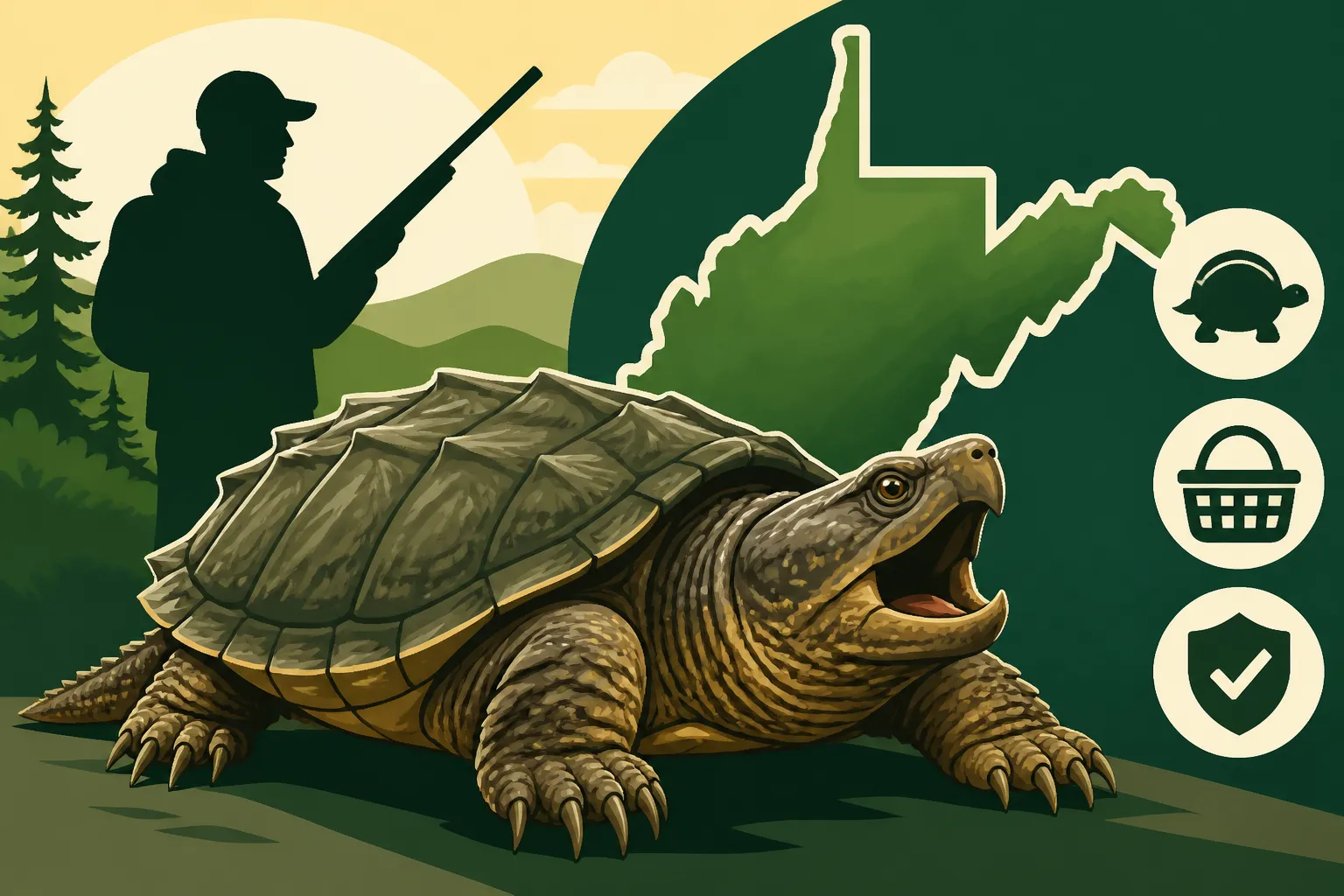
West Virginia Snapping Turtle Harvest Rules
For folks interested in something a little different than chasing whitetails or gobblers, harvesting snapping turtles in West Virginia can be a rewarding pursuit, offering unique challenges and delicious table fare. However, navigating the specific rules and regulations can feel like trying to untangle fishing line after a long day on the water, especially when most of the focus is on deer and turkey seasons. This guide aims to clear up the confusion, providing a comprehensive look at what you need to know to legally and successfully harvest snapping turtles in the Mountain State.
Understanding West Virginia's Snapping Turtle Regulations
When it comes to something as unique as snapping turtle harvest, the rules aren't always as widely publicized or as familiar as, say, deer season dates. Many hunters and trappers are surprised to learn that snapping turtles fall under a different set of guidelines than traditional game species, offering a unique opportunity for those looking to expand their outdoor pursuits. It's crucial to understand these specifics to ensure you're always operating within the law.
Season Length and Bag Limits
Unlike most game animals with strict open and closed dates, West Virginia takes a much more liberal approach to snapping turtles. The season for snapping turtles is open year-round, which means you can pursue them practically any day you're willing to brave the elements and put in the effort. This continuous open season is a testament to the robust nature of the common snapping turtle population in the state and the minimal impact recreational harvesting has on their overall numbers. It gives dedicated hunters and trappers ample opportunity to get out on the water whenever the mood strikes.
While the season is open indefinitely, there are still important bag limits to observe. You are permitted to harvest up to five snapping turtles per day. This daily limit helps ensure sustainable harvesting practices, even with a year-round season. It also means you can't just clean out a local pond in one go, which is good for the resource and for other folks who might want to enjoy the same pursuit. The possession limit mirrors the daily bag limit: you can have no more than five snapping turtles in your possession at any given time, regardless of how many days you've been out. This includes turtles you've already harvested and are preparing for consumption. Always be mindful of these numbers; it's easy to get carried away when the turtles are biting, but staying within the legal limits is paramount.
Legal Methods for Taking Snapping Turtles
West Virginia offers a few different legal methods for harvesting snapping turtles, catering to various skill sets and preferences. It's not a free-for-all, however, and certain methods are strictly prohibited, primarily to ensure fair chase, human safety, and the welfare of other aquatic species. Understanding what's allowed and what's not is crucial before you even think about heading out.
The most common and often preferred methods include:
- Hand-grabbing or Snaring: This is perhaps the most traditional and hands-on method, often requiring you to get right into the water. It involves locating a turtle, usually in shallow water or along a bank, and physically capturing it. Snaring involves a loop on a stick or pole that can be slipped around the turtle's neck or a leg, allowing you to pull it in. While it sounds simple, this method demands caution due to the snapping turtle's powerful bite and sharp claws. It's not for the faint of heart, but certainly exhilarating for those who enjoy the direct challenge.
- Set Hooks/Trotlines: You can set baited hooks specifically for snapping turtles. These are typically large, sturdy hooks designed to hold a strong, aggressive turtle. They can be set individually or as part of a trotline, which is a long line with multiple baited hooks extending into the water. When using set hooks or trotlines, it's vital to check them frequently to prevent unnecessary suffering for any caught turtles and to ensure you're not inadvertently catching non-target species. You also need to mark these lines clearly so other recreational users are aware of their presence.
- Turtle Traps: These can be effective for catching multiple turtles. Common designs include hoop traps or slatted box traps, which allow turtles to enter but prevent them from leaving. Bait, often spoiled meat or fish, is placed inside to lure them in. Similar to trotlines, these traps must be checked regularly, typically daily, to minimize stress on the animals and ensure fresh bait. Make sure any trap you use is designed to capture turtles specifically and is not likely to catch protected species.
What's not allowed? Shooting snapping turtles with firearms is generally prohibited for harvest. The rules for taking small game and furbearers often vary wildly from aquatic species. This also applies to archery equipment; while you can bowfish for certain species in West Virginia, snapping turtles are not typically included in those regulations. It's important to differentiate between general hunting regulations and specific rules for aquatic furbearers or non-game species like turtles. Always double-check the current regulations on the WVDNR website or through resources like GoHunt if you're ever unsure about a specific method.
| Harvest Method | Legality in West Virginia | Considerations |
|---|---|---|
| Hand-grabbing/Snaring | Legal | Requires caution, physical prowess, direct contact. |
| Set Hooks / Trotlines | Legal | Must be marked, checked frequently, use appropriate bait and hook size. |
| Turtle Traps | Legal | Must be checked daily, designed for turtles, clearly marked. |
| Firearms / Archery | Generally Prohibited | Not considered a legal method for snapping turtle harvest in most contexts. |
| Fishing Rod & Reel | Not typical for harvest | While you might catch one accidentally, not a primary or legal harvest method. |
Licensing and Permitting Requirements
Before you even think about setting a hook or wading into a creek, you need to make sure your paperwork is in order. Snapping turtle harvest, while distinct, still falls under the umbrella of regulated outdoor activities in West Virginia. This means you’ll need a valid license to participate.
Generally, a valid West Virginia resident or nonresident fishing license is required for taking snapping turtles by any legal method. This is because, in the eyes of the regulations, their pursuit is often grouped with other aquatic activities. For many folks, this means their existing fishing license, which they might use for catching bass or trout, covers them for turtle hunting too. However, it's always wise to confirm this directly with the WVDNR, as regulations can sometimes have nuances. If you have a comprehensive license, like the West Virginia Class X Combo License, it will certainly cover you.
Some specialized methods, like commercial trapping or large-scale harvest, might have additional permitting requirements, but for the average recreational hunter looking to bag a few turtles for the dinner table, a standard fishing license is usually sufficient. It's a small price to pay for the privilege of enjoying the state's diverse natural resources. Always carry proof of your license when afield, whether it's the physical card or a digital version on your phone. You can purchase licenses online via the Go Wild West Virginia platform, which makes the process incredibly straightforward.
Why West Virginia Regulates Snapping Turtle Harvest
It might seem odd to have regulations for something many people don't even consider "game," but there are very good reasons why the West Virginia DNR has these rules in place. It's all about balancing opportunity with conservation and public safety.
Conservation and Population Management
While snapping turtles are generally considered common and robust across West Virginia, that doesn't mean their populations are limitless. Regulations like daily and possession limits are crucial tools for preventing overharvest. A year-round season might sound generous, but without limits, a popular stream could be depleted by just a few determined individuals. The WVDNR monitors various wildlife populations, including those of non-game and furbearer species, to ensure that harvesting activities remain sustainable. They study things like reproductive rates, habitat availability, and natural mortality to set limits that allow populations to thrive while still providing recreational opportunities.
Think of it this way: if everyone could take as many as they wanted, pretty soon those easy-to-access ponds and slow-moving creeks wouldn't have any left. By imposing limits, the state ensures that there's a healthy population for future generations to enjoy, whether it's for harvesting, observation, or simply the ecological balance they provide. It's part of the broader effort to manage all of West Virginia's natural resources responsibly. Understanding West Virginia's Chronic Wasting Disease Counties shows how important species management is across the board, even for deer, and similar principles apply here.
Public Safety and Ethical Considerations
The rules surrounding legal methods aren't just about what's effective; they're also about safety for both the harvester and other people enjoying West Virginia's waterways. Prohibiting firearms for turtle harvest, for instance, prevents indiscriminate shooting near public swimming areas, fishing spots, or homes adjacent to water bodies. Similarly, requiring trotlines and traps to be marked helps prevent accidents for boaters or swimmers who might otherwise unknowingly encounter them. Nobody wants to stumble upon an unmarked hook line.
Beyond safety, there are ethical considerations. Regulations aim to promote humane methods of dispatch and responsible handling of any harvested animal. While a snapping turtle might seem tough, they are still living creatures, and ethical hunters strive to minimize suffering. This also includes minimizing impact on non-target species. A properly set turtle trap is designed to catch turtles, not fish or other protected aquatic life. If you do accidentally catch something you didn't intend to, knowing how to safely release it unharmed is part of being a responsible outdoorsperson. It’s the same respect you'd give to a deer or turkey.
Prime Locations and Scouting for Snapping Turtles in West Virginia
Now that you know the rules, where do you actually find these tough reptiles in West Virginia? Snapping turtles are incredibly adaptable and can be found in a wide variety of aquatic habitats across the state. However, some areas will be more productive than others.
Identifying Productive Habitats
Snapping turtles prefer slow-moving or stagnant water with muddy bottoms and abundant vegetation. This includes:
- Ponds and Lakes: These are classic snapping turtle hotspots. Look for areas with thick weed beds, submerged logs, or overhanging banks where turtles can bask or ambush prey. Farm ponds, small impoundments, and the shallow coves of larger lakes are all excellent places to start.
- Slow-Moving Rivers and Creeks: While they can tolerate some current, snappers really shine in the calmer sections of rivers and creeks. Think oxbows, backwaters, and deep pools that are away from the main flow. The Ohio River Valley Bottomland can be particularly productive in these slower, muddy areas.
- Swamps and Marshes: These often overgrown, shallow, and muddy areas are ideal snapping turtle territory. The abundance of food and cover makes them perfect for these opportunistic predators.
- Beaver Ponds: If you can find an active or old beaver pond, you've likely found a snapping turtle haven. The damming creates perfect slow-water, muddy habitat with plenty of food.
When you're looking at a map, whether it's a traditional paper one or an app like GoHunt, zero in on those dark green or blue areas that indicate standing or slow-moving water. These are your prime candidates.
Scouting Tips for Snapper Success
Just like deer hunting, successful turtle harvesting starts with good scouting. You're looking for signs of presence and areas that offer easy access for your chosen method.
- Look for Basking Turtles: On warm, sunny days, snapping turtles will often bask on logs, rocks, or muddy banks. They're more wary than painted turtles, so you'll need a keen eye and often binoculars. A good pair of binoculars is invaluable when scouting any aquatic habitat. This is usually your clearest sign of presence.
- Observe Water Features: Pay attention to things like submerged logs, dense aquatic vegetation, and undercut banks. These are prime hiding and ambush spots for snapping turtles. They love cover and places to lurk.
- Check for Tracks and Trails: On soft, muddy banks, you might find distinctive turtle tracks leading from the water. Sometimes, you'll even see trails where they've dragged themselves across mudflats.
- Talk to Locals: Local fishermen, landowners, or even bait shop owners can be a wealth of information about where the turtles are active. Sometimes the best intel comes from the folks who spend the most time on the water.
- Utilize Mapping Tools: Apps like GoHunt are fantastic for identifying potential water bodies and understanding property boundaries. You can use their satellite imagery to spot ponds, creek bends, and marshy areas that might hold turtles. Before heading out, especially on public land, familiarizing yourself with Scouting West Virginia Public Land Before Season is a smart move, as many of the same principles apply. Knowing how to interpret aerial photos for things like flow and cover can give you a significant advantage. Remember, accessing public lands like a Wildlife Management Area (WMA) might require you to be aware of the West Virginia WMA Access Sign-In Process in some instances.
Gear and Techniques for a Successful Harvest
Harvesting snapping turtles isn't quite like going after a squirrel, but it doesn't require an arsenal of specialized equipment either. A few key items and some savvy techniques will greatly increase your chances of success.
Essential Gear for Turtle Hunters
The gear you need will depend heavily on your chosen harvest method, but some items are universally helpful:
- Gloves: Heavy-duty gloves are an absolute must, regardless of your method. Snapping turtles have incredibly powerful jaws and sharp claws. A good bite can easily break a bone or sever a finger. Leather or thick rubber gloves offer essential protection.
- Pliers or Hook Removers: If using set hooks or trotlines, you'll need sturdy pliers or a specialized hook remover to safely unhook a turtle. Their strong jaws make direct hand interaction risky.
- Container for Transport: A sturdy, well-ventilated container like a large cooler (without ice initially), a heavy-duty tote, or a livewell is necessary for transporting live turtles. Ensure it's escape-proof and allows the turtle to breathe.
- Processing Tools: For dispatch and processing, a sharp, heavy knife and potentially a small hatchet or axe will be useful. Knowing how to humanely dispatch and field-dress a turtle is crucial.
- Waterproof Boots/Waders: Depending on how you plan to access the water, waterproof boots or chest waders will keep you dry and comfortable. Many of the best turtle spots are in shallow, muddy areas.
- Sun Protection and Insect Repellent: You'll likely be spending time outdoors near water, so sun screen, a hat, and bug spray are always good ideas.
- First Aid Kit: Always a smart addition to any outdoor excursion, especially when dealing with potentially dangerous wildlife or slippery banks.
Techniques for Setting Traps and Lines
Successfully using traps or trotlines involves more than just throwing them in the water. Strategic placement and consistent monitoring are key.
- Placement is Everything: Locate your traps or lines in areas you've scouted that show signs of turtle activity. Focus on channels between weed beds, near submerged logs, or at the edges of deep holes in sluggish water. Turtles are creatures of habit and will often use the same travel routes. Don't just set them in open water; place them where turtles naturally move or feed.
- Bait Smart: Snapping turtles are scavengers, so stinky, spoiled meat or fish works wonders. Chicken necks, fish heads, or even roadkill can be effective. Secure your bait well within the trap or on the hook so it can't be easily stolen by other critters. The stronger the odor, the better it is at attracting them from a distance.
- Secure Your Setup: Traps and trotlines need to be securely anchored so a strong turtle can't drag them off. Use heavy rocks, stakes, or tie them off to sturdy trees on the bank. Losing your gear, or worse, leaving a turtle in a lost trap, is something you want to avoid.
- Check Frequently: As mentioned earlier, all traps and lines must be checked regularly – ideally daily. This minimizes stress on the turtles, ensures your bait is fresh, and allows you to address any issues like tangled lines or non-target catches. Neglecting your gear is irresponsible and can lead to violations.
Harvesting snapping turtles can be a fascinating and fulfilling aspect of West Virginia's hunting and trapping culture. It offers a chance to connect with the wild in a unique way and provides incredibly lean and flavorful meat. Just be sure to do your homework, respect the regulations, and prioritize safety every step of the way. Understanding things like West Virginia Trapping License Requirements and West Virginia Small Game Season Rules can provide broader context to these specific regulations for aquatic species.
Disclaimer
This article is for general informational purposes only and does not constitute professional advice. Laws, prices and regulations vary by location and change over time. Consult a qualified professional for guidance on your specific situation.