Rangefinding Binoculars Worth the Cost
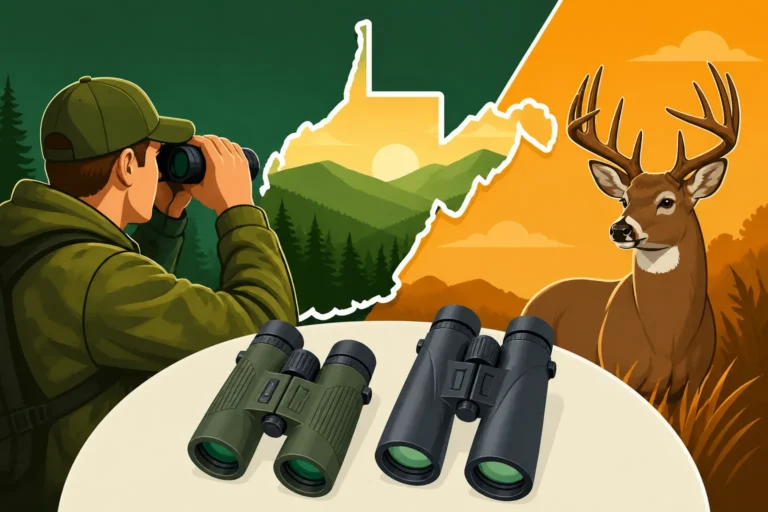
It's a familiar scenario for any hunter who spends time in West Virginia's rugged mountains and expansive hollows: you're walking, carefully scanning the terrain with your binoculars, and suddenly, a magnificent buck steps into a clearing. Your heart pounds, you drop your binoculars, grab your rangefinder, fumble to get it to your eye, push the button, wait for the reading, and by the time you've got the number, that buck might already be gone. This guide will dive deep into whether rangefinding binoculars are a worthwhile investment for the serious West Virginia hunter, helping you decide if consolidating your gear is the smart move for your style of hunting.
The Frustration of Separate Devices in West Virginia's Woods
Hunting in West Virginia is a uniquely challenging and rewarding experience, characterized by steep climbs, dense timber, and unpredictable game movement. Every piece of gear you carry and every second you spend fumbling with it can impact your success. The classic setup of separate binoculars and a handheld rangefinder, while effective, often introduces frustrations that dedicated hunters are constantly looking to minimize.
The Weight and Bulk on Steep Slopes
When you're trekking up a grueling Allegheny ridge or navigating a winding hollow, every ounce strapped to your back or hanging around your neck feels like a ton. Traditional binoculars, a separate rangefinder, maybe a map, your calls, water – it all adds up. The weight isn't just about comfort; it's about endurance and agility. A heavy, bulky setup can make a long day even longer, wear you down faster, and even hinder your ability to move silently and stealthily through cover.
Think about glassing a distant clear-cut or a far-off bench. You're holding your binoculars steady, trying to pick apart the shadows. Then you spot something. Is it a stump? A rock? Or the shoulder of a deer? You instinctively reach for your rangefinder, but it's clipped to your belt, or tucked in a pocket, or maybe even in your pack. The process of putting down your binos, pulling out the rangefinder, and bringing it to your eye, especially when your hands are cold or you're balancing on uneven ground, is clunky. It feels like you're performing a magic trick just to get a yardage. This constant switching not only adds to the perceived weight through mental burden but can also create extra movement and noise in the woods, the very things we strive to avoid.
Speed and Efficiency in Critical Moments
In hunting, sometimes a moment is all you get. A deer might step out of a thicket for just a few seconds before disappearing again. A gobbler might present itself briefly before ducking behind a rise. In these fleeting instances, speed and efficiency are paramount. If you're using separate devices, there's an inherent delay. Your eyes are focused through your binoculars, you spot the animal, but before you can even think about the shot, you have to range it. This means breaking visual contact (or at least shifting your focus), going through the motions of retrieving and activating your rangefinder, acquiring the target, getting the reading, and then, finally, transitioning to your weapon.
That sequence might only take a few seconds in a perfect world, but in the heat of the moment, with adrenaline pumping, it can feel like an eternity. Those precious seconds can be the difference between a clean shot and watching a trophy animal vanish into the timber. Integrating the rangefinder directly into your binoculars streamlines this process, allowing you to maintain visual contact, instantly range the target, and focus on the shot. This seamless transition is where rangefinding binoculars truly shine, especially in dynamic hunting situations where game animals are constantly on the move, like trying to get a range on a buck moving through a saddle while Hunting a Ridge-Top Saddle for Rutting Bucks.
Simplicity in the Field
Beyond weight and speed, there's the undeniable appeal of simplicity. Fewer devices mean fewer things to manage, fewer batteries to keep track of, and fewer items that could potentially be lost or damaged in the field. When you're deep in the Monongahela National Forest Hunting, miles from your truck, you want your gear setup to be as robust and straightforward as possible.
Imagine the frustration of reaching for your rangefinder, only to find the battery dead, or worse, realizing you left it on the dash of your truck back at camp. With rangefinding binoculars, you only have one set of batteries to worry about for both functions. It simplifies your pre-hunt checklist and reduces the mental overhead while you're focused on the hunt. This single-unit approach means less clutter in your pack or around your neck, allowing you to focus more on the subtle sounds and movements of the forest, rather than on managing your equipment. It's about optimizing your mental bandwidth for the hunt itself, not for gear logistics.
What Exactly Are Rangefinding Binoculars and How Do They Work?
Rangefinding binoculars, often simply called "range binos" or "RF binos," are precisely what they sound like: a pair of binoculars with an integrated laser rangefinder. Instead of carrying two separate optical devices, you have one unit that performs both tasks, theoretically offering the best of both worlds. But how do they pull this off, and what kind of compromises (if any) are involved?
The Technology Under the Hood
At their core, rangefinding binoculars use a laser rangefinding system that works by emitting a pulse of invisible laser light. This pulse travels to the target, reflects off it, and returns to a receiver within the binocular. The device then precisely measures the time it took for the laser light to make that round trip. Since the speed of light is a known constant, the internal computer can accurately calculate the distance to your target. This is the same principle employed by standalone laser rangefinders.
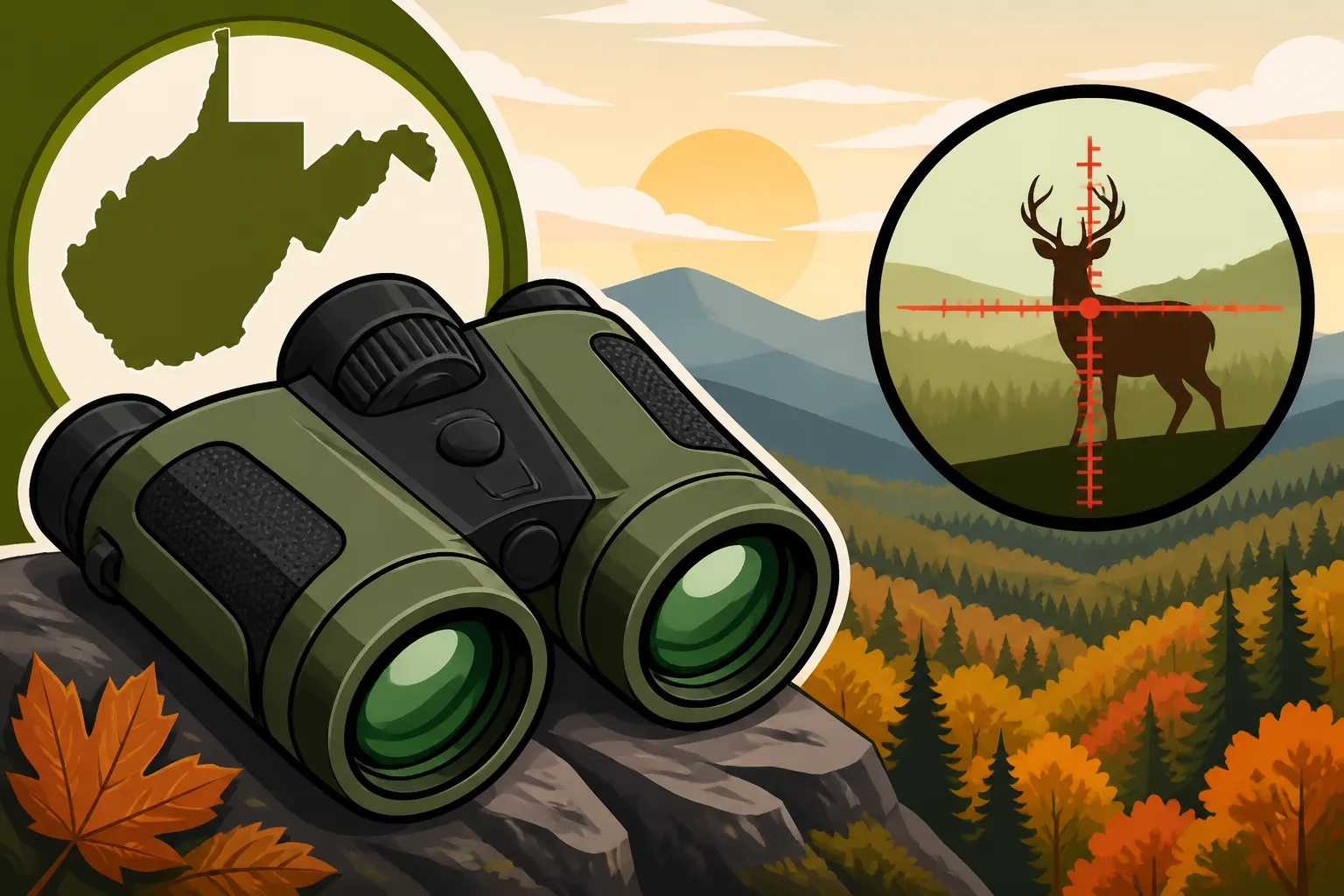
What sets them apart is the integration. The laser emitter and receiver are built directly into the binocular chassis. When you look through the eyepieces, you'll typically see a small reticle or display, often red or black, superimposed on your field of view. This display shows the distance reading once the laser is fired. Many modern range binos also feature "angle compensation," which is incredibly useful in West Virginia's hilly terrain. This technology calculates the true horizontal distance to the target, accounting for uphill or downhill angles, giving you the correct ballistic range to make an accurate shot. This is especially critical when you're perched on a ridge, looking down into a steep hollow, or ranging up to a bench on an opposing slope. The GoHunt community often discusses the importance of angle compensation for shots taken in severe terrain.
Optical Performance Versus Standalone Binoculars
One of the biggest questions hunters have about rangefinding binoculars is whether the integration compromises optical quality. In the early days of this technology, that was often a valid concern. The additional components for the rangefinder could sometimes mean sacrificing lens coatings, prism quality, or overall light transmission compared to a premium standalone binocular.
However, advancements in manufacturing and optical design have largely closed this gap. Many high-end rangefinding binoculars from reputable optics brands now offer optical performance that rivals or even surpasses excellent traditional binoculars. They use high-quality glass, advanced lens coatings to maximize light transmission, and precisely engineered prisms to deliver bright, clear, and sharp images, even in challenging low-light conditions like dawn or dusk.
Of course, like with any optic, there's a spectrum of quality. You'll find entry-level models and top-tier options. When considering optical performance, pay attention to the clarity edge-to-edge, the brightness in dim light, and the color fidelity. A good rangefinding binocular should allow you to confidently identify game at distance, not just range it. For hunters who spend hours glassing vast areas, such as Hunting Eastern Panhandle Farmland Deer or scanning open powerline cuts, the optical quality is just as important as the ranging function.
Key Features to Look For
When evaluating rangefinding binoculars, several features are worth considering:
- Magnification and Objective Lens: Common configurations are 8×42 and 10×42. An 8x magnification offers a wider field of view and is easier to hold steady, which can be great in dense woods. A 10x offers more detail at longer distances, ideal for open areas or spotting tiny movements far away. The 42mm objective lens is a good all-around choice for light gathering. You might consider Binocular Power for Mountain Hunting if you want to dive deeper into this choice.
- Maximum Range: How far can they accurately range? While you might not shoot a deer at 1,500 yards, a higher maximum range often indicates a more powerful and precise laser, which means more reliable readings at shorter, practical hunting distances, especially on less reflective targets.
- Angle Compensation: As mentioned, this is crucial for West Virginia's topography. Ensure the unit provides an equivalent horizontal range (EHR) or similar adjusted distance.
- Display Type: Most rangefinders use a red or black display. Red is often preferred in low light or against dark backgrounds, while black can be crisper in bright conditions. Some offer adjustable brightness or automatic adjustment.
- Scan Mode: This allows you to continuously range multiple targets or a moving target by holding down the range button, which is incredibly useful for tracking a deer walking through the timber.
- Battery Life: Given that it's powering two functions, battery life is a key consideration. Look for models with efficient power management and easily replaceable batteries.
- Ergonomics and Durability: How do they feel in your hand? Are they comfortable to hold for extended periods? Look for rugged, waterproof, and fog-proof designs that can stand up to West Virginia's diverse weather conditions.
- Ballistic Solvers: Some advanced models integrate basic ballistic calculators, which, when combined with your rifle and cartridge data, can provide holdover points. While not essential for all hunters, it's a valuable feature for those taking longer shots.
The Pros and Cons for the West Virginia Hunter
Deciding whether to invest in rangefinding binoculars means weighing their undeniable benefits against the potential drawbacks, especially when considering the specific challenges and styles of hunting prevalent in West Virginia.
Advantages on the Mountain
For hunters navigating West Virginia's steep terrain, the advantages of rangefinding binoculars can be significant.
- Unrivaled Speed and Seamless Transition: This is the biggest selling point. You spot a deer, press a button, and the yardage appears instantly in your field of view. There's no awkward fumbling, no dropping one device to grab another. This drastically reduces the time from "spot" to "shot," which can be absolutely critical when a West Virginia whitetail is on the move. Imagine a buck cutting through a natural funnel between two hollows; a split-second range can make all the difference. This speed is invaluable when you're hunting in areas like Hunting Steep Allegheny Ridges where deer can appear and disappear quickly.
- Less Clutter, Streamlined Gear: One less piece of gear hanging around your neck or rattling in your pack contributes to a cleaner, more efficient setup. This reduces snag hazards in thick brush and makes moving silently through the woods easier. When you're carrying a pack full of essentials for a long day of Scouting West Virginia Public Land Before Season, every item that pulls double duty is a win.
- Consistent Eye Relief and Muscle Memory: By using one device for both glassing and ranging, your eye-to-optic alignment remains consistent. This builds muscle memory and familiarity, leading to faster target acquisition and more comfortable extended glassing sessions. It removes an entire step in your shooting process, allowing you to focus purely on the shot itself once the range is confirmed.
- Angle Compensation is Built-in: Many high-end rangefinding binoculars automatically calculate the angle-compensated distance, providing the true ballistic range. This is an immense benefit in West Virginia, where flat ground is a rarity. Manually calculating holdovers for steep uphill or downhill shots is a pain, and these optics remove that variable, increasing your confidence and accuracy. For a detailed look at some of the best features, resources like GoHunt often highlight models with superior angle compensation.
Disadvantages and Considerations
While the benefits are compelling, rangefinding binoculars aren't without their drawbacks, and these often boil down to cost and complexity.
- The Sticker Shock: Let's be frank, rangefinding binoculars are a significant investment. They are almost always more expensive than purchasing a high-quality binocular and a good standalone rangefinder separately. For many hunters, especially those on a tighter budget, the cost can be a prohibitive barrier. You have to ask yourself if the convenience justifies the premium price tag.
- Weight (Sometimes): While they consolidate two devices into one, rangefinding binoculars can sometimes be heavier than a top-tier traditional binocular of the same size, simply because of the added internal components. This might seem counterintuitive to the "less bulk" advantage, but it's important to compare specific models. For hunters who prioritize ultralight setups for deep backcountry trips, this added weight, even if minimal, could be a consideration.
- Battery Life Concerns: Now, one battery is powering both your optics display and the laser rangefinder. While modern designs are efficient, this means you're relying on that single battery for all your glassing and ranging needs. If it dies in the field, you've lost both functions. Carrying spare batteries is essential, but it negates some of the "simplicity" argument. This is especially important for extended trips in remote areas where recharging isn't an option.
- Repair Complexity: Should something go wrong with your rangefinding binoculars, repairing them can be more complex and potentially more expensive than repairing a standalone binocular or rangefinder. If one component fails, the entire unit might need servicing, leaving you without both functions.
- Performance Trade-offs (Less Common Now): While optical performance has improved dramatically, some argue that even the best rangefinding binoculars still can't quite match the absolute pinnacle of standalone traditional binoculars in terms of pure optical brilliance or low-light performance. This is a nuanced point and often only noticeable to the most discerning users with very specific needs, but it's a consideration for those who demand absolutely uncompromised optical quality.
Real-World Scenarios Where They Shine (or Don't)
- Shine: Spot-and-stalk hunting in open country (like Hunting Eastern Panhandle Farmland Deer) where quick, accurate ranges are needed repeatedly. Hunting in the late season with limited light where quick target acquisition and ranging are crucial. Any scenario where a shot might be taken over varied terrain, needing instant angle compensation. They're excellent for Hunting Potomac Highlands Public Land where long draws and open hillsides are common.
- Don't Shine (as much): Deep woods hunting with very short shooting distances (under 50 yards) where a simple pin-setting bow sight or a rifle zeroed at 100 yards makes ranging less critical. Hunters on an extremely tight budget who can get sufficient performance from separate, more affordable units. For still-hunting in very thick cover like Still-Hunting Cranberry WMA Ridges, where shots are often reactionary and close, the premium features might be overkill.
Making the Investment Decision: Are They Right for Your Hunting Style?
Ultimately, the question of whether rangefinding binoculars are "worth the cost" boils down to your individual hunting needs, budget, and priorities. There's no one-size-fits-all answer, especially given the diverse hunting landscapes and styles found across West Virginia.
Budget Versus Need
Let's talk brass tacks: price. High-quality rangefinding binoculars typically start at a premium price point, easily eclipsing the combined cost of a good pair of traditional binoculars and a basic rangefinder. For a hunter just starting out, or someone who only hunts a few times a year, that investment might be hard to justify. A solid pair of 10×42 binoculars and a reliable handheld rangefinder will absolutely get the job done, and likely leave you with more money for other essential gear like a good backpack or better boots for Walking West Virginia Ridges.
However, if you're a dedicated hunter who spends countless hours afield, values efficiency above all else, and consistently finds yourself in situations where quick, precise ranging is critical, the value proposition shifts. The convenience, speed, and reduced fumbling can translate directly into more successful hunts and a more enjoyable experience. Consider how often you actually use your rangefinder in a given hunting season. If it's a constant companion, the integrated solution offers a compelling advantage. Many hunters find that resources like GoHunt provide valuable reviews and comparisons that can help justify the investment by highlighting specific features that align with their hunting needs.
Hunting Environment and Style
Your typical hunting grounds and preferred methods play a huge role in this decision.
- Open Country and Longer Shots: If you frequently hunt areas with long sight lines, like agricultural fields in the Eastern Panhandle, powerline cuts, or vast clear-cuts in the mountains, rangefinding binoculars become incredibly valuable. The ability to instantly get an accurate reading on a deer at 200, 300, or even 400+ yards without breaking your glassing rhythm is a game-changer. For rifle hunters needing precise holdovers, especially when Zeroing a Rifle for Mixed Distances across varied terrain, they are a significant asset.
- Steep and Varied Terrain: As we've discussed, West Virginia's topography makes angle compensation almost a necessity for ethical shots at anything beyond close range. Having this feature integrated and automatic removes a layer of mental calculation and potential error. If you're often Hanging a Stand on a Steep Allegheny Ridge or setting up in a hollow where shots will be significantly uphill or downhill, this is a major benefit.
- Bowhunting in Openings: While bowhunting often involves shorter ranges, those ranges still need to be precise. If you hunt field edges, open woods, or food plots where a deer might stop briefly 40-60 yards out, the speed of ranging with bino-rangefinders can be very advantageous. For Bowhunting West Virginia's Long Archery Season, every yard counts.
- Dense Cover and Close-Quarters: If most of your hunting is in thick laurel, heavy timber, or dense bottomland where shots are almost always under 75 yards, a separate, perhaps simpler, rangefinder might suffice. In these scenarios, the optical performance of a premium standalone binocular might be prioritized, and a compact rangefinder could still offer adequate speed for the distances involved.
Trying Before You Buy
Just like you wouldn't buy a new rifle without shouldering it, you shouldn't commit to expensive optics without some hands-on experience. If possible, try to handle different models of rangefinding binoculars at a local sporting goods store or a dedicated optics dealer.
- Ergonomics: How do they feel in your hands? Are the buttons easily accessible and intuitive to use? Can you comfortably hold them steady for extended periods?
- Optical Clarity: Compare them side-by-side with high-quality traditional binoculars and other rangefinding models. Look at targets at various distances and in different lighting conditions.
- Ranging Speed and Display: Test how quickly they acquire a range and how clearly the display appears in your field of view. Some brands might fit your eye better than others.
- Weight and Balance: Does the weight feel manageable? How do they balance when you wear them around your neck or carry them in a chest harness?
Don't hesitate to ask questions and take your time. This is a significant investment, and you want to ensure it's the right fit for your West Virginia hunting adventures. Research online reviews, engage with hunting forums, and specifically look for feedback from hunters who operate in similar terrain and conditions to yours. The GoHunt platform can be a good source for this kind of user experience and review data.
The decision to invest in rangefinding binoculars is a personal one. For many West Virginia hunters, the ability to consolidate gear, reduce fumbling, and get lightning-fast, angle-compensated ranges makes them an invaluable tool worth every penny. For others, the traditional setup remains perfectly adequate. Consider your hunting style, your terrain, and your budget carefully.
| Feature | Standalone Binoculars & Rangefinder | Rangefinding Binoculars |
|---|---|---|
| Cost | Generally less expensive when bought separately | Premium price point, often a significant investment |
| Weight/Bulk | Two separate units; can feel more cluttered | One integrated unit, but might be slightly heavier than binos alone |
| Speed/Efficiency | Requires switching between devices; small delay | Instantaneous ranging while glassing; seamless transition |
| Simplicity | Two sets of batteries, two devices to manage/lose | One set of batteries, one device; less to juggle |
| Optical Quality | Can achieve top-tier optical quality in binoculars | Optical quality has significantly improved, often excellent |
| Angle Compensation | Available in many standalone rangefinders, must be activated | Often integrated and automatic, a major convenience |
| Repair | If one fails, the other still works; easier to repair one unit | If unit fails, both functions are lost; more complex repair |
| Hunting Style Fit | Good for casual hunting, fixed position, or budget-conscious | Excellent for spot-and-stalk, varied terrain, critical speed |
Disclaimer
This article is for general informational purposes only and does not constitute professional advice. Laws, prices and regulations vary by location and change over time. Consult a qualified professional for guidance on your specific situation.