Locator Calls for West Virginia Gobblers
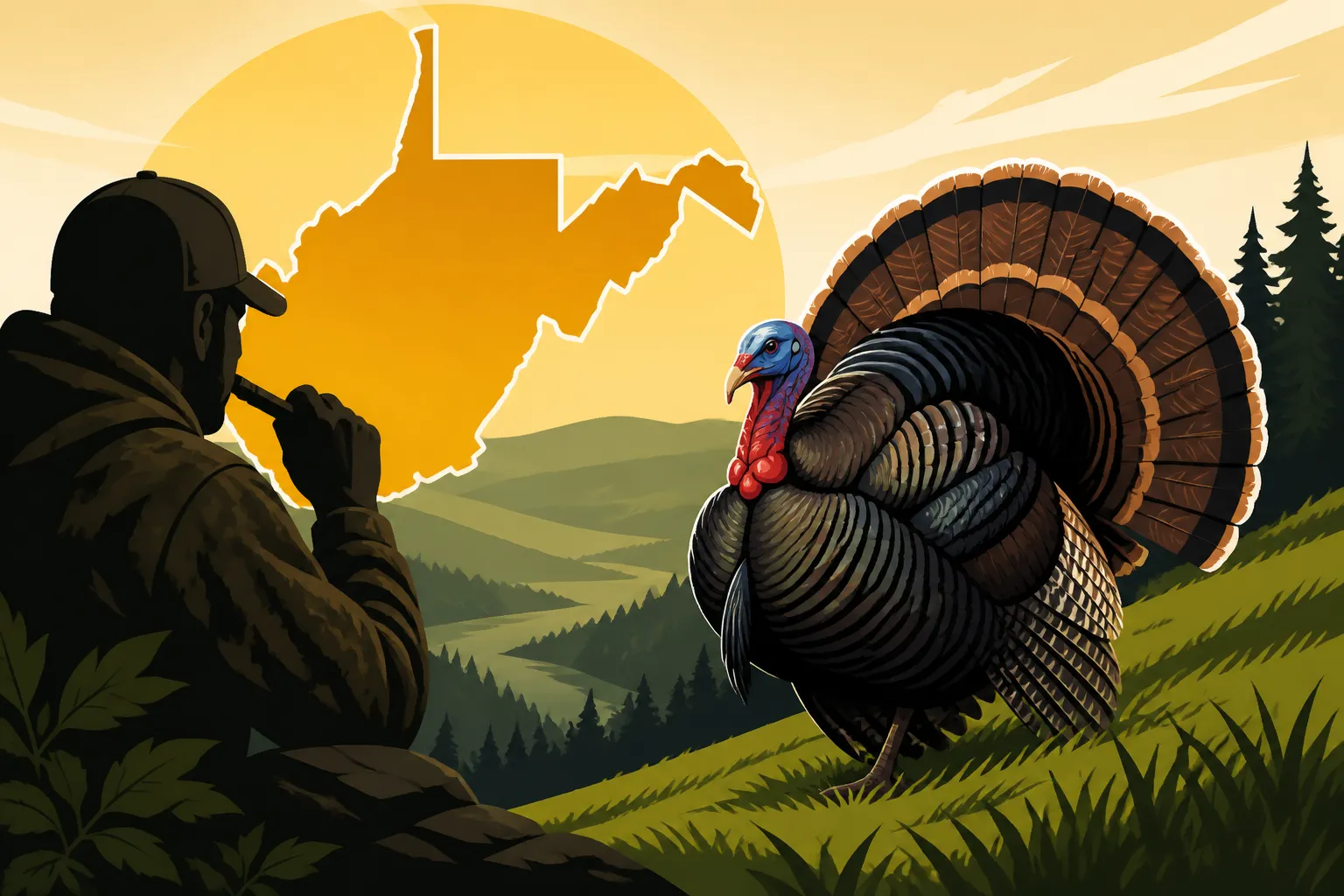
Few things are more frustrating for a turkey hunter than stepping into the pre-dawn woods, hearing nothing but the gentle rustle of leaves, and knowing there's a gobbler out there somewhere, just not talking. It’s like trying to find a needle in a haystack when the haystack is a sprawling West Virginia mountain. This guide is all about how to break that silence, using various locator calls to make those elusive longbeards give away their position, and how to use that information to your advantage, even when they're tight-lipped.
Understanding Locator Calls and Why They Work (or Don't) in West Virginia
Let's be real, you're not trying to call a turkey in with a locator call in the same way you'd use a hen yelp. The whole point here is to annoy him, startle him, or make him think another creature is making enough racket that he just has to gobble back and prove he’s still the boss of his little corner of the woods. It's about getting an involuntary shock gobble that pins his location down, giving you a starting point for your approach.
The Psychology Behind a Gobbler's Response
A gobbler's world is full of sounds. He's constantly listening for rivals, potential mates, and predators. When you blast out a loud, distinct sound that's not a turkey, it often triggers an instinctual response. He might gobble because he feels challenged by a perceived intruder, or because he's a big, confident tom who just wants to announce his presence to the world, regardless of the source of the noise. Sometimes, it's just sheer territoriality. He hears something loud and out of place, and he lets out a shock gobble to say, "Hey, I'm here, and this is my ridge!"
Now, it's important to remember that not every gobbler will respond to every call, or even respond at all. Pressure from other hunters, the time of day, weather conditions, and even his individual personality can all play a role. A gobbler that has been relentlessly pursued might be completely shut down, refusing to gobble at anything but the most subtle hen calls, if that. But a confident, untouched bird, especially early in the season or on less pressured public land, is often more willing to sound off. When you're Roost Hunting West Virginia Gobblers, a locator call can be gold. It’s a gamble, but a calculated one, and sometimes that single gobble is all you need to seal the deal.
When and Where to Use Locator Calls
Locator calls are your best friend during those frustrating quiet periods, especially in the early morning before turkeys fly down, or mid-morning when the woods go silent. They are especially effective when you suspect birds are in the vicinity but just aren’t sounding off. Imagine you're deep in the Monongahela National Forest, covering vast ground, and you haven't heard a peep. Instead of just walking aimlessly, a well-placed series of owl hoots or crow caws can potentially cut through the silence and reveal a bird you never knew was there.
The best places to use them are usually high vantage points like ridge tops, open fields, or along clear-cut edges where sound can really travel. Think about those big, open hollows or expansive ridgetops where sound echoes. In these spots, your locator call can carry a long way, and a gobbler's response will, too. Avoid using super loud locator calls when you're already very close to where you suspect a bird is roosted or feeding. You don’t want to spook him right off the limb or make him clam up. Instead, use a softer version or switch to a different type of call. For instance, if you're Hunting Steep Allegheny Ridges, using a locator call that can carry down into a deep hollow, or across to an opposing ridge, is essential. This can save you a lot of walking and help you pinpoint birds in otherwise inaccessible spots.
Different Types of Locator Calls for WV Terrain
West Virginia's diverse terrain, from the dense cover of the Allegheny Highlands to the more open farmlands of the Eastern Panhandle, means that certain locator calls will be more effective than others depending on your specific hunting ground. Having a variety in your vest is key.
Natural Sounds: Owl Hoots and Crow Caws
These are arguably the most classic and widely used locator calls, and for good reason: they are natural parts of the West Virginia soundscape. Turkeys hear owls and crows all the time, and they don't associate these sounds with danger, unless, of course, a hunter keeps blowing the same sequence directly at them day after day.
Owl Hoots: The barred owl hoot is probably the king of locator calls, especially in the early morning or late evening. That "Who cooks for you? Who cooks for you all?" cadence is unmistakable. A gobbler often feels compelled to gobble back at an owl, seeing it as another dominant creature in his domain. I've had countless birds fire up just before fly-down after hitting a series of hoots. The key is to make it sound natural, not like a machine gun of hoots. Vary your cadence, listen for responses, and then try again. Sometimes, a quiet gobbler won't respond to the first set of hoots, but a second, slightly different cadence will get him. This is particularly effective when you are scouting pre-season or trying to locate birds When West Virginia Gobblers Go Quiet in May.
Crow Caws: Crows are the noisy neighbors of the woods, and their loud, boisterous caws can often agitate a gobbler into giving up his position. Crow calls work well throughout the day, not just at dawn and dusk. They can cut through wind or thick foliage better than some other calls. A series of aggressive, drawn-out caws, followed by a sharper, shorter one, can sometimes be all it takes. Many hunters will pair a crow call with a little motion, like waving a small piece of blaze orange, to try and replicate a crow landing or interacting, which adds to the realism. Just be mindful you don't call in an actual crow directly over your head and give away your position to a wary longbeard.
| Locator Call Type | Best Time to Use | Ideal Terrain | Why It Works | Notes |
|---|---|---|---|---|
| Barred Owl Hoot | Pre-dawn, Dusk | Ridge tops, hollows, dense woods | Mimics natural predator/competitor, triggers shock gobble | Vary cadence; listen carefully for distant responses |
| Crow Caw | All day, especially mid-morning | Open fields, ridge lines, clear-cuts | Loud, natural, often triggers an aggressive response | Can attract actual crows; use varied calls |
| Coyote Howl | Early morning, anytime in remote areas | Large tracts of public land, wilderness | Strong territorial challenge; aggressive gobblers respond | Can be intimidating; use sparingly if close to known bird |
| Pileated Woodpecker | Mid-morning, mid-day | Mature timber, deep woods | Sharp, loud drumming/call cuts through quiet woods | Less common response, but can work on pressured birds |
Imitative Calls: Coyote Howls and Pileated Woodpeckers
Sometimes you need to think outside the box, especially when traditional owl hoots and crow caws aren't cutting it. This is where calls like coyote howls and pileated woodpecker calls come in. They’re less common in a turkey hunter's arsenal, which can sometimes be their greatest strength.
Coyote Howls: A coyote howl is a powerful, territorial sound that can really get a gobbler fired up. It screams "predator" and "competitor" at the same time. Many gobblers will gobble fiercely in response to a howl, almost as if to say, "I'm still here, and I'm not afraid!" They're particularly effective in larger, wilder tracts of public land, such as parts of the Monongahela National Forest or more remote Wildlife Management Areas where coyotes are prevalent. The key is to make it sound authentic – a lone howl, followed by a listen, perhaps another howl, then wait. Don't go crazy with a full pack sequence unless you actually want to call in coyotes! If you're on a hunting app like GoHunt, you might even be able to see areas where coyote sign is more common, which could give you a clue as to where these calls might be most effective. I’ve found that the best time for coyote howls is usually early morning, but I’ve had success mid-day on quiet birds too.
Pileated Woodpecker Calls: This is a more niche locator, but surprisingly effective in the right conditions. The loud, distinctive drumming and calls of a pileated woodpecker are natural sounds in mature West Virginia timber. It’s a sharp, piercing sound that can carry well and doesn't sound threatening. Think of that loud "cuk-cuk-cuk" or the drumming against a hollow tree. It's not as universally effective as an owl or crow, but on a really tight-lipped gobbler, or in a specific type of mature timber where these birds are common, it can sometimes be just the unique trigger he needs to gobble. It’s a good one to try when the woods are dead silent mid-morning, after the initial fly-down excitement has worn off, and you're Hunting Potomac Highlands Ridgelines.
Mastering the Art of Calling for a Response
It’s not just about blowing into a call; it’s about timing, technique, and truly listening to the woods. Any call can be a locator call if it’s loud and jarring enough, but knowing how and when to deploy them is where the real skill lies.
Volume, Cadence, and Reading the Landscape
Using a locator call isn't about blasting it as loud as you can, every time. It’s a nuanced art.
Volume Control: Start with a moderate volume. If you don't get a response, slowly increase the volume. If you're on a ridge and trying to reach into a hollow, you might need more power. If you suspect a bird is close, a softer series of hoots or caws might be better, to avoid spooking him. I always recommend practicing your locator calls at home, getting a feel for the different volumes you can achieve. A good friend of mine always talks about how important it is to match the energy of the woods – if it’s dead calm, a softer call might be less jarring and more natural.
Cadence and Authenticity: A natural cadence is crucial. Listen to real owls, crows, or coyotes if you can, or watch videos. Replicate their rhythm and pauses. A machine-like, repetitive sequence will sound fake to a wary gobbler. Think about the flow. For an owl, it’s not just "Hoo-hoo-hoo-hoo," but "Who cooks for you? Who cooks for you all?" with natural pauses. For a crow, it’s not just "Caw-caw-caw," but maybe a long, drawn-out "Caaaaawwww!" followed by a couple of sharper "caws!" Just like when you're using traditional Grunt Calls in Mature West Virginia Timber, sounding natural is always key.
Reading the Landscape: This is where good scouting and understanding your hunting area really pay off. Knowledge of topography is huge. Sound travels differently in different environments. Up a hollow, over a ridge, through dense pines versus open hardwoods. Knowing how sound carries in a particular area will dictate how often and how loud you call. If you’re using a mapping tool like GoHunt, you can analyze the terrain, identify likely roosting areas, and pinpoint where sound might carry best, helping you strategize your calling locations. A steep ridge can funnel sound, while a dense laurel thicket can muffle it. Understanding these nuances makes your locator calls much more effective.
Strategic Movement and Listening Skills
It’s not enough to just make noise; you have to move and listen intelligently.
Move and Call Strategy: Don't just stand in one spot and blow your call repeatedly. Move along a ridge, stopping every 100-150 yards to call and listen. This covers more ground and helps you triangulate the gobbler's position if he does respond. If you get a faint response from a distance, don't rush in. Move a little closer, call again, and confirm his location and direction before making a full approach. This "call and move" strategy is a staple of Run-and-Gun Turkey Tactics on Public Land, allowing you to cover vast areas efficiently.
Active Listening: This might sound obvious, but it's often overlooked. When you make a locator call, stop everything and listen. Don't shuffle your feet, don't adjust your vest, just freeze and listen intently. A gobbler's response can be surprisingly soft, especially if he's far away or somewhat pressured. Sometimes it's not a full gobble, but a soft "cluck" or "spit-drum" that you might miss if you're not paying attention. Listen for the direction, the strength of the gobble, and how quickly he responds. All these cues give you valuable information about his enthusiasm and exact location. You want to hear that distinct sound carry across the hollow, perhaps even echoing slightly.
Integrating Locator Calls into Your Hunting Strategy
Locator calls are just one tool in your turkey hunting toolbox, but a crucial one. They shouldn’t be used in isolation but rather as a synergistic part of your overall approach.
Pairing Locators with Traditional Turkey Calls
Once you get a gobbler to respond to a locator call, the game shifts. You’ve found him; now you need to convince him to come closer. This is where your traditional hen yelps, clucks, and purrs come into play.
The Transition: After a successful locator call, you might not want to immediately hit him with aggressive hen calls. Sometimes, a soft, subtle series of hen sounds is enough to pique his interest. He’s already announced his presence; now he’s listening for the hen that made him do it. You’ll want to ease into your turkey calling. If you're Calling a West Virginia Gobbler Off the Roost, for example, a few soft tree yelps after he gobbles to your owl hoot might be perfect. You're giving him a reason to fly down in your direction. Over-calling right off the bat can sometimes scare a bird away, or worse, make him hang up out of range, just out of sight. Remember to set up quickly and get ready for him to come in.
Reading the Gobbler: Pay close attention to how he responds. Is he gobbling aggressively and moving your way? Then you can be more confident with your hen calls. Is he gobbling, but staying put or moving away? He might be henned up, or simply wary. In that case, scale back the hen calls and try to change your position to get closer, using terrain features to your advantage. Maybe a subtle purr or cluck is all he needs, or even just silence, letting him wonder where that hen went. Some gobblers are extremely sensitive to calls, especially those that have been hunted hard on public land.
What to Do When a Gobbler Answers (or Stays Silent)
The moment a gobbler answers your locator call is exhilarating, but it’s only the beginning. And what about those times when he doesn't say a word?
When He Answers:
- Pinpoint Location: As soon as he gobbles, try to get a bearing. Mentally note the direction, and any landmarks. If you’re using a mapping app like GoHunt on your phone, you might even drop a pin.
- Move (Cautiously): If you're far, start moving in his direction, using terrain for cover. Stay quiet, be stealthy. If he’s close, stop, find a good setup spot with plenty of cover, and get ready. For Hunting a Funnel Between Two Hollows, you'll want to position yourself where he'll naturally come through.
- Set Up: Get against a wide tree that breaks up your outline, or into a ground blind. Ensure you have a clear shooting lane in the direction you expect him to come from.
- Call to Him: Now, shift to your turkey calls. Start with soft hen yelps, clucks, or purrs. Don't blast him. Let him know you're there, but make him want to come find you. If he keeps gobbling aggressively, you can ramp up the calling, but always let him dictate the pace. Remember the goal is to close the distance, not just to make him gobble. For Setting Up Against a Big Oak near a known travel corridor, you want to be as invisible as possible.
When He Stays Silent:
- Don't Give Up Immediately: Sometimes gobblers are just quiet. They heard you, they might even be interested, but they're not going to gobble. Wait for 15-20 minutes, listening intently. He might be walking silently towards you.
- Change Locator Call: If after a good wait he’s still silent, try a different type of locator call. If an owl hoot didn’t work, maybe a crow caw will. A different sound might trigger him.
- Change Position: If nothing works from your current spot, pack up quietly and move to a new vantage point. Go over a ridge, around a bend in a creek, or to a different field edge. Sometimes a new angle or a different acoustic environment is all it takes. For those wide open spaces of the Hunting Eastern Panhandle Farmland Deer (and turkeys), a reposition can completely change how sound carries and how a turkey might respond.
- Go Hunting: If all locator calls fail, and you still believe there are birds in the area, switch to an active hunting strategy. This might mean still-hunting through likely turkey habitat, or setting up in a known travel corridor and blind calling every 15-20 minutes with hen calls, hoping to intercept a curious bird.
Locator calls are about efficiency and confidence. They allow you to survey vast expanses of West Virginia's rugged terrain, identifying the exact locations of gobblers quickly. Mastering their use, understanding when to deploy them, and how to transition from a locator call to actual turkey calling, will elevate your turkey hunting game, ensuring fewer silent mornings and more opportunities to bring a longbeard home.
Disclaimer
This article is for general informational purposes only and does not constitute professional advice. Laws, prices and regulations vary by location and change over time. Consult a qualified professional for guidance on your specific situation.