Hunting Near Spruce Knob’s High Ground
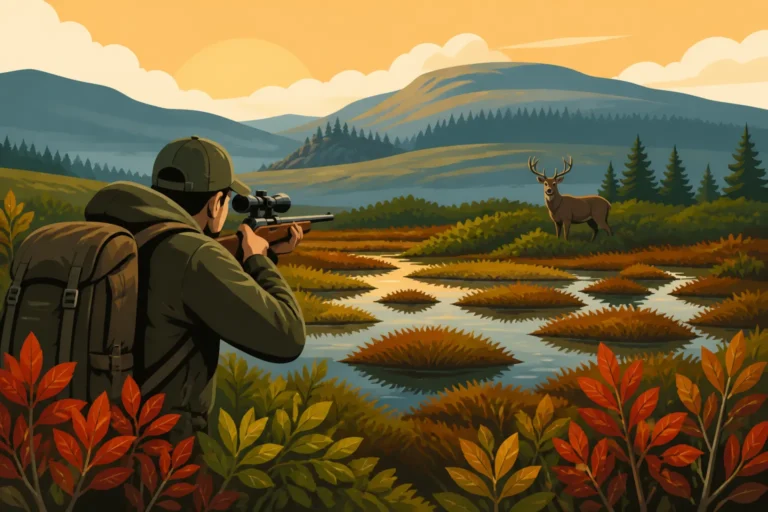
Hunting the challenging, high-elevation terrain near Spruce Knob in West Virginia presents a unique set of obstacles and rewards for any hunter. The thinner air, unpredictable weather, and steep, unforgiving landscape can quickly humble even the most experienced outdoorsman, but for those willing to put in the work, this majestic region offers unparalleled opportunities for a truly wild hunt. This guide will walk you through what to expect and how to prepare for a successful and safe hunting experience in West Virginia's highest country.
Understanding Spruce Knob's Unique Terrain and Ecosystem for Hunting
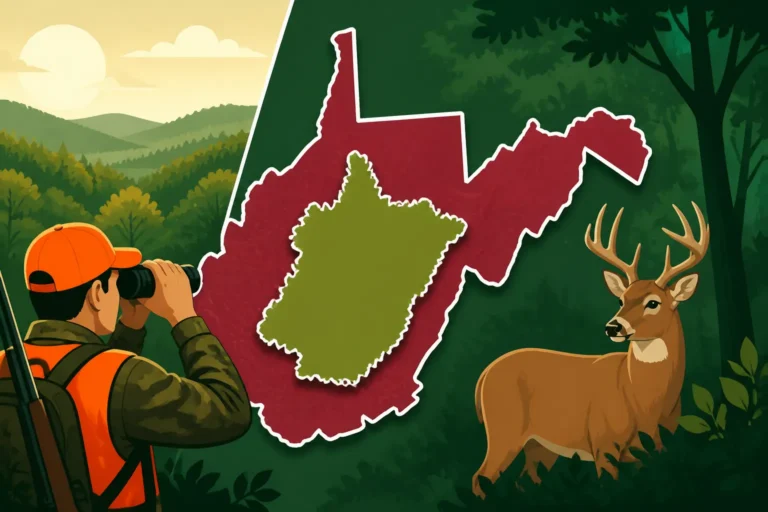
Spruce Knob, West Virginia's highest peak, isn't just a pretty view; it's a formidable hunting ground with an ecosystem shaped by its elevation. The mountains here aren't like the rolling hills of the central part of the state. They are steep, often rocky, and the weather can turn on a dime, requiring a different approach to scouting, strategy, and gear.
The Allure and Challenges of High-Elevation Hunting
There's something incredibly appealing about hunting the high country. The solitude, the vastness of the unbroken forest, and the feeling of truly earning your game when you're miles from any road. But let's be realistic, it's tough. The air is noticeably thinner, making those steep climbs a real lung-buster. You might start your morning in crisp, clear air and by noon be navigating a dense fog that rolls in without warning, or even a sudden snow squall in October. The ground is often a mix of rocky outcrops, dense rhododendron thickets, and deep, dark hollows where the sun barely reaches.
Wildlife in these areas is often less pressured because fewer hunters are willing to tackle such rugged terrain. This can mean more mature animals and a different kind of hunting experience where stealth and endurance are paramount. You're not just looking for a deer; you're looking for a deer that lives in some of the wildest country West Virginia has to offer, a true mountain survivor. Understanding Wind and Thermals on a Steep Ridge is absolutely critical here, as the air currents can play tricks on your scent, making approaches incredibly tricky.
Key Game Species Around Spruce Knob
The high elevations around Spruce Knob host a diverse array of game, each with its own preferred habitat and challenges. White-tailed deer are certainly present, though their densities might be lower than in agricultural areas. However, the deer that thrive here are often older, tougher, and highly attuned to their environment. You'll find them focused on natural food sources, like acorns, beech nuts, and browse, especially as winter approaches. Understanding Late-Season Food Sources for West Virginia Whitetails is crucial if you're hunting beyond the early archery season.
Black bears are also a significant presence. Spruce Knob and the surrounding Monongahela National Forest provide ideal habitat for bears, with vast tracts of unbroken forest, abundant mast crops, and plenty of secluded denning sites. Encounters with bears are common, and for the bear hunter, this region offers prime opportunities. Then there are ruffed grouse, the king of the upland birds. These elusive birds thrive in the regenerating timber, aspen cuts, and spruce thickets found in the high country. Chasing grouse with a good bird dog (or even without one, if you're up for a challenge) is a quintessential mountain hunting experience. While less common, you might also find turkeys, especially around the edges of the higher elevations where they transition to more hardwood forests.
Essential Scouting and Planning for Spruce Knob Hunts
Preparation is not just key; it's non-negotiable when you're venturing into the wild country near Spruce Knob. You can't just show up and expect to figure it out. Diligent scouting, both from your living room and on the ground, will drastically increase your chances of success and, more importantly, your safety.
Leveraging Technology for High-Ground Reconnaissance
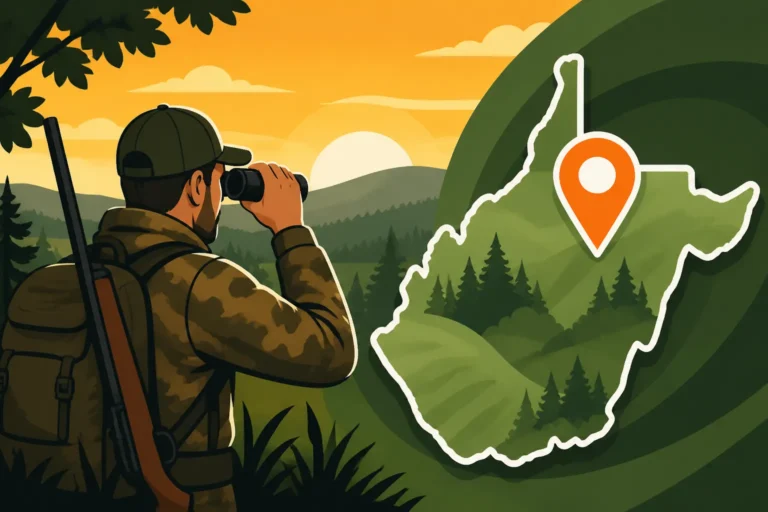
Before you even tie your boots, you should be spending hours on your computer or tablet, pouring over maps. Online mapping tools like onX Hunt and GoHunt are indispensable for hunting near Spruce Knob. These platforms allow you to dissect the terrain from a bird's-eye view, revealing contour lines, identifying steep hollows, ridge tops, and potential saddles that act as natural travel corridors for deer and bear.
You can overlay public and private land boundaries, which is critical in this mixed landscape. Identifying remote public access points, looking for old logging roads or trails that aren't visible on basic maps, and pinpointing water sources or natural springs can save you countless hours of unproductive walking. I often use the satellite imagery to spot older clear-cuts or areas of dense regenerating forest – prime bedding and cover for deer, and often good grouse habitat. Marking potential treestand locations or ambush points before you even arrive helps you formulate a plan, giving you a distinct advantage. Think of it as your first, silent scout. This initial reconnaissance is a vital part of Scouting West Virginia Public Land Before Season.
On-the-Ground Scouting in the Off-Season
While technology is a great starting point, there's no substitute for getting boots on the ground, especially in the off-season. Visiting your planned hunting area outside of hunting season allows you to explore without the pressure of having to hunt. You can hike in, identify fresh game trails, rub lines, and old scrapes without disturbing active hunting areas or spooking game. Look for areas with abundant mast, like oak or beech ridges, or areas where soft mast, such as serviceberry or wild grape, might be present.
Pay close attention to topography and how it funnels game. A small saddle between two peaks, a bench running along a steep hillside, or a creek bottom can be absolute gold mines for deer movement. Understanding how game uses these natural features is paramount. Also, consider water sources. In dry years, identifying reliable springs or seeps can show you where animals will congregate. This is also your chance to get a feel for the terrain itself: how steep it really is, how dense the rhododendron thickets are, and where the most challenging climbs will be. Remember, the more you know about the ground, the more confident you'll be when you're actually hunting it. This is where you can confirm what your Reading Aerial Photos for Eastern Panhandle Deer scouting hints at, even if you're not in the Eastern Panhandle, the principles apply.
Strategies for Hunting Spruce Knob's Rugged Landscape
Hunting near Spruce Knob requires a blend of physical stamina, mental fortitude, and adaptable strategies. The deep timber and steep slopes demand a different approach than hunting flatter, more open terrain.
Tactics for Deer in High-Elevation Timber
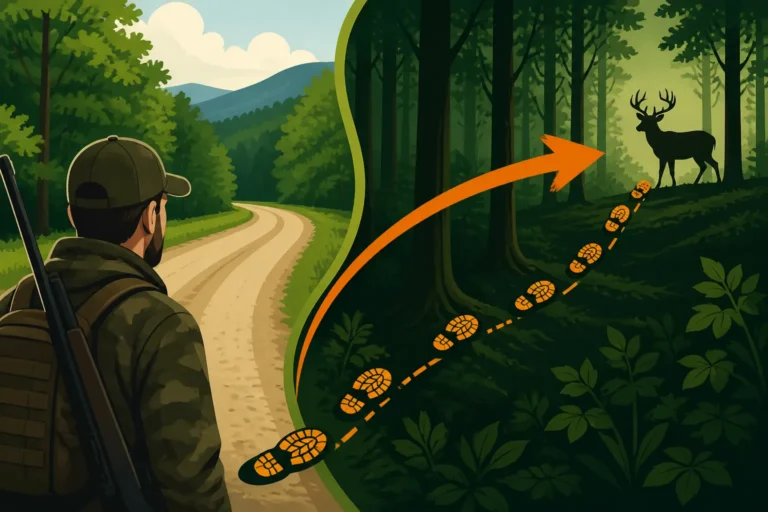
When you're chasing whitetails in the high-elevation timber, your tactics need to be tailored to the environment. Still-hunting is often one of the most effective methods here. Moving slowly and deliberately, taking a few steps, then pausing to glass and listen, allows you to cover ground effectively without spooking game. The dense cover often means shorter shot opportunities, so being ready to react quickly is crucial. Focus on ridges and benches, as deer often prefer to travel along these contours rather than dropping into deep hollows unless pressured.
In late season, deer will concentrate on available food sources and seek out thermal cover. South-facing slopes that catch more sun can be prime bedding areas, especially during cold snaps. Look for thick stands of evergreens like spruce or hemlock for bedding, as these provide excellent thermal cover from harsh winds and snow. Identifying specific food sources, whether it's an isolated stand of oak still dropping acorns or areas with browse, becomes a critical part of your strategy. This method directly applies to Hunting a High Elevation Mountain Bench where deer will feed and bed.
Another strategy, particularly during the rut, involves hunting saddles or funnels between ridges. Bucks will use these natural pinch points to travel between bedding and feeding areas, or while searching for does. If you can find a good, secluded saddle, especially one that sees less pressure, you might be in for a great encounter. Hunting a Ridge-Top Saddle for Rutting Bucks offers an excellent overview of this tactic.
Bear Hunting Opportunities Near Spruce Knob
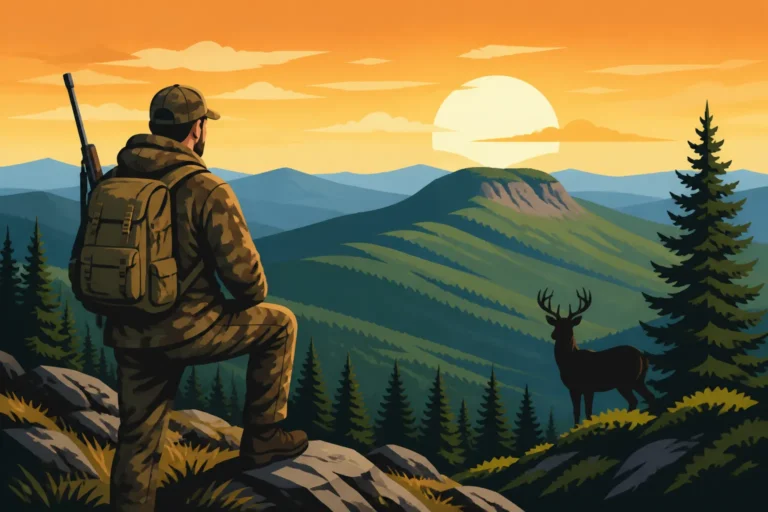
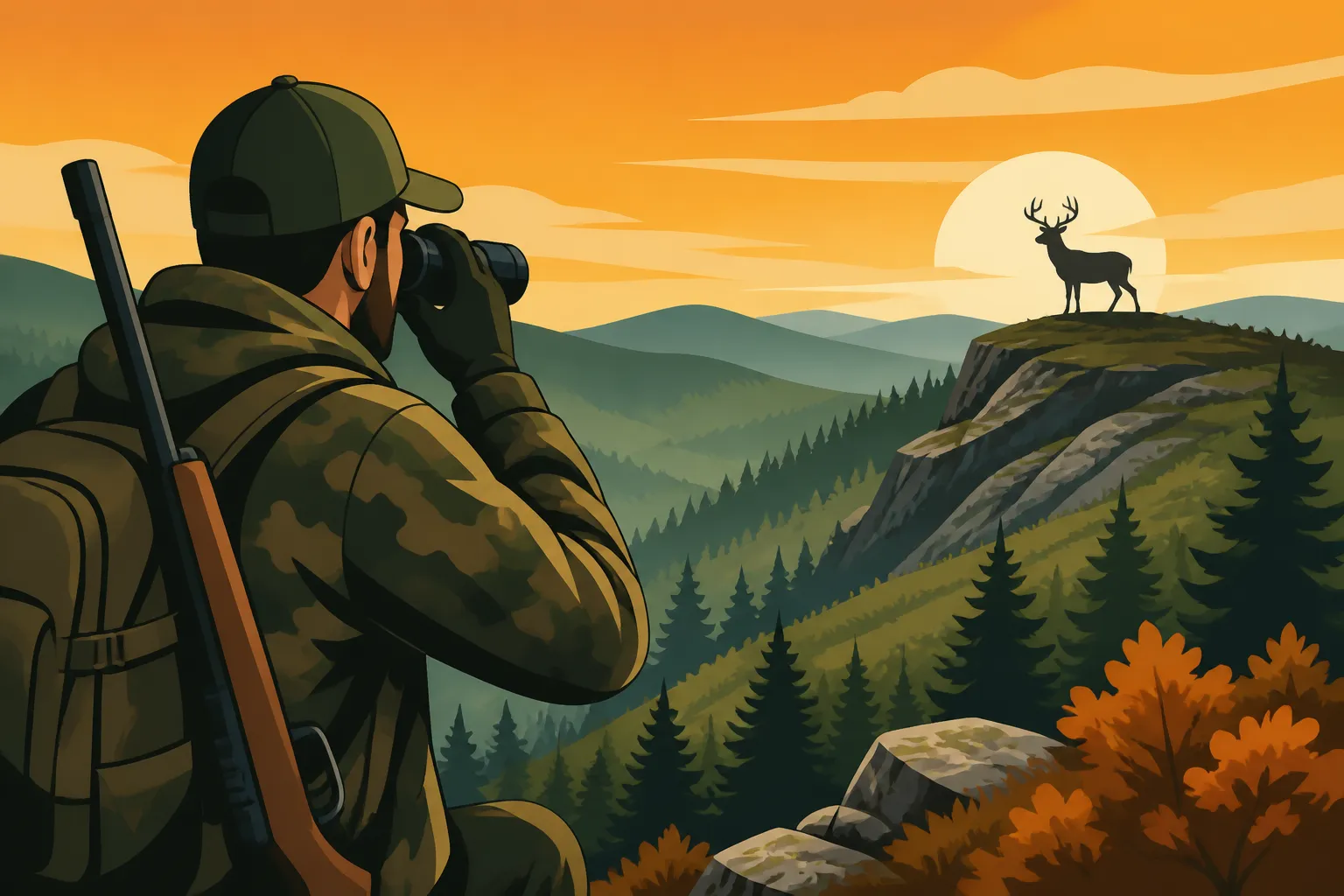
Spruce Knob and the surrounding Monongahela National Forest are truly bear country, offering fantastic opportunities for bear hunters. The vast, undisturbed forests provide everything a bear needs, from abundant natural food sources to dense cover. Spot-and-stalk hunting can be highly effective, especially during the early fall when bears are actively feeding on mast crops like acorns and beech nuts. Finding an elevated vantage point where you can glass large swaths of timber, particularly south-facing slopes, can reveal a bear feeding.
Understanding bear sign – claw marks on trees, scat, and overturned rocks – is essential. Bears tend to travel along the paths of least resistance, so old logging roads, game trails, and creek bottoms can be productive travel corridors. If you're hunting during an especially good mast year, focus your efforts on those specific food sources. Bears will congregate in areas with heavy acorn or beech nut drops. However, remember that baiting laws can be very specific, so always check the latest regulations before considering such tactics. Hunting Bears Over Natural Mast in the Mountains provides further insight into this.
Chasing Ruffed Grouse in Mountain Cover
For those who love upland bird hunting, Spruce Knob offers some of West Virginia's best ruffed grouse habitat. These birds thrive in young, regenerating forest stands, which provide dense cover for protection and plenty of food sources. Look for areas that have been recently logged or clear-cut, particularly those with a mix of aspen, birch, and thick underbrush like rhododendron or laurel. The edge where a young clear-cut meets mature timber can be a hot spot.
Walking old logging roads or hiking trails that cut through these areas can flush birds, but often, you'll need to get into the thick stuff. A good bird dog can be invaluable here, helping to locate and flush birds that would otherwise hold tight. Without a dog, you'll need to move slowly and deliberately, pausing frequently to listen for flushes. Be ready for fast, explosive flushes, and quick, instinctive shots. Knowing Grouse Hunting Highlands Aspen Cuts will give you an edge in finding these elusive birds. The dense cover can make for challenging shooting, but the reward of a flushed grouse in the mountains is unforgettable.
Gear and Safety Considerations for Spruce Knob
The challenging environment around Spruce Knob demands serious attention to your gear and safety protocols. Being unprepared here isn't just uncomfortable; it can be dangerous.
Packing Smart for Mountain Weather
Mountain weather is notoriously fickle. What starts as a clear, crisp morning can quickly turn into a cold, driving rain or a full-blown snowstorm, even in early fall. Layering is your best friend. Start with a moisture-wicking base layer, add an insulating mid-layer (fleece or down), and top it with a waterproof and windproof outer shell. Wool is an excellent choice for hunting clothing in the mountains because it retains its insulating properties even when wet, unlike some synthetics. Wool Versus Synthetics in Mountain Cold can help you make informed decisions.
Your boots are perhaps the most critical piece of gear. They need to be waterproof, well-insulated, and provide excellent ankle support for navigating uneven, rocky terrain. Break them in well before your hunt to avoid painful blisters. Don't forget a warm hat, gloves, and a neck gaiter, even if the forecast looks mild. I always carry a compact, lightweight rain suit in my pack, regardless of the forecast. It weighs next to nothing and can save your hunt (or even your hide) if the weather turns. A good quality hunting pack, capable of carrying all your essentials and possibly some game, is also crucial. Consider a daypack with enough capacity for extra layers, food, water, and emergency supplies. For extended backcountry trips, a sturdy frame pack might be necessary if you plan on boning out a deer or bear.
| Item Type | Essential Gear for Spruce Knob | Why it's Important |
|---|---|---|
| Clothing | Layered System (Base, Mid, Outer) | Adapt to rapidly changing mountain weather; stay dry and warm. |
| Waterproof/Insulated Boots | Traction, ankle support, and warmth on steep, wet, rocky terrain. | |
| Rain Gear | Sudden downpours are common; staying dry prevents hypothermia. | |
| Navigation | GPS Device or App (e.g., onX Hunt) | Easy to get lost in dense timber; track your route and pinpoint locations. |
| Topographical Map & Compass | Battery backup/redundancy for electronic devices; fundamental navigation. | |
| Safety | First-Aid Kit (well-stocked) | Minor injuries are common, major ones require immediate attention. |
| Headlamp with extra batteries | Essential for early morning starts or walking out after dark. | |
| Fire Starter (waterproof matches/lighter) | Emergency warmth and signaling. | |
| Whistle | Attract attention in an emergency. | |
| Other | Plenty of Water & High-Energy Snacks | Stay hydrated and fueled for strenuous activity. |
| Knife | Field dressing, general utility. | |
| Game Bags | Protect meat from dirt and flies. |
Navigation and Emergency Preparedness
Getting lost in the vastness of Monongahela National Forest, especially around Spruce Knob, is a real possibility if you're not prepared. A reliable GPS unit, or a smartphone app like onX Hunt or GoHunt with downloaded offline maps, is absolutely essential. Don't rely solely on cell service, as it's often non-existent in these remote areas. Carry a physical map and compass as a backup and know how to use them.
Always inform someone of your hunting plans: where you're going, your planned route, and when you expect to return. Stick to your plan as much as possible. A well-stocked First Aid Kits for Remote Highlands Ground is also non-negotiable. Beyond basic bandages, include items for blisters, sprains, and any personal medications. A headlamp with extra batteries is critical for navigating in low light or if you find yourself walking out after dark. Headlamps for Walking Out After Dark are a lifesaver.
Always carry more water and high-energy snacks than you think you'll need. The physical exertion of mountain hunting can quickly dehydrate and exhaust you. Finally, know your limits. The mountains are beautiful but unforgiving. If you feel tired, disoriented, or if the weather takes a turn for the worse, it's always better to err on the side of caution and head back to camp or your vehicle. There's always another day to hunt.
Disclaimer
This article is for general informational purposes only and does not constitute professional advice. Laws, prices and regulations vary by location and change over time. Consult a qualified professional for guidance on your specific situation.