Spruce Knob Backcountry Access
For many West Virginia hunters, the thought of chasing game in truly wild, untamed country brings both excitement and a touch of apprehension. Spruce Knob, with its challenging elevations and vast backcountry, can feel impenetrable if you don't know where to start. This guide aims to demystify accessing and hunting the remote areas surrounding Spruce Knob, equipping you with the knowledge and tactics to successfully explore and hunt this magnificent high-elevation wilderness.
Understanding Spruce Knob's Unique Terrain and Wilderness Character
Spruce Knob isn't just a high point on a map; it's the highest point in West Virginia, topping out at 4,863 feet. This elevation brings with it a distinct character, a raw and untamed feel that sets it apart from lower-lying hunting grounds. The terrain here is rugged, demanding, and utterly beautiful, but it requires a different approach from typical flatland or even rolling hill hunting.
High-Elevation Challenges and Ecosystems
Hunting around Spruce Knob means confronting significant elevation changes. You'll encounter steep inclines and descents, rocky outcrops, and dense rhododendron thickets that can feel like impenetrable walls. The air is thinner, especially if you're not used to it, making climbs more strenuous. This is not a place for a casual stroll; it's a test of endurance and preparation. The ecosystem itself is unique, a mix of spruce-fir forests reminiscent of northern climes, mixed hardwoods, and vast open areas on the windswept ridges. Game animals here, particularly deer and bear, adapt to these conditions, often seeking thermal cover in the dense evergreens during cold snaps or finding bedding areas on sheltered benches. Understanding these microclimates and how they influence animal movement is crucial for success.
The vegetation can be incredibly thick, creating both excellent cover for wildlife and significant challenges for hunters. Laurel slicks, sometimes referred to as "rhododendron hells," can make forward progress a slow, noisy, and exhausting endeavor. Yet, these same thickets offer sanctuary for mature bucks and bears, making them prime spots to focus your efforts if you're willing to put in the work. Think about how deer use these areas for security, especially when pressured, and how you might approach them. Hunting Steep Allegheny Ridges can provide additional context on navigating such terrain.
Designated Wilderness Areas and Boundary Rules
A significant portion of the land around Spruce Knob falls within federally designated Wilderness Areas, such as the Cranberry Wilderness and Dolly Sods Wilderness. These areas come with specific regulations that hunters must understand and adhere to. For example, mechanized vehicles, including ATVs, are strictly prohibited. Even bicycles are often not allowed. This means your access is limited to foot travel, reinforcing the "backcountry" nature of the hunt. You'll need to know where these boundaries lie, as violating Wilderness Area rules can lead to hefty fines and loss of hunting privileges.
It's not just about what you can't do; it's also about what you should do to preserve these pristine environments. Leave No Trace principles are paramount here. This includes packing out everything you pack in, minimizing your impact on vegetation, and being mindful of campfires. Knowing the difference between the National Forest general use areas and the specific Wilderness Area boundaries is non-negotiable. Using detailed maps, especially those that highlight wilderness boundaries, is critical for planning your routes and ensuring you stay within legal parameters.
Seasonal Considerations and Weather Extremes
The weather at Spruce Knob is notoriously unpredictable and can change rapidly, often catching unprepared hunters by surprise. Even during a mild October, temperatures can plummet, and a clear morning can quickly turn into a snowy, windswept afternoon. The higher elevation means colder temperatures, more precipitation, and often, high winds that can make glassing or even standing still challenging. Fog is also a frequent visitor, reducing visibility to mere yards and disorienting even experienced woodsmen.
For late-season hunts, snow cover is common and can be quite deep, especially in the sheltered hollows. While snow can be a hunter's friend for tracking, it also adds to the physical demands and the risk of hypothermia. Understanding the typical weather patterns for your chosen hunting season is vital, but always be prepared for the worst. Packing extra layers, waterproof outerwear, and emergency shelter is not just recommended; it's a necessity. This is true whether you're deer hunting or exploring Hunting Bears Over Natural Mast in the Mountains.
Planning Your Backcountry Hunt: Research and Preparation
Successful hunting in the Spruce Knob backcountry is less about luck and more about meticulous planning. You can't just show up and expect to stumble upon game in such vast and rugged terrain. It requires diligent research, physical readiness, and a comprehensive understanding of the area you intend to hunt.
Mapping and Satellite Imagery Analysis
Before you ever set foot on the mountain, spend significant time studying maps and satellite imagery. Digital mapping applications like onX Hunt are invaluable for this type of terrain. They allow you to identify potential bedding areas, travel corridors, water sources, and natural funnels that might hold deer or bear. Look for variations in timber type, old clear-cuts (which can offer browse and cover), and areas with good south-facing slopes for warmth. Pay close attention to contour lines to understand the steepness of the terrain and plan the least strenuous routes in and out.
Overlaying different map layers, such as public land boundaries, topo maps, and aerial photography, can reveal hidden details. Use the tools available to measure distances and elevation changes for potential hikes, giving you a realistic understanding of the effort required. Services like onX Hunt often have historical satellite imagery, which can show past logging activity or changes in vegetation that might influence current game movement. This virtual scouting is essential for narrowing down productive areas and avoiding wasted effort in less promising zones. Reading Aerial Photos for Eastern Panhandle Deer offers more insights into map interpretation.
Understanding Regulations and WVDNR Resources
Navigating the regulations for Spruce Knob and the surrounding National Forest areas can be complex, but it’s absolutely crucial. You need to know season dates, bag limits, weapon restrictions, and any specific rules for the area you're hunting. The West Virginia Division of Natural Resources (WVDNR) website is your primary source for this information. They publish hunting proclamations that outline all the rules and regulations. Pay particular attention to any special provisions for National Forests or Wilderness Areas.
Additionally, some areas might have specific rules regarding camping, baiting, or the use of certain types of stands. For example, some Wilderness Areas may not allow the cutting of live trees for stand placement. Always check for current regulations before heading out. Don't forget to purchase your West Virginia Hunting Licenses and What They Cost and any necessary stamps well in advance. Ignorance of the law is not an excuse, and violations can lead to serious consequences. Check the WVDNR's online resources or contact a local game warden if you have any questions.
Physical Conditioning and Emergency Planning
Spruce Knob is not a place for the faint of heart or the unprepared. The physical demands of hiking steep terrain, often with a loaded pack and potentially packing out game, require a good level of physical fitness. Start conditioning yourself well before hunting season by hiking with a weighted pack, practicing climbing hills, and generally improving your cardiovascular endurance. This will not only make the hunt more enjoyable but also safer.
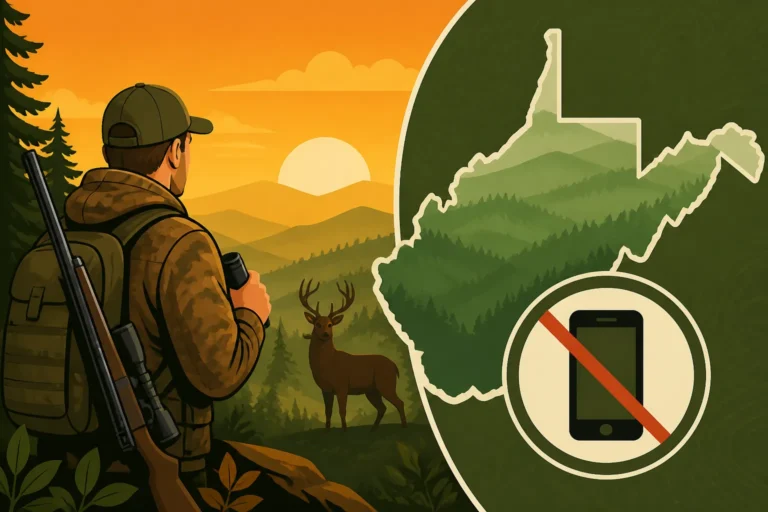
Equally important is comprehensive emergency planning. This includes carrying a first-aid kit with supplies for common backcountry injuries, knowing how to purify water, and having a reliable communication device (recognizing that cell service is often nonexistent in these remote areas). Share your detailed hunt plan with a trusted person who is not with you, including your intended route, where you'll park, and when you expect to return. Consider carrying a satellite messenger or a personal locator beacon (PLB) for emergencies. Knowing basic survival skills – fire starting, shelter building, signaling for help – can make all the difference if something goes wrong.
Navigating the Remote Landscape: Tools and Techniques
Getting lost in the Spruce Knob backcountry isn't just an inconvenience; it can be life-threatening, especially when the weather turns. Relying solely on your phone's GPS can be a recipe for disaster if the battery dies or you lose signal. A multi-pronged approach to navigation is your best bet for staying found.
GPS Devices and Digital Mapping Applications
A dedicated handheld GPS unit or a robust smartphone app like onX Hunt or GoHunt are indispensable tools for backcountry navigation. These devices allow you to pinpoint your exact location, track your movement, and mark waypoints for important features like your vehicle, a promising sign, or a potential bedding area. Download offline maps for your hunting area before you leave home, as cell service will almost certainly be absent. Learn how to use all the features of your chosen device or app, including how to create routes, mark waypoints, and navigate to specific coordinates.
While powerful, these digital tools are not foolproof. Batteries die, screens crack, and signals can be spotty. Always carry a portable power bank to recharge your phone or GPS unit. Even with digital maps, learning to read the terrain and correlate it with what you see on your screen is a skill that comes with practice. Don't just follow the line; understand why the line is there and what the surrounding topography means.
Traditional Map and Compass Skills
Despite the advancements in GPS technology, a physical topographic map and a reliable compass are still essential backups. Batteries don't die on a map and compass. You should be proficient in using them to orient yourself, plot a bearing, and triangulate your position. These skills are fundamental to backcountry safety. A topographic map gives you a three-dimensional perspective of the land, showing elevation changes, drainages, and ridge lines in a way a flat satellite image sometimes can't.
Take the time to learn how to read contour lines, identify land features, and navigate using a compass. Practice these skills in less remote areas before venturing into Spruce Knob's true wilderness. Understanding how to use a map to visualize the terrain you'll be traversing, especially when Hunting Potomac Highlands Ridgelines, will give you a significant advantage. This foundational knowledge complements your digital tools, providing redundancy and a deeper understanding of the landscape.
Marking Trails and Avoiding Getting Lost
Even with the best navigation tools, it's easy to get disoriented in dense woods or heavy fog. A simple technique is to mark your trail as you go. This doesn't mean leaving permanent markers, but rather making mental notes of prominent trees, rock formations, or unique trail features. For longer hikes into unfamiliar territory, consider using flagging tape (and remember to retrieve it on your way out!) or dropping frequent digital waypoints on your GPS.
Always look back at your trail periodically. What does it look like from the perspective of returning? Often, things look very different when traveling in reverse. Pay attention to the sun's position, the direction of prevailing winds, and the flow of water in streams. These natural cues can help you maintain a sense of direction even without technology. If you find yourself truly lost, the best strategy is often to stay put, signal for help, and conserve energy. Panicking and wandering aimlessly can make a bad situation much worse.
Essential Gear for a Spruce Knob Backcountry Adventure
Your gear selection for Spruce Knob should prioritize durability, functionality, and the ability to adapt to rapidly changing conditions. This isn't the place to skimp on quality; your safety and success can depend on it.
Layering Systems for Variable Weather
The key to comfort and safety in Spruce Knob's unpredictable weather is a versatile layering system. Start with a moisture-wicking base layer to draw sweat away from your skin. Next, add an insulating mid-layer, such as fleece or synthetic puffy jacket, for warmth. Finally, a waterproof and windproof outer shell is crucial to protect against rain, snow, and biting winds. Being able to add or shed layers as conditions change allows you to regulate your body temperature, preventing both overheating and hypothermia.
Avoid cotton at all costs, as it loses its insulating properties when wet and takes a long time to dry. Wool or synthetic materials are far superior. Don't forget a warm hat, gloves or mittens, and a neck gaiter; you lose a significant amount of heat from your head and extremities. Even if the forecast looks mild, pack for cold and wet. It's far better to have extra layers and not need them than to be caught unprepared. Layering for a West Virginia Deer Stand provides more details on this critical aspect of hunting.
High-Quality Boots and Footwear
Your feet will take a beating in the Spruce Knob backcountry, so investing in high-quality, comfortable, and waterproof boots is non-negotiable. Look for boots with excellent ankle support to prevent twists and sprains on uneven terrain, and a stiff sole to provide stability on rocky ground. They should be waterproof to handle wet conditions, creek crossings, and potential snow. Break in your boots thoroughly before your hunt to avoid blisters, which can quickly ruin a trip.
Consider carrying a second pair of thick, moisture-wicking socks, or even a spare pair of lightweight camp shoes if you plan to overnight. Nothing saps morale faster than cold, wet feet. Gaiters can also be a game-changer, preventing snow, mud, and debris from entering the tops of your boots, especially when Hunting Steep Allegheny Ridges through thick brush. Your feet are your primary mode of transportation, so treat them well!
Backpacking and Meat Care Equipment
A reliable backpack is your mobile base camp. For a day hunt, a comfortable daypack with enough capacity for water, food, extra layers, first-aid, and emergency gear is sufficient. For multi-day backcountry excursions, a larger internal frame pack is essential to carry camping gear, more food, and the heavy load of meat if you're successful. Choose a pack that fits you well and allows for good weight distribution.
If you plan to harvest an animal, especially a deer or bear, you must have a plan for meat care. This includes game bags to protect the meat from dirt and insects, a sharp, sturdy knife for field dressing and quartering, and potentially a bone saw. For larger animals or multi-day hunts, a pack frame designed for hauling heavy loads is invaluable. Knowing how to properly field dress and break down an animal in the field is a critical skill, especially since dragging a whole animal out of the Spruce Knob backcountry is often impossible. Consider the implications of Recovering a Deer From a Steep Hollow and plan accordingly.
| Gear Category | Essential Item | Why It's Crucial for Spruce Knob |
|---|---|---|
| Navigation | GPS Device/App | Pinpoints location, tracks movement, offline maps. |
| Topo Map & Compass | Battery-free backup, aids terrain visualization. | |
| Headlamp/Flashlight | Navigating in low light or emergencies. | |
| Clothing | Layering System | Adapts to rapid weather changes, prevents hypothermia. |
| Waterproof Outerwear | Protection from rain, snow, and wind. | |
| Warm Hat & Gloves | Prevents heat loss from extremities. | |
| Footwear | High-Quality Boots | Ankle support, waterproof, grip on rough terrain. |
| Gaiters | Keeps debris and moisture out of boots. | |
| Packs | Backpack (Day/Multi-day) | Carries gear, food, water, and potential game meat. |
| Pack Frame (optional) | Essential for heavy meat hauling on successful hunts. | |
| Safety | First-Aid Kit | Addresses injuries, crucial in remote areas. |
| Water Filter/Purifier | Ensures safe drinking water from natural sources. | |
| Fire Starter | Emergency warmth and signaling. | |
| Satellite Messenger/PLB | Emergency communication where cell service is absent. | |
| Meat Care | Field Dressing Knife | Essential for processing harvested game. |
| Game Bags | Protects meat from contamination and insects. |
Hunting Strategies for High-Elevation Wilderness
Hunting in the Spruce Knob backcountry demands a blend of traditional hunting skills, exceptional patience, and a deep understanding of how game animals utilize this unique environment. It’s not about covering miles quickly, but about moving deliberately and strategically.
Locating Game in Remote Basins and Ridges
Deer and bear in the high country often live by different rules than their lowland counterparts. They utilize the terrain for security, food, and thermal regulation. Look for southern-facing slopes that catch more sunlight, offering warmer bedding areas in colder months. East-facing slopes can provide morning warmth, while west-facing slopes offer afternoon sun. Deep, sheltered hollows filled with dense evergreens provide crucial thermal cover during harsh weather. Identifying these areas from your maps and then scouting them carefully is key.
Focus on saddles between ridges, which often serve as natural travel corridors. Look for fresh sign: tracks, droppings, rubs, and scrapes. In years with good mast crops, oak flats or beech groves will be major drawcards for both deer and bear. Remember that hunting pressure can push animals into the most remote, rugged areas, precisely the kind of ground Spruce Knob offers. Don't be afraid to go deeper than most hunters are willing to venture. Finding Sign in Big Monongahela Timber can help you interpret what you see.
Still-Hunting and Patience in Thick Cover
Due to the dense cover and rugged terrain, still-hunting is often the most effective method. This involves moving incredibly slowly, taking just a few steps, then stopping to scan and listen for an extended period – sometimes 10-15 minutes or more. Use your binoculars to pick apart every shadow, every clump of rhododendron, looking for the tell-tale horizontal line of a deer's back or the black mass of a bear. The wind and thermals are critical here; always try to hunt into the wind, especially in the variable mountain conditions where thermals can shift quickly, blowing your scent uphill in the morning and downhill in the afternoon. Wind and Thermals on a Steep Ridge provides crucial details on these dynamics.
Patience is paramount. Many hunters get frustrated by the slow pace and vastness of the backcountry, but rushing through these areas will only result in missed opportunities and bumped game. Embrace the solitude and the challenge. Often, a big buck will allow you to walk right by if you're moving too fast and not paying attention. Listen for subtle sounds – a twig snap, rustling leaves, the distinct call of a squirrel. These small clues can betray the presence of game long before you see it.
Post-Harvest Logistics: Recovery and Pack-Out
Successfully harvesting an animal in the Spruce Knob backcountry is only half the battle; the other half is getting it out. This is where your planning and physical conditioning truly pay off. Immediately after the shot, take your time to assess the situation. Mark the spot carefully, and then begin tracking. In such dense cover, even a short blood trail can be hard to follow. Take photos of the blood sign, note direction of travel, and move slowly.
Once you find your animal, the hard work begins. Field dress the animal as quickly and efficiently as possible to begin the cooling process. If you're a long way from a vehicle, quartering the animal is usually the only practical option. This means breaking it down into manageable pieces that can be carried in a pack frame. This is a physically demanding task that requires strong arms, a sharp knife, and a clear head. Remember, safety first: stay hydrated, take breaks, and don't try to lift more than you can handle. Dragging a Deer Off a Steep Ridge often isn't feasible here; quartering is generally the way to go.
Respecting the Resource: Ethics and Conservation in the Backcountry
Hunting in the Spruce Knob backcountry is a privilege, not a right. It comes with a profound responsibility to respect the land, the wildlife, and fellow outdoor enthusiasts. Embracing ethical practices and contributing to conservation efforts ensures that future generations can experience the same wild beauty.
Leave No Trace Principles
The foundational principle of ethical backcountry use is "Leave No Trace." This means minimizing your impact on the environment in every possible way. Pack out all your trash, including food scraps, spent cartridges, and flagging tape. Avoid cutting live trees for firewood or stand placement. Stay on established trails where possible to prevent erosion. When choosing a campsite, select durable surfaces and keep it clean. Bury human waste properly and away from water sources.
By adhering to these principles, you help preserve the pristine nature of Spruce Knob for everyone – other hunters, hikers, and wildlife observers. It's about leaving the area as you found it, or even better. This goes hand-in-hand with rules like Camping Rules on West Virginia National Forest Land. Your actions reflect on the entire hunting community, so set a good example.
Wildlife Conservation and Stewardship
As hunters, we are stewards of the wildlife resource. This means understanding and supporting sound wildlife management practices. Follow all hunting regulations, including bag limits and season dates, as these are set to ensure sustainable populations. Report any poaching or illegal activity you witness to the WVDNR. Consider participating in volunteer projects or donating to conservation organizations that work to preserve critical habitat.
In a place like Spruce Knob, which is home to diverse species, understanding the broader ecological picture is important. From the Ruffed Grouse in the West Virginia Highlands to the burgeoning black bear population, every species plays a role. Good stewardship also involves ethical shot placement to ensure a quick, humane kill and diligent recovery efforts to avoid wasting game.
Hunter Responsibility and Safety
Your responsibility as a backcountry hunter extends beyond simply following the law. It includes making safety your top priority. Always inform someone of your detailed hunting plan. Carry emergency supplies and know how to use them. Be aware of other users in the woods, including hikers, photographers, and other hunters. Wear blaze orange during gun seasons, even if you’re archery hunting (though check specific regulations, as some archery-only counties may have different rules, Spruce Knob is not one of them). Even in archery season, blaze orange or pink is a smart choice for visibility, especially if you're not in an Hunting the Southern Archery-Only Counties.
Finally, be prepared to adapt. The mountains will always be the boss. If weather conditions turn severe, or if you encounter an unexpected challenge, have the wisdom to turn back and hunt another day. No animal is worth risking your life or the lives of potential rescuers. The true reward of hunting Spruce Knob is the experience itself – the challenge, the solitude, and the connection to a truly wild corner of West Virginia.
Disclaimer
This article is for general informational purposes only and does not constitute professional advice. Laws, prices and regulations vary by location and change over time. Consult a qualified professional for guidance on your specific situation.