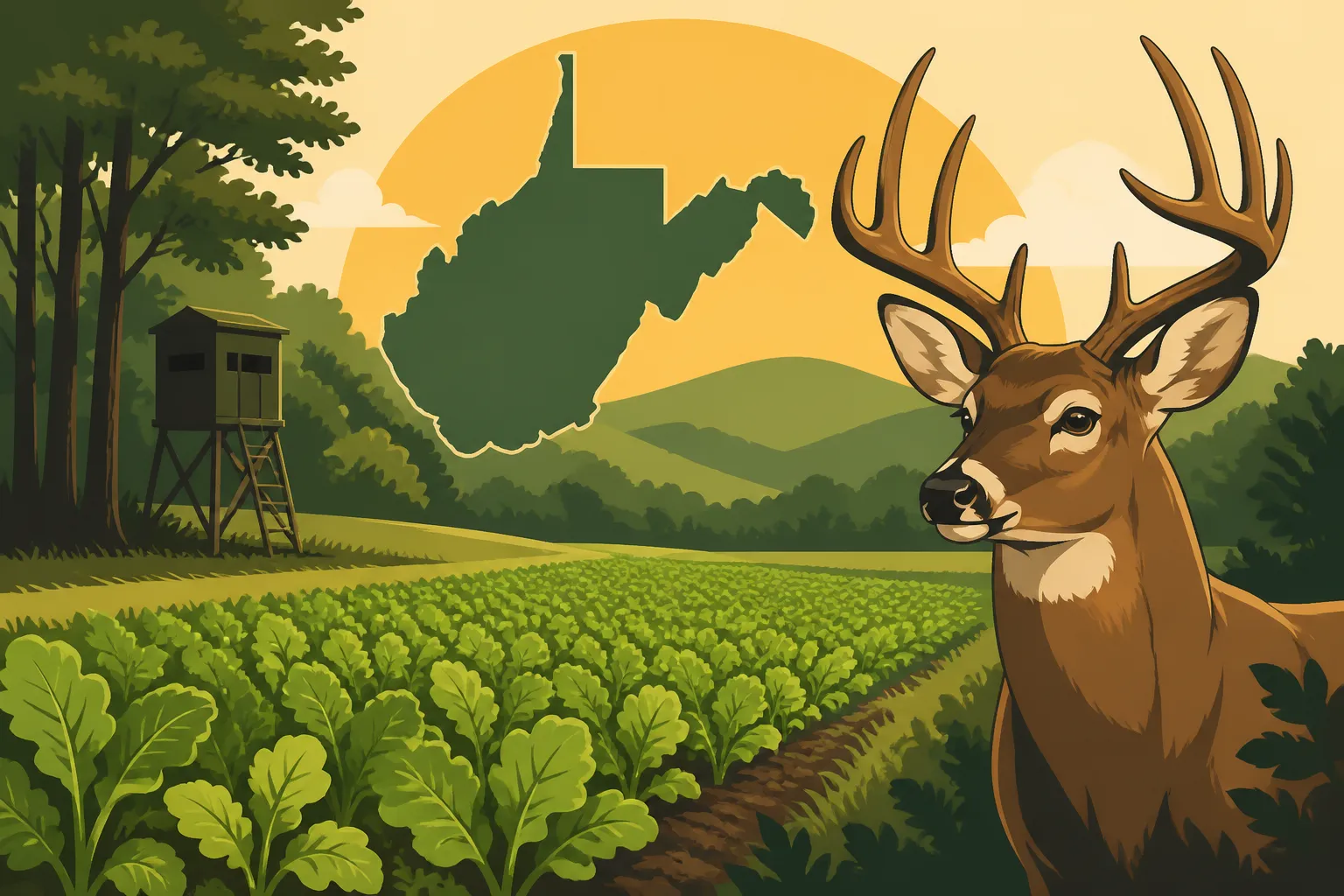
Food Plots on West Virginia Private Land
Anyone who’s tried to keep deer on their property, or even just influence their movement for hunting, knows the struggle. It feels like you’re always chasing them, trying to figure out where they'll be next. This guide is all about changing that dynamic by creating irresistible food plots on your West Virginia private land, turning your property into a deer magnet and making your hunting seasons more predictable and rewarding.
Why Food Plots Can Be a Game Changer on West Virginia Private Land
Food plots aren't just pretty patches of green in the woods; they're a powerful tool for wildlife management, especially for white-tailed deer here in West Virginia. Our mountainous terrain, diverse forests, and scattered farmlands offer a mixed bag of natural forage, but sometimes it's not enough to hold deer on your specific property. That's where a well-planned food plot comes in, and for private landowners, it offers immense control over local deer populations.
Attracting and Retaining Deer on Your Property
The most immediate benefit of a food plot is its ability to attract deer. Think about it: if there's a consistent, high-quality food source available, deer are naturally going to gravitate towards it. This isn't just about drawing them in from the neighboring property; it's about holding them there. When you provide a reliable food source, especially during critical times like the late season when natural browse dwindles or during the rut when bucks are burning calories, deer will spend more time on your land. This dramatically increases your chances of encountering them while hunting. It creates a familiar pattern of movement around your property, making scouting and stand placement much more effective. Imagine knowing that deer are likely to be hitting your clover plot every evening, rather than just hoping they wander by.
Enhancing Deer Health and Antler Growth
Beyond attracting deer for hunting, food plots play a crucial role in the overall health of the herd. West Virginia deer, especially in areas with poorer soils or high deer densities, can benefit significantly from supplemental nutrition. Food plots, particularly those planted with high-protein legumes like clover or alfalfa, provide essential nutrients that might be lacking in the natural environment. This improved diet leads to healthier deer, which means stronger does, healthier fawns, and yes, bigger antlers on bucks. While genetics and age are still primary factors in antler growth, proper nutrition allows bucks to express their full genetic potential. It’s incredibly satisfying to see the difference a few years of dedicated food plot management can make in the quality of the deer on your property. This isn't just about trophies; it's about contributing to a robust, healthy local deer population.
Extending Hunting Opportunities and Season Success
Having food plots can really extend your hunting success throughout the season, from the early archery opener to the late-season hunts in December. During the early season, lush plots of clover or chicory can be absolute magnets, especially when natural mast crops haven't fully dropped yet. As the season progresses and the temperatures drop, cold-tolerant plants like brassicas become vital, providing crucial energy sources when everything else is turning brown. This allows you to have multiple effective hunting strategies depending on the time of year and available forage. For example, during Bowhunting West Virginia's Long Archery Season, a well-placed stand overlooking a diverse plot can be deadly. Later, as you're Hunting the Late-Season December Lull, a standing plot of brassicas or winter rye might be the only reliable food source around, concentrating deer movement directly to your property. This strategic food availability takes some of the guesswork out of hunting and gives you more consistent opportunities.
Choosing the Right Plants for West Virginia's Soil and Seasons
Selecting the correct plants for your food plot is absolutely critical for success in West Virginia. Our state has incredibly varied topography and soil types, from the rich bottomlands of the Ohio River Valley to the rocky, acidic soils of the Allegheny Mountains. What thrives in one area might struggle in another, so understanding your specific conditions is key.
Understanding West Virginia Soil Types and pH Levels
Before you even think about buying a bag of seed, you must know your soil. This means getting a soil test done. You can usually get this done through your local Extension Office, and it’s a small investment that pays huge dividends. The test will tell you your soil's pH level and what nutrients (like nitrogen, phosphorus, and potassium) are present or deficient. West Virginia soils can often be acidic, which means a lower pH, and many desirable food plot plants prefer a more neutral to slightly acidic pH (typically 6.0-7.0). If your pH is too low, you'll need to add agricultural lime to raise it. The soil test will tell you exactly how much. Without correcting the pH, your plants won't be able to properly absorb the nutrients you add, no matter how much fertilizer you spread. It’s like trying to drink water through a clogged straw – it just won't work efficiently. Don't skip this step; it's the foundation of a successful food plot.
Warm Season vs. Cold Season Forage Options
West Virginia's distinct seasons demand a variety of forage options to provide year-round benefit. You'll want to think about what you want your food plot to accomplish and when.
-
Warm Season Forage (Spring/Summer Planting): These plots grow best during the warmer months and often provide early-season attraction or summer nutrition.
- Clover: A perennial favorite, clover is a legume that fixes nitrogen in the soil, improving fertility. It's incredibly attractive to deer, provides high protein, and can last for several years with proper management. Varieties like ladino or durana clover are popular. It thrives in well-drained soils with a good pH.
- Chicory: Often planted with clover, chicory is a deep-rooted perennial that provides excellent drought tolerance and high protein, especially during hot summer months when clover might slow down.
- Soybeans/Cowpeas: These annuals offer fantastic protein and tonnage, but they can get hammered by deer quickly in small plots, especially if you have high deer densities. They are great for providing a massive nutritional boost through the summer and early fall.
- Corn/Grain Sorghum: While not as high in protein, these provide massive amounts of carbohydrates and energy, becoming an irresistible draw in the late season as a standing food source. They require significant acreage to avoid being wiped out too quickly by deer.
-
Cold Season Forage (Late Summer/Fall Planting): These are the workhorses for your hunting season, providing critical food through fall and winter.
- Brassicas (Turnips, Radishes, Rape, Kale): These are absolute deer magnets once a few hard frosts "sweeten" them, making the leaves and tubers more palatable. They provide massive amounts of carbohydrates and are incredibly cold tolerant. They're ideal for Late-Season Food Sources for West Virginia Whitetails.
- Winter Wheat/Rye/Oats: These cereal grains are easy to grow, establish quickly, and provide palatable forage throughout the fall and into winter. Deer will browse them heavily. Winter rye is particularly hardy and continues to grow in colder temperatures.
- Forage Oats: A great choice for early fall hunting, oats grow quickly and are highly attractive. They tend to winterkill in severe cold, but are excellent for attraction until then.
Mixing and matching these, or using specific blends designed for deer, can give you consistent attraction. You might consider looking at resources from seed companies like Tecomate, Antler King, or Whitetail Institute, who have blends tailored for different regional conditions and goals.
Selecting Drought-Tolerant or Shade-Tolerant Varieties
Given West Virginia's varied landscape and unpredictable weather patterns, sometimes you'll face drought conditions, and often you'll be trying to establish plots in areas that don't get full sun all day. This is where choosing the right varieties can save you a lot of heartache.
- Drought Tolerance: In some years, late summer and early fall can be surprisingly dry. Chicory, with its deep taproot, is a fantastic choice for drought resilience. Some clover varieties also show better drought tolerance than others. Grain sorghum is another option that handles drier conditions better than corn. If you're using a mapping tool like
onX Huntto analyze the topography and identify drier, more exposed ridges, you might lean towards these varieties. - Shade Tolerance: Many areas on West Virginia private land might be bordered by mature timber, leading to partial shade. While full sun (6-8 hours daily) is ideal for most food plot plants, some do better with less. White clover is more shade-tolerant than red clover. Chicory also handles partial shade fairly well. Winter rye and oats are also more forgiving in lower light conditions than, say, corn or soybeans. When you're Finding Ground Others Walk Past in the deep woods, these more shade-tolerant options can allow you to create small, effective hidey-hole plots where other plants might fail. Remember, even "shade-tolerant" doesn't mean "no sun." Every plant needs some sunlight to thrive.
Here’s a quick overview of common food plot choices for West Virginia:
| Crop Type | Primary Season | Pros | Cons | Ideal pH |
|---|---|---|---|---|
| Clover (White) | Spring/Summer | Perennial, high protein, nitrogen fixer | Can get outcompeted by weeds, sensitive to overgrazing | 6.0-6.5 |
| Chicory | Spring/Summer | Drought tolerant, high protein, deep taproot | Can bolt and get bitter if not mowed | 6.0-7.0 |
| Brassicas | Fall/Winter | Cold tolerant, high energy, highly attractive | Deer may not touch until first hard frost | 6.0-7.0 |
| Winter Rye | Fall/Winter | Extremely hardy, grows quickly, palatable | Lower protein than legumes, can become stemmy | 5.5-7.0 |
| Oats | Fall | Quick growth, highly attractive, easy to establish | Less cold tolerant than rye, can winterkill | 6.0-7.0 |
| Soybeans | Spring/Summer | Very high protein, excellent tonnage | High deer pressure can wipe out small plots quickly | 6.0-7.0 |
Planning and Preparing Your West Virginia Food Plot
You wouldn't build a house without a blueprint and a solid foundation, and the same goes for a successful food plot. Careful planning and thorough preparation are the unsung heroes of a productive plot on your West Virginia private land.
Site Selection and Layout Considerations
Choosing the right location for your food plot is paramount. It’s not just about finding a patch of open ground; it’s about considering the surrounding habitat and how deer move through it. When you're Reading Aerial Photos for Eastern Panhandle Deer, you'll notice how natural funnels, ridges, and hollows dictate deer movement. Your food plot should ideally be positioned to take advantage of these natural travel corridors.
- Sunlight: Most food plot crops need at least 6-8 hours of direct sunlight per day. Avoid heavily shaded areas, as plants will struggle and become spindly.
- Access: Consider how you'll get equipment (tractor, ATV, sprayer) to the plot. Also, think about your hunting access – can you get to your stand without spooking deer? A long, concealed entry route can be a huge advantage.
- Soil Drainage: Avoid low-lying areas that stay waterlogged, as most food plot plants don't like "wet feet." Well-drained soil is crucial for root development.
- Proximity to Cover: Deer feel safest feeding near good bedding cover. A plot located close to thick timber, dense brush, or even a steep hollow provides security and encourages daytime use. Think about Where Monongahela Forest Bucks Bed and try to position your plot in relation to that.
- Size and Shape: The size of your plot should match the deer density and the amount of work you're willing to put in. Even small plots (1/4 to 1/2 acre) can be highly effective. Long, narrow plots can offer more edge for deer to browse, and also provide more shooting lanes for hunters than a perfectly square plot. Use tools like
onX HuntorGoHuntto mark potential plot locations, measure acreage, and visualize how they connect to bedding and water sources.
Clearing and Initial Ground Preparation
Once you've picked your spot, it's time to get your hands dirty. This is often the most labor-intensive part, but doing it right ensures long-term success.
- Clearing Vegetation: If you're starting with overgrown brush or timber, you'll need to clear it. This might involve cutting trees, using a brush hog, or even renting heavier equipment. For smaller plots, hand tools and a sturdy chainsaw can get the job done. Remove as much debris as possible, as stumps and large rocks can make future tilling difficult.
- Herbicide Application: Once cleared, you'll likely face a flush of weeds. A non-selective herbicide like glyphosate can be incredibly effective at killing off existing vegetation, giving your new plot a clean slate. Allow a week or two after spraying for the herbicide to work before you do any tilling. This step is crucial for minimizing weed competition later on.
- Tilling/Disking: This is where you prepare the seedbed. A tractor with a disc or tiller is ideal for larger plots. For smaller, more remote plots, an ATV-mounted disc or even a robust walk-behind tiller can work. You want to break up the soil, creating a loose, workable seedbed. Aim for a depth of 4-6 inches. Make multiple passes in different directions to ensure a thoroughly worked plot.
Fertilization and Liming Based on Soil Test Results
Remember that soil test? Now it's time to put those results into action. This is not a step to guess at.
- Liming: If your soil pH is low (which is common in much of West Virginia), you'll need to apply agricultural lime. The soil test will specify how many pounds per acre. It's best to apply lime several months before planting, if possible, as it takes time to work into the soil and change the pH. You can spread it with a broadcast spreader, then work it into the soil with your disc or tiller.
- Fertilization: The soil test will also recommend specific amounts of nitrogen (N), phosphorus (P), and potassium (K) that your chosen crop needs. Fertilizers are typically labeled with these N-P-K ratios (e.g., 10-10-10, 5-20-20). Phosphorus and potassium are often worked into the soil before planting, while nitrogen, which is more volatile, might be applied at planting or as a top-dressing later, especially for certain crops like corn or brassicas. Always follow the recommendations from your soil test to avoid over-fertilizing, which can be wasteful and even harmful to your plants. This precise approach ensures your plants get exactly what they need for optimal growth.
Maintaining Your Food Plot for Maximum Success
Planting a food plot isn't a "set it and forget it" operation. To truly maximize its potential on your West Virginia private land, consistent maintenance throughout the growing season and beyond is essential. This ongoing effort ensures your investment pays off with a vibrant, productive plot that keeps deer coming back.
Weed Control Strategies
Weeds are the arch-nemesis of any food plot. They compete with your desired crops for sunlight, water, and nutrients, severely hindering growth and reducing the plot's attractiveness to deer. Effective weed control is a continuous battle.
- Pre-Emergent Herbicides: For some crops, a pre-emergent herbicide can be applied after planting but before the crop emerges. This creates a chemical barrier that prevents weed seeds from germinating. However, be extremely careful to use the correct herbicide for your specific crop, as applying the wrong one can kill your plot.
- Post-Emergent Herbicides: These are applied after your crop and weeds have emerged. Selective post-emergent herbicides are designed to kill certain types of weeds (e.g., broadleaf weeds or grasses) while leaving your crop unharmed. For example, specific grass-killing herbicides can be used in clover or chicory plots without damaging the broadleaf plants. Always read the label carefully and apply according to instructions.
- Mowing/Clipping: For certain perennial plots like clover, occasional mowing can be a great way to control broadleaf weeds, encourage new growth, and prevent the clover from going to seed too early. This revitalizes the plot and makes it more palatable for deer. Be sure to mow at the right height for your specific crop.
- Hand Pulling: For very small plots or isolated weed patches, good old-fashioned hand-pulling can be effective, especially for stubborn perennial weeds that herbicides struggle with. This is a labor of love for dedicated plot managers.
Re-Fertilization and Soil Health Management
Just as your plants grow, they consume nutrients from the soil. To keep your food plot performing at its peak, you'll likely need to re-fertilize at specific points in the growing cycle or for perennial plots, on an annual basis.
- Top-Dressing: Many annual crops, especially those with high nitrogen demands like corn or brassicas, benefit from a "top-dressing" of nitrogen fertilizer a few weeks after emergence. This gives them an extra boost during their rapid growth phase.
- Annual Maintenance for Perennials: For clover or chicory plots, a light application of phosphorus and potassium in the spring can greatly extend their life and productivity. Another soil test every 2-3 years is a good idea to monitor nutrient levels and pH, allowing you to adjust your liming and fertilization strategy as needed.
- Organic Matter: Over time, incorporating organic matter, such as leaving crop residue or even planting cover crops, can improve soil structure and health. Healthy soil is the bedrock of a healthy food plot, and this is especially true in West Virginia's often less-than-ideal native soils.
Crop Rotation for Long-Term Productivity
Monocropping (planting the same crop year after year) can lead to nutrient depletion, increased pest pressure, and a buildup of specific weed seeds. Crop rotation is a sustainable practice that benefits your soil and your food plot's longevity.
- Varying Plant Families: Try to rotate between different types of plants. For example, follow a brassica plot with a cereal grain, and then perhaps a legume like clover. Legumes (clover, soybeans) add nitrogen to the soil, benefiting subsequent crops. Brassicas and grains extract different nutrients, so rotating them helps balance the soil's chemistry.
- Breaking Disease Cycles: Pests and diseases can become specific to certain plants. Rotating crops can help break these cycles, reducing the reliance on pesticides and improving overall plant health.
- Weed Management: Different crops respond to different weed control strategies. By rotating, you can vary your weed management, preventing a single type of weed from becoming dominant. For instance, if you have a lot of grassy weeds after a year of oats, planting clover next allows you to use a grass-specific herbicide without harming the clover, effectively cleaning up your plot for future plantings.
Common Challenges and Solutions for WV Food Plotters
West Virginia's unique environment, with its steep terrain, variable weather, and abundant wildlife, presents its own set of challenges for food plot enthusiasts. But don't despair! Most problems have practical solutions that can keep your plots thriving.
Dealing with Intense Deer Pressure and Overgrazing
This is probably the most common "problem" food plotters face, and it's a good problem to have because it means your plot is working! However, if deer eat your plants down to the dirt before they can establish, it's a real issue.
- Increase Plot Size: On smaller private tracts, especially where you have a high West Virginia Deer Herd Size, a tiny plot might simply not be enough to feed all the deer that visit. Consider expanding the acreage if possible.
- Plant High-Tonnage Crops: If you have heavy pressure, choose crops that produce a lot of forage per square foot, like large-bulb turnips or forage radishes, or even corn/soybeans if you can dedicate enough space.
- Multiple Plots: Instead of one large plot, consider several smaller plots scattered across your property. This can spread out the grazing pressure and also create more hunting opportunities in different areas, perhaps even allowing you to have Hunting a Funnel Between Two Hollows with a plot at each end.
- Temporary Fencing: For small, newly established plots, especially high-value ones, a temporary electric fence can protect young plants until they are established enough to handle grazing pressure. Once the plants have a good root system and some height, you can remove the fence.
- Repellents: Commercial deer repellents can be somewhat effective on very small plots or specific plants, but they require frequent reapplication, especially after rain, and are less practical for larger areas.
Wildlife Damage Beyond Deer (Bears, Hogs, Turkeys)
While deer are your primary target, West Virginia is home to other wildlife that might take a liking to your food plot, creating additional challenges.
- Bears: Black bears are increasing across West Virginia and can be particularly destructive to corn and oat plots. They'll break stalks, flatten crops, and can devastate a plot quickly.
- Solution: Electric fencing is usually the most effective deterrent. A strong, multi-strand electric fence designed for bears can keep them out. Another strategy is to plant corn in larger, more open areas if possible, as bears prefer the cover of dense woods. For some, Hunting Bears Over Natural Mast in the Mountains is preferred, so if you're not planning to harvest a bear on your plot, deterring them might be your only option.
- Feral Hogs: Feral Hogs Across West Virginia are an invasive species and can cause catastrophic damage by rooting up entire plots.
- Solution: Trapping is by far the most effective control method for hogs. Once they discover a food source, they are persistent. Fences (especially electric ones) can help, but trapping is essential for population control.
- Turkeys and Other Birds: Turkeys will readily feed on grains like corn and oats, especially in the early stages, as will other birds.
- Solution: While turkeys can consume some seed, they usually don't cause widespread devastation like bears or hogs. Planting enough acreage to accommodate both deer and turkeys, or focusing on crops less appealing to birds (like brassicas), can help.
Addressing Steep Terrain and Rocky Soil Limitations
West Virginia's beauty often comes with challenges for agriculture: steep slopes and rocky, acidic soils. This can make establishing and maintaining food plots an uphill battle, sometimes literally.
- Small, Strategic Plots: On steep terrain, forget large, sprawling plots. Focus on creating smaller, strategic plots on benches, saddles, or gentler slopes. These "micro-plots" or "hidey-hole plots" can still be incredibly effective for concentrating deer movement. When you're Hanging a Stand on a Steep Allegheny Ridge, a small plot on a bench below you can be a prime ambush spot.
- Terracing/Contour Plowing: For slightly less steep slopes, you might consider basic terracing or contour plowing to reduce erosion. Always plow across the slope, not up and down, to prevent washouts.
- No-Till Planting: If bringing in heavy equipment is impossible due to terrain or rocks, no-till planting methods can be a lifesaver. This involves spraying existing vegetation with herbicide, then broadcasting seed directly onto the ground, sometimes followed by cultipacking to ensure good seed-to-soil contact. You can even create small, hand-prepped plots with rakes and hoes in rocky areas.
- Lime and Fertilizer Transport: Getting lime and fertilizer to remote, steep plots can be a huge logistical challenge. Consider carrying smaller bags on foot or using an ATV with a trailer. For areas with exceptionally rocky soil, frequent smaller applications of lime might be more practical than one massive application. Look into finely ground lime, which acts faster than traditional ag lime.
- Acid-Tolerant Crops: While correcting pH is ideal, some crops are more tolerant of acidic soils. Winter rye and oats are generally more forgiving than clover or brassicas. You might have to compromise on "perfect" pH in some of the most challenging terrain.
Remember, every piece of ground in West Virginia is different. What works for your neighbor might not work exactly the same for you. Be patient, observe, and adjust your strategies based on what you learn from your own private land.
Disclaimer
This article is for general informational purposes only and does not constitute professional advice. Laws, prices and regulations vary by location and change over time. Consult a qualified professional for guidance on your specific situation.