Nicholas County Public Hunting Access
Finding quality public hunting land in West Virginia can often feel like searching for a needle in a haystack, especially when you're looking at a specific county like Nicholas County. The mountainous terrain, mixed land ownership, and varied access points can make planning a hunting trip seem overwhelming before you even step foot in the woods. This guide is here to cut through that confusion, giving you a clear picture of the public hunting opportunities available in Nicholas County and how to make the most of them.
Understanding Nicholas County's Public Hunting Landscape
Nicholas County, nestled in the heart of West Virginia, offers a fantastic array of public hunting opportunities, though they might not always be immediately obvious on a general map. Unlike some counties dominated by vast tracts of national forest, Nicholas County's public access is often a mosaic of state-managed Wildlife Management Areas (WMAs) and sections of larger national forest lands that spill over county lines. This means you’ve got to be a bit more strategic in your scouting, but the reward is often less pressured game and diverse habitats.
When you think about public land here, you're primarily looking at properties managed by the West Virginia Division of Natural Resources (WVDNR) and portions of the Monongahela National Forest. The beauty of these areas is the sheer diversity they offer, from mature hardwood ridges to thick cover and river bottoms. It's a true wild West Virginia experience, complete with steep climbs, deep hollows, and the kind of solitude that serious hunters crave. It’s not always easy hunting, but it's incredibly rewarding.
Key Public Hunting Areas in Nicholas County
While Nicholas County doesn't host an enormous, contiguous block of federal land like some of our eastern counties, it does offer access to some fantastic hunting. The closest and most significant federal presence is the southern reaches of the Monongahela National Forest. This area, particularly its peripheral sections that touch Nicholas County, provides miles of challenging yet rewarding terrain. You'll find everything from dense rhododendron thickets to open timber, perfect for Hunting Steep Allegheny Ridges.
For state-managed lands, you'll want to focus on several key Wildlife Management Areas that either fall entirely within Nicholas County or have significant portions extending into it. These WMAs are explicitly managed for wildlife and public recreation, often featuring diverse habitats and established access points. They are generally well-marked, but don't expect perfectly groomed trails everywhere. These are wild places, and that's part of their charm.
One of the big advantages of hunting WMAs is the focused habitat management. The WVDNR often undertakes projects specifically designed to improve conditions for game animals, such as timber stand improvements, food plots, and creating early successional habitat. This can lead to higher game densities and better hunting success, especially if you take the time to learn the specific management strategies of the WMA you plan to hunt. Don't forget to check the West Virginia WMA Permit Requirement before heading out, as some areas may require specific permits or have sign-in procedures.
Navigating Mixed Ownership Challenges
One of the biggest frustrations for hunters in West Virginia, especially in counties with a mix of public and private land like Nicholas, is understanding property boundaries. It's not uncommon for public lands to be surrounded by, or interspersed with, private holdings. This can create confusion, accidental trespassing, or simply limit access to prime areas if you're not absolutely sure where you stand.
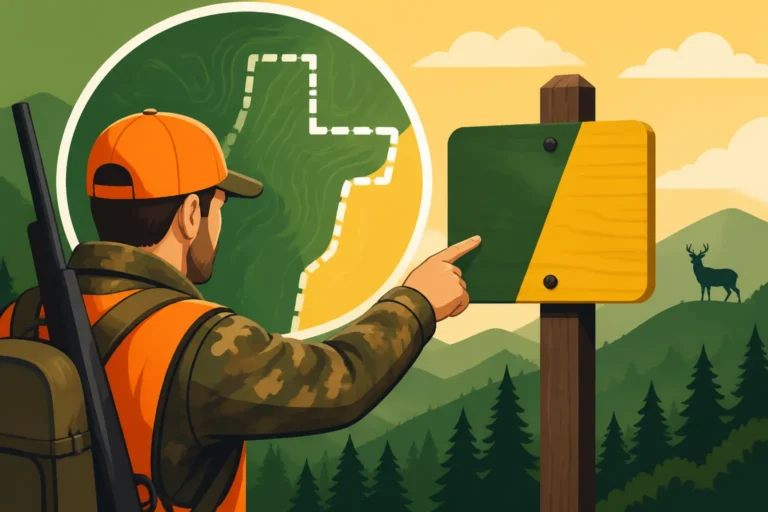
This is where modern mapping tools become absolutely indispensable. Gone are the days of relying solely on paper maps that might be outdated or lack the detail you need in the field. Apps like onX Hunt have revolutionized how we approach public land. With detailed parcel information overlayed on topographical maps and satellite imagery, you can pinpoint exactly where public land begins and private land ends, often right down to the property owner's name. This peace of mind is invaluable, allowing you to focus on the hunt rather than worrying about inadvertently crossing a line. I always tell new hunters to invest in a good mapping app; it's truly a game-changer.
Furthermore, these tools can help you identify public right-of-ways or easements that might provide access through private land to otherwise landlocked public sections. Knowing these details can unlock vast amounts of huntable ground that many other hunters simply overlook because they can't figure out the access. It also helps in Finding Ground Others Walk Past.
| Public Land Type | Typical Game Species | Access Considerations | Special Rules/Notes |
|---|---|---|---|
| Monongahela National Forest | Deer, Bear, Turkey, Grouse | Primitive roads, hiking, steep climbs | Backcountry focus, less developed |
| Wildlife Management Areas | Deer, Turkey, Bear, Small Game | More defined parking, some internal roads, hiking | Specific WMA rules, habitat projects |
| State Forests (if applicable) | Deer, Turkey, Small Game | Similar to WMAs, often timber management focus | May have specific logging activity |
Scouting Nicholas County's Terrain and Habitat
Nicholas County's terrain is classic central West Virginia – rugged, steep, and absolutely beautiful. This isn't flatland hunting, folks. You'll encounter significant elevation changes, dense forest cover, and a network of hollows, ridges, and creek bottoms. Understanding how game animals use this topography is key to successful hunting here. Deer, for instance, often bed on leeward slopes or benches just below the ridge lines, using the thermals and wind to their advantage. Turkeys will roost high on ridges and drop into hollows to feed. Bears will travel drainages and frequent areas with abundant mast crops.
When you're looking at aerial photos or topo maps, pay close attention to saddlebacks, benches, and convergences of drainages. These are natural travel corridors for deer. Look for areas where different habitat types meet, such as old clear-cuts transitioning into mature timber, or where a dense laurel thicket meets an open oak stand. These "edge" habitats are magnets for wildlife. Using mapping software like onX Hunt or GoHunt, you can really dive into these details from the comfort of your home, identifying potential pinch points, bedding areas, and food sources before you ever hit the trail. This kind of pre-season Scouting West Virginia Public Land Before Season is invaluable.
The forest here is predominantly mixed hardwoods, with oaks being a dominant feature, especially on the ridges. Acorn crops play a massive role in deer and bear movements, particularly in the fall. If it's a good mast year, game will be spread out, feeding where the acorns are dropping. In a poor mast year, they'll concentrate around alternative food sources like green briar, grapevines, or agricultural fields on the fringes of public land. Water sources, especially during dry spells, are also crucial and can dictate game movement, so mark those springs and creeks on your map.
Reading the Woods for Nicholas County Deer and Turkey
Deer in Nicholas County, particularly on public land, tend to be more wary due to hunting pressure. They often stick to the thickest cover during daylight hours and move primarily at dawn, dusk, or under the cover of darkness. This means you need to get deep, hunt tight to cover, and pay close attention to wind and thermals. The steep topography can make wind tricky; what feels like a steady breeze on the ridge top might swirl wildly in a hollow. Wind and Thermals on a Steep Ridge are critical considerations here.
For deer, focus on identifying natural funnels and pinch points. A narrow saddle between two steep peaks, a bench running along a hillside, or a creek crossing in a deep hollow can all concentrate deer movement. Look for fresh rubs and scrapes, especially along logging roads or old logging decks, as these indicate active deer travel. During the rut, these areas become even more active.
Turkeys here follow similar patterns. In the spring, gobblers will roost high on the ridges and pitch down into feeding areas, often along bench lines or near openings. Learning to Calling a West Virginia Gobbler Off the Roost requires understanding their morning routine. In the fall, turkeys often congregate in flocks and can be found working ridge tops for mast or scratching in hollows. Breaking up a flock and calling in lonely birds can be an incredibly effective strategy for Breaking Up a Fall Turkey Flock.
Tactics for Successful Nicholas County Hunting
Given the rugged nature of Nicholas County's public land, your hunting tactics need to be adaptable and physically demanding. Still-hunting, where you move slowly and deliberately through the woods, often pausing to glass and listen, can be very effective. This allows you to cover ground while remaining stealthy, letting you encounter game on their terms. For those who prefer a stationary approach, carefully selected treestand or ground blind setups are essential.
When hanging a treestand, look for choke points, benches, or transition lines where deer are likely to travel. Consider your entry and exit routes carefully to minimize disturbance. On public land, especially, it's wise to scout multiple spots and have a few setups ready, allowing you to adapt to changing wind conditions or game patterns. For example, Hanging a Stand on a Steep Allegheny Ridge requires specialized equipment and safety precautions.
Ground blinds can be an excellent option in areas with good natural cover, like a thick rhododendron patch or along a fencerow on a WMA that borders agricultural fields. Just remember to brush them in thoroughly to break up your outline. The key is to blend into the environment and remain undetected.
Gear Up for the Mountains
Hunting in Nicholas County demands durable, reliable gear. Your boots, especially, will be your best friend or worst enemy. Invest in high-quality, waterproof boots with excellent ankle support to navigate the steep, uneven terrain. Layers are crucial for clothing, as temperatures can fluctuate dramatically from early morning to midday, and a steep climb can quickly make you overheat even on a cold day. Boots for West Virginia Hollows and Ridges are not a luxury; they're a necessity.
A good pack is also essential to carry water, snacks, emergency supplies, and any game you might harvest. Think about bone saws or a robust knife, especially if you plan to use the gutless method for field dressing a deer deep in the backcountry. Navigational tools, beyond just your phone, are also smart. A handheld GPS unit, or a downloaded map on your phone with an external battery pack, can save you a lot of trouble when you're miles from the truck and the sun is setting.
Finally, remember that you're in bear country. While specific gear for bear hunting might include bait barrels or hounds (where legal and applicable), simply being prepared for an encounter is important. Carrying bear spray, knowing how to properly store food, and making noise as you walk can all contribute to a safe experience. Bear Hunting Gear in the Highlands is designed for a specific purpose, but general preparedness applies to all hunters in these woods.
Targeting Specific Species
Nicholas County is known for its robust populations of deer, turkey, and black bear. White-tailed deer are the most commonly pursued game animal, and with careful scouting and persistence, trophy bucks can be found, especially in less accessible public land sections. The Deer Density by West Virginia Region can give you an idea of what to expect, but local conditions always matter more.
Wild turkeys thrive in the mixed hardwood forests, offering fantastic spring and fall hunting opportunities. Calling tactics, whether using a box call, slate, or diaphragm, are critical for success. Understanding West Virginia Turkey Population Trends can help gauge expectations, but success often boils down to keen observation and good calling skills.
Black bears are also plentiful, and Nicholas County offers excellent chances to pursue them. Whether you're hunting over natural mast, still-hunting, or participating in a hound hunt, the experience of chasing a West Virginia black bear is truly unique. It’s always important to understand West Virginia Bear Tag Requirements and all the relevant regulations before heading into the woods.
Squirrel and other small game hunting can also be excellent in Nicholas County, offering a great way to introduce new hunters to the sport or to simply enjoy a more relaxed day afield. Focus on oak and hickory stands for squirrels, and dense brushy areas for rabbits. Squirrel Hunting West Virginia Bottomland Hardwoods can be surprisingly productive and a lot of fun.
Disclaimer
This article is for general informational purposes only and does not constitute professional advice. Laws, prices and regulations vary by location and change over time. Consult a qualified professional for guidance on your specific situation.