How Wild Hogs Spread Across West Virginia
It's a sight no one wants to see in their favorite hunting spot: torn-up fields, churned-over forest floors, and tracks you know don't belong to a deer or a bear. Wild hogs, or feral swine, are an increasing concern across West Virginia, and for many, their appearance feels sudden and overwhelming. You might be asking yourself, "How did they get here, and why are they spreading so fast?" This comprehensive guide will pull back the curtain on the complex story of how these destructive invaders have managed to establish and expand their foothold throughout the Mountain State.
The Unseen Migrants: Understanding Feral Swine Origins and Introductions
The presence of wild hogs in West Virginia isn't some ancient, forgotten history; it's a relatively recent, and deeply problematic, phenomenon. Their arrival and subsequent spread are a tangled tale of both accidental occurrences and, unfortunately, deliberate human actions. Understanding where they came from is the first step in grasping their rapid expansion across our landscape.
A History of Escapism and Intentional Releases
Long before the modern boom in wild hog populations, you could find domestic pigs occasionally escaping from farms. These escapees, left to fend for themselves in the wild, would quickly revert to a more primal, wild state over generations. They'd grow tusks, their coats would become thicker and coarser, and their instincts for survival would sharpen. While these early feral domestic hogs were present in limited numbers, they didn't pose the widespread threat we see today. The real game-changer came with the intentional, and often illegal, release of hogs for hunting purposes. Individuals, seeking to establish new hunting opportunities, brought in pigs from other states where populations were already booming, such as Texas or the Carolinas. These actions, often driven by a lack of understanding of the severe ecological consequences, seeded new populations in areas where they had never existed before, creating entirely new breeding groups that would further complicate efforts to contain them.
These initial releases, whether accidental or intentional, set the stage for the complex genetic makeup of West Virginia's feral swine. Over time, escaped domestic pigs bred with one another, and crucially, they also began to interbreed with a far more formidable adversary: the Eurasian wild boar. This genetic cocktail created an animal that possessed the hardiness of its domestic ancestors, combined with the aggressive instincts and incredible survival capabilities of its wild relatives, making it a super-species of sorts, uniquely equipped to thrive in our rugged terrain. The story of how wild hogs have proliferated is truly intertwined with this mixed heritage, making them a formidable challenge for wildlife management.
The Game Changer: Eurasian Wild Boar Influence
The introduction of pure Eurasian wild boar, sometimes referred to as "Russian Boar," dramatically altered the trajectory of feral swine populations. These animals were originally imported into the United States, often onto private hunting preserves, specifically for exotic hunting experiences. They are larger, more aggressive, and possess a genetic predisposition for wild behavior that domestic pigs lack. Naturally, escapes from these preserves were inevitable, and once loose, these powerful animals began to interbreed with the existing feral domestic hog populations.
This crossbreeding was a turning point. The offspring of these unions were far more adaptable, more resilient to harsh conditions, and critically, even more prolific breeders than their purely domestic counterparts. They carried the powerful rooting instincts, sharper senses, and quicker wits of the wild boar, making them incredibly difficult to track, trap, and eradicate. The genetic legacy of these Eurasian wild boar influences is evident in the robust, often dark-colored, and tusked wild hogs you might encounter in West Virginia today. Understanding the impact of this genetic blend is crucial when considering West Virginia Feral Swine Genetics and Origin and the challenges they present to our native ecosystems.
The Paths They Pave: Key Mechanisms of Dispersal
Once established, wild hogs don't just sit still. Their spread is a multi-pronged assault, driven by both their own incredible biological capabilities and, unfortunately, continued human interference. They utilize any advantage they can find, turning natural landscapes and even misguided intentions into pathways for expansion.
The Shadowy Practice of Illegal Translocation
Perhaps the most frustrating and impactful reason for the rapid and widespread appearance of wild hogs in previously untouched areas is illegal translocation. This is where individuals, for various reasons (most commonly to create new hunting opportunities closer to home), intentionally trap and release hogs into new territories. Imagine the frustration for wildlife agencies and ethical hunters: years of careful management and containment efforts can be undone overnight by a single, irresponsible act of moving just a few hogs.
The clandestine nature of these releases makes them incredibly difficult to detect and prevent. It only takes a pregnant sow or a small group to quickly establish a new breeding population, often miles from any existing known hog territories. This practice creates isolated "satellite" populations that then become new epicenters for further spread. It’s a significant headache for conservationists who are battling these animals on multiple fronts, trying to educate the public about the severe risks, and enforcing laws against such damaging actions. When we talk about how quickly these animals pop up in unexpected places, illegal translocation is almost always a prime suspect.
Natural Migration Through Prime Habitat Corridors
Beyond human interference, feral hogs are simply excellent at getting around on their own. They are highly mobile animals, and particularly, boars can travel significant distances in search of food, water, and new breeding grounds. West Virginia's landscape, with its vast tracts of unbroken forest and intricate network of river systems, provides perfect natural highways for their dispersal. They use these corridors as safe travel routes, moving stealthily under the cover of dense vegetation.
River systems, like the Ohio, Kanawha, and New River, are especially critical avenues for hog expansion. These riparian zones offer consistent access to water, a diverse array of food sources, and often thick, impenetrable cover along their banks. Hogs are also surprisingly good swimmers, making rivers less of a barrier and more of a superhighway for movement. They can gradually infiltrate new areas by following these waterways, eventually branching out into adjacent agricultural fields and woodlands. Hunters looking to find where these animals might be pushing into new areas often use mapping tools like GoHunt to identify these prime river corridors and assess potential travel routes or feeding grounds, effectively using technology to understand the terrain that facilitates their spread.
Where They've Taken Hold: Tracking the Spread Across West Virginia
The story of feral hog spread in West Virginia isn't uniform; it's a dynamic process that began in certain regions and has gradually, but relentlessly, pushed outwards. From initial strongholds, they've used every available resource and pathway to extend their range, creating new challenges for landowners and wildlife managers alike.
From Southern Strongholds to Widespread Presence
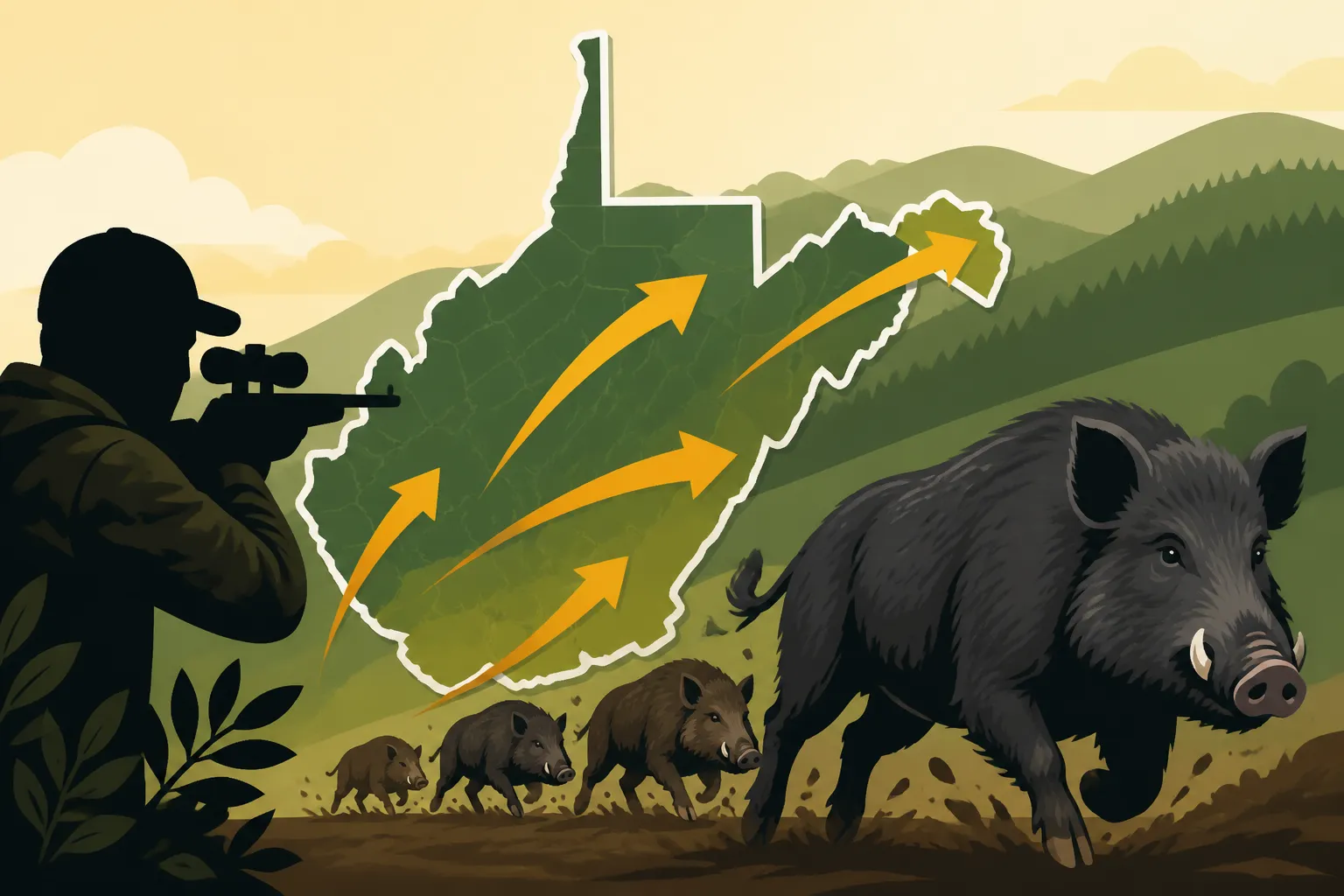
The initial establishment of significant feral hog populations in West Virginia largely occurred in the southern counties, particularly in the coalfield regions. Counties like Mingo, Logan, Boone, Wyoming, and McDowell have long been identified as primary areas for hog activity. This foothold was likely a combination of natural migration from neighboring states like Kentucky and Virginia, which already had established populations, and those early, intentional releases we discussed. These rugged, often remote, landscapes provided ideal conditions for hogs to multiply largely unmolested, offering dense cover and varied food sources.
Over time, these southern strongholds became launchpads for further expansion. As populations grew, hogs naturally dispersed, pushing outwards from these core areas. It’s a classic ecological phenomenon: when a population reaches carrying capacity in one area, individuals will venture further afield to find new resources. This outward pressure, combined with their incredible adaptability, allowed them to gradually colonize adjacent counties, creating a domino effect across the southern third of the state. Knowing Which West Virginia Counties Have the Most Hogs is crucial for understanding the historical context of their spread.
Agricultural Lands and River Bottoms: New Frontiers
As feral hogs expanded from their southern strongholds, they quickly discovered the rich resources available in West Virginia's agricultural lands and river bottoms. These areas represent prime real estate for a species that is constantly seeking abundant food and water. The fertile soils of the Ohio River Valley bottomland, for instance, with their vast corn and soybean fields, are a veritable buffet for these omnivores. Hogs will root up newly planted crops, feast on mature grains, and use the dense cover along riverbanks to hide during the day and forage at night.
The river systems themselves, as we've noted, act as critical arteries for their movement. Hogs can travel for miles along these riparian corridors, slowly but surely infiltrating new watersheds and ecosystems. More recently, reports and sightings have confirmed their presence in areas further north and east, away from their traditional southern ranges. This includes scattered sightings even toward the Eastern Panhandle, indicating that the problem is no longer confined to specific regions but is becoming a state-wide concern. This creeping expansion highlights their relentless nature and the pervasive threat they pose to diverse landscapes across West Virginia. If you're hunting in the Ohio River Valley Bottomland, keep an eye out for tell-tale rooting sign.
Built to Expand: Biological Traits Fueling Their Success
The sheer tenacity and reproductive prowess of feral hogs are nothing short of astounding. They possess a suite of biological characteristics that make them incredibly effective at colonizing new areas and rapidly escalating their populations, creating an uphill battle for anyone trying to control their numbers.
The Reproductive Powerhouse: Breeding Beyond Belief
The single most significant factor contributing to the rapid spread and population explosion of feral hogs is their astonishing reproductive rate. These aren't like deer, which typically have one or two fawns once a year. Feral sows can start breeding as young as six months old, and they can produce multiple litters per year – often two, sometimes even three, depending on conditions. Each litter can range from four to twelve piglets, with an average of five to six.
Do the math on that: one sow and her offspring can theoretically lead to dozens of new hogs in a single year. Their gestation period is relatively short, around 114 days, which is roughly three months, allowing for that quick turnaround between litters. This biological advantage means that even if a significant number of hogs are removed through hunting or trapping, the population can quickly rebound and even exceed previous levels if control efforts aren't sustained and aggressive. It's a true uphill battle, making Hunting West Virginia's Year-Round Feral Hogs a necessary, ongoing effort rather than a seasonal pursuit.
Unmatched Adaptability and Intelligence
Beyond their reproductive might, feral hogs are incredibly adaptable and possess a surprising level of intelligence. They are true survivors, capable of thriving in nearly any habitat West Virginia throws at them – from the dense, rugged forests of the Allegheny Highlands to the more open farmlands and bottomlands of the Ohio River Valley. Their omnivorous diet is a major component of this adaptability; they're not picky eaters. They'll root for acorns, tubers, and roots; feast on insects, worms, and carrion; and absolutely decimate agricultural crops like corn, soybeans, and even hayfields. This dietary flexibility means they can sustain themselves even when preferred food sources are scarce.
Their intelligence is also a double-edged sword for control efforts. Hogs quickly learn to associate human presence, traps, and hunting pressure with danger. When pressured, they'll become largely nocturnal, moving under the cloak of darkness to feed and travel. They'll learn to avoid specific trap designs after a few individuals are caught, making trapping efforts increasingly complex and requiring constant innovation. This combination of cunning, intelligence, and adaptability allows them to persist and expand their territories even in the face of concerted efforts to manage their numbers.
The Far-Reaching Consequences of Their Growing Footprint
The relentless spread of wild hogs across West Virginia isn't just an interesting biological phenomenon; it's an escalating crisis with profound ecological, agricultural, and even public health implications. Their presence leaves a path of destruction that affects virtually every aspect of the natural and human-modified landscape.
Devastating Ecological and Economic Impacts
The most visible and immediate consequence of feral hog activity is the extensive damage they inflict on the environment. Their constant rooting behavior, driven by their search for food, literally turns over soil, destroying native vegetation, impacting forest regeneration by eating tree seedlings, and causing significant soil erosion, especially on sloped terrain or near waterways. This rooting can transform pristine forest floors into muddy, barren landscapes, harming delicate ecosystems and the species that depend on them. Furthermore, feral hogs are opportunistic predators. They will raid the nests of ground-nesting birds, like wild turkeys and ruffed grouse, consuming eggs and even young poults. They've also been known to prey on fawns, salamanders, and other small wildlife, adding another layer of pressure to native populations.
From an economic standpoint, the damage to agriculture is catastrophic. Farmers across the state face significant losses due to hogs rooting up and consuming valuable crops such as corn, soybeans, and even hay. They also destroy pastures, contaminate water sources, and damage fences, leading to costly repairs and reduced yields. The financial burden on individual landowners can be immense, and it’s a problem that shows no signs of slowing down. For a deeper dive into the specific issues, Crop Damage Hogs Cause in West Virginia is a stark reminder of the financial toll these animals exact.
A Looming Threat: Disease Vectors and Public Health Concerns
Beyond the immediate physical damage, feral hogs pose a serious, often unseen, threat as carriers and vectors for numerous diseases. These animals can harbor and transmit pathogens that affect not only livestock and native wildlife but also humans. Diseases like Brucellosis (which can cause reproductive issues in cattle and flu-like symptoms in humans), Pseudorabies (fatal to dogs and pigs, but not humans, though it can impact other mammals), Leptospirosis, and even certain strains of E. coli are commonly found in feral swine populations. They can also carry classical swine fever (hog cholera), a highly contagious and often fatal disease for domestic pigs.
The risk of disease transmission is significant, especially in areas where hogs interact with domestic livestock or where hunters handle carcasses. Hunters need to be extremely cautious, always wearing gloves and practicing good hygiene when field dressing. The potential for these diseases to jump from wild hogs to domestic herds or even to humans is a constant concern for agricultural agencies and public health officials. This invisible threat adds another layer of complexity to the challenges posed by the unchecked spread of feral swine across West Virginia.
| Factor | Description | Impact on Spread |
|---|---|---|
| Illegal Translocation | Deliberate movement and release by humans. | Rapid establishment in new, distant areas, creating isolated populations. |
| Natural Migration | Hogs walking/swimming to new territories. | Gradual expansion along river systems and extensive habitat corridors. |
| High Reproductive Rate | Multiple litters/year, large litter sizes, early maturity. | Exponential population growth, quickly filling and overflowing new areas. |
| Habitat Adaptability | Thrive in diverse environments from mountains to farmlands. | Ability to establish in varied West Virginia landscapes with ease. |
| Dietary Flexibility | Omnivorous; eats crops, roots, insects, carrion. | Sustained populations even when preferred foods are scarce, reducing die-offs. |
| Eurasian Wild Boar Genetics | Hybridization with aggressive, prolific stock. | Enhanced resilience, larger size, increased reproductive output, and wilder instincts. |
The spread of wild hogs in West Virginia is a multifaceted challenge, driven by a combination of their incredible biological advantages and, unfortunately, human actions. Understanding these dynamics is the first step in facing this growing problem. While the task is daunting, awareness and adherence to West Virginia Feral Hog Regulations are crucial. Hunters, landowners, and wildlife agencies must work together, employing every tool available, from Trapping West Virginia Feral Hogs to Night Hunting Hogs With Lights on Private Land, to manage these destructive animals and protect West Virginia's native wildlife and agricultural resources.
Disclaimer
Please note that hunting regulations, seasons, and licensing requirements can change. Always consult the latest West Virginia Division of Natural Resources (WVDNR) official publications or website before planning any hunting activity. This content is for informational purposes only and should not be considered legal advice.