West Virginia Turkey Harvest Numbers
It's a familiar feeling, isn't it? You spend hours scouting, patterning your shotgun, and practicing your calls, all while wondering if there are even enough turkeys out there to make the effort worthwhile. Hunters often feel disconnected from the larger picture of game populations, and understanding annual harvest numbers can feel like staring at a complex spreadsheet. This guide is here to demystify West Virginia's wild turkey harvest data, showing you exactly where to find this crucial information, what it means for the health of our beloved birds, and how you can use it to better plan your next hunt in the Mountain State.
Understanding West Virginia's Turkey Harvest Data
For many of us who cherish chasing gobblers and trying to fill a fall tag, the annual turkey harvest numbers released by the West Virginia Division of Natural Resources (WVDNR) can feel like a report card on the health of our wild turkey populations. But what exactly do these numbers represent, where do they come from, and why are they so important? It's not just about bragging rights; it's about the bigger ecological picture.
What Harvest Numbers Really Tell Us
When we talk about West Virginia turkey harvest numbers, we're referring to the total count of wild turkeys successfully taken by hunters during the designated spring and fall seasons. These numbers are a crucial barometer for wildlife biologists because they reflect several interconnected factors. First, they give us an indication of the overall turkey population health and density in a given area. If harvest numbers are consistently high, it suggests a robust and thriving population. Conversely, a sustained decline can signal potential issues, whether it's habitat loss, disease, or poor reproductive success.
Beyond just population size, harvest data helps biologists understand hunter effort and success rates. For example, if hunter numbers increase but harvest numbers remain stagnant or drop, it might indicate that birds are harder to find or that pressure is increasing. It’s a complex puzzle, but each piece of data helps complete the picture. This is especially true when analyzing trends over several years, allowing us to see the long-term health of our wild turkey flocks.
The Source of This Data: Mandatory Checking
In West Virginia, every hunter who successfully harvests a wild turkey is required by law to check their bird within 24 hours. This mandatory checking system is the backbone of the WVDNR's data collection efforts. Hunters can check their game either online through the Go Wild West Virginia portal, via a toll-free telephone number, or in person at an official checking station. The process captures vital information: the date of harvest, the county where the bird was taken, and whether it was a male (gobbler) or female (hen), and if it was a jake or adult gobbler.
This seemingly simple act by each hunter contributes directly to the comprehensive dataset that informs wildlife management decisions. Without this vital input, biologists would be left guessing about population dynamics. So, next time you're celebrating a successful hunt, remember that checking your bird isn't just a regulatory hoop; it's a direct contribution to the conservation and informed management of West Virginia's wild turkey resource. For more on the specifics, check out our guide on West Virginia Turkey Checking Requirements.
Historical Trends in West Virginia Turkey Harvest
Looking at West Virginia's turkey harvest numbers isn't just about what happened last year; it's about understanding a journey of restoration, challenges, and adaptation. Our wild turkey populations have seen incredible highs and concerning lows, and tracing these trends offers invaluable insights for hunters and conservationists alike.
The Remarkable Story of Turkey Restoration
It's easy to forget that wild turkeys weren't always as abundant in West Virginia as they are today. In the early 20th century, due to rampant logging and unregulated hunting, wild turkey populations across much of the state, and indeed the country, were decimated. Many areas, especially in the central and western parts of West Virginia, were completely devoid of turkeys. The story of their comeback is truly one of the greatest conservation successes in North America.
Beginning in the mid-20th century, the WVDNR, working with partners like the National Wild Turkey Federation, embarked on an ambitious trap-and-transfer program. Wild turkeys from areas where populations were stable, primarily in the eastern counties, were trapped and relocated to suitable habitats where they had been extirpated. This, coupled with strict hunting regulations and improved forest management practices that allowed habitat to recover, led to a slow but steady resurgence. By the late 1980s and early 1990s, turkeys had re-established themselves in virtually all suitable habitats across the state. This amazing recovery is reflected directly in the harvest numbers, which climbed steadily as populations expanded into new territories. You can read more about this fascinating journey in our piece on How Turkeys Were Restored to West Virginia.
Recent Fluctuations and Influencing Factors
While the overall trend for West Virginia's wild turkeys has been one of success, the harvest numbers in recent decades haven't always been a straight line upwards. We've seen periods of stable harvests, followed by slight dips, and then recoveries. For example, in the last five to ten years, spring turkey harvests have generally been strong, often exceeding 12,000 birds annually, with some years pushing close to 15,000. Fall harvests, while typically lower due to different hunting styles and fewer hunters, usually hover between 2,000 and 4,000 birds.
However, these numbers aren't static. Annual fluctuations are often tied to factors like nesting success and poult survival from the previous spring. A cold, wet spring can significantly impact the number of young turkeys that survive to hunting age, leading to lower harvests a year or two later. Similarly, acorn crops and other mast production can affect turkey distribution and condition, influencing hunter success. We'll delve deeper into these influencing factors shortly, but it's crucial to understand that nature's cycles play a huge role in the numbers we see each year.
Spring Versus Fall Turkey Harvest Dynamics
West Virginia offers both a robust spring gobbler season and a more nuanced fall season, and the harvest dynamics between the two are distinctly different. Understanding these differences is key to appreciating the overall health and management of the state's wild turkey population.
The Thrill of the Spring Gobbler Season
The spring season is, without a doubt, the most popular and iconic turkey hunting period in West Virginia. It's when gobblers are vocal, strutting, and actively seeking hens, making them susceptible to calling tactics. The regulations are specifically designed to protect breeding hens, allowing only the harvest of bearded turkeys (which are overwhelmingly gobblers, though a small percentage of hens can also have beards). This focus on adult males ensures the reproductive capacity of the flock remains intact.
As a result, spring harvest numbers are consistently much higher than fall numbers. Hunters are typically more dedicated, the weather is often more pleasant (though April and May in West Virginia can still be unpredictable!), and the birds' behavior makes them more responsive to traditional hunting methods. The average spring harvest in West Virginia typically sees well over 10,000 birds checked, making it a significant contributor to the state's overall annual turkey take. The thrill of hearing a gobble echo through a hollow on a crisp April morning keeps hunters coming back year after year. For those planning their spring adventure, knowing When West Virginia's Spring Turkey Opening Day is crucial.
Navigating the West Virginia Fall Turkey Splits
The fall turkey season in West Virginia is a different beast entirely. It's less about calling in a lust-crazed gobbler and more about woodsmanship, finding flocks, and breaking them up to call a scattered bird back. The state's fall season is also unique in its structure, often referred to as "fall turkey splits," with varying season lengths across different counties. Some counties might only have a one-week season, while others enjoy longer, multi-week seasons. This tiered system is a direct reflection of local turkey population densities and harvest objectives. You can explore these regulations in detail by understanding West Virginia Fall Turkey County Tiers.
Fall harvest numbers are significantly lower than spring harvests, often only a quarter to a third of the spring total. This isn't necessarily a sign of a struggling population, but rather a reflection of several factors:
- Fewer Hunters: Many turkey hunters prefer the spring's vocal action and milder weather.
- Different Tactics: Fall hunting requires more extensive scouting and a different skillset, often involving covering more ground.
- Harvest Opportunity: While hens are legal in fall, hunters are often more selective, or simply find fewer birds overall.
- Variable Season Lengths: The shorter seasons in many counties naturally limit the overall harvest.
It’s an entirely different challenge, but one that offers its own unique rewards for those who pursue it.
Factors Influencing Annual Turkey Harvests
You might look at the WVDNR's annual harvest reports and see numbers fluctuate, sometimes significantly, from one year to the next. It's natural to wonder why. It's rarely one single thing; instead, it's a complex interplay of environmental conditions, biological realities, and even human behavior.
The Role of Mother Nature: Weather and Mast Crops
Mother Nature is arguably the biggest influence on annual turkey harvest numbers. Two key natural factors stand out:
- Spring Weather during Nesting: A cold, wet spring during the critical nesting and brooding period can be devastating for poult (young turkey) survival. Hens struggle to keep eggs warm and dry, and newly hatched poults are highly susceptible to hypothermia and disease in adverse conditions. A poor hatch means fewer young birds surviving to the fall, and even fewer making it to the next spring as jakes or yearlings. This directly impacts harvest potential for the next 1-2 seasons.
- Mast Crop Production: West Virginia is a heavily forested state, and acorn production (mast) is a critical food source for wild turkeys, especially in the fall and winter. In years with a bumper mast crop, turkeys tend to be more spread out, as food is abundant everywhere. This can make them harder for hunters to locate, potentially leading to lower fall harvest numbers, even if the population is healthy. Conversely, a poor mast year concentrates turkeys around remaining food sources, making them more predictable and potentially increasing hunter success.
These environmental variables are outside of human control, but biologists monitor them closely to anticipate potential impacts on turkey populations and adjust management strategies where possible. When hunting after a poor acorn year, for instance, hunters know to focus on alternative food sources.
Population Dynamics: Nesting Success and Poult Survival
Beyond just the weather, the intrinsic biology of the turkey population itself plays a huge role. West Virginia Wild Turkey Nesting Success is a metric closely watched by biologists. It refers to the percentage of nests that successfully hatch at least one poult. But simply hatching isn't enough; the survival of those young poults is paramount. The Poult-to-Hen Ratios and What They Mean provide another critical insight. This ratio helps estimate how many young birds are being recruited into the population each year.
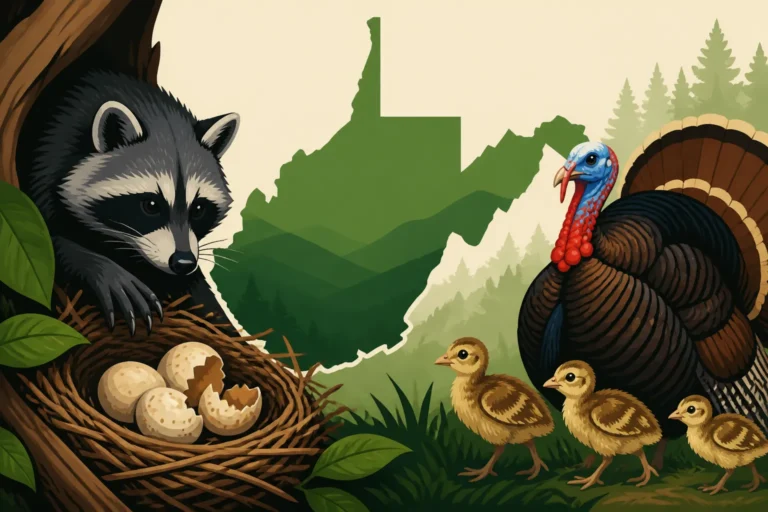
Factors like predation (from coyotes, raccoons, opossums, and even black bears), disease, and habitat quality all influence poult survival. If an area has a high poult-to-hen ratio one year, it often translates to a strong cohort of jakes the following spring and adult gobblers the year after. If this ratio consistently declines, it's a red flag for the WVDNR, signaling potential issues with recruitment that could lead to fewer turkeys overall and, subsequently, lower harvest numbers.
Hunting Pressure and Hunter Success
Finally, human factors contribute to the annual harvest picture. The number of hunters in the woods and their individual success rates are obviously direct drivers of the harvest.
- Hunter Numbers: While West Virginia sees a dedicated core of turkey hunters, the total number can fluctuate based on economic conditions, interest levels, and even turkey population buzz. More hunters generally mean more effort, which can translate to higher harvest numbers if birds are available.
- Hunter Skill and Effort: Let's be honest, some days the turkeys are just quiet, or the weather is terrible. But hunter skill, persistence, and knowledge of tactics also play a role. Those who adapt to conditions, understand Run-and-Gun Turkey Tactics on Public Land, or patiently Roost Hunting West Virginia Gobblers often have higher success rates.
- Regulation Changes: Occasionally, the WVDNR might adjust season lengths, bag limits, or open/close specific areas based on population data. Such changes directly impact the potential harvest. For instance, in areas where populations are struggling, a shortened season could be implemented to reduce pressure and allow for recovery.
Regional Differences in West Virginia Turkey Harvests
West Virginia is a diverse state, geographically and ecologically. What works for turkeys in the Eastern Panhandle might be entirely different from the conditions they face in the Southern Coalfields or the Allegheny Highlands. Consequently, turkey harvest numbers often show significant regional variations, reflecting these distinct environments and population densities.
Eastern Panhandle and Potomac Highlands Success
The Eastern Panhandle and adjacent Potomac Highlands region often boasts some of the highest turkey harvest numbers in the state. Counties like Hampshire, Hardy, Mineral, and Grant consistently report strong spring gobbler takes. There are a few key reasons for this success:
- Prime Habitat: This region features a mix of mature hardwood forests, agricultural lands, and excellent mast production, providing ideal turkey habitat. The varied terrain offers plenty of roosting sites, feeding areas, and cover.
- Established Populations: Turkeys were never completely extirpated from parts of the Eastern Panhandle, and restoration efforts here led to robust, well-established populations relatively early.
- Accessibility: While still rugged in places, parts of this region are more accessible, attracting a good number of hunters who find consistent success. The availability of both public and private land, including areas like the Potomac Wildlife Management Area, contributes to hunter opportunity.
However, even in these strong areas, factors like hunting pressure and CWD can influence local turkey health, as seen in deer populations. The WVDNR monitors this closely to ensure the long-term viability of these premier turkey hunting destinations.
Allegheny Highlands and Mountain Challenges
Moving into the high elevations of the Allegheny Highlands, counties like Pocahontas, Randolph, Pendleton, and Tucker still provide excellent turkey hunting, but the harvest numbers per square mile might be a bit lower than the Eastern Panhandle, reflecting the unique challenges of the mountain environment.
- Vast Public Land: This region is home to vast tracts of public land, including the Monongahela National Forest, offering incredible opportunity but also requiring hunters to cover more ground.
- Rugged Terrain: The steep ridges, deep hollows, and high elevations can make turkey hunting physically demanding. While birds are present, they can be harder to access and pattern. Hunters often employ tactics like Hunting Steep Allegheny Ridges to find birds in this challenging landscape.
- Habitat Diversity: While primarily forested, the Allegheny Highlands offer diverse habitats, from spruce forests to oak-hickory stands, which influence turkey distribution. Mast crops can be less consistent at higher elevations, impacting local populations.
Despite these challenges, the sense of solitude and the beauty of calling in a mountain gobbler make this region a favorite for many. Harvests here remain respectable, contributing significantly to the statewide total.
Southern Coalfields and Recovering Populations
The Southern Coalfields region, encompassing counties like Logan, Mingo, McDowell, and Wyoming, traditionally had lower turkey populations due to extensive logging and mining operations that dramatically altered the landscape in previous centuries. While recovery efforts have been successful, some of these areas are still developing their turkey populations compared to other parts of the state.
- Habitat Recovery: Many areas here are undergoing significant habitat recovery as old mining lands are reclaimed and forests regrow. This slow process dictates the rate at which turkey populations can expand.
- Archery-Only Counties: Interestingly, four counties in this region – Logan, McDowell, Mingo, and Wyoming – are Why Four Southern Counties Skip Gun Season for deer, being archery-only. This doesn't apply to turkey hunting, but it highlights a historical management approach for game in these areas.
- Lower Hunter Density: Fewer hunters might focus exclusively on turkeys in some of these counties compared to the traditional hotspots, potentially influencing harvest numbers.
However, ongoing habitat improvements and continued WVDNR management efforts are steadily improving the turkey hunting prospects in the Southern Coalfields, and dedicated hunters are finding increasing success.
Interpreting Harvest Data for Your Hunt Planning
Okay, so you've learned about the history, the regional differences, and the factors influencing West Virginia's turkey harvest numbers. That's a lot of information! But how can a regular hunter like you actually use this data to become more successful in the field? It’s not just for biologists; it’s a powerful tool for strategic hunt planning.
Identifying Hotspots and Trends
One of the most practical ways to use harvest data is to identify historical and current hotspots. The WVDNR often releases county-by-county breakdowns of spring and fall harvests. By reviewing these, you can quickly see which counties consistently produce the most birds. While a high harvest number doesn't guarantee you'll find a turkey, it's a strong indicator of a healthy, dense population.
- Long-Term Consistency: Look for counties that show consistently high numbers over multiple years, not just one exceptional season. This indicates a stable population, less prone to drastic year-to-year swings.
- Recent Upswings: Pay attention to counties that might be showing an upward trend in harvest. This could signal improving habitat, successful restoration efforts, or simply a couple of good hatch years that are now translating to more birds for hunters.
- Regional Focus: If you plan on Hunting Potomac Highlands Public Land, for example, zoom in on the specific harvest numbers for those counties (e.g., Pendleton, Grant, Hardy) rather than looking at the state average. This granular approach will give you a more accurate picture of what to expect.
However, remember that high harvest numbers can also mean higher hunting pressure, especially on public lands during opening weekend. Tools like GoHunt can help you overlay public land maps with harvest data, allowing you to scout specific areas within productive counties.
Adjusting Tactics Based on Data Insights
Beyond just choosing a county, harvest data can inform your tactical approach, especially when combined with other observations.
- Impact of Poor Nesting Years: If the WVDNR reports a particularly poor nesting success or poult-to-hen ratio from the previous spring, you might anticipate fewer jakes the following spring and potentially a slightly lower overall population. This might mean adjusting your expectations, being more patient, or focusing on areas known for older, more mature gobblers. You might also reconsider Making the Most of a Two-Bird Spring Limit if populations are down locally.
- Mast Crop Considerations: If you know it was a bumper acorn crop year, especially for the fall season, turkeys will be more dispersed. This means you might need to cover more ground, employ more aggressive Deer Drives on West Virginia Public Land (if applicable and legal for turkey in your chosen location), or rely more heavily on locator calls to find birds that aren't concentrated in obvious food plots. Conversely, a poor mast year should drive you to focus intensely on remaining food sources like agricultural fields, persistent soft mast, or planted green fields.
- Fall vs. Spring Effort: If you see consistently low fall harvest numbers in a particular area, it might signal that birds are either very difficult to locate in the fall, or simply that hunter effort is low. This could present a unique opportunity for a dedicated fall hunter who is willing to put in the work to find unpressured birds.
By becoming a student of the harvest data, you move beyond simply hoping for the best and start making informed decisions that can significantly improve your chances of success and your understanding of West Virginia's magnificent wild turkeys.
| Year | Spring Gobbler Harvest | Fall Turkey Harvest | Total Annual Harvest |
|---|---|---|---|
| 2023 | 14,520 | 3,890 | 18,410 |
| 2022 | 13,985 | 3,675 | 17,660 |
| 2021 | 12,870 | 3,210 | 16,080 |
| 2020 | 11,550 | 3,025 | 14,575 |
| 2019 | 10,990 | 2,880 | 13,870 |
| 2018 | 10,545 | 2,750 | 13,295 |
Note: These numbers are illustrative based on typical West Virginia harvest trends and do not represent actual historical WVDNR data for the specific years listed.
Disclaimer
The information provided in this guide is for general informational purposes only and does not constitute legal advice or replace official West Virginia hunting regulations. Always consult the current West Virginia Division of Natural Resources (WVDNR) hunting regulations pamphlet or their official website before participating in any hunting activity. Seasons, bag limits, and rules can change annually. Hunters are responsible for knowing and adhering to all applicable laws and regulations.