West Virginia Grouse Habitat Loss Causes
If you've spent any time chasing those explosive flushes in West Virginia, you've probably noticed it: the drumming seems a little quieter, the flushes fewer and farther between. It's a frustrating reality for many of us who cherish the ruffed grouse, and often, the reason boils down to one critical factor – habitat. This guide is dedicated to unpacking the complex causes behind West Virginia's grouse habitat loss, helping us understand what's happening to these magnificent birds' homes.
The Shifting Landscape: Understanding Grouse Habitat Needs
When we talk about ruffed grouse, we're not just talking about any old woods. These birds are incredibly specific about where they live, and unfortunately, the type of forest they thrive in is becoming rarer across West Virginia. It’s a change that sneaks up on you, one mature tree at a time, until suddenly, those once-reliable coverts are quiet.
The Ideal Ruffed Grouse Home
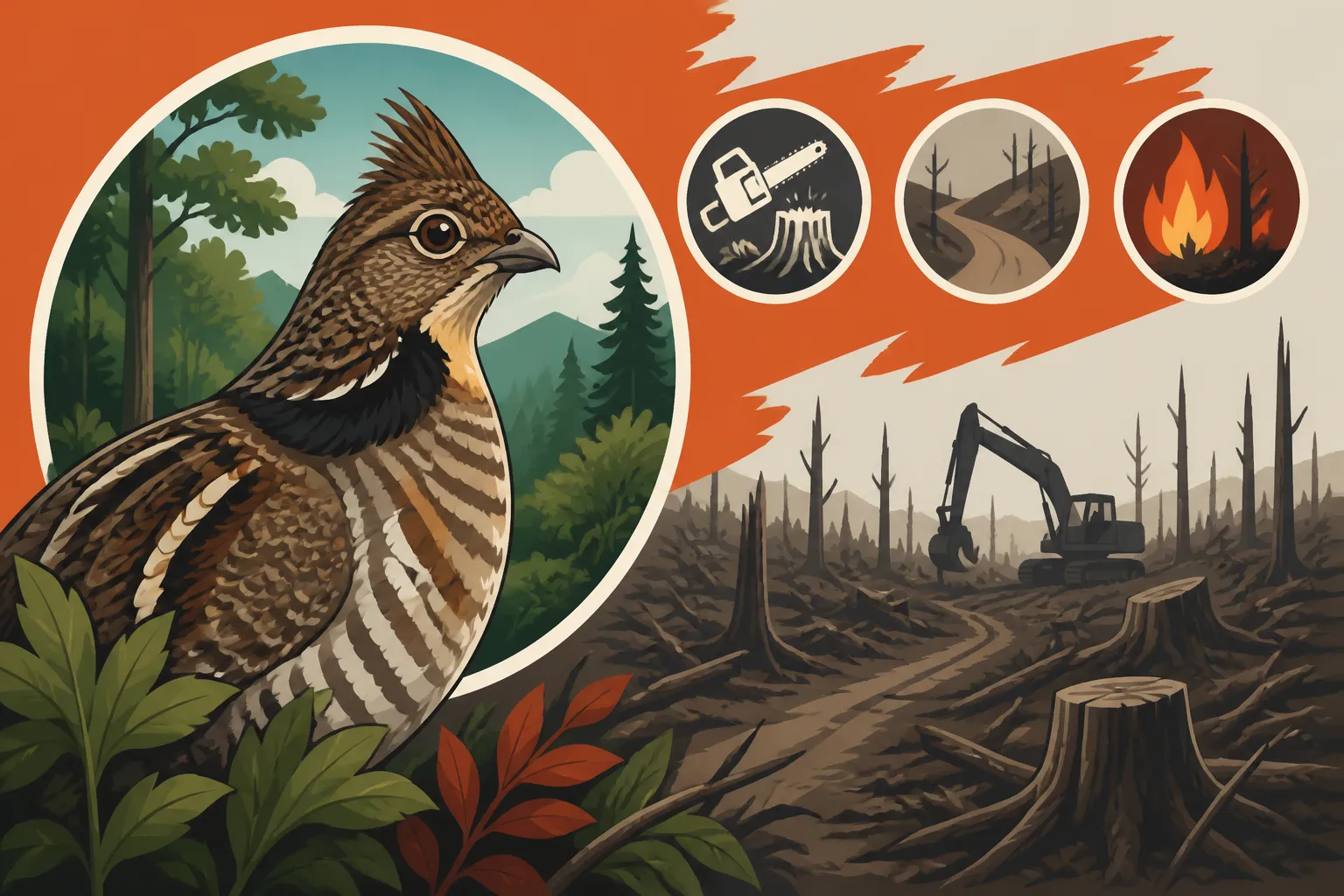
Imagine a dense, tangled mess of young trees, shrubs, and brush – that's prime ruffed grouse real estate. They need what we call "early successional forest," which is essentially young woodland, often regenerating after a disturbance like a timber harvest or a fire. Think of it as nature's nursery, packed with saplings that might only be a few inches in diameter, but standing so thick you can barely walk through them. This dense, vertical cover provides critical protection from aerial predators like hawks and owls, and ground predators like coyotes and foxes.
Beyond just cover, these young forests are teeming with food. Grouse feed on buds, catkins from aspen and birch, and a variety of berries and insects found close to the ground. The mixture of dense cover and abundant food sources is exactly what allows a healthy grouse population to thrive. They particularly love areas with aspen, birch, and dense pockets of mountain laurel or rhododendron, all common features in our West Virginia highlands. You'll often find them along logging roads or clear-cut edges where new growth is exploding. For more on this, check out Ruffed Grouse in the West Virginia Highlands.
Why Young Forests Are Disappearing
The irony is that much of the best grouse habitat we've known in West Virginia was actually created by human activity, albeit often unintentionally. Decades ago, logging practices, sometimes quite aggressive, or even widespread wildfires, would clear large tracts of land. What followed was a vigorous regeneration of young trees and brush, creating ideal grouse cover for about 10 to 20 years.
However, as our forests have matured, and as active forest management (especially large-scale clear-cutting) has slowed in many areas, those vital young forests have simply grown up. Mature timber provides different wildlife benefits, but it lacks the dense, ground-level cover that grouse require. Furthermore, a long history of fire suppression, while protecting valuable timber and homes, has also removed a natural process that once reset forest succession and created new pockets of young growth. It's a slow, quiet change, but it's a profound one, directly contributing to West Virginia Ruffed Grouse Decline.
Logging Practices and Forest Management Challenges
The way we manage our forests, both public and private, directly impacts the availability of grouse habitat. It’s a complex issue, balancing timber production, wildlife conservation for various species, recreation, and aesthetic values. Sometimes, what's good for one aspect isn't necessarily good for another, especially when it comes to a specific niche like grouse.
The Decline of Commercial Timbering
Historically, commercial timbering was a major driver of early successional habitat. When loggers came in and clear-cut an area, the result was a burst of new growth that created perfect grouse cover. But logging has changed. There's less demand for some of the smaller, pulpwood-sized trees that are so critical for establishing dense cover quickly. Modern operations often focus on more selective harvesting of mature, high-value timber, or on practices that promote sawtimber growth over a longer rotation. While selective cutting can be good for overall forest health and diversity, it often doesn't create the large, continuous blocks of dense young growth that grouse populations really need to flourish.
Landowners face economic pressures, too. The cost of logging and the market for different timber products dictate what kind of cuts are profitable. It's not always easy for private landowners to justify a large clear-cut solely for wildlife, especially if the timber market isn't favoring those specific tree types. This means fewer opportunities for that "reset" button to be pushed on the landscape, leaving vast areas of mature forest that are beautiful, but largely devoid of prime grouse real estate.
Public Land Management Priorities
Our incredible public lands, like the Monongahela National Forest and various Wildlife Management Areas, are managed for a multitude of uses. Agencies like the West Virginia Division of Natural Resources (WVDNR) and the U.S. Forest Service have a tough job, balancing recreation (hiking, camping, fishing), water quality, timber production, and habitat for dozens of wildlife species, not just grouse.
This multi-use approach means that managing specifically for a species that requires significant forest disturbance, like the ruffed grouse, can be a challenge. While these agencies do implement timber sales and habitat projects, they are often constrained by budgets, public opinion, and the need to consider all species. For instance, managing for mature oak forests to support deer and bear, which thrive on acorns, creates a different forest structure than what grouse prefer. It’s a balancing act, and sometimes, the grouse get the short end of the stick. This is a common discussion point when considering Monongahela National Forest Hunting strategies, as forest age heavily dictates game presence. Hunters who actively scout using tools like GoHunt can sometimes identify these less-managed, overlooked pockets of younger growth, but they are increasingly rare.
Other Factors Impacting Grouse Habitat in West Virginia
While forest maturation and changing logging practices are arguably the biggest culprits, other factors also contribute to the decline of suitable grouse habitat. These often work in conjunction, compounding the challenges faced by our feathered friends.
Urbanization and Development Pressures
West Virginia, while largely rural, isn't immune to the creeping tendrils of development. As populations grow, and people seek out more isolated or scenic areas, forests are cleared for homes, subdivisions, businesses, and infrastructure. Roads, power lines, and gas pipelines fragment existing habitat, breaking up what might have been continuous blocks of cover into smaller, less viable parcels. This is particularly noticeable in regions like the Eastern Panhandle, where urban sprawl from neighboring states pushes further into wild areas.
Habitat fragmentation is a huge problem for grouse. Smaller, isolated patches of suitable habitat make populations more vulnerable to predators and limit genetic exchange, weakening the overall health of the local birds. A grouse needs enough connected cover to move, feed, and nest without constantly exposing itself to danger. When their world gets chopped up into bite-sized pieces, it becomes a much harder place to survive and reproduce.
The Role of Climate and Disease
While not directly a "habitat loss" issue in the traditional sense, environmental stressors like climate change and disease can exacerbate the problems caused by dwindling habitat. A healthy population with abundant, high-quality habitat might be able to weather these challenges better than a struggling one.
Consider the potential impact of climate shifts on specific forest types. Changes in rainfall or temperature patterns could alter the health and regeneration rates of certain trees and shrubs that grouse rely on for food and cover. For instance, if certain berry-producing plants struggle, it directly impacts the grouse's diet. Additionally, diseases like West Nile Virus, though its full impact on ruffed grouse is still being studied, can put additional pressure on populations that are already stressed by limited habitat. A less robust population, due to fewer places to hide and fewer food sources, is generally more susceptible to such environmental threats.
What Can Be Done: Habitat Improvement and Advocacy
The situation isn't hopeless, but it requires active management and dedicated effort from all of us who care about grouse. We can't simply sit back and hope nature takes its course, because in many cases, nature's current course isn't creating the habitat these birds need.
Targeted Habitat Restoration Efforts
The good news is that we know what grouse need, and we can actively create it. Targeted habitat restoration involves deliberate forest management practices aimed at producing early successional habitat. This includes carefully planned commercial timber sales that mimic natural disturbances, focusing on clear-cutting small to medium-sized patches, or using patch cuts to create a mosaic of different age classes within the forest. These areas then explode with the dense regeneration that grouse love.
Prescribed burning is another valuable tool. Controlled burns can clear out underbrush, reduce competition from less desirable species, and stimulate the growth of beneficial plants. Many private landowners and conservation groups are also getting involved, working to create grouse habitat on their properties through initiatives like Aspen Management and Highlands Grouse. Organizations like the Ruffed Grouse Society work tirelessly with landowners and public land managers to implement these critical projects. When you're Scouting West Virginia Public Land Before Season, look for recent logging activity or areas marked for prescribed burns – these might be future grouse hotspots.
Hunter Involvement and Support
Hunters are often the first to notice changes in wildlife populations, and our passion makes us powerful advocates. Getting involved is crucial. Supporting conservation organizations focused on upland game, like the Ruffed Grouse Society, directly funds habitat improvement projects and research. Attending public meetings about forest management plans for areas like Monongahela National Forest Hunting and voicing your support for active, grouse-friendly timbering is also vital.
Furthermore, a significant portion of conservation funding comes directly from hunting license sales and excise taxes on hunting equipment. So, buying your licenses and stamps, even if you don't hunt grouse every year, contributes to the overall health of wildlife habitat. Tools like the WVDNR website and even mapping apps like GoHunt can help hunters understand current land classifications and identify potential areas where active management is needed or already underway. Understanding the landscape, and using resources like Using the Go Wild West Virginia Map Tool, empowers us to be better stewards and more effective advocates for our beloved ruffed grouse.
| Forest Age Class | General Characteristics | Grouse Suitability |
|---|---|---|
| 0-15 Years | Dense saplings, brush, thick ground cover. | Excellent – Primary feeding, nesting, and escape cover. |
| 15-30 Years | Stand begins to close canopy, some larger saplings. | Good – Still offers dense cover, but beginning to thin at ground level. |
| 30-60 Years | Poles and small sawtimber, canopy mostly closed. | Fair – Less dense understory, mostly travel corridors or temporary cover. |
| 60+ Years (Mature) | Large sawtimber, open understory, high canopy. | Poor – Lacks critical dense cover, limited food sources. |
It's clear that the future of West Virginia's ruffed grouse hinges on our willingness to actively manage our forests and advocate for the habitat they desperately need. Let's make sure that those explosive flushes remain a vibrant part of our mountain heritage.
Disclaimer
This article is for general informational purposes only and does not constitute professional advice. Laws, prices and regulations vary by location and change over time. Consult a qualified professional for guidance on your specific situation.