Aspen Management and Highlands Grouse
For many of us who cherish the crisp autumn air and the explosive flush of a ruffed grouse, the declining numbers in our beloved West Virginia highlands can be a real punch to the gut. It's frustrating to walk covers that once held birds, only to find them silent. This guide is here to shed some light on one of the most crucial elements for grouse survival and hunting success: the management of aspen forests, and how focused efforts can bring back those thrilling moments afield.
The Plight of the Ruffed Grouse in West Virginia
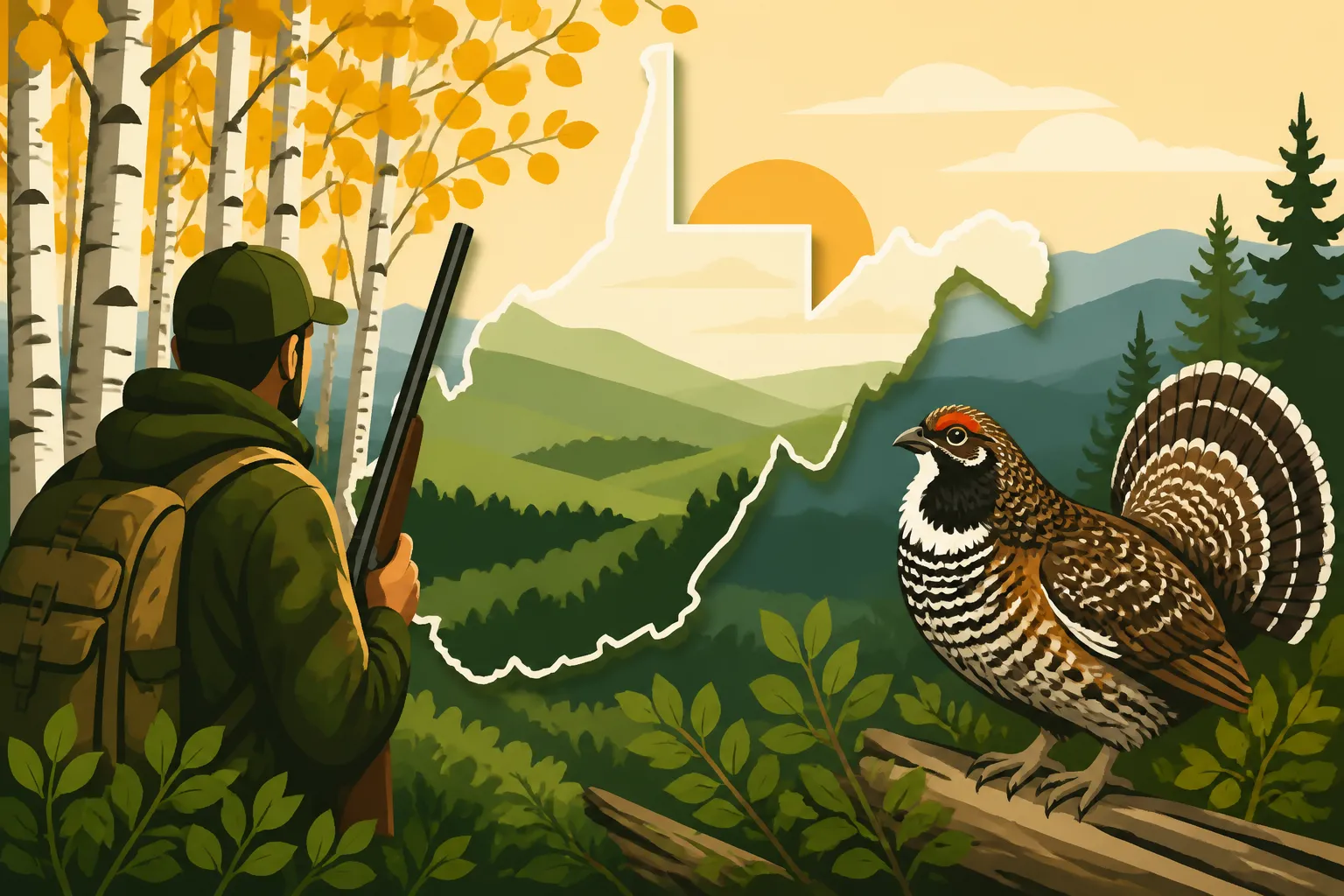
The ruffed grouse, often called the "king of game birds," holds a special place in the hearts of West Virginia hunters. Their sudden, thunderous flush from dense cover is an unmatched experience. However, it’s no secret that grouse populations across the state, particularly in the Allegheny Highlands, have faced significant challenges. Many of us have witnessed this firsthand, walking miles through once-productive areas only to find a stark absence of birds.
Understanding West Virginia Ruffed Grouse Decline
The decline isn't just a hunter's lament; scientific data supports it. Historically, grouse thrived in the diverse, early successional forests that characterized much of West Virginia. But over decades, changes in land use, timber harvesting practices, and natural forest maturation have gradually diminished the very habitat grouse need to survive and reproduce. We've seen a noticeable shift in numbers, leading to concerns about the long-term viability of grouse hunting as we once knew it. It’s a complex issue, but habitat is almost always at the core of wildlife population health.
The key factor is often a lack of young forest. Unlike deer or turkeys that can adapt to various forest stages, grouse are highly dependent on specific types of cover, especially during different life stages. When we talk about grouse, we're really talking about a species that needs dense, regenerating vegetation. Without it, they become increasingly vulnerable to predators and struggle to find adequate food and nesting sites. This ongoing trend is what makes conversations around active habitat management so critical.
The Importance of Early Successional Habitat
Early successional habitat refers to young forests, brushlands, and clearings that arise after disturbances like logging, fire, or severe storms. These areas are characterized by dense, often thorny, vegetation that provides crucial overhead and lateral cover. Think about a five-year-old clear-cut, thick with saplings and briars—that’s grouse paradise. This dense cover protects grouse from aerial predators like hawks and owls, and terrestrial predators such as coyotes and bobcats. It’s their nursery, their refuge, and their pantry all in one.
Without a mosaic of these young forest types interspersed within mature woodlands, grouse simply can't thrive. They need these patches for nesting, for raising their broods, and for winter protection. The drumming male grouse, a classic sign of breeding activity, often utilizes drumming logs in the transition zones between dense young growth and slightly older timber, where he can survey his territory but also quickly dive into protective cover. When this vital habitat disappears, so too do the grouse.
Understanding Aspen's Role in Grouse Habitat
While many types of early successional forests benefit grouse, aspen stands hold a particularly special place in the discussion, especially in our West Virginia highlands. These fast-growing trees, often found in cooler, higher elevations, are like gold for grouse.
Aspen's Unique Growth and Regenerative Properties
Aspen species, primarily quaking aspen and bigtooth aspen, are remarkable for their rapid growth and aggressive regeneration. Unlike many hardwoods that reproduce primarily by seed, aspen are clonal. When an aspen stand is cut or disturbed, the roots send up thousands of new shoots, called suckers, creating an incredibly dense, thicket-like forest in a very short time. This characteristic makes aspen management incredibly effective for creating instant, high-quality early successional habitat.
Imagine a mature stand of twenty-year-old aspens being clear-cut. Within a year or two, that area will be a tangled mass of two to ten-foot-tall aspen saplings, forming an impenetrable wall of cover. This rapid regeneration is precisely what makes aspen stands such a critical component for grouse. It’s not just about providing some cover; it’s about providing exceptional cover very quickly, far denser than many other regenerating forest types. This rapid growth also means that managed aspen can cycle through different growth stages that benefit various wildlife, not just grouse.
Aspen as Food and Cover Source for Grouse
Aspen provides an all-inclusive package for grouse throughout the year. In winter, grouse can bud on aspen, feeding on the protein-rich buds, especially during heavy snowfalls when other food sources are buried. This is a crucial food source that helps them survive the lean months. During spring and summer, the dense saplings provide unparalleled brooding cover, shielding young chicks from predators and the elements. The thick canopy of young aspen also harbors insects, a vital protein source for growing poults.
As the trees mature slightly, grouse find shelter within the stems, creating thermal cover and escape routes. The catkins (flower clusters) are another important food source. Essentially, a properly managed aspen stand is a grocery store, a nursery, and a fortress all rolled into one for grouse. This complete package is why hunters focused on grouse often prioritize areas with significant aspen components. When you're scouting for grouse, a stand of young aspen should be at the top of your list.
Challenges and Opportunities in Aspen Management
While the benefits of aspen management for ruffed grouse are clear, actually implementing these practices in West Virginia comes with its own set of hurdles, alongside exciting opportunities for conservation.
Historical Land Use and Forest Maturation
Historically, much of West Virginia's landscape experienced large-scale disturbances, like the logging boom of the late 19th and early 20th centuries. These events created vast tracts of early successional forests, perfect for grouse. However, as those forests matured and management practices shifted towards selective cutting or no cutting at all, the amount of young forest significantly declined. This widespread maturation of our forests is arguably the biggest challenge facing grouse populations today. Our forests are simply "too old" in many places for grouse to thrive.
Furthermore, fire suppression policies, while beneficial for protecting structures, have also removed a natural disturbance mechanism that historically created and maintained early successional habitats. The cumulative effect is a landscape where the specific type of habitat grouse need is increasingly fragmented and scarce. This means that to bring back grouse, we often have to actively intervene and mimic these historical disturbance patterns, which can be a slow and expensive process on a large scale.
Economic and Logistical Hurdles for Active Management
Implementing active aspen management, particularly clear-cutting, can face both economic and logistical challenges. Timber markets and demand play a huge role; if there isn't a strong market for pulpwood or other smaller timber products, it can be difficult to find contractors willing to perform smaller, wildlife-focused cuts. On public lands, large-scale projects often involve extensive planning, environmental assessments, and public input, which can be time-consuming and costly.
For private landowners, the costs associated with logging can be prohibitive, especially for managing smaller parcels. There's also the perception challenge: clear-cutting, while biologically beneficial for certain species like grouse, can sometimes be viewed negatively by the public due to aesthetic concerns. Overcoming these hurdles requires education, incentives for landowners, and dedicated funding for conservation projects on both public and private lands. Programs and partnerships that help offset these costs or provide expertise are vital for expanding aspen management across the state.
Implementing Aspen Management Practices
So, how do we actually go about creating these grouse havens? Aspen management isn't just about cutting trees; it's a strategic approach to mimicking natural disturbances and ensuring the long-term health of the forest for wildlife.
Clear-Cutting for Maximum Aspen Regeneration
The most effective method for regenerating aspen is clear-cutting. This involves removing all trees in a designated area. While it might look drastic initially, it's precisely this intense disturbance that triggers the massive root suckering response from aspen. The sudden influx of sunlight to the forest floor, combined with the removal of competing vegetation, creates the perfect conditions for a dense stand of young aspen to emerge.
The size of the clear-cut matters, too. For optimal grouse benefit, cuts are often recommended to be between 10 and 40 acres, though smaller cuts can also be beneficial as part of a mosaic. The goal isn't just one big cut, but a series of cuts rotated over time to create different age classes of habitat. Imagine a patchwork quilt of habitat: some areas clear-cut five years ago, some ten, some just cut this year. This provides continuous early successional habitat, crucial for grouse which use different age stands throughout their life cycle. A land management plan will often outline these rotations to provide long-term benefits.
Rotating Cuts for Diverse Age Classes
The real magic of aspen management lies in creating a rotation of cuts. Instead of cutting one large area once, the strategy is to divide a larger forest block into smaller sections and cut them on a staggered schedule, typically every 10-20 years. This creates a diverse mosaic of aspen stands in various stages of regeneration, from young sprouts to mature trees. This diversity ensures a continuous supply of the specific habitat components grouse need at any given time.
For instance, a one-to-five-year-old stand provides incredible brooding cover and insect foraging. A five-to-fifteen-year-old stand offers dense winter cover and a food source with buds. Older stands might still provide some food, but the critical dense cover diminishes. By having all these age classes available within a relatively small area, grouse can move between them as their needs change seasonally. Tools like GoHunt can be incredibly useful for land managers and hunters to visualize these different timber stand ages and plan their management or hunting strategies based on satellite imagery and forest data. This thoughtful rotation is the cornerstone of sustainable grouse habitat.
Finding Grouse in Managed Aspen Areas
Once these management efforts are underway, the next step is to know how and where to hunt these reinvigorated coverts. Hunting grouse in managed aspen requires a keen eye and a willingness to push through thick cover.
Identifying Productive Aspen Stands
The key to finding grouse in managed aspen is knowing what to look for. You're searching for those dense, thick stands of young aspen. A five to fifteen-year-old stand is often the sweet spot. The trees will be too small to have much commercial timber value, but they’ll be tall enough to provide canopy cover and lateral concealment, yet still dense enough at the base to deter predators. Look for areas with a mix of aspen and other regenerating species like black cherry or red maple, and often an understory of briars.
During your scouting, pay close attention to the edges of these aspen thickets, particularly where they meet older timber or open fields. Grouse often use these transition zones for feeding and dusting. In winter, look for stands where the aspen buds are prominent. You can often spot evidence of grouse feeding on the tips of branches. Using mapping tools like GoHunt, you can often identify clear-cut areas or areas showing different forest age classes, which will give you a significant head start in narrowing down your search. Don't be afraid to study those aerial photos and topography maps before you even step foot in the woods.
Tactics for Hunting Dense Aspen Cover
Hunting dense aspen cover requires a specific approach. Forget those long shots in open timber; this is close-quarters combat. A good bird dog is an invaluable asset here, but if you're hunting without one, slow, deliberate walking is your best friend. Move through the thickets, pausing frequently. Grouse will often hold tight, relying on their camouflage, so you need to be ready for an explosive flush at close range. Carry a light, fast-swinging shotgun with an open choke, like an improved cylinder or skeet choke, to handle those quick, close shots. For more insights on gear, you might find valuable tips in "Shotgun Gauge Choice" or "Choke Choice for Fast Flushes".
Work the edges, walk along old logging roads that dissect the stands, and pay attention to subtle changes in elevation or cover density. Remember, grouse want to be safe, so they’ll often be in the thickest part of the cover. Be prepared to push through some nasty stuff. If you hear a drumming grouse in the spring, make a mental note – that's a good indication of suitable breeding habitat and potential birds in the fall. You can read more about Grouse Hunting Allegheny Highlands Cover for additional strategies specific to our terrain.
Here’s a quick overview of aspen stand benefits:
| Aspen Stand Age | Primary Benefit for Grouse | Hunter's Perspective (What to Look For) |
|---|---|---|
| 1-5 Years | Dense brooding & escape cover, insects | Extremely thick, young saplings; great for young birds |
| 5-15 Years | Optimal cover, buds, stem density | Ideal hunting cover, dense understory, holds birds tight |
| 15-25 Years | Winter buds, some cover | Still good, but density starts to thin, look for thickest parts |
| 25+ Years | Limited cover, food, roosting | Less productive, unless mixed with younger stands |
The Future of Grouse Hunting and Conservation
The future of ruffed grouse hunting in West Virginia, and indeed the conservation of the species, hinges significantly on our commitment to understanding and implementing effective habitat management strategies, particularly those involving aspen. It's a long game, but a crucial one for maintaining our natural heritage.
Collaboration for Habitat Restoration
Achieving widespread habitat restoration for grouse requires a collaborative effort. State agencies like the West Virginia Division of Natural Resources (WVDNR), federal partners like the U.S. Forest Service on lands such as the Monongahela National Forest, and private conservation groups like the Ruffed Grouse Society, along with passionate individual landowners, all have a vital role to play. These partnerships can pool resources, share expertise, and implement projects on a larger scale than any single entity could achieve alone. For example, groups like the Ruffed Grouse Society often provide grants or technical assistance to landowners interested in creating early successional habitat.
Hunter participation is also essential, not just in the field, but in supporting these conservation efforts through license fees, donations, and volunteer work. By working together, we can overcome the economic and logistical hurdles and create a more interconnected landscape of thriving grouse habitat. These efforts aren't just for grouse; they benefit a host of other wildlife species that rely on young forests, from woodcock to deer and various songbirds.
Supporting Sustainable Forestry Practices
Beyond specific aspen management, supporting broader sustainable forestry practices is key to the long-term health of our forests and wildlife. This means encouraging timber harvesting that considers ecological impacts, promotes forest regeneration, and creates diverse age classes of timber. It's about recognizing that sometimes, cutting trees is the most ecological choice for certain species. Landowners have a critical role to play here, choosing logging methods that prioritize wildlife habitat alongside timber production.
Educating ourselves and others about the benefits of active forest management for wildlife, even when it involves clear-cutting, is an ongoing process. We need to dispel misconceptions and highlight the scientific basis for these practices. The health of our forests, and the populations of game birds like the ruffed grouse, are directly tied to our stewardship. By championing smart, sustainable forestry, we ensure that future generations of West Virginia hunters will still hear that electrifying flush from a dense aspen covert. For more information on the broader challenges, consider reading West Virginia Grouse Habitat Loss Causes.
Disclaimer
This article is for general informational purposes only and does not constitute professional advice. Laws, prices and regulations vary by location and change over time. Consult a qualified professional for guidance on your specific situation.