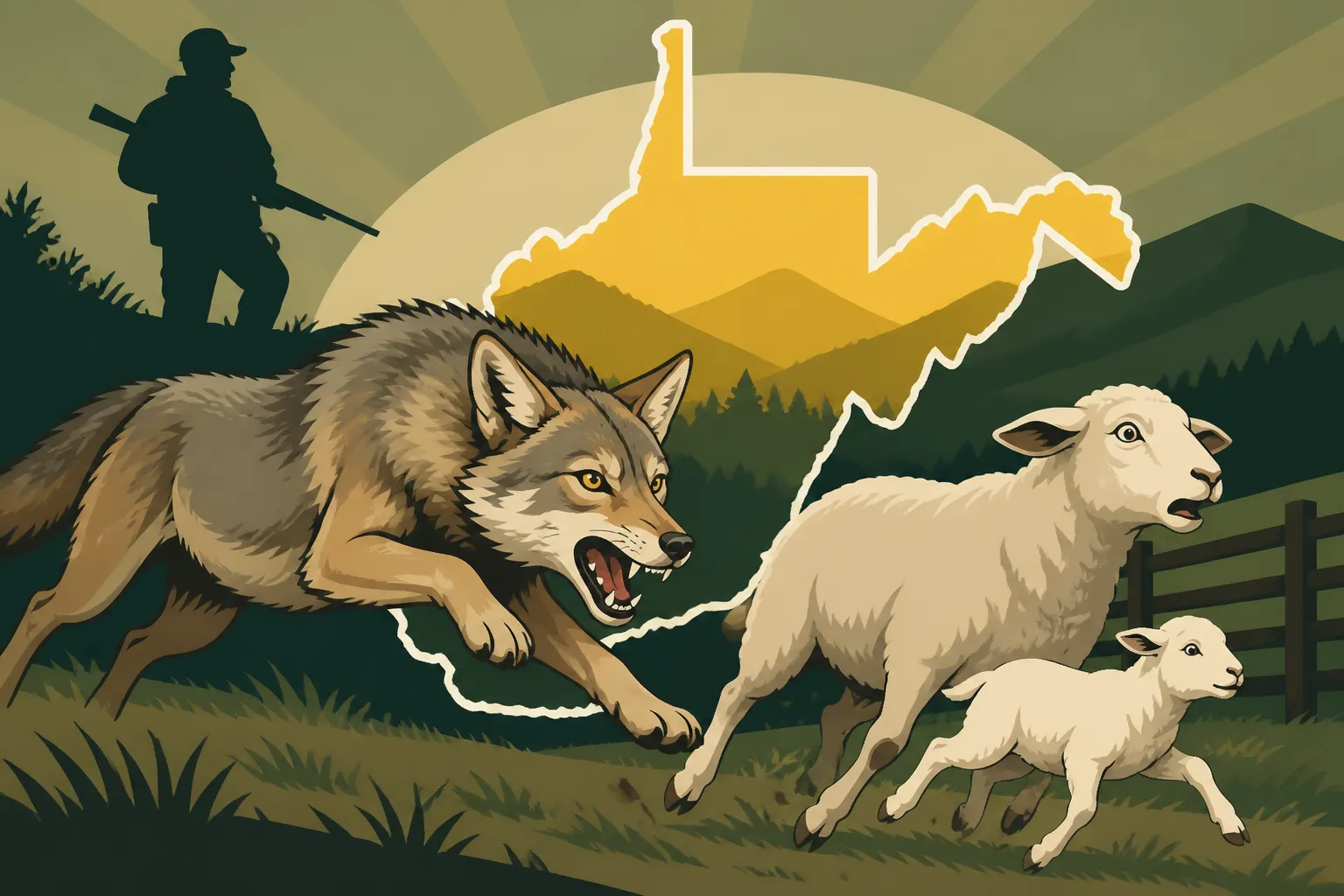
West Virginia Coyote Attacks on Livestock
For farmers and homesteaders across West Virginia, the threat of coyote attacks on livestock isn't just a distant concern; it's a heartbreaking reality that can decimate herds and livelihoods in an instant. This guide delves deep into understanding why these opportunistic predators target valuable animals, what effective proactive measures you can implement, and how to respond swiftly and legally when an attack inevitably occurs, helping you protect your animals and your peace of mind.
Understanding Coyote Predation on West Virginia Livestock
Coyotes are incredibly adaptable animals, and their presence is widespread across all 55 counties of West Virginia. While their primary diet consists of rodents, rabbits, and deer fawns, they are opportunistic hunters, meaning they won't pass up an easy meal. When natural prey populations fluctuate, or when livestock becomes accessible, coyotes can quickly turn their attention to domestic animals. It's not usually a sign of malice, but rather a survival strategy, which unfortunately puts our sheep, goats, poultry, and even young cattle at risk.
The reasons behind increased predation are complex, often stemming from a combination of factors. As human development expands, prime coyote habitat can shrink, pushing them closer to agricultural areas. Conversely, a reduction in hunting or trapping pressure can lead to higher coyote populations, increasing the likelihood of encounters with livestock. Understanding these underlying dynamics is the first step toward effective management. You might be surprised to learn about the extensive range and prevalence of these animals, a topic explored further in West Virginia Coyote Range and Density.
Why Coyotes Target Livestock
Coyotes are not inherently "livestock killers" by nature, but rather highly intelligent and adaptable carnivores. They learn quickly, and if they discover a vulnerable food source like a flock of chickens or a pen of young lambs, they will exploit it. Often, a single "problem coyote" or a small family group can be responsible for multiple depredations. These animals are masters of efficiency; if the risk is low and the reward is high, they will continue to return.
Their hunting strategies are diverse, ranging from solo stalking to coordinated pack efforts. They are particularly drawn to young, weak, or isolated animals. Newborn calves, lambs, and goat kids are especially susceptible, as are poultry that are not securely housed. The dense cover often found along field edges or in hollows can provide perfect ambush sites, allowing coyotes to approach unseen.
Most Vulnerable Livestock and Attack Timelines
While coyotes can and do attack various types of livestock, certain animals are far more vulnerable. Small ruminants like sheep and goats, especially during lambing and kidding seasons, are prime targets. Young calves, particularly those left in pastures at night, also face significant risk. Poultry, from chickens and ducks to geese, are perhaps the easiest prey, often taken directly from coops or free-ranging areas. Occasionally, even larger animals like adult cattle can be harassed or injured, especially if they are sick or elderly.
Most coyote attacks occur under the cover of darkness, from dusk until dawn, though they are not exclusively nocturnal. Increased activity can be observed during the denning season in late winter and spring when pups are being fed, and during periods of harsh winter weather when natural prey is scarce. A strong understanding of West Virginia Coyote Diet in Farm Country can shed more light on these seasonal patterns and vulnerabilities. This makes constant vigilance and secure overnight housing absolutely critical for producers in areas with known coyote presence.
Distinguishing Coyote Attacks from Other Predators
It can be incredibly distressing to find an injured or deceased animal, and often the first question is "what did this?" Identifying the predator correctly is crucial for implementing the right preventative measures. While coyotes leave distinct clues, it's important to rule out other potential culprits like domestic dogs, foxes, bobcats, or even black bears in some areas. Looking at the bite marks, feeding patterns, and surrounding tracks can tell a critical story.
Coyotes typically attack the throat and neck of larger prey, aiming to sever the trachea or jugular. You might find crushing wounds or punctures from their canines. For smaller animals like lambs or poultry, the damage might be more widespread, with tearing and bruising. They often consume internal organs first, particularly the liver, heart, and lungs. Unlike domestic dog attacks, which can be frenzied and leave multiple, disorganized bite marks over the body, coyote kills tend to be more precise and targeted. Furthermore, coyotes usually try to drag their prey a short distance from the kill site. If you're dealing with a bear, you'll likely see massive crushing injuries, often with the hide peeled back, and consumption of muscle mass. Foxes tend to target smaller poultry, often carrying them away whole.
| Predator Type | Common Target Areas | Feeding Patterns | Scat/Tracks | Other Clues |
|---|---|---|---|---|
| Coyote | Throat, neck, flanks | Internal organs first, then muscle. | Oval, symmetrical tracks; scat with hair/bone. | Often drags prey; precise canine punctures. |
| Domestic Dog | Dispersed bites over body | Often mauls but doesn't consume much. | Variable track size/shape; scat can be varied. | Frenzied attack; sometimes just harassment. |
| Fox | Head, neck (poultry) | Usually carries off small prey whole. | Smaller, delicate tracks; pointed nose print. | Buries uneaten portions; dens can be nearby. |
| Bobcat | Neck, head, back of skull | Clean kills; often covers uneaten prey. | Round, no claw marks; larger than domestic cat. | Often in dense cover; more elusive. |
| Black Bear | Larger animals; any area | Massive crushing injuries; hide peeled. | Large, distinct heel pad and five toe prints. | Tree claw marks nearby; signs of foraging. |
Proactive Measures: Protecting Your Livestock from Coyotes
Preventing coyote attacks is a continuous effort that requires a multi-faceted approach. There's no single magic bullet, but rather a combination of strategies that, when implemented together, create a formidable defense for your livestock. Many of these measures focus on making your animals less accessible and less appealing as a food source, effectively turning your farm into a less attractive option for a hungry coyote. It's about being smarter than the predator, which isn't always easy given the coyote's cunning nature.
Every farm is different, and what works for one might need adjustment for another. The terrain, the type of livestock, and the local coyote pressure all play a role in determining the most effective strategies. Taking the time to observe your property and identify potential weaknesses in your defenses is a crucial first step. Consider what areas might provide cover for a coyote approaching your pastures or what times your animals are most exposed.
Secure Fencing and Enclosures
One of the most fundamental and effective deterrents against coyote predation is secure fencing. Standard barbed wire fences, while good for containment, offer little to no protection against a determined coyote. They are excellent jumpers, diggers, and squeezers. A truly predator-proof fence needs to address these capabilities. High-tensile electric fencing, particularly with multiple strands, can be a game-changer. The shock provides a strong negative reinforcement, teaching coyotes to stay away.
For smaller livestock like sheep, goats, or poultry, woven wire fences are often a better choice, especially when combined with an electrified "hot wire" at the top and bottom. The bottom wire should be very close to the ground, or even buried slightly, to prevent digging. The height is also critical; ideally, fences should be at least 5 to 6 feet tall. Investing in robust fencing might seem like a significant upfront cost, but it can quickly pay for itself by preventing devastating losses.
Livestock Guardian Animals LGAs
Bringing in a four-legged protector can be one of the most natural and effective ways to deter coyotes. Livestock Guardian Animals (LGAs) are breeds specifically selected and trained to live with livestock and protect them from predators. The most common LGAs are dogs, with breeds like Great Pyrenees, Anatolian Shepherds, and Akbash dogs being popular choices. These dogs bond with their herd, are instinctively protective, and their presence alone often acts as a strong deterrent.
Beyond dogs, other animals can serve a similar purpose. Donkeys, particularly Jennies (females), can be fiercely protective of sheep, goats, and calves, chasing and even kicking coyotes. Llamas also have a strong guarding instinct and can be effective, especially for smaller flocks. The key to successful LGAs is proper socialization and integration with the livestock from a young age. They aren't pets; they are working animals whose primary job is to guard.
Nighttime Confinement and Pasture Management
Coyotes are most active during low-light hours, making nighttime confinement a simple yet effective strategy. Moving vulnerable livestock, such as ewes and their lambs or young calves, into secure barns, corrals, or smaller, predator-proof pastures overnight significantly reduces their risk. This strategy works best for producers with smaller herds or those who have the infrastructure to safely house animals indoors.
Beyond nighttime confinement, thoughtful pasture management can also make a difference. Avoiding isolated pastures, especially those with dense brush or woods nearby that can provide cover for coyotes, is wise during high-risk periods. Rotating pastures can also disrupt established coyote travel patterns. When you're trying to figure out if you're in a high-risk area, tools like the mapping features you might find on platforms like GoHunt can be incredibly insightful, showing you terrain and potential travel corridors for predators that you might not otherwise notice. This kind of mapping can highlight areas where you might need to concentrate your preventative efforts.
Habitat Modification and Attractant Removal
Coyotes thrive in areas with dense cover, which they use for hunting, resting, and denning. Reducing brush piles, tall weeds, and overgrown fencerows around your pastures can make your property less inviting to them. Creating a clear buffer zone around livestock enclosures makes it harder for coyotes to approach unseen and reduces ambush opportunities.
Furthermore, removing attractants is paramount. This includes properly disposing of dead livestock immediately. Leaving carcasses out in the open is like putting out a dinner bell for coyotes, drawing them to your property and potentially habituating them to livestock as a food source. Securely storing feed, pet food, and even garbage can also reduce the temptation for coyotes to linger in your area. This diligence helps to manage the overall presence of Coyotes and Predators in West Virginia in your immediate vicinity.
Responding to a Coyote Attack and Mitigating Future Risk
Even with the best preventative measures, a determined coyote can sometimes slip through. When an attack occurs, your response is critical, not only for assessing the damage but for preventing future incidents. This is where understanding legal options, reporting procedures, and targeted management strategies come into play. It's a tough situation, but having a plan can help you navigate it effectively and reduce emotional distress.
Remember, the goal isn't necessarily to eradicate all coyotes – that's often impossible and unnecessary. The goal is to manage predation by removing the specific individuals or groups that are causing problems, or by making your property so unappealing that they choose to hunt elsewhere. This requires a systematic and often persistent approach.
Confirming the Predator and Documenting the Incident
After discovering an injured or killed animal, the very first step is to confirm that a coyote was indeed the culprit. As discussed earlier, knowing the specific predator dictates the appropriate response. Look for characteristic bite marks, track patterns, and feeding habits. Take clear photographs of the carcass, the kill site, and any tracks or scat you find. Document the date, time, and specific location.
This documentation is not just for your records; it's often a crucial requirement if you need to report the incident to the West Virginia Division of Natural Resources (WVDNR) or other authorities. Detailed evidence helps them verify the claim and can inform their advice on depredation control. Don't rush to clean up the scene until you've gathered all possible evidence, as disturbing the area can obscure vital clues.
Reporting Attacks and Seeking Assistance
Once you've confirmed a coyote attack, reporting it to the appropriate authorities is highly recommended. The WVDNR is the primary agency responsible for wildlife management in West Virginia, and they can offer guidance on dealing with problem predators. They may be able to provide advice on non-lethal deterrents, or in cases of persistent depredation, discuss options for lethal control.
Some counties or agricultural extension offices might also have resources or programs to assist landowners with predator control. This is where community insight, sometimes gathered through platforms like GoHunt, can be valuable for understanding local resources or even connecting with experienced trappers or hunters who can offer assistance. Always ensure any actions you take align with state regulations. Understanding the West Virginia Depredation Permit Process is crucial if you are considering lethal removal outside of general hunting seasons.
Lethal Control Options and Legal Considerations
When non-lethal methods prove insufficient, and coyotes continue to depredate livestock, lethal control may become a necessary option. In West Virginia, coyotes are typically classified as a furbearer with a continuous open season for hunting and trapping, meaning you can generally hunt or trap them year-round. However, specific regulations and methods can vary, especially concerning night hunting or the use of certain traps.
Hunting coyotes can be effective, especially through calling techniques. Coyote Calling in West Virginia Farm Country explores various methods for luring coyotes. Night hunting may be permitted under specific conditions and requires adherence to Night Hunting Rules for West Virginia Coyotes. Trapping, when done responsibly and legally, can be a highly effective way to target individual problem coyotes. It's important to understand the regulations for setting traps, including trap types, placement, and checking intervals. For those interested, Running a Trapline in Rural West Virginia offers detailed insights into this practice. Always consult the current WVDNR regulations before engaging in any lethal control methods.
Proper Carcass Disposal and Community Involvement
Proper disposal of carcasses is a critical component of preventing future attacks. As mentioned, leaving dead animals out in the open actively attracts coyotes and other scavengers to your property, reinforcing the idea that your farm is a reliable food source. Carcasses should be promptly removed and disposed of either by burying them deeply, composting them according to agricultural best practices, or rendering services if available.
Finally, consider community involvement. Predator problems often aren't isolated to a single property. Working with neighbors to implement consistent predator management strategies, share information, and even coordinate efforts can lead to greater success for everyone. A community-wide approach to managing West Virginia Coyote Attacks on Livestock can create a larger, safer buffer zone for all livestock producers in the area.
Disclaimer
This article is for general informational purposes only and does not constitute professional advice. Laws, prices and regulations vary by location and change over time. Consult a qualified professional for guidance on your specific situation.