Using a Ground Blind on West Virginia Public Land
Hunting West Virginia's public lands can feel like a constant battle against the elements, other hunters, and the sheer challenge of finding good cover, especially when that perfect tree for a stand just isn't there, or the steep, rocky terrain makes an elevated setup impractical. This guide is designed to help you navigate those challenges by showing you how to effectively use a ground blind, transforming it from a simple hide into a strategic asset for deer hunting across the Mountain State.
Why Consider a Ground Blind for West Virginia Public Land?
Many hunters think of treestands as the default for deer hunting, and while they certainly have their place, ground blinds offer a flexibility and concealment that can be a real game-changer on West Virginia's diverse and often rugged public hunting grounds.
Overcoming Treestand Limitations and Terrain Challenges
Let's be honest: finding a suitable tree for a treestand on West Virginia public land can sometimes feel like searching for a needle in a haystack. The hardwoods might be too small, too limby, or riddled with thorns. The terrain itself, with its steep hollows and rocky ridges, often makes it incredibly difficult, if not downright dangerous, to hang a stand or even get to one safely in the dark.
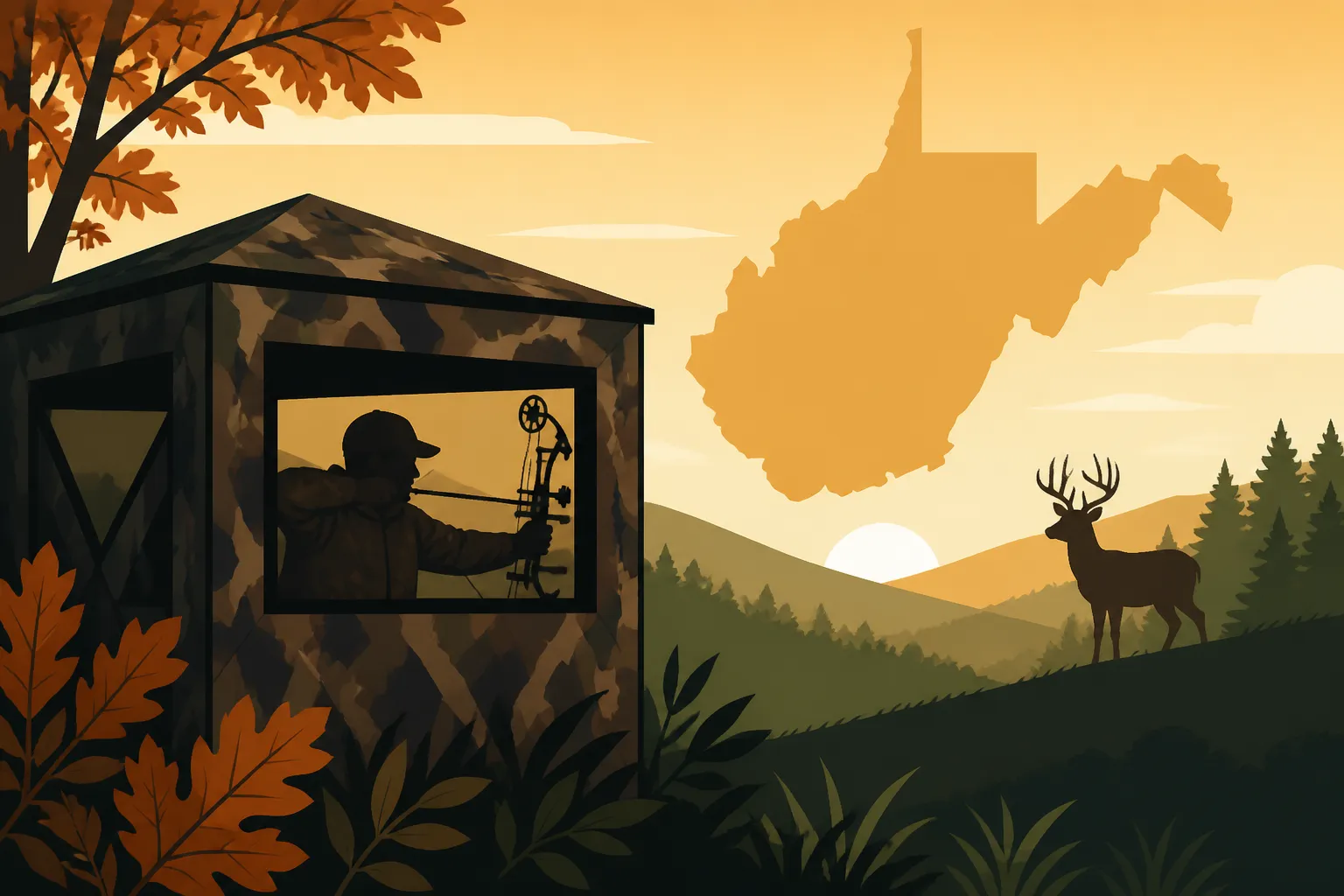
This is where a quality ground blind truly shines. You don't need a perfect tree. You don't even need a tree at all! You can set up a blind virtually anywhere that offers decent cover and a strategic advantage. Imagine being able to hunt that thick brush line along a clear-cut, the edge of a powerline right-of-way, or a small, overlooked clearing that simply doesn't have the right kind of timber for an elevated set. A ground blind offers incredible versatility, allowing you to adapt quickly to new deer sign or changing wind conditions without being tied to a specific tree or location. This mobility can be particularly advantageous for hunters who prefer a more run-and-gun approach or need to make quick adjustments based on fresh intel.
Enhanced Concealment and Comfort
One of the most immediate benefits of a ground blind is the superior concealment it offers. Unlike a treestand, where every subtle movement can be picked up by a wary deer, a ground blind provides a full 360-degree barrier. You can scratch that itch, quietly shift your weight, or even grab a snack without sending every deer in the county running. This level of stealth is absolutely critical on public land, where deer are often more accustomed to human presence and are thus much warier.
Beyond concealment, ground blinds offer a level of comfort that's hard to beat. They shield you from the harsh West Virginia weather, whether it's a cold, driving rain, a biting wind, or even unexpected snow. You can bring more gear – a comfortable chair, a heater for those late-season hunts, extra layers, or even a book for slow periods. This comfort can translate into longer, more patient sits, increasing your chances of success. They're also fantastic for introducing youth or new hunters to the sport, as the contained environment minimizes distractions and allows for more movement, making the experience much more enjoyable for them.
Legalities and Public Land Considerations
While ground blinds are generally permitted on West Virginia public lands, it's always wise to double-check the specific regulations for the Wildlife Management Area (WMA) or National Forest you plan to hunt. Some areas might have specific rules regarding how long a blind can remain in place or what materials are allowed. For detailed information, consult our guide on Ground Blind Rules on West Virginia WMAs.
The general rule of thumb, especially on public land, is to adhere strictly to "leave no trace" principles. This means your blind should be removed at the end of the hunting season, and certainly at the end of your trip if it's a short hunt. No permanent structures are allowed. Remember that blaze orange requirements still apply during firearm seasons, even if you're tucked inside a blind. While the blind itself provides camouflage, you'll still need to wear the legally required amount of blaze orange (or blaze pink) when walking to and from your blind, and it's a good idea to display some orange on the blind itself, particularly if other hunters might be in the area.
Choosing and Preparing Your Ground Blind for West Virginia
The right ground blind can make all the difference. It's not just about picking the first one you see; it's about selecting a blind that can stand up to West Virginia's rugged environment and provide the features you need for successful hunting.
Features to Look For in a Public Land Blind
When you're outfitting yourself for West Virginia public land, the blind itself needs to be robust. First and foremost, look for durability. West Virginia weather can be unpredictable, swinging from mild to wild in a matter of hours. Your blind needs to withstand strong winds, driving rain, and even heavy snow. Check the fabric quality – is it thick and quiet? Are the poles sturdy? Reinforced corners and heavy-duty zippers are signs of a well-made blind that won't let you down halfway through a hunt.
Portability is another critical factor. Many of West Virginia's best hunting spots require a significant hike. A blind that's too heavy or awkward to carry will quickly become a nuisance. Look for models with comfortable backpack straps and a relatively lightweight design that collapses compactly. A blind weighing 15-20 pounds is generally manageable for a longer walk, but anything much heavier might require a deer cart if you're covering substantial ground.
Window design is surprisingly important. You need quiet windows that can be opened and closed with minimal noise, ideally with shoot-through mesh that won't impede your arrow or bullet. Ensure the window configuration offers ample sight lines for your chosen weapon, allowing for comfortable shooting angles in all directions you expect deer to approach from. Lastly, the camouflage pattern should blend seamlessly with West Virginia's natural environment. Patterns mimicking hardwoods, pines, or rocky terrain are ideal.
Essential Accessories and Pre-Season Prep
A ground blind is just the starting point; a few key accessories and some pre-season preparation will significantly enhance your experience. High-quality anchoring stakes and tie-downs are a must. The flimsy stakes that often come with blinds are usually insufficient for West Virginia's rocky soil or strong winds. Invest in heavy-duty tent stakes or screw-in anchors to keep your blind firmly planted.
Comfortable, quiet seating is non-negotiable. A small, collapsible hunting chair or stool that swivels silently will save your back and prevent unnecessary movement. Many hunters will also add a small piece of carpet or a quiet mat to the floor of their blind to muffle footfalls and prevent gear from clanking.
For scent control, a good spray-down routine for both you and your gear is essential. While a blind can help contain some scent, it's not a hermetically sealed box. Consider airing out your blind outside for several days before the season to dissipate any factory smells. Some hunters even use portable ozone generators inside their blinds, though their effectiveness is a topic of ongoing debate.
Different Blind Types and Their Best Use Cases
When it comes to ground blinds, you'll primarily encounter a couple of main styles, each with its own advantages for hunting in West Virginia.
Pop-Up Hub Blinds: These are the most common and versatile ground blinds. They feature a central hub system that allows them to quickly "pop up" and expand into a full enclosure, often in less than a minute.
- Pros: Very fast setup, roomy interior (often accommodating 1-3 hunters), excellent 360-degree concealment due to full enclosure, good protection from elements.
- Cons: Can be bulky when folded, moderately heavy for long hikes, often pricier.
- Best Use: Ideal for hunting field edges, open timber stands, or anywhere you need substantial space and quick deployment. They're excellent for mentoring new hunters or youth due to the interior space and movement allowance.
Panel Blinds / Doghouse Blinds: These tend to be smaller, lighter, and more compact, designed for a single hunter or possibly two in a pinch. Panel blinds might consist of several panels connected, while doghouse blinds resemble a small, low tent.
- Pros: Excellent portability, very lightweight and compact for deep woods hikes, generally more affordable.
- Cons: Less interior space, often requires more natural brushing-in to achieve full concealment, offers less protection from severe weather.
- Best Use: Perfect for solo hunters who prioritize mobility and need to set up in thicker cover, tight spots, or areas requiring a more discreet footprint.
Here's a quick comparison of the two main types:
| Feature / Blind Type | Pop-Up Hub Blind | Panel Blind / Doghouse Blind |
|---|---|---|
| Setup Speed | Very Fast (minutes) | Fast (can be quicker than hub if simple panels) |
| Portability | Moderate (can be bulky, 15-25+ lbs) | Excellent (lighter, more compact, 5-15 lbs) |
| Concealment | Excellent (full enclosure) | Good (often partial enclosure, requires more brush-in) |
| Interior Space | Roomy (1-3 hunters, gear) | Compact (1 hunter, minimal gear) |
| Wind Resistance | Good (when properly staked) | Moderate (stakes and tie-downs critical) |
| Cost | Mid-range to High ($100-$400+) | Low to Mid-range ($50-$200) |
| Best Use | Open areas, mentoring, comfort, long sits | Thick cover, solo hunting, mobile setups, quick moves |
Strategic Placement and Concealment on Public Land
The most expensive blind in the world won't do you any good if it's placed poorly. Strategic location and thorough concealment are paramount, especially on West Virginia's heavily hunted public lands where deer are notoriously cagey.
Scouting Key Locations with Topography in Mind
Before you even think about setting up a blind, the real work begins with diligent scouting. Tools like GoHunt can be invaluable here, allowing you to pour over satellite imagery and topographic maps from the comfort of your home. You're looking for natural funnel points, inside corners of fields, edges of clearings, old logging roads, and anywhere else deer are likely to travel. Consider checking out our guide on Scouting With the WVDNR App to maximize your pre-season efforts, or dive deeper into Reading Aerial Photos for Eastern Panhandle Deer for region-specific tips.
Once you have a few promising spots identified on your map, it's time to hit the ground. Look for natural cover near these high-traffic areas – dense thickets of rhododendron or mountain laurel, blowdowns, or clusters of young pines and hemlocks. These features provide a natural backdrop for your blind. Always keep the wind and thermals in mind, especially in mountainous West Virginia. As detailed in Wind and Thermals on a Steep Ridge, understanding how air currents move through hollows and over ridgelines is crucial for proper scent management. Prioritize pinch points or travel corridors where deer are naturally funneled, such as the saddle between two peaks, a narrow strip of woods between a field and a bedding area, or a small stream crossing. These natural choke points are excellent spots for a blind. We explore these concepts further in Hunting a Funnel Between Two Hollows.
Integrating Your Blind with Natural Surroundings
This step is arguably the most critical: brush in your blind! A stark, dark blob in the middle of the woods will scream "hunter!" to every deer that walks by. Use natural vegetation from the immediate area – dead branches, pine boughs, laurel cuttings, even clumps of grass – to break up the outline of your blind. Don't be shy; overdo it rather than underdo it. We cover more on this vital tactic in Brushing In a Blind on a Field Edge. The goal is to make your blind look like just another part of the natural landscape, not an alien invasion.
Always try to place your blind against a dark background, such as a dense stand of evergreens, a shadowed hillside, or a thick cedar swamp. This helps the blind disappear even more effectively. Avoid placing it out in the open, or worse, silhouetted against the skyline on a ridge top. Tucking it just below the crest of a hill or against a taller, darker backdrop will significantly reduce its visibility to approaching deer.
Respecting Property and Hunter Ethics
Hunting public land comes with a responsibility to respect not only the land but also your fellow hunters. Before setting up, always confirm land boundaries, especially if you're near private parcels. Using mapping tools like GoHunt or official plat maps can help you avoid accidental trespass, which is a serious offense. For more on this, check out Finding West Virginia Property Lines.
While it's ideal to set up your blind a few days or even weeks in advance to allow deer to get accustomed to its presence, this isn't always feasible on public land due to the risk of theft or vandalism, or simply due to time constraints. If you must set it up on the day of the hunt, brushing it in exceptionally well becomes even more critical.
Finally, be mindful of other hunters. Public land can get crowded, especially during peak seasons. Avoid setting up too close to existing treestands, other blinds, or known hunting spots, especially during high-pressure times like opening day. Our article on Opening Weekend Crowds on West Virginia Public Land offers more insights into navigating busy periods. A little common courtesy goes a long way in ensuring everyone has a safe and enjoyable hunt.
Effective Hunting Tactics from a Ground Blind
Once your blind is strategically placed and brushed in, the work isn't over. How you hunt from within that blind will dictate your success, particularly on the Mountain State's wily whitetails.
Managing Scent and Sound in the Blind
Scent control is absolutely paramount, no matter where or how you hunt, but it takes on a slightly different nuance in a ground blind. While the blind does offer a barrier, it's not foolproof. Wear clean, scent-free clothing, spray down thoroughly, and always be aware of the wind direction. Position your blind so that the prevailing wind carries your scent away from where you expect deer to approach. Only open the windows you intend to shoot from, as this minimizes your human profile and helps contain scent to a degree.
Silence is golden inside a ground blind. Every rustle, every clank, every little cough echoes. Invest in quiet zippers for your blind, wear soft clothing that doesn't make noise when you move, and choose rubber-soled boots. If you've laid down a mat or carpet, that will help muffle sounds. Minimize extraneous gear, and arrange what you do bring so it's easily accessible without bumping, scraping, or fumbling. Practicing drawing your bow or raising your gun silently in the blind before a hunt can make all the difference.
Mastering Shot Angles and Ranges
Hunting from a ground blind means you'll be taking shots from a seated position, often through shoot-through mesh or a narrow window. This is significantly different from shooting from an elevated treestand. It's critical to practice shooting from this exact position. Set up your blind in your backyard or a safe shooting area and practice drawing your bow or shouldering your rifle while seated, just as you would in the woods. Pay close attention to how the mesh might affect your arrow flight or bullet trajectory – while shoot-through mesh is designed to be minimal impact, it's still a factor.
Before deer even show up, range out common shooting lanes and landmarks around your blind. Know your maximum ethical range from that seated position and be disciplined about it. The confined space of a blind can sometimes trick your eyes into thinking a deer is closer than it actually is. Be acutely aware of any blind spots your particular blind might have, especially directly behind you or immediately to the sides. Constant, slow, deliberate scanning through all available windows is key to picking up deer before they pick up on you.
Patience, Persistence, and Post-Shot Protocol
Ground blind hunting, especially on public land where deer are often more educated, frequently demands a higher degree of patience and persistence. Deer can appear silently from seemingly nowhere, and they might skirt your setup before committing. Trust your preparation, stay still, and be ready.
After the shot, whether with a bow or gun, resist the urge to immediately jump out of the blind. Remain quiet and still for a period, listening intently for any sounds that might indicate the deer's direction of travel or where it might have gone down. This waiting period is even more crucial if you suspect a marginal hit. Once you decide to begin tracking, know your local laws regarding retrieving game from private land, which can often border public hunting areas. Our guide on Retrieving Game From Private Land in West Virginia provides essential information on this. Then, follow proper blood-trailing protocol, taking your time and carefully analyzing every piece of sign. If the shot was late in the day, knowing how to handle Blood Trailing After Dark in West Virginia will be crucial for recovery. You can find more comprehensive details on Tracking a Deer Through West Virginia Leaf Litter. A successful hunt from a ground blind is often a testament to patience and methodical action.
Disclaimer
Please note that hunting regulations in West Virginia can change. Always consult the latest West Virginia Division of Natural Resources (WVDNR) hunting regulations manual for the current rules and season dates before heading afield. This guide is for informational purposes only and does not supersede official regulations.