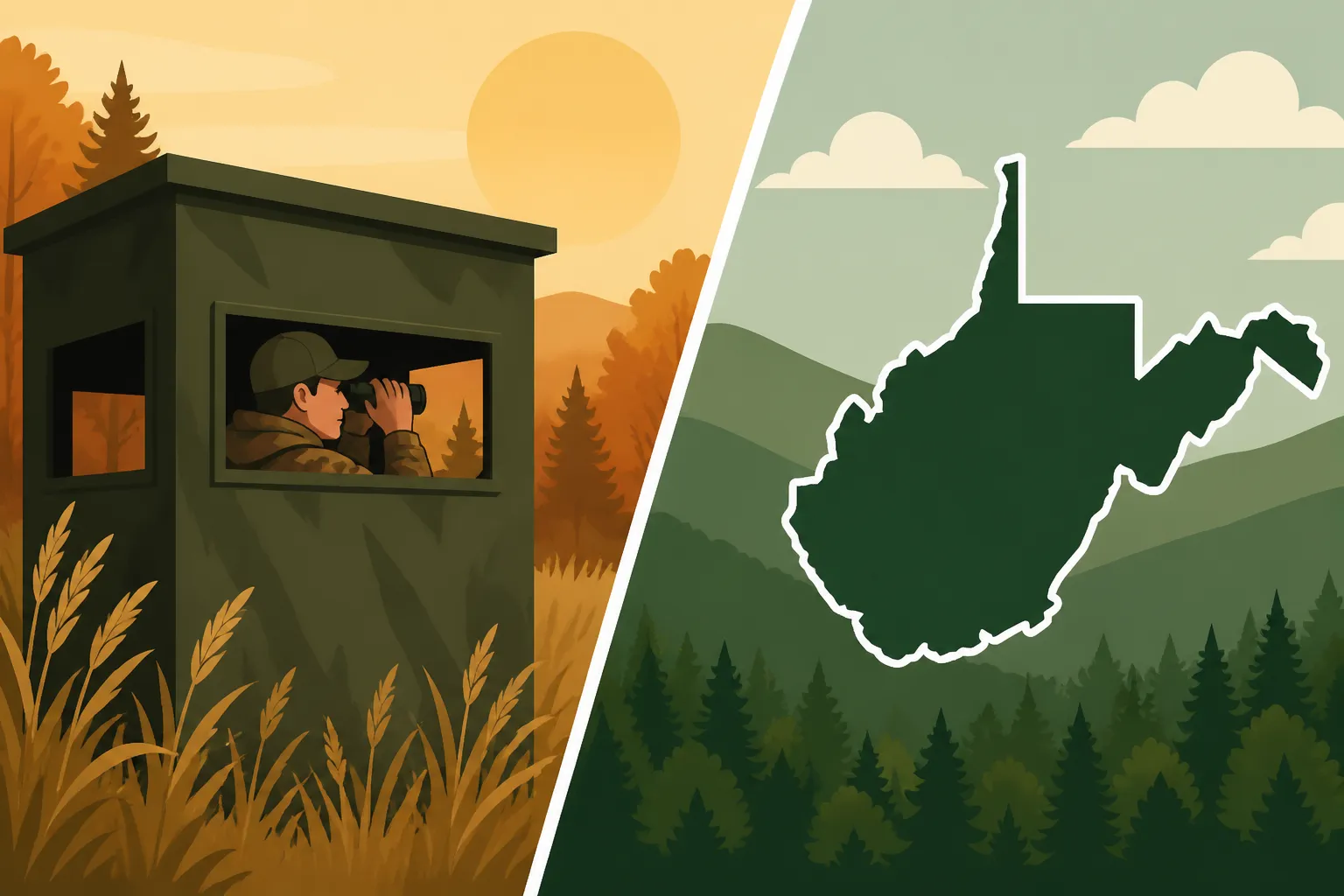
Ground Blind Rules on West Virginia WMAs
It can be incredibly frustrating to haul a ground blind into your favorite hunting spot on a West Virginia WMA, only to realize you've misunderstood the rules and risked a fine or, worse, losing your hunting privileges. Figuring out what's allowed and what's not with ground blinds on our state's Wildlife Management Areas can feel like navigating a legal thicket. This guide will cut through the confusion, detailing the specific regulations, best practices, and practical advice you need to use your ground blind confidently and legally on West Virginia WMAs.
Navigating the Nuances of Ground Blind Rules on West Virginia Public Lands
Hunting on public land in West Virginia offers incredible opportunities, but it also comes with a responsibility to understand and abide by specific regulations that protect both the land and the experience for everyone. When it comes to ground blinds, the rules are often misinterpreted or simply unknown, leading to headaches for hunters. It's not as simple as just "putting up a blind wherever you want." There are very real concerns about litter, damage to vegetation, and ensuring fair access.
Think about it: if every hunter left their blind out year-round, our beautiful public lands would quickly become an obstacle course of deteriorating fabric and plastic. The rules are in place for a good reason – to maintain the integrity of the land, prevent eyesores, and ensure that no single hunter "claims" a spot permanently. This applies whether you're chasing whitetails in the Monongahela National Forest or calling gobblers on a local WMA. You need to know what you can and can't do before you ever step foot into the woods with your blind. The consequences of not knowing can range from a warning to hefty fines, and nobody wants their hunting season ruined by a preventable legal issue.
Before we dive into the specifics of WMAs, it's crucial to understand that all public lands generally prohibit permanent structures. This is a baseline rule. A "permanent structure" isn't just a deer camp cabin; it can also include a ground blind left out for an extended period, especially if it's anchored in such a way that it causes damage or appears to be a fixture. West Virginia's public land ethos is largely about respecting shared resources, and part of that means leaving no trace. This principle should always be at the forefront of your mind when considering any kind of setup on public ground. You can find more information about the various kinds of public lands in our state in Public Hunting Land in West Virginia.
Specific Regulations for Ground Blinds on West Virginia Wildlife Management Areas
Wildlife Management Areas (WMAs) in West Virginia are managed intently by the West Virginia Division of Natural Resources (WVDNR) to provide diverse habitats and ample hunting opportunities. Because of this active management and the relatively high usage some WMAs see, they often have more detailed rules than, say, a vast, remote section of National Forest land. For ground blinds, these details are paramount.
The core principle on WMAs is that ground blinds must be temporary. This isn't just a suggestion; it's a hard rule. A temporary blind is one that is erected for a single hunting trip or a short duration and then removed. You cannot, under any circumstances, leave a ground blind set up indefinitely or even for weeks at a time on a WMA. The expectation is that you bring it in with you and take it out when you leave. This applies to manufactured pop-up blinds as much as it does to improvised natural blinds you might construct. If you're hunting for a few days straight and camping nearby, keeping your blind up for those few days is generally acceptable, provided it's clearly temporary and you're actively using the site. However, leaving it unattended for days or weeks between hunts is usually a no-go.
It's also important to note that you cannot damage or cut vegetation to create or improve your ground blind on WMAs. While it might be tempting to snip a few branches for better concealment, this is explicitly prohibited. The idea is to use the natural cover already available, or to bring in your own manufactured blind. This rule extends to clearing shooting lanes as well. If you can't get a shot without altering the natural environment, then that spot simply isn't a good blind location. This ties back to the "leave no trace" ethic. Many hunters mistakenly believe that a small trim here or there won't hurt, but cumulative damage from many hunters can significantly degrade the habitat. For more general information on these unique areas, see West Virginia Wildlife Management Areas.
| Blind Type/Action | WVDNR Regulation on WMAs | Explanation for Hunters |
|---|---|---|
| Manufactured Blinds | Must be temporary and removed daily. | Set up for your hunt, take down when you leave. Don't leave unattended for extended periods. |
| Natural Blinds | Must be constructed without cutting live vegetation. | You can use fallen branches, rocks, or deadfall. No cutting or damaging live trees/shrubs. |
| Placement | No permanent attachment to trees or ground that causes damage. | Avoid driving stakes that aren't easily removed. No screws or nails in trees. |
| Marking | (Not typically required for temporary blinds) | Some public lands require marking permanent stands, but temporary blinds usually don't apply. Still, it's good practice to label your gear with your ID. |
| Damage/Litter | Prohibited. | Pack out everything you pack in. Any blind or materials left behind are considered litter. |
When considering where to place your blind, remember that it should not obstruct trails, roads, or access points for other users of the WMA, whether they be other hunters, hikers, or WVDNR personnel. Placing a blind directly on a well-used trail, for example, is not only inconsiderate but could also be a safety hazard. Always think about visibility, especially during gun seasons when blaze orange requirements are in effect. Even if you're inside a blind, you still need to ensure you meet all personal blaze orange regulations when you enter or exit and while moving through the woods.
Essential Considerations for Responsible Ground Blind Use in West Virginia
Responsible ground blind use goes beyond just knowing the letter of the law; it's about being an ethical hunter and a good steward of our shared resources. One major aspect of this is placement. You want to choose a spot that offers natural concealment without requiring you to modify the environment. Look for natural depressions, thickets, large fallen logs, or the edge of a field. These locations allow your blind to blend in organically and minimize your impact. Scouting your hunting spot thoroughly before the season is absolutely critical for this. Scouting West Virginia Public Land Before Season delves into effective scouting techniques.
Think about the long-term impact. Even small things, like crushing vegetation repeatedly in the same spot, can leave a lasting mark. Try to rotate your blind locations if you hunt an area frequently, or choose a spot that already has a good, solid footprint. Furthermore, always pack out everything you pack in. This includes not just your blind, but all trash, empty shell casings, and any other items you bring with you. Unfortunately, some WMAs suffer from litter, and we, as hunters, have a responsibility to be part of the solution, not the problem. A clean camp or hunting site reflects well on all hunters.
Another consideration is security. While blinds left on WMAs are supposed to be temporary and removed, theft can still be an issue if you leave a valuable pop-up blind unattended for even a short period. It's a sad reality, but it happens. If you need to leave your blind for a few hours while you retrieve a downed animal or take a break, try to secure it as best you can, perhaps by tucking it deep into thick cover, although this is still risky. The safest bet, always, is to take your blind with you. This also applies to other hunting equipment; just like you need to be mindful of Treestand Rules on West Virginia Public Land, you need to consider the security of all your gear.
Leveraging Technology for Compliant Blind Placement on West Virginia WMAs
In today's hunting world, technology can be a huge asset, especially when it comes to understanding land boundaries and regulations. Mapping applications are invaluable for ensuring your ground blind is placed legally and responsibly. These tools allow you to visualize property lines, WMA boundaries, and even topographical features, all from the palm of your hand.
Applications like onX Hunt are incredibly useful for pre-season scouting and in-field navigation. With onX Hunt, you can clearly see the boundaries of West Virginia's WMAs, national forests, and private land. This allows you to confirm that your chosen blind location is indeed on public land and within the WMA boundaries where you intend to hunt. There's nothing worse than setting up a blind, only to discover you've inadvertently crossed onto private property without permission. These apps also often have layers that can show you roads, trails, and even terrain features like elevation changes and drainages, which are crucial for deciding where a blind will be most effective and least intrusive. Reading Aerial Photos for Eastern Panhandle Deer emphasizes the importance of these tools for successful deer hunting.
Beyond just land boundaries, these mapping apps can help you understand the lay of the land, identify natural funnels, pinch points, and cover that could be ideal for a ground blind setup. You can mark potential blind locations as waypoints during scouting trips, and then review them at home. This helps you plan your approach and exit routes, minimizing disturbance and ensuring you're setting up in a way that respects the habits of the game and other hunters. For more advanced planning and insights, some hunters use comprehensive platforms like GoHunt which offer extensive data layers and planning tools, though the direct mapping of WV public land boundaries like onX Hunt often provides the most immediate benefit for ground blind placement.
Using these digital tools can also help you avoid areas with high hunting pressure. By studying satellite imagery and identifying less-traveled spots within a WMA, you can often find overlooked pockets of habitat perfect for a ground blind where you're less likely to interfere with other hunters. This is a key part of hunting effectively and ethically on shared public resources, as discussed in Hunting Pressure on West Virginia Public Land. Ultimately, technology empowers you to make informed decisions, ensuring your ground blind efforts are both successful and compliant with WMA rules.
Disclaimer
This article is for general informational purposes only and does not constitute professional advice. Laws, prices and regulations vary by location and change over time. Consult a qualified professional for guidance on your specific situation.