Portable Stands for Public Land Mobility
Hunting public land in West Virginia can often feel like a game of chess against nature and other hunters, especially when you're tied to the ground. That feeling of being stuck, watching deer pass just out of range because your setup isn't quite right, is incredibly frustrating. This guide is all about giving you the freedom to move and adapt, diving deep into how portable treestands can unlock new opportunities and dramatically increase your success on West Virginia's challenging public lands.
Why Portable Stands are Crucial for Public Land Hunting
Public land hunting here in West Virginia is a special kind of beast. It's often rugged, remote, and sees a fair bit of pressure. Unlike private land where you might have established food plots or a permanent stand, public ground demands a different approach. You can't just throw up a ladder stand and expect it to be productive all season long. You need flexibility, and that's exactly what portable stands offer.
The Public Land Hunter's Dilemma
Think about it: you spend hours scouting, poring over aerial maps, and maybe even find some hot sign during the pre-season. You hike miles back into a remote hollow in the Monongahela National Forest Hunting or a far corner of a Wildlife Management Area, only to find the perfect tree isn't where you expected, or the deer sign has shifted since your last visit. Or worse, someone else got to that "perfect" tree before you did. The traditional fixed stand approach just doesn't cut it when the landscape is constantly changing, and other hunters are playing the same game. You can feel locked into a spot that's suddenly gone cold, or that isn't producing the shot opportunities you need. That's a classic public land dilemma.
This constant state of flux means that being able to pick up and move your setup in a matter of minutes or hours, not days, is absolutely paramount. Deer patterns change with weather, mast crops, hunting pressure, and the rut progression. A stand that was deadly in early October might be utterly useless by November. The frustration of being in the right general area but the wrong exact spot is something every public land hunter has experienced. It's disheartening to put in the effort, only to be limited by your equipment.
Adapting to Changing Conditions
Imagine you’ve set up in a promising oak flat, only to have a sudden cold front blow in, dropping temperatures and switching the wind direction completely. Or perhaps a sudden rainstorm has passed through, washing away fresh scent and changing how deer navigate the terrain. With a permanent setup, you’re often stuck, gritting your teeth and hoping for the best, or worse, packing it in for the day. But with a portable stand, you can quickly relocate. You can pick up your gear and move to the backside of a ridge to get out of the wind, or reposition to take advantage of a new thermal current as the day warms up. This adaptability isn't just a convenience; it's a strategic advantage that can turn a slow hunt into a successful one.
Furthermore, being mobile allows you to react to fresh sign. You might be still-hunting along a ridge and stumble upon a newly active scrape line or fresh rub cluster that wasn't there last week. Instead of marking it for a future hunt, you can immediately set up a stand nearby, capitalizing on that fresh activity while it's hot. This real-time responsiveness to deer movement is a game-changer on public land where deer are often pressured and unpredictable. It allows you to adjust your Treestand Setups in Monongahela National Forest as needed, rather than being stuck with a static option.
Types of Portable Stands for West Virginia Public Land
When we talk about portable stands, we're really looking at a few main categories, each with its own advantages and disadvantages for the rugged terrain and dense timber of West Virginia. The key is finding one that fits your hunting style, your physical capabilities, and the specific terrain you plan to hunt.
Climbing Stands: The Original Mobile Solution
Climbing stands have been a staple for mobile hunters for decades, and for good reason. They are generally self-contained units, meaning you carry one piece of equipment, and it contains both your seat and your platform. The beauty of a climber is its simplicity once you get the hang of it. You find a straight, limbless tree, attach the top and bottom sections, and "walk" yourself up to your desired height. This design makes them incredibly efficient for moving from spot to spot, provided you can find the right tree.
However, West Virginia's public lands, particularly in the mountainous regions, aren't always a perfect playground for climbers. Many of our hardwoods, especially in older timber stands, have limbs starting fairly low, or they aren't perfectly straight and cylindrical. Finding that ideal "climber tree" can sometimes be a challenge, and if you can't find one, your climber is essentially dead weight. They also tend to be a bit heavier and bulkier than some other portable options, which can be a factor when you're doing a long hike into the Cranberry Wildlife Management Area. That said, for areas with mature, straighter timber, they offer excellent mobility and a secure platform.
Hang-On Stands with Climbing Sticks: Versatility is Key
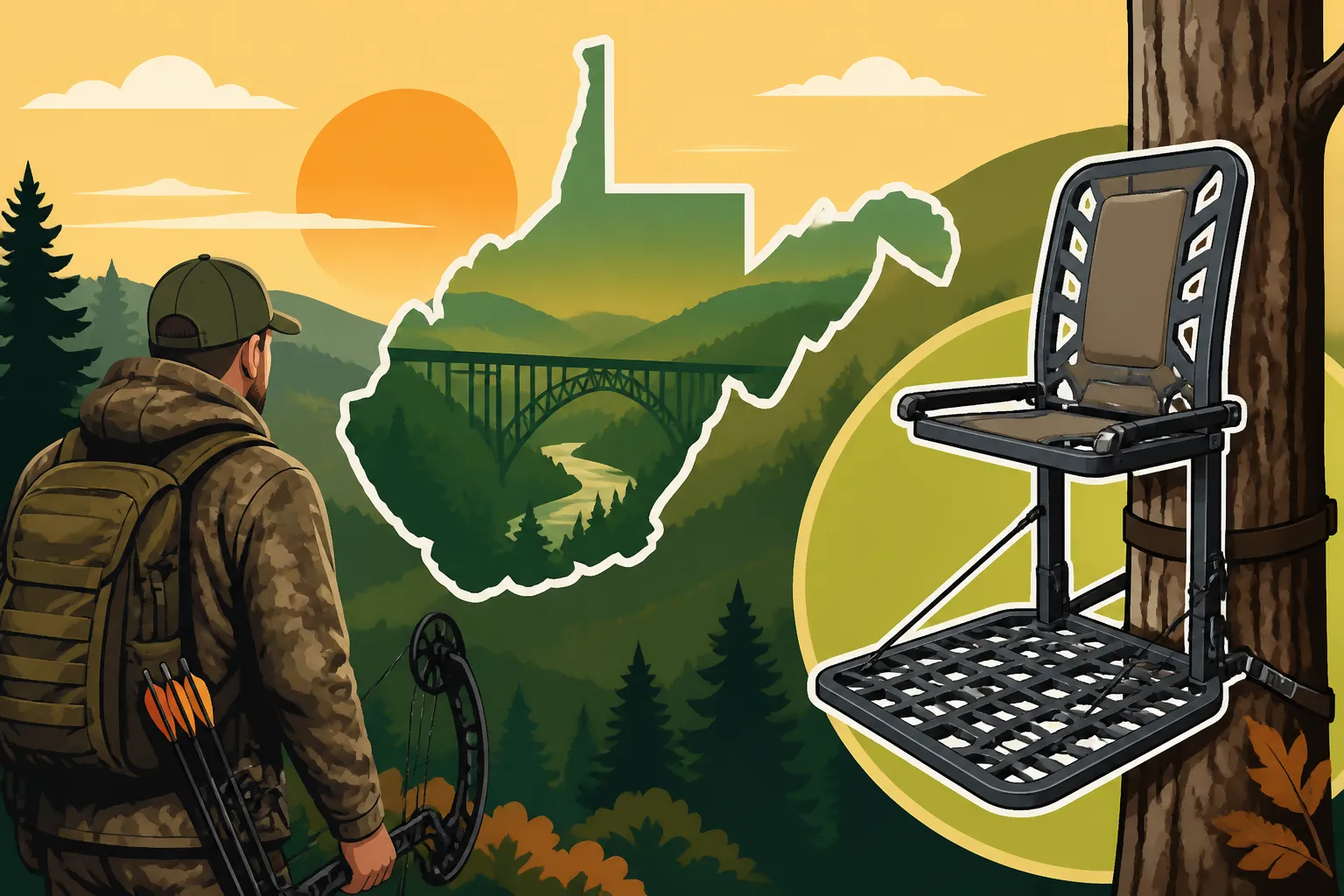
For many West Virginia public land hunters, a hang-on stand combined with climbing sticks is the gold standard for versatility. A hang-on stand is typically a lightweight, compact platform that you physically attach to a tree with a strap or chain. To get up to it, you use separate climbing sticks, which are modular sections that you attach to the tree one by one, creating a ladder to your stand. The main advantage here is that you're not nearly as reliant on a perfectly straight, limbless tree. You can navigate around small limbs or set up on trees with some lean, giving you far more options in the woods.
The ability to place climbing sticks precisely allows you to position yourself for the best shooting lanes, even if the tree itself isn't perfect. This modularity means you can choose lighter sticks for shorter hunts or more robust ones for longer sits. Many hunters also choose to leave sticks on a "sacrificial" tree in a good area and just carry the hang-on stand for maximum efficiency. While it means carrying two separate pieces of gear, the combined weight can often be lighter than a bulky climber, and the added flexibility in tree choice is invaluable. This is a fantastic option for Hanging a Stand on a Steep Allegheny Ridge where tree options might be more limited. When considering a hang-on and sticks, durability is key. Brands like Lone Wolf, XOP, and Summit offer popular options known for their quality. Before you buy, check online reviews on platforms like GoHunt to see what other hunters are saying about their performance in conditions similar to West Virginia's.
Saddle Hunting: The Ultimate in Lightweight Mobility
If you haven't looked into saddle hunting yet, it's quickly becoming the darling of the ultra-mobile public land hunter. A hunting saddle isn't a stand in the traditional sense; it's more like a rock climbing harness that you wear. You ascend the tree using climbing sticks, ropes, or an aider system, then attach yourself to the tree via a tether and a lineman's rope. You essentially lean into the tree, using a small platform or steps for your feet. The beauty of saddle hunting is its incredible lightweight nature and compactness. Your entire system—saddle, platform, sticks, ropes—can often weigh significantly less than even the lightest hang-on setup.
This minimal weight translates directly into greater mobility. You can hike farther, deeper, and faster into the backcountry. It also offers a full 360-degree shooting radius around the tree, a huge advantage when a deer approaches from an unexpected angle. For hunting highly pressured areas where deer are constantly circling and trying to scent check, being able to pivot silently to get a shot can be the difference between success and failure. Saddle Hunting in West Virginia Hardwoods offers a truly unique and adaptable experience. There's a learning curve, absolutely, but for hunters who prioritize stealth and mobility above all else, the saddle system is hard to beat on West Virginia's challenging terrain.
Essential Features for a Public Land Portable Stand
Choosing a portable stand isn't just about picking a type; it's about evaluating the features that will make your hunt safer, more comfortable, and ultimately, more successful. Every piece of gear you take into the woods is a compromise, so understanding what truly matters for public land hunting in West Virginia is vital.
Weight and Packability Considerations
When you're hiking into the remote corners of a WMA or tackling the steep grades of the Allegheny Mountains, every ounce matters. A stand that feels light in the garage can feel like a lead anchor after a two-mile hike, especially if you're carrying a pack with other essentials. Look for stands made from aluminum alloys rather than steel to keep the weight down. For hang-ons and saddles, consider how the climbing sticks or aider system integrates with your pack. Can they be strapped securely, or do they flop around and make noise? Many modern designs prioritize a sleek profile that hugs your body as you walk, minimizing snags on brush and reducing bulk.
Think about the total system weight: the stand, the sticks/aider, your safety harness, and any ropes. A lighter overall system allows you to go farther, scout more effectively, and still have enough energy to set up your stand safely and make a clean shot. It also means less fatigue at the end of a long day when you're Dragging a Deer Off a Steep Ridge. A heavy, bulky stand system will limit your willingness to move, defeating the entire purpose of a portable setup. You want to be able to seamlessly carry your stand along with your Packs for a Monongahela Forest Day Hunt without feeling like you're hauling a small car.
Quietness and Durability
There’s nothing worse than the tell-tale squeak of metal-on-metal as you try to set up silently in the pre-dawn darkness, or the clank of a stand as you bump a tree during a crucial moment. Pressured West Virginia deer are incredibly sensitive to noise. Look for stands that incorporate silent strap attachments, nylon washers, or solid connections that minimize metal-on-metal contact. Before taking a new stand into the field, set it up in your backyard and deliberately try to make noise. Identify and address any potential squeaks or rattles with tape, rubber, or lubricant.
Durability is equally important. West Virginia's terrain is rough. You'll be crossing creeks, scrambling over rocks, and pushing through thick laurel hells. Your stand needs to withstand abuse without bending, breaking, or developing weaknesses. Look for robust welds, quality hardware, and sturdy platform construction. While ultralight is appealing, it shouldn't come at the cost of being able to safely and reliably support your weight, season after season. A stand that holds up to the rigors of mountain hunting is an investment that pays dividends in safety and peace of mind.
Safety and Comfort on Long Sits
Above all else, your stand needs to be safe. Always, always, always use a fall arrest system – whether it's a full-body harness for a hang-on or climber, or the tether and lineman's rope for a saddle. Practice using it at ground level before you ever leave the ground. Check all straps, cables, and connections before each hunt. Safety is non-negotiable. Many stands are rated for specific weights, and it’s critical to stay within those limits, factoring in your body weight plus all your gear.
Comfort, while secondary to safety, is crucial for those long, all-day sits, especially during the peak of the Hunting the Rut in Mid-November. A stand with an uncomfortable seat or a small platform will quickly lead to fidgeting, reduced alertness, and a shorter hunt. Look for padded seats that allow you to sit for hours without pain. For hang-ons and saddles, consider a larger platform if you like to stand and stretch or move around a bit. Adjustability in the seat height or platform angle can also make a huge difference in comfort, especially on trees that aren't perfectly straight. If you're cold and uncomfortable, you're not going to stay in the woods as long as you should.
Tactics for Deploying Portable Stands Effectively
Having the right portable stand is only half the battle. Knowing how to use it strategically and efficiently is what truly separates the successful public land hunter from the rest. It's about combining your gear with smart tactics to maximize your opportunities.
Scouting and Stand Placement
Effective stand placement starts long before opening day. This means diligent Scouting West Virginia Public Land Before Season. Use tools like GoHunt's mapping features to identify potential bedding areas, travel corridors, and food sources. Look for pinch points, saddles, benches, and creek bottoms that naturally funnel deer movement. Once you're on the ground, confirm this with fresh sign – rubs, scrapes, tracks, and droppings. With a portable stand, you're not looking for a tree, you're looking for the perfect tree that offers cover, shot opportunities, and a favorable wind for your approach and exit.
When you find that ideal spot, don't just pick the first tree you see. Scan the surrounding area. Is there a tree that offers better cover? One that puts you slightly higher for a better view or to get above a deer's nose? Is there a secondary tree nearby that might work if conditions change? The beauty of a portable stand is that you can be extremely picky. Place your stand so you can comfortably shoot in your most likely kill zones, keeping branches and brush that might deflect an arrow or bullet in mind. Remember to consider your entry and exit routes—can you get to and from your stand without spooking deer? This might mean setting up 20-30 yards off a primary trail or food source to intercept deer on their way in or out, rather than directly on it.
Entry and Exit Strategies
This is where many public land hunts go wrong. You can have the perfect stand in the perfect spot, but if you blow out deer getting to or from it, your efforts are wasted. With a portable stand, your goal is to be as stealthy as possible. Plan your routes carefully, especially in low light. Use terrain features like creek beds, ditches, or ridge lines to mask your approach. Always hunt with the wind in mind; if the wind changes direction mid-hunt and makes your route dangerous, be prepared to sit tight or take an alternate, quieter exit.
For example, if you're hunting an early morning stand, consider an entry route that parallels a bedding area but stays well off it, allowing you to get in before deer are up and moving. For an evening hunt, your exit might involve waiting until full dark when deer are actively feeding, then slipping out with minimal disturbance. The goal is to leave the area as undisturbed as possible, ensuring future hunts from that same spot remain viable. Being able to adapt your route on the fly is part of what makes portable stands so effective. You might even find yourself Finding Ground Others Walk Past because they're unwilling to tackle the challenging entry that your lightweight stand allows.
Practicing Your Setup
Don't let the first time you set up your new portable stand be in the dark, thirty minutes before legal shooting light, shivering in the cold. Practice, practice, practice! Set up your stand in your backyard or a nearby woodlot. Get familiar with every buckle, strap, and connection. Understand how to get the stand level, how to hang your climbing sticks efficiently, and how to safely ascend and descend. For saddle hunters, practice your rope and tether management until it's second nature.
The more you practice, the faster and quieter you'll become in the field. This confidence and efficiency mean you'll be less likely to make mistakes, less likely to spook game, and more likely to be settled and ready when that big West Virginia buck walks by. Time your setup to see how long it takes you, then try to shave off a few minutes. This deliberate practice will pay huge dividends when you're actually out there in the mountains, under pressure, trying to get into position before the woods wake up. This is also where you'll fine-tune small details, like where to hang your bow or where to place your pack for easy access.
Here's a quick comparison of popular portable stand types:
| Stand Type | Key Advantages | Ideal West Virginia Terrain | Typical Weight (Stand Only) | Noise Level (Setup) | 360-Degree Shooting? |
|---|---|---|---|---|---|
| Climbing Stand | Fast setup on ideal trees, self-contained | Straight, limbless hardwoods; river bottoms | 18-25 lbs | Moderate | No (forward only) |
| Hang-On + Sticks | Versatile tree choice, quieter setup, adaptable | Varied timber, steep terrain, dense cover | 8-15 lbs (stand) + 6-12 lbs (sticks) | Low | Limited |
| Saddle Hunting | Ultra-light, extremely mobile, full visibility | Any tree; ideal for deep backcountry & thick cover | 3-6 lbs (saddle) + 6-12 lbs (sticks/aider) | Very Low | Yes |
Ultimately, the best portable stand for you is one that you are comfortable with, can safely operate, and that aligns with your specific hunting style on West Virginia's diverse public lands. Whether you're chasing deer during West Virginia's Buck Gun Season or trying to get the jump on a gobbler during Spring Turkey Hunting in West Virginia, the ability to be mobile is a huge asset.
Conclusion
Embracing the mobility offered by portable treestands truly revolutionizes how you can hunt West Virginia's public lands. Gone are the days of feeling stuck in a fixed position, watching opportunities walk by because your setup isn't quite right. By investing in the right lightweight gear and mastering the art of silent, efficient setup, you gain the freedom to adapt to shifting deer patterns, changing weather, and evolving pressure.
From the rugged Allegheny ridges to the dense river bottoms, a portable stand allows you to follow the sign, react to conditions, and ultimately place yourself in the best possible position for success. Remember, hunting public land is about effort and adaptability. Equip yourself with a portable stand, perfect your entry and exit strategies, and scout relentlessly. You'll not only enhance your chances of harvesting game, but you'll also deepen your connection to the wild, untamed beauty of West Virginia's mountains.
Disclaimer
This article is for general informational purposes only and does not constitute professional advice. Laws, prices and regulations vary by location and change over time. Consult a qualified professional for guidance on your specific situation.