Field Dressing Knives Worth Carrying
There's nothing quite like the immense satisfaction of a successful hunt in the wild, beautiful mountains of West Virginia. But that moment of triumph can quickly turn into a frustrating chore if you're not properly equipped for the next crucial step: field dressing your animal. Struggling with a dull blade, an ill-fitting handle, or a knife that simply isn't up to the task can make a messy job even messier, compromising meat quality and even risking injury. This guide will walk you through everything you need to know about choosing, using, and maintaining the field dressing knives truly worth carrying into the West Virginia wilderness, ensuring your hard-earned venison is cared for right from the start.
Why Your Field Dressing Knife Matters More Than You Think
When you're out in the woods, far from the conveniences of home, your field dressing knife isn't just a tool; it's an extension of your preparedness and respect for the animal you've harvested. The right knife makes the process efficient, clean, and safe, while the wrong one can turn a necessary task into a source of stress and regret.
The Frustration of a Dull Blade
We've all been there, or at least heard the stories. You've just dropped a beautiful buck, maybe after a long stalk through the Monongahela National Forest Hunting grounds, and now it's time to get to work. You pull out your trusty knife, but as you begin to make the first cut, it drags. It tears the hide instead of slicing cleanly. You push harder, risking slipping, and suddenly your fingers are dangerously close to the blade. A dull knife doesn't just make the job harder; it makes it infinitely more dangerous. You expend more energy, your cuts are less precise, and you increase the chances of puncturing organs, which can contaminate the meat. The frustration mounts, and what should be a respectful and efficient process becomes a grueling ordeal. A truly sharp edge, on the other hand, glides through hide and muscle with minimal effort, allowing for controlled, clean incisions that protect the integrity of the meat and keep you safe.
Different Cuts, Different Needs
Field dressing isn't a one-size-fits-all operation, and neither are the knives that tackle it best. From opening the body cavity to skinning and even breaking down quarters in the field, different stages demand different blade characteristics. You wouldn't use a delicate caping knife to split a deer's sternum, just as a large, heavy blade would be clumsy for precise cuts around the anus or for removing the windpipe. Understanding these nuances can save you time, improve hygiene, and result in better meat quality. For instance, when you're quickly trying to cool down an animal shot in early archery season, efficiency is key. Having the right tool to quickly and cleanly open the cavity can be the difference between perfectly preserved meat and venison that suffers from heat spoilage. The array of tasks involved means that often, a single "perfect" knife might not cut it (pun intended!) for every scenario, leading many experienced hunters to carry a small, well-thought-out kit.
Types of Field Dressing Knives and Their Ideal Uses
The market is flooded with hunting knives, but not all are created equal when it comes to the specific demands of field dressing. Let's break down the most common and effective types.
Fixed Blade Knives: The Workhorses of the Woods
For many West Virginia hunters, a good fixed blade knife is the undisputed king of the field dressing kit. Their robust construction means there's no folding mechanism to fail or get gunked up with blood and fat. This inherent strength makes them incredibly reliable, especially when you're exerting force to cut through tough hide or cartilage. Plus, fixed blades are generally easier to clean thoroughly, which is paramount for hygiene in the field. After a successful Bowhunting West Virginia's Long Archery Season outing, you want a knife that can handle the grit and grime without complaint.
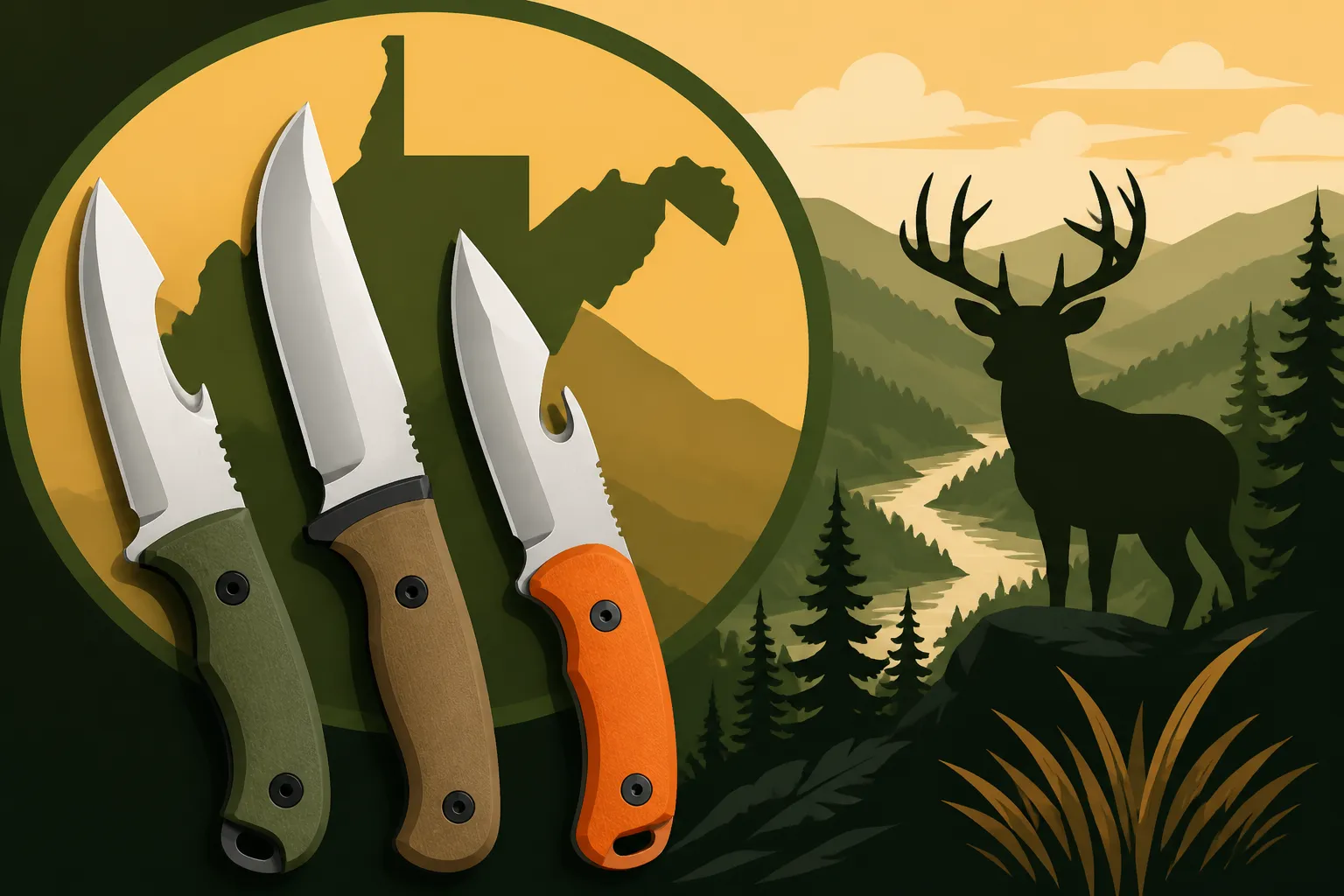
However, this strength often comes with bulk, meaning they take up more space and require a secure sheath for safe transport. When choosing a fixed blade, look for designs like the drop point, which has a strong tip and a belly that's excellent for skinning, or a clip point, offering a finer tip for more precise work. Some fixed blades also integrate a gut hook on the spine, designed to open the abdominal cavity with less risk of puncturing intestines. For tasks like Field Dressing a Deer in Cold Weather or even just general gutting, a solid fixed blade with a comfortable grip is invaluable. When I'm researching new gear, I often check resources like GoHunt to see what other hunters are recommending for durable, dependable fixed blades that can handle the rugged conditions we face here in the mountains.
Folding Knives: Compact Convenience with Caveats
Folding knives offer undeniable portability and convenience. They tuck neatly into a pack or pocket, and their closed design provides a measure of safety during transport. For hunters who prefer a lighter load, a well-designed folding knife can certainly handle many field dressing tasks. They're often excellent for the initial cuts to open the hide and for separating muscle groups.
The main caveats, however, revolve around cleaning and potential robustness. The pivot points and internal mechanisms of folding knives can be difficult to clean thoroughly, trapping blood and debris that can lead to bacterial growth or corrosion over time. While modern folding knives feature incredibly strong locking mechanisms, they are still inherently less robust than a full-tang fixed blade when significant leverage is applied. If you choose a folder, ensure it has a strong, reliable lock (like a lockback or frame lock) and a simple design that allows for as much open access for cleaning as possible.
Specialized Tools: Beyond the Basic Blade
Sometimes, the job requires more than just a general-purpose blade. Specialized tools can make specific aspects of field dressing much easier and cleaner.
- Gut Hooks: These are often integrated into the spine of a fixed blade or sold as standalone tools. A gut hook is designed to easily slice open the abdominal cavity from the inside out, without piercing the intestines. You hook it under the skin, and the rounded tip keeps the cutting edge away from the internal organs. This is fantastic for novice hunters or when you're working quickly in low light, significantly reducing the risk of contamination.
- Caping Knives: If you plan on getting a shoulder mount, a caping knife is invaluable. These are typically small, slender blades with fine tips, designed for intricate work around the ears, eyes, and mouth. They allow for the precision necessary to avoid cutting hair or damaging the hide in areas crucial for taxidermy. While not essential for basic field dressing, they're a must for trophy care.
- Bone Saws: Trying to hack through a deer's sternum or pelvis with your primary knife is a recipe for a dull edge and a lot of frustration. A small, lightweight bone saw, either folding or fixed, makes quick work of these tougher sections. They allow you to get into the chest cavity more easily or to split the pelvis for thorough cleaning and cooling. When you're planning to Butchering a Deer at Camp, a bone saw is almost a necessity for efficient processing.
| Knife Type | Primary Use | Pros | Cons | Best For |
|---|---|---|---|---|
| Fixed Blade | Gutting, skinning, general cuts | Robust, easy to clean, reliable | Can be bulky, requires sheath for safety | All-around workhorse, heavy duty tasks |
| Folding Knife | Lighter gutting, general cuts | Compact, portable, safe carry | Harder to clean, less robust than fixed blades | Light & fast hunting, backup knife |
| Gut Hook (tool) | Opening abdominal cavity | Prevents organ puncture, quick cavity opening | Single-purpose tool, often integrated with other knives | Clean cavity opening, especially for beginners |
| Caping Knife | Detail work for taxidermy | Precision for intricate cuts | Too small for general field dressing | Trophy preparation, fine skinning |
| Bone Saw (tool) | Splitting bone (sternum, pelvis) | Quick, clean bone cuts, preserves knife edge | Additional tool to carry, often used post-gutting | Larger game, processing at camp |
Key Features to Look for in a Field Dressing Knife
Choosing the right knife goes beyond just deciding if it's fixed or folding. The materials and design aspects are what truly separate a mediocre blade from a lifelong hunting companion.
Blade Material and Edge Retention
The steel a blade is made from is perhaps its most critical feature. It dictates how well it holds an edge, how easy it is to sharpen, and its resistance to corrosion – all vital for a field dressing knife.
- Stainless Steel: The most common choice for hunting knives, stainless steel alloys (like 440C, AUS-8, or tougher variants like S30V) offer excellent corrosion resistance, which is a huge benefit when dealing with blood and moisture in the field. They generally hold an edge reasonably well and can be resharpened with relative ease. For West Virginia's often damp and unpredictable weather, a rust-resistant blade is a real advantage.
- Carbon Steel: While less common today, traditional carbon steel knives are known for taking and holding an incredibly keen edge. The downside is that they are highly susceptible to rust and require diligent cleaning and oiling to prevent corrosion. Some hunters swear by them for their superior edge performance, but they demand more maintenance.
- Full Tang: For fixed blades, "full tang" means the blade steel extends all the way through the handle. This construction method provides maximum strength and durability, making the knife incredibly resilient to twisting or heavy use. It's a non-negotiable feature for a primary field dressing knife that you'll rely on for tough tasks like Recovering a Deer From a Steep Hollow or splitting tough joints.
When considering a knife, you might find valuable reviews and comparisons of different blade steels and designs on outdoor gear platforms or hunter forums. I often refer to resources like GoHunt for their detailed breakdowns on various knife features, which helps me stay informed on the latest durable options.
Handle Ergonomics and Grip
A knife is only as good as your ability to safely and comfortably control it, especially when your hands are cold, wet, or bloody. The handle material and shape are critical for this.
- Material: Look for handle materials that offer excellent grip even when wet. Textured rubber, G10, or Micarta are popular choices. These materials are durable, easy to clean, and provide a secure hold. Natural materials like wood or bone can be beautiful, but ensure they are stabilized and treated to resist moisture and provide adequate texture for a non-slip grip. In the chilly late season when your fingers are numb, a good grip is vital for safety.
- Shape: The handle should fit comfortably in your hand, without hot spots or sharp edges that could cause discomfort during prolonged use. A finger guard is crucial to prevent your hand from sliding forward onto the blade, a common cause of accidents. Some handles feature specific contours or textures that enhance control, giving you confidence and precision with every cut.
Sheath and Carry Options
The sheath is not just a carrying case; it's a safety device and an integral part of your field dressing system.
- Security: A good sheath should hold the knife securely, preventing accidental loss or unsheathing. You don't want your knife falling out while you're scrambling over downed logs or scaling a steep bank in pursuit of game.
- Material: Kydex, a thermoformed plastic, is popular for its durability, weather resistance, and ability to hold a knife with a satisfying click. Leather sheaths are classic and durable but require more maintenance to stay dry and supple. Nylon or synthetic fabrics are also common, often with plastic inserts to protect the blade.
- Design: Look for sheaths with draining holes to prevent moisture buildup and to allow for easy cleaning. Different carry options, such as belt loops for vertical or horizontal carry, or attachments for pack straps, can cater to your personal preference and hunting style. The ability to easily access your knife with one hand, especially if you're holding a limb or a flashlight, is a huge bonus.
Maintenance and Best Practices for Your Field Dressing Kit
Even the best knife is useless if it's dull or dirty. Proper care and maintenance are non-negotiable for any serious hunter.
Keeping Your Edge Razor Sharp
A sharp knife is a safe knife. Period. It's also far more efficient. You should never head into the woods without a razor-sharp blade.
- Sharpening Tools: Invest in quality sharpening tools. This could be a set of Arkansas stones, a diamond sharpening system, a ceramic rod, or even a compact pull-through sharpener for quick touch-ups in the field. A leather strop can put that final, hair-popping edge on your blade.
- Sharpening Technique: Learn to sharpen your knives correctly. Maintaining a consistent angle is key. Many modern sharpeners offer guides for common angles (e.g., 20 or 25 degrees). Practice on an old kitchen knife before working on your prize hunting blade. Don't wait until your knife is completely dull; regular, light touch-ups will keep it performing at its best and prolong its life.
- Field Touch-Ups: A small, lightweight sharpener or ceramic rod in your pack is a lifesaver. You might be able to process multiple deer or other game over a weekend, and a quick touch-up ensures your knife stays effective. When I'm out in the field and need a quick edge, I often reference tips and gear recommendations from reputable sources, like those found on GoHunt, to ensure I'm using the best methods and products for maintaining my blades.
Cleaning and Storage for Longevity
After the hard work is done, proper cleaning and storage are vital to protect your investment and maintain hygiene.
- Immediate Cleaning: As soon as you finish field dressing, clean your knife thoroughly. Warm, soapy water works wonders. Use a brush or sponge to remove all blood, fat, and tissue from the blade, handle, and especially any crevices. This is where fixed blades really shine, as they lack the intricate mechanisms of folders that can trap debris.
- Thorough Drying: After washing, dry your knife immediately and completely. Moisture is the enemy of steel, leading to rust. If you have a carbon steel blade, apply a light coat of food-grade mineral oil to prevent corrosion.
- Proper Storage: Store your knife in a dry environment. Keep it in its sheath, but ensure the sheath isn't trapping moisture. Avoid storing it in damp basements or garages. Keeping your knives clean and well-maintained ensures they're always ready for action, whether it's for Hunting the Rut in Mid-November or handling a late-season deer.
Building a Complete Field Dressing Kit
While a good knife is the centerpiece, a truly effective field dressing kit includes a few other essentials that will make the job safer, cleaner, and easier.
- Gloves: Always carry a few pairs of disposable nitrile or latex gloves. They protect your hands from blood and bacteria, and help prevent the spread of CWD if you're hunting in areas like Hampshire County, where West Virginia's Chronic Wasting Disease Counties are a concern.
- Wipes/Paper Towels: A small roll of paper towels or a pack of wet wipes can be invaluable for quick clean-ups of hands, knives, and other gear.
- Game Bags: If you're quartering your animal in the field, especially for a long drag out or when conditions are warm, good quality game bags are a must. They protect the meat from dirt, insects, and drying out. Game Bags for Warm September Days can make a huge difference in meat quality.
- Flashlight/Headlamp: Field dressing often happens in fading light or after dark. A reliable headlamp leaves your hands free to work safely.
- Deer Drag/Sled: While not strictly part of the knife kit, having a plan for moving your animal after it's field dressed is critical, especially when Dragging a Deer Off a Steep Ridge.
By assembling a comprehensive kit and committing to proper knife care, you ensure that the effort you put into harvesting an animal is matched by the care you give it afterward. It's all part of being a responsible and prepared West Virginia hunter.
Disclaimer
This article is for general informational purposes only and does not constitute professional advice. Laws, prices and regulations vary by location and change over time. Consult a qualified professional for guidance on your specific situation.