Rain Gear for a West Virginia Downpour
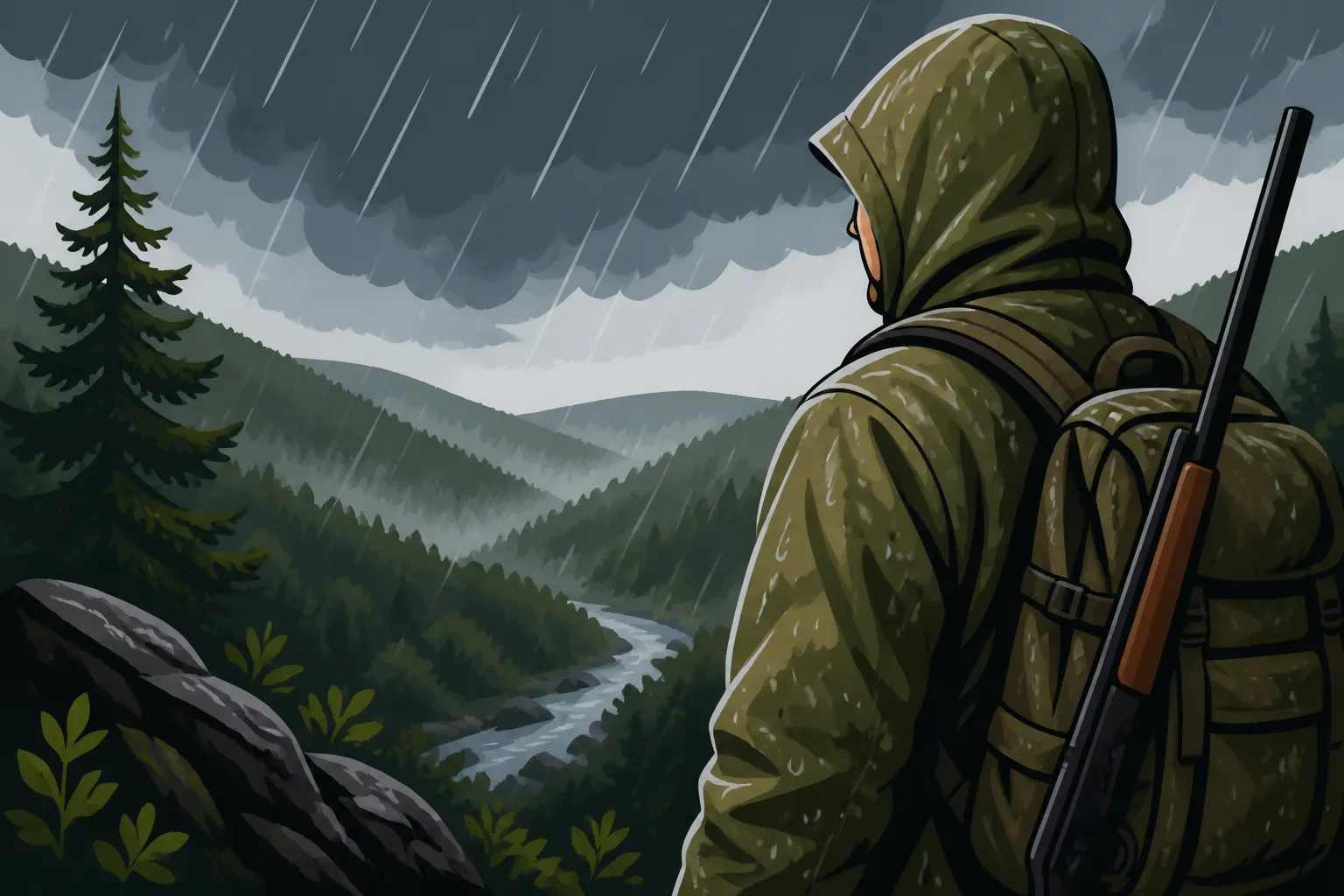
There's nothing quite like standing on a West Virginia ridge, the morning light breaking, only for a sudden, dark cloud to roll over, dumping sheets of rain with little warning. Getting caught unprepared in a downpour can quickly turn an exciting hunt into a miserable, even dangerous, experience. This guide is all about equipping you with the knowledge to choose the right rain gear, ensuring you stay dry and comfortable no matter what Mother Nature throws your way in the Mountain State.
Why West Virginia Weather Demands Serious Rain Gear
Hunting in West Virginia means embracing diverse and often unpredictable weather. It's not just about staying dry; it's about staying safe and effective in conditions that can shift from sunshine to heavy rain, then back again, all within a few hours. Your rain gear isn't just an accessory here; it's a critical piece of your hunting system.
Sudden Mountain Storms and Temperature Drops
Anyone who's spent time in the Allegheny Mountains knows how quickly the weather can turn. You can start your morning walk to the stand under clear skies, feeling the chill but confident it'll warm up. Then, without much warning, a squall line pushes through, bringing not just rain but a significant drop in temperature. This isn't just uncomfortable; it can be dangerous, leading to hypothermia if your core temperature drops too low. Proper rain gear acts as a crucial barrier, preventing your insulating layers from getting wet and losing their effectiveness. Imagine sitting patiently, waiting for that buck you’ve been Scouting West Virginia Public Land Before Season to step out, and suddenly being drenched to the bone. That’s a quick end to any hunt.
These sudden deluges are especially common during early fall archery seasons when temperatures might still feel mild, but the air is already moist. A cold front moving through can trigger torrential rains, and if your rain gear isn't up to snuff, you'll be shivering in no time. For instance, hunting those high elevation benches near Spruce Knob means you're often exposed, and a passing shower can be much colder and more intense than the same shower in a valley.
Humidity and Persistent Drizzle
It's not always about sudden, heavy rain. West Virginia can also be characterized by long periods of persistent drizzle, sometimes accompanied by a thick fog that saturates everything. This kind of moisture can be insidious, slowly seeping through less-than-adequate gear. Add to that the state's natural humidity, especially in the thick hollows and river bottoms, and you've got a recipe for getting soaked from both the outside and the inside if your gear doesn't breathe.
Think about a late-season hunt in December, maybe tracking a deer through the leaf litter after a fresh snow. The air is damp, the trees are dripping, and you're working up a sweat as you push through thick cover. If your rain gear keeps the external moisture out but traps all your body heat and sweat in, you're essentially creating your own personal rain shower inside your jacket. This makes Cold-Weather Sitting Strategy in the Mountains incredibly challenging, as even a small amount of internal moisture can lead to a significant chill once you stop moving.
Key Features to Look for in Effective Rain Gear
When you're evaluating rain gear, it’s not just about a pretty pattern or a brand name. You need to scrutinize the technical details that will make or break your comfort and effectiveness in the field. Every stitch, every zipper, and every membrane matters when you’re facing a genuine West Virginia downpour.
Waterproof vs. Water-Resistant: Understanding the Difference
This is perhaps the most critical distinction. "Water-resistant" gear might shed light drizzle for a short while, but it will inevitably wet out in a sustained rain. This type of gear is often cheaper and lighter, but it's rarely sufficient for serious hunting in West Virginia. When the sky truly opens up, water-resistant layers will leave you soaked and miserable. You might think it's good enough for Bowhunting West Virginia's Long Archery Season where you can often seek shelter, but if you're deep in the woods, that's not always an option.
"Waterproof" gear, on the other hand, is designed to completely prevent water penetration, typically through the use of a waterproof membrane (like Gore-Tex or proprietary alternatives) combined with sealed seams. This is what you absolutely need for West Virginia. Look for terms like "fully seam-taped" or "hydrostatic head rating" (which indicates how much water pressure the fabric can withstand before leaking). When you invest in truly waterproof gear, you’re investing in staying dry and warm, allowing you to focus on the hunt, not on the weather. Many reputable outdoor brands offer excellent waterproof solutions, and platforms like GoHunt often feature reviews highlighting the true waterproof capabilities of various products.
Breathability: Staying Dry from the Inside Out
Getting wet from the outside is one problem; getting wet from the inside is another entirely, and just as miserable. As mentioned, West Virginia hunting often involves significant physical exertion – climbing Steep Allegheny Ridges, dragging gear, or tracking game. This effort generates body heat and sweat. If your waterproof gear isn't also breathable, that sweat has nowhere to go. It condenses on the inside of your jacket, making you feel clammy and eventually wet, defeating the purpose of being waterproof.
Breathable membranes work by having microscopic pores that are too small for liquid water droplets to pass through, but large enough for water vapor (sweat) to escape. Look for terms like "vapor transmission rate" (VTR) or "Moisture Vapor Transmission Rate" (MVTR) in product descriptions, though specific numbers can be hard to compare across brands. Instead, focus on reputable brands known for their breathable waterproof technologies. Features like pit zips (zippers under the arms) and mesh-lined pockets also aid in ventilation, allowing you to dump excess heat quickly without removing your outer layer. This balance of keeping water out while letting sweat escape is crucial for comfort and warmth, especially when you're Hunting the West Virginia Rut in November and moving a lot.
Durability and Quietness for the Field
Hunting gear needs to stand up to abuse. You'll be pushing through rhododendron thickets, scrambling over rocks, and brushing against tree bark. Flimsy rain gear will tear, compromising its waterproof integrity. Look for fabrics that are robust, often described as having a higher denier count, especially in high-wear areas like shoulders, elbows, and knees. However, durability often comes with a trade-off: weight and quietness. A heavy, durable fabric might be noisy when you move, which is a definite no-go for close-range hunting with a bow or even still-hunting with a rifle.
The ideal hunting rain gear strikes a balance. It needs to be durable enough to survive a season or more of hard use, but also quiet enough not to alert game. Many specialized hunting apparel companies use brushed fabrics or softer face fabrics laminated to their waterproof membranes to reduce noise. These materials are often more expensive, but the investment pays off when you're trying to sneak within range of a wary whitetail. When you're Using a Ground Blind on West Virginia Public Land, the rustle of your jacket might not matter as much, but if you're actively stalking, quietness is paramount.
Fit, Layering, and Mobility
Your rain gear needs to fit over your regular hunting layers without feeling bulky or restricting movement. West Virginia hunters often use a layering system – a base layer, a mid-layer for insulation, and an outer shell for protection. Your rain jacket and pants should accommodate these layers comfortably. If your rain gear is too tight, it will compress your insulating layers, reducing their effectiveness, and restrict your range of motion when drawing a bow or shouldering a rifle.
Conversely, gear that's too baggy can snag on branches, create excessive noise, and generally be a nuisance. Many modern hunting rain jackets feature articulated elbows and knees, gusseted underarms, and adjustable cuffs and hems to allow for freedom of movement. Always try on rain gear with the layers you intend to wear underneath. This ensures you have the mobility to climb into a treestand, crawl through brush, or shoulder your weapon quickly. Remember that Layering for a West Virginia Deer Stand is key to staying warm, so your rain gear must integrate seamlessly into that system.
Different Types of Rain Gear for Various Hunting Scenarios
Just as you wouldn't use the same rifle for squirrel hunting as you would for elk, different hunting scenarios in West Virginia call for different types of rain gear. Understanding these variations can save you money and keep you more comfortable.
Lightweight Packable Shells for Archery Season
During West Virginia's long archery season, especially in the warmer early weeks, temperatures can swing wildly. You might start your day with a chill, but by midday, it's warm and humid. A heavy, insulated rain jacket would be far too much. This is where a lightweight, highly packable waterproof shell shines. These garments are designed to be rolled up or stuffed into a small pouch, taking up minimal space in your Packs for a Monongahela Forest Day Hunt.
They're perfect for throwing into your backpack on a sunny morning, knowing that a pop-up thunderstorm could develop at any moment. While they often lack the extreme durability or warmth of heavier gear, their primary function is to provide immediate, effective waterproof protection without adding bulk or overheating you during strenuous walks. Many bowhunters appreciate their minimalist design, especially when Hunting the Southern Archery-Only Counties where stealth and agility are paramount. Just make sure even these lighter options are genuinely waterproof, not just water-resistant, as those early season downpours can be intense.
Heavy-Duty Outerwear for Late-Season Gun Hunts
When West Virginia's buck gun season opens, or during the late muzzleloader and archery seasons, the weather often turns genuinely nasty. Freezing rain, sleet, wet snow, and biting winds are all on the menu. For these conditions, you need heavy-duty rain gear that not only keeps you dry but also contributes to your insulation and overall warmth. These garments are typically more robust, featuring thicker face fabrics for added durability and warmth, and often have a more substantial DWR (Durable Water Repellent) coating.
This type of rain gear might integrate a slight amount of insulation, or it might be a bombproof shell designed to go over your significant insulating layers like a Wool Versus Synthetics in Mountain Cold mid-layer. Look for features like reinforced knees and seat, storm flaps over zippers, and deep, hand-warmer pockets. The quietness factor is still important, but sometimes a slightly tougher, more rigid fabric is acceptable given the colder temperatures and often less precise shot distances of rifle hunting. When you're making a Deer Drives With Three or Four Hunters through a laurel thicket in late November, you need gear that can take a beating and keep you dry.
Rain Pants and Bibs: Don't Forget Your Lower Half
It's a common mistake to invest heavily in a good rain jacket and then neglect the lower body. But anyone who's spent an hour sitting in wet brush or walking through tall, dew-soaked grass knows how quickly your legs can get soaked. Wet pants can lead to cold legs, which significantly impacts your overall body temperature and comfort. Rain pants or bibs are just as crucial as your rain jacket.
Rain Gear Type Comparison
| Feature/Type | Lightweight Packable Shells (Jacket & Pants) | Heavy-Duty Outerwear (Jacket & Pants/Bibs) |
|---|---|---|
| Primary Use | Early archery, warm/mild weather, emergency rain protection | Late gun season, cold/wet conditions, prolonged exposure |
| Weight | Very light, compressible | Moderate to heavy |
| Durability | Good, but often thinner fabrics, less abrasion resistance | Excellent, reinforced high-wear areas, robust fabrics |
| Quietness | Generally quiet, often softer face fabric | Can be slightly stiffer/noisier due to heavier fabric |
| Insulation | None or very minimal | None (shell) or light insulation (some models) |
| Breathability | High priority, often excellent | Good to very good, balanced with durability |
| Cost | Moderate to high | High |
| Ideal WV Scenario | West Virginia Archery Season Opening Day, sudden storms | Muzzleloader Deer Hunting in West Virginia, West Virginia's Buck Gun Season |
Rain pants should have full-length side zippers, which are incredibly useful. These allow you to put them on or take them off without removing your Boots for West Virginia Hollows and Ridges, and they double as ventilation if you start to overheat. Bibs offer even more protection, extending higher up your torso, which is fantastic for keeping drafts out and preventing water from running down your back if you bend over. This additional coverage is particularly valuable for sitting in a stand for hours or for more active hunting where you might be kneeling or crawling. Remember, a good waterproof membrane and sealed seams are just as vital in rain pants and bibs as they are in your jacket.
Maintaining Your Rain Gear for Longevity
Investing in quality rain gear is only half the battle; the other half is taking care of it. Proper maintenance ensures your gear continues to perform season after season, keeping you dry and extending its lifespan. Neglecting your rain gear can quickly lead to diminished performance, leaks, and a wasted investment.
Cleaning and Re-Waterproofing
Over time, dirt, oils, and residues from sweat and campfires can clog the microscopic pores of your breathable waterproof membrane, reducing its breathability and making the outer fabric "wet out" (absorb water instead of shedding it). Even though the membrane might still be intact, if the outer fabric wets out, you'll feel cold and damp because the fabric is heavy with water, and air can't circulate effectively. This is why cleaning is crucial.
Always follow the manufacturer's specific washing instructions. Generally, this involves using a technical cleaner specifically designed for waterproof breathable fabrics, not regular laundry detergent which can leave residues that impair performance. Wash in cold or warm water, on a gentle cycle. After cleaning, it's often necessary to reapply a DWR (Durable Water Repellent) treatment to the outer fabric. This can be done with a spray-on or wash-in product. The DWR causes water to bead up and roll off the fabric, preventing wetting out and helping the breathable membrane do its job more effectively. You can often tell if your DWR needs reapplying if water no longer beads up on the fabric's surface. A quick check on a site like GoHunt might even yield user-submitted tips for specific brands and materials.
Proper Storage to Prevent Damage
How you store your rain gear between hunts and seasons makes a big difference. Never pack away wet or even damp rain gear. Always ensure it's completely dry before folding or hanging it. Storing damp gear can lead to mildew growth, which not only smells terrible but can also damage the fabric and membrane, compromising its waterproof properties.
Store your rain gear in a cool, dry place, away from direct sunlight, which can degrade fabrics over time. Avoid compressing it tightly for long periods if possible, especially if it has any integrated insulation, as this can damage the loft. Hanging jackets and pants loosely in a closet is ideal. If you're using a packable shell, ensure it's clean and dry before stuffing it back into its pouch. Taking these simple steps will ensure that when you pull your rain gear out for that critical Hunting Deer After a Cold Front or during a West Virginia Youth Deer Weekend hunt, it's ready to perform at its peak. After all, what good is top-of-the-line gear if it's been ruined by improper care?
Disclaimer
This article is for general informational purposes only and does not constitute professional advice. Laws, prices and regulations vary by location and change over time. Consult a qualified professional for guidance on your specific situation.