Saddle Hunting in West Virginia Hardwoods
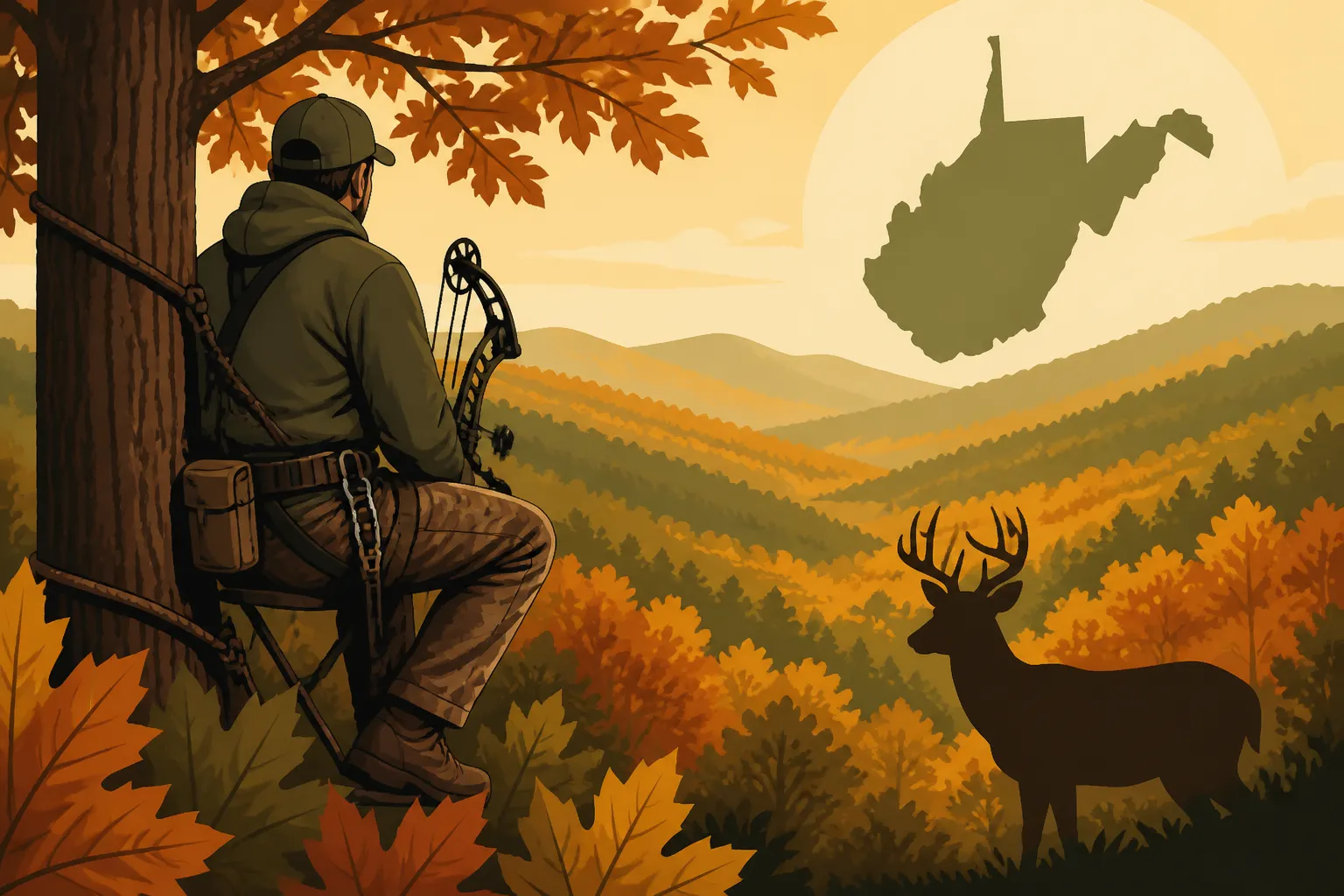
The rugged terrain and dense forests of West Virginia present unique challenges for deer hunters, often making traditional, bulky treestands feel cumbersome and limiting. Many hunters struggle with how to access remote spots quietly, adapt to changing conditions on steep slopes, or simply find a setup that doesn't scream "human" to a wary whitetail. This guide will dive deep into the world of saddle hunting, exploring how this highly mobile and minimalist approach can transform your experience in the Mountain State's hardwood forests, helping you unlock previously inaccessible areas and increase your odds of success.
Why Saddle Hunting Shines in West Virginia's Hardwoods
West Virginia's hunting landscape is defined by its dramatic topography—endless ridges, deep hollows, and thick timber. Traditional treestands, while effective in some areas, can be a real pain to haul through this kind of country, let alone set up discreetly. This is where saddle hunting truly comes into its own, offering unparalleled advantages for hunters looking to blend in and move efficiently.
Mobility and Adaptability in Rugged Terrain
Imagine trying to navigate a steep Allegheny ridge, crossing multiple ravines and thick rhododendron hells, all while carrying a bulky ladder stand or a heavy climbing stand. It's exhausting, noisy, and often leads to settling for less-than-ideal spots simply because they're easier to reach. Saddle hunting, by contrast, thrives on mobility. Your entire setup—saddle, climbing sticks, ropes—is incredibly lightweight and compact, allowing you to cover significant ground with less fatigue. This means you can truly get off the beaten path, venturing deep into public lands like Monongahela National Forest, where big bucks often seek refuge from hunting pressure.
When you're able to move quickly and quietly, you can adapt to real-time scouting information, changing wind directions, or unexpected deer sign. Maybe you find a fresh scrape line along a logging road that wasn't there last week, or you pinpoint a new bedding area tucked into a thick clear-cut. With a saddle, you can quickly assess the situation and set up in the perfect tree nearby, rather than being committed to a fixed stand location. This agility is a game-changer when you’re hunting highly dynamic environments. The ability to climb almost any tree, regardless of its shape or lean, opens up a world of possibilities that a rigid stand simply can't match. You might find a cluster of oaks dropping acorns on a steep sidehill, and a saddle allows you to access a tree directly overlooking that food source, even if the ground beneath it is too uneven for a traditional stand. You can truly embrace Scouting West Virginia Public Land Before Season to its fullest, knowing you can adapt on the fly.
Reduced Silhouette and Stealth
One of the biggest advantages of saddle hunting is the way it minimizes your profile in the tree. Unlike a traditional treestand where you often stand or sit with your back against the tree, presenting a clear outline, a saddle allows you to face the tree. This means your body is largely concealed by the trunk, and your movements are more natural and fluid, mimicking the tree itself. Imagine a whitetail buck picking his way through a laurel thicket, looking up through the canopy. He’s less likely to spot an irregular lump against a tree trunk than a distinct human shape silhouetted against the sky.
This reduced silhouette isn't just about concealment; it's also about stealthy movement. When you're facing the tree, your movements are often more controlled and less expansive. You can rotate around the trunk, using it as natural cover, to get a shot angle or simply to adjust your position without creating jerky, unnatural motions that grab a deer's attention. This is especially critical when dealing with Wind and Thermals on a Steep Ridge in West Virginia, as deer often approach from unexpected directions as air currents shift. The ability to fluidly shift your body around the tree, staying hidden, can be the difference between a shot opportunity and a blown encounter. The minimalist nature of the gear also means less metallic noise, less clanking, and a much quieter setup process compared to many stands.
Essential Gear for Your West Virginia Saddle Setup
Getting into saddle hunting requires a specific set of gear, but the beauty of it is that most of it is lightweight, durable, and designed for modularity. Investing in quality components will not only enhance your comfort and safety but will also stand up to the rigors of West Virginia's wilderness.
The Saddle Itself and Lineman's Belt
At the heart of your setup is the saddle. This isn't just any harness; it's a specialized piece of equipment designed to be comfortable for extended sits while suspending you securely from a tree. Saddles typically consist of a main belt that goes around your waist, a leg strap system, and a "bridge" or tether that connects to your tree rope. When choosing a saddle, prioritize comfort, adjustability, and a good fit for your body type. You'll be spending hours in this thing, often on uneven ground or steep hillsides, so pinch points or uncomfortable pressure spots will quickly ruin a hunt. Brands like Tethrd and Latitude Outdoors are popular choices among saddle hunters for their ergonomic designs and robust construction.
A crucial accompanying piece of gear is the lineman's belt. This short, adjustable rope or strap with a carabiner on each end allows you to safely secure yourself to the tree while you're climbing up and setting your main tether. It essentially creates a hands-free environment as you work your way up with your climbing sticks or other aids. Without a lineman's belt, installing climbing sticks or a platform would be a dangerous juggling act. Always ensure your lineman's belt is properly adjusted and securely clipped before performing any work while ascending or descending. This is part of the overall Treestand Safety Gear for Steep Ground philosophy that applies equally to saddle hunting.
Climbing Method: Sticks, Aiders, or Ropes
Once you have your saddle and lineman's belt, you need a way to get up the tree. There are several popular methods, each with its own advantages, particularly when considering the diverse West Virginia timber.
- Climbing Sticks: These are arguably the most popular choice for saddle hunters. Lightweight, modular sections of aluminum or carbon fiber, climbing sticks typically strap to the tree, providing small steps. You climb them sequentially, adding one above you as you ascend. They're quick to deploy, relatively quiet, and allow you to get to a good hunting height, usually 15-25 feet, with ease. For hunters navigating the gnarly, bark-covered trees of the Monongahela National Forest, sticks that offer robust, no-slip attachment are key.
- Aiders: Often used in conjunction with climbing sticks or even ropes, aiders are stirrup-like webbing loops that extend your reach between steps. They allow you to get higher with fewer sticks, making your pack lighter and setup faster. This is particularly useful for those longer climbs when you want to get above the thick canopy or gain a better vantage point on a deep hollow.
- Ropes (Ascenders/Rappelling): For the most minimalist and often fastest ascent, some saddle hunters utilize a rope system with an ascender for climbing and rappelling gear for descent. This method requires more specialized training and comfort with ropes but can be incredibly efficient once mastered. It's also fantastic for trees with heavy lower limbs or irregular trunks that make sticks difficult.
The best climbing method for you often depends on the specific trees you're targeting and your comfort level. For most West Virginia hunters, a combination of lightweight climbing sticks and possibly an aider will be the sweet spot, offering a balance of speed, weight, and ease of use.
Ropes, Carabiners, and Safety Features
Safety is paramount in any elevated hunting scenario, and saddle hunting relies heavily on robust ropes and secure hardware. Your primary connection to the tree is typically a strong, static rope or tether that runs around the tree and connects to your saddle's bridge with a series of knots or mechanical devices. This tether is what you'll be hanging from. It's critical that this rope is rated for tree work or climbing, and that you regularly inspect it for wear and tear.
Carabiners, often aluminum for weight savings, are used to connect various parts of your system, such as your lineman's belt to your saddle, or your saddle to your tether. Always use climbing-rated carabiners that feature a locking gate to prevent accidental opening. Screw-gate and auto-locking carabiners are common choices. Additionally, many saddle hunters use various friction hitches or mechanical ascenders on their tether to allow for easy height adjustment and secure locking once at your desired height.
Think of these components as your lifeline. Never skimp on quality, and always practice their use at ground level before ascending high into a tree. Understanding how to properly tie knots, use friction hitches, and inspect your gear could literally save your life. Tools from GoHunt can sometimes help you identify access points and ideal tree types, allowing you to pre-plan your rope lengths and climbing strategies before you even hit the woods.
Mastering Saddle Hunting Techniques in Mountainous Woods
Saddle hunting isn't just about the gear; it's a mindset and a set of techniques tailored for efficiency and stealth. In West Virginia's challenging landscapes, understanding how to apply these techniques makes all the difference.
Scouting for the Perfect Tree and Approach
Success in saddle hunting starts long before you even touch a tree. Effective scouting is crucial, and it takes on a slightly different flavor than traditional stand hunting. You're not just looking for deer sign; you're looking for the perfect tree within that sign. What makes a tree perfect?
First, consider its location relative to deer travel patterns, bedding areas, and food sources. Is it on a ridge-top saddle where bucks might cruise during the rut? Or overlooking a bench where deer frequently feed? Hunting a Ridge-Top Saddle for Rutting Bucks offers prime saddle hunting opportunities. Second, assess the tree itself. You want a tree that's healthy, sturdy, and offers good cover from the ground up. Dense branches or vines can help break up your outline. The ideal tree also allows for a clear shot lane in your anticipated kill zone. Use a mapping tool like GoHunt to analyze topography, identify potential funnels, and mark promising tree locations during your e-scouting phase.
Your approach to the tree is just as important as the tree itself. Always plan an entry route that minimizes disturbance, utilizes natural cover, and accounts for wind direction. You want to arrive at your chosen tree undetected, both by sight and sound. In West Virginia's leaf-littered woods, this often means slow, deliberate steps, picking your way carefully. Avoid walking directly through known bedding areas or feeding zones on your way in. Think about how you'll manage your scent during the walk as well.
Hanging and Hunting with Minimal Disturbance
One of the greatest benefits of saddle hunting is the ability to hang your "stand" with minimal noise and disruption. With climbing sticks and a saddle, you can often scale a tree in a matter of minutes, far more quietly than assembling a ladder stand or maneuvering a heavy climber. Begin by securing your lineman's belt around the tree at waist height. Then, attach your first climbing stick section. As you ascend, always remain tethered by either your lineman's belt or your main tether. Take care not to bump your gear against the tree or make unnecessary noise. Remember, you're trying to emulate a squirrel, not a freight train.
Once you reach your desired height, typically 15-25 feet, secure your main tether around the tree and connect it to your saddle's bridge. Adjust your height so you're comfortably suspended, facing the tree. Many saddle hunters use a small platform or a set of compact climbing sticks as a "platform" to stand on, allowing them to shift their weight and rotate around the tree easily. This allows for fluid movement to get around the tree for various shot angles. When hunting, stay still and use the tree trunk as your primary cover. Rotate slowly to scan your surroundings, making small, controlled movements. The goal is to blend into the tree and become part of its natural form.
Shot Angles and Hunter Safety Considerations
Saddle hunting often places you in a unique position relative to the tree, which means your shot angles can be different from a traditional treestand. Because you're typically facing the tree and rotating around it, you might find yourself shooting off your dominant side more often or having to pivot significantly for a shot. Practice these various angles at home, ideally from an elevated position with your saddle, to build confidence. Understand how your bow or rifle clears the tree, and where your tether and lineman's belt might be positioned during a shot.
Safety is paramount. Always use a proper full-body harness (your saddle itself acts as one) and ensure you are always connected to the tree from the moment your feet leave the ground until they return. The "three points of contact" rule applies during ascent and descent, whether that's two hands and one foot, or two feet and one hand. Regularly inspect all your ropes, carabiners, and climbing sticks for any signs of wear, fraying, or damage. Never use damaged gear. Packs for a Monongahela Forest Day Hunt should always include a small first aid kit, especially when you're going deep into remote areas where help might be a long way off. Always tell someone where you are hunting and when you expect to return.
Overcoming Challenges and Maximizing Success
While saddle hunting offers incredible advantages, it's not without its specific challenges, especially when operating in a place like West Virginia. Being prepared for these obstacles will greatly enhance your success and enjoyment.
Dealing with West Virginia's Weather and Terrain
West Virginia's weather can be unpredictable. You might start a hunt in crisp, clear autumn air only for a sudden cold front to bring rain, sleet, or even snow. Sitting for extended periods in a saddle, especially when temperatures drop, requires thoughtful layering. Without a solid platform to stand on and move around, staying warm can be more challenging. Invest in high-quality, moisture-wicking base layers, insulating mid-layers, and a waterproof/windproof outer shell. Wool and synthetic blends are excellent choices for their warmth-to-weight ratio and ability to insulate even when damp. Consider insulated pants and a puffy jacket that you can easily pack and put on once in the tree. Boots for West Virginia Hollows and Ridges are critical; ensure they are waterproof and offer good ankle support for the often-steep and rocky ascents and descents.
The terrain itself—the steepness of the ridges, the density of the undergrowth, the slick leaves after a rain—can make both the approach and the climb more difficult. Always pick your path carefully, utilizing trekking poles for stability if needed. When climbing, watch for loose bark or dead limbs that could break off. The lean of a tree might feel more pronounced when suspended in a saddle, so ensure you pick a tree that feels stable and comfortable for your chosen hang. Practice climbing and descending in varied conditions, perhaps in your backyard or a local woodlot, to build confidence before hitting the deep woods.
Practicing for Confident and Quiet Hunts
Just like any hunting method, proficiency in saddle hunting comes with practice. Don't wait until opening day to try out your new setup. Spend time in your backyard or a nearby woodlot. Practice ascending and descending safely and efficiently. Get comfortable with the feel of the saddle, adjusting your tether and bridge for maximum comfort. Practice moving around the tree, drawing your bow or raising your rifle from different angles, simulating shot opportunities. Do this repeatedly until it becomes second nature.
The goal is to be able to set up quietly, quickly, and with absolute confidence, minimizing any movements or sounds that could alert nearby deer. Try setting up in the dark, using only your headlamp, to simulate those early morning hunts. The more you practice, the more intuitive the process becomes, and the less you have to think about your gear, allowing you to focus entirely on the hunt. This practice also extends to your overall woodsmanship – quiet walking, scent control, and reading deer sign. Combine your gear practice with a deep understanding of deer behavior in West Virginia's unique habitat, and you’ll be well on your way to consistent success.
| Feature | Saddle Hunting | Traditional Treestand (Fixed or Climber) |
|---|---|---|
| Mobility | Excellent – Lightweight, compact, fast setup. | Good to Poor – Heavier, bulkier, slower setup. |
| Stealth/Silhouette | Superior – Concealed by tree, reduced profile. | Moderate – Often silhouetted, more exposed. |
| Comfort | High (when fit properly) – Suspended, less pressure. | Varies – Can be less comfortable for long sits. |
| Tree Options | Excellent – Can climb most trees, even leaning. | Limited – Requires straight, clear trunks. |
| Cost (Initial) | Moderate to High | Moderate to High |
| View/Shot Angles | 360-degree rotation, facing the tree. | Limited by stand size and position. |
| Safety | High (with proper technique/gear) – Always tethered. | High (with proper harness/lifeline). |
| Weight | Very Low (typically 5-10 lbs total) | Moderate to High (typically 15-30+ lbs) |
This article is for general informational purposes only and does not constitute professional advice. Laws, prices and regulations vary by location and change over time. Consult a qualified professional for guidance on your specific situation.