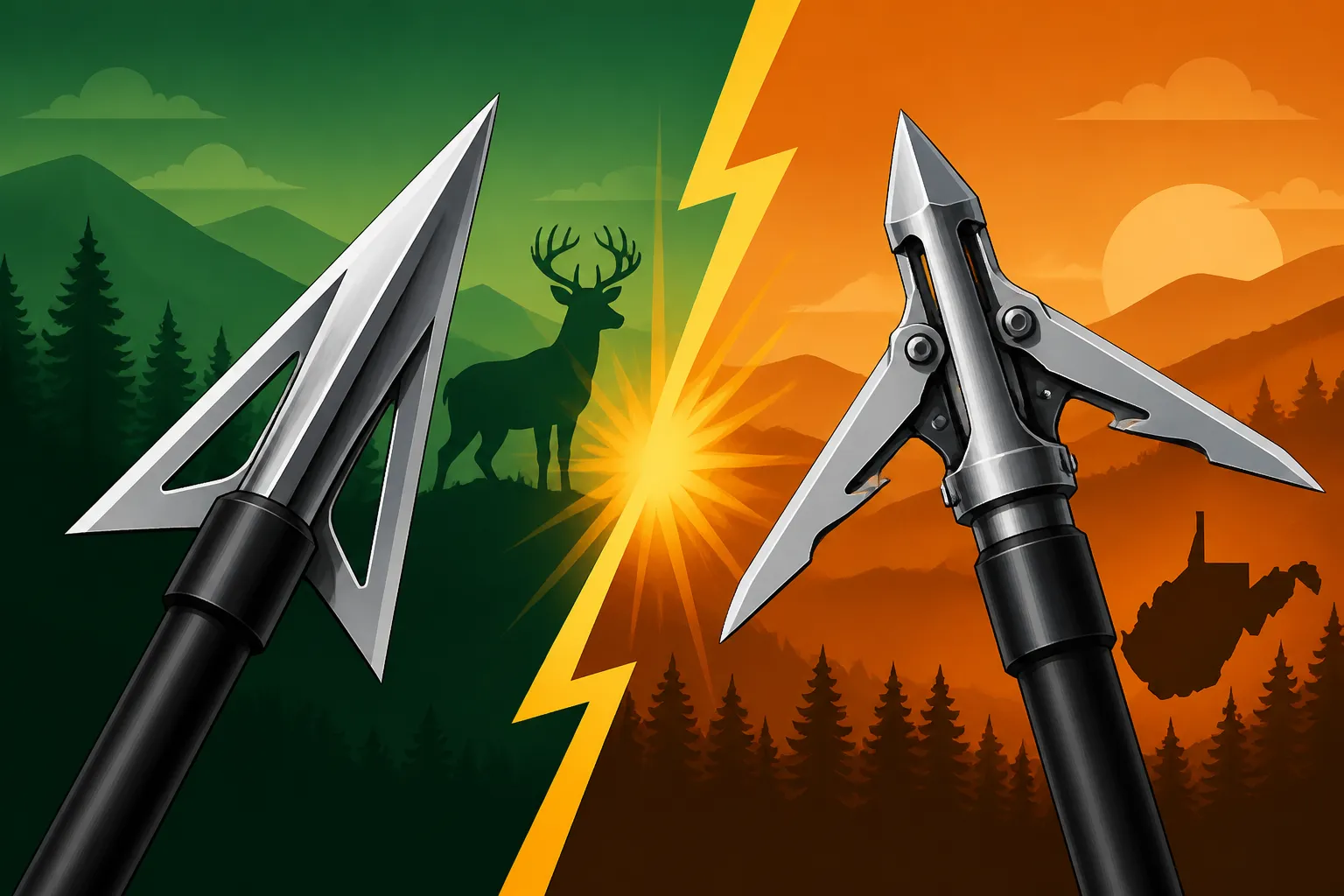
Fixed Versus Mechanical Broadheads
Every bowhunter in West Virginia eventually hits that crossroads: fixed blade versus mechanical broadhead. It's a debate as old as carbon arrows, and it can feel like you're choosing a side in a deep-rooted family feud. Picking the right broadhead isn't just about what looks cool in the package; it's about what performs reliably when that once-in-a-season buck finally steps into your shooting lane, deep in a laurel thicket or on a remote mountain bench. This guide is here to help you navigate that often-confusing decision, exploring the real-world implications of each type for your West Virginia hunts.
Understanding the Broadhead Basics: Fixed Blade vs. Mechanical
When you first start looking at broadheads, the sheer variety can be overwhelming. There are so many designs, materials, and marketing claims out there. But at its heart, the choice usually boils down to two main categories, and understanding their fundamental differences is the first step toward making an informed decision for your hunting setup. Both have their devout followers, and for good reason—they each excel in different scenarios.
What Defines a Fixed Blade Broadhead?
Fixed blade broadheads are, as the name suggests, solid and unchanging. Their blades are permanently attached to the ferrule, meaning they don't move or deploy upon impact. Think of them as miniature razor-sharp arrows. They've been around for centuries, evolving from flint and obsidian to modern steel and aerospace-grade aluminum. Their design is inherently simple and robust. You screw one on, and what you see is exactly what you get when it hits its target. This simplicity often translates to incredible durability, especially when encountering bone or tough hide. They're built like tanks, meant to smash through and keep cutting.
One of the biggest advantages of a fixed blade is its reliability. There are no moving parts to fail, no O-rings to break, no blades to prematurely deploy in flight. When you launch a fixed blade, you know exactly what it's going to do. This confidence can be a huge mental edge, especially when you've hiked miles into the Monongahela National Forest Hunting backcountry and only get one shot opportunity. They're also known for their impressive penetration, as all the arrow's kinetic energy is focused on pushing those fixed blades through the animal without the energy required to deploy anything. However, this unwavering design also means a fixed blade presents more surface area to the wind, which can sometimes make them a bit trickier to tune for perfect flight, especially with faster bows or if your bow setup isn't absolutely spot-on. They demand meticulous tuning and practice to ensure they fly true with your field points.
Consider a scenario where you're hunting a big bodied whitetail in the dense timber of Randolph County. That deer might be quartering away slightly, and you know there's a chance you'll encounter a rib or even the shoulder blade on impact. A stout fixed blade, with its unyielding construction, gives you a greater sense of assurance that it will punch through and continue its work, creating a vital wound. Many veteran bowhunters swear by them for this exact reason, trusting their proven track record against tough game. They are often favored by those who prioritize deep penetration and a consistent, no-fail mechanism above all else.
What Makes a Mechanical Broadhead Different?
Mechanical broadheads, also known as expandable broadheads, represent a more modern approach to archery hunting. Their defining feature is that their blades are tucked away during flight and then deploy or "expand" upon impact with the target. This deployment dramatically increases their cutting diameter, often creating a much wider wound channel than most fixed blades. The idea here is simple: fly like a field point for superior accuracy, then open up to deliver maximum damage. These broadheads typically use either a spring-loaded mechanism, O-rings, or a slip-cam design to hold the blades in place until they hit something substantial.
The primary appeal of mechanical broadheads is their field-point-like accuracy. Because their blades are folded back, they have a much smaller profile during flight, which significantly reduces drag and wind plane. This means they tend to fly more consistently with your practice field points, often requiring less tuning work to get them to hit the same spot. For hunters who value pinpoint accuracy and want to avoid extensive broadhead tuning, mechanicals can be a game-changer. The larger cutting diameter after deployment also means potentially massive wound channels and, often, shorter, more pronounced blood trails, which is crucial when Tracking a Deer Through West Virginia Leaf Litter.
However, the very mechanism that gives mechanicals their advantage can also be their Achilles' heel. Any moving part introduces a potential point of failure. While modern mechanicals are incredibly reliable, there's always that small chance of a blade not deploying fully, deploying prematurely in flight (especially with high-speed bows or improper nocking), or suffering damage upon impact that hinders full expansion. They can also sometimes require more kinetic energy to deploy and penetrate effectively compared to a fixed blade, meaning slower bows or lighter arrows might not get optimal performance from certain models. It's a trade-off: increased cutting diameter and easier tuning for a slightly more complex design.
Performance Under Pressure: Comparing Key Attributes
When you're out in the woods, whether you're sitting in a treestand overlooking a food plot in the Eastern Panhandle or still-hunting through the rugged terrain of the Potomac Highlands, your broadhead's performance is paramount. It's not just about what looks good; it's about what happens in those critical few seconds after you release an arrow. Different broadhead designs perform distinctively when put to the ultimate test on game, and understanding these differences can help you align your gear with your hunting style and the challenges of West Virginia's diverse landscape.
Flight Characteristics and Accuracy in West Virginia Conditions
One of the most talked-about aspects of broadhead performance is how well it flies. For many hunters, especially those who shoot high-speed bows, mechanical broadheads are championed for their "field point accuracy." Because their blades are folded back, they present a smaller profile to the wind, theoretically minimizing drag and steering effect. This often means less need for extensive bow tuning to get your broadheads to group with your field points. It’s an attractive prospect, especially when you're busy with work and family and time for meticulous tuning is short. Many archers find that they can screw on a mechanical and be confident that it will hit where they're looking, even out to longer distances or in variable wind conditions that are common on West Virginia's exposed ridgelines.
On the flip side, fixed blade broadheads, with their exposed blades, can act like small wings, catching the wind and potentially steering the arrow slightly off course if not perfectly tuned. This doesn't mean they're inaccurate; it just means they demand more attention to detail in your bow setup. Factors like fletching type, arrow spine, and proper center shot become even more critical to achieve field-point accuracy. However, once a fixed blade is tuned to fly true, it's incredibly stable and predictable. There's no concern about blades deploying mid-flight or inconsistencies from shot to shot. In the dense, often windy, conditions of a West Virginia hollow, that unwavering flight can be a huge comfort. It's about confidence in your equipment, and a well-tuned fixed blade inspires just that. Tools like GoHunt often provide data or forums where hunters discuss tuning tips for various broadheads, which can be invaluable.
Imagine you're hunting an open area near farmland in the Eastern Panhandle. A deer steps out at 40 yards, and a gust of wind picks up just as you release. A mechanical broadhead, with its reduced wind planing surface, might be less susceptible to that gust than a fixed blade that isn't perfectly tuned. Conversely, if you're set up in a ground blind in a tight laurel patch for Hunting the Late-Season December Lull, and your shot is only 15 yards, the tuning demands are less critical for either, but the predictability of a fixed blade, knowing exactly how it will react, can still be reassuring.
Penetration Power Through Bone and Muscle
This is where the rubber meets the road, or more accurately, where the broadhead meets the animal. Penetration is arguably the most critical factor in achieving a quick, ethical harvest. A broadhead must be able to push through hide, fat, muscle, and potentially bone to reach the vital organs.
Fixed blade broadheads generally excel in penetration. Their solid, unyielding design means that all of the arrow's kinetic energy is focused purely on pushing the blades through. There's no energy wasted on blade deployment. When a fixed blade encounters bone—say, a rib or a shoulder blade on a tough old mountain buck—its robust construction is designed to power through or split it, maintaining its integrity and forward momentum. This makes them a favorite for hunters pursuing larger, tougher game, or those who anticipate less-than-perfect shot angles that might involve bone. The angle of the blades and the overall ferrule design play a huge role here, with steeper blade angles generally offering better penetration.
Mechanical broadheads, while often creating wider wound channels, do use some of the arrow's kinetic energy to deploy their blades. This can reduce overall penetration compared to a fixed blade, especially with lower poundage bows or lighter arrows. While many modern mechanicals are designed for impressive penetration even after deployment, hitting heavy bone can sometimes be an issue. A mechanical might deflect or break blades if it hits a major bone head-on, potentially limiting its ability to reach the vitals. This isn't to say mechanicals don't penetrate well—many do, exceptionally so—but it's a consideration, especially if you're on the lower end of the acceptable kinetic energy range for your setup or hunting animals with particularly heavy bone structure, like a West Virginia's Black Bear Comeback. You need enough Bow Draw Weight for West Virginia Whitetails and Arrow Weight for Short Shots to ensure adequate penetration with whatever broadhead you choose.
Wound Channels and Blood Trails in Thick Cover
For many bowhunters, the effectiveness of a broadhead ultimately comes down to the wound it creates and the resulting blood trail. After all, a quick recovery is the goal for an ethical harvest, and a strong blood trail makes that possible, especially in the thick, often unforgiving West Virginia woods.
Mechanical broadheads are famous for creating wide, devastating wound channels. Once deployed, their cutting diameter can be significantly larger than most fixed blades, sometimes exceeding two inches. This creates a larger hole through tissue, leading to more rapid blood loss and, ideally, a quicker demise. A wider wound channel also tends to leave a more profuse and easier-to-follow blood trail. This is a massive advantage in West Virginia, where thick rhododendron thickets, dense laurel hells, and deep hollows can swallow up a scant blood trail in moments. A hunter with a good blood trail from a mechanical broadhead might have an easier time recovering a deer, even if it runs a short distance into challenging terrain.
Fixed blade broadheads, while typically having a smaller cutting diameter (usually around an inch to 1.25 inches), make up for it with their consistent cutting performance. Because their blades are always exposed, they cut from the moment of impact and continue cutting as they pass through the animal. They create a consistent, if sometimes narrower, wound channel that is less prone to "closing up" than some expandable wounds. While the blood trail might not be quite as immediately profuse as with a wide mechanical, it tends to be steady and consistent. For archers who prioritize consistent, reliable cutting over maximum cutting diameter, fixed blades are a solid choice. The key with both types is a sharp edge – you want those blades to be razor-sharp to maximize tissue damage and blood loss, regardless of design.
Real-World Considerations for West Virginia Bowhunters
Beyond the technical specs and marketing claims, choosing a broadhead often comes down to very practical considerations. West Virginia hunting presents its own unique set of challenges, from steep terrain to unpredictable weather and dense cover. Your equipment needs to perform reliably under these real-world conditions, and your broadhead choice is a big part of that.
Equipment Compatibility and Tuning for Your Setup
Not all broadheads play well with all bows. This is a truth many bowhunters learn the hard way. Faster bows, those spitting arrows out at over 300 feet per second, can sometimes create issues with certain mechanical broadheads. The sheer force and speed can cause blades to deploy prematurely in flight, leading to erratic arrow flight and a missed shot. While most modern mechanicals are designed to handle high speeds, it's crucial to check the manufacturer's recommendations for your specific broadhead model and bow speed. If your bow is pushing the limits, a fixed blade might offer more consistent flight without the risk of pre-deployment.
Tuning is another huge factor. Fixed blade broadheads, due to their fixed blades, are more sensitive to subtle tuning issues in your bow. Your arrow rest, nocking point, and cam timing need to be spot-on for them to fly perfectly with your field points. Many hunters enjoy this process, seeing it as a crucial part of becoming a proficient archer. They'll spend hours at the range, tweaking their setup until their fixed blades are punching perfect holes. On the other hand, mechanical broadheads are often more forgiving of minor tuning imperfections, making them a popular choice for hunters who prefer to spend less time tuning and more time practicing shot execution or Scouting West Virginia Public Land Before Season. Ultimately, a well-tuned bow is essential for both, but the path to achieving it can be different.
When you're preparing for Bowhunting West Virginia's Long Archery Season, it's not just about the broadhead itself, but how it integrates with your entire system. Are you shooting a heavier arrow with good FOC (Front of Center) that will drive a fixed blade deep? Or are you running a lighter, faster arrow that pairs well with an expanding mechanical? Consider the total system—bow, arrow, and broadhead—as a single unit. It's also worth noting that many bow technicians and pro shop staff will advise you on which broadheads tend to tune easier with various setups. This insight can save you a lot of headache and frustration.
Ethical Harvest and Recovery in Challenging Terrain
The ethical responsibility of a hunter is to achieve the quickest, most humane harvest possible, followed by a swift recovery of the animal. Your broadhead choice directly impacts both. In West Virginia, where terrain can be incredibly challenging, the ability to recover an animal quickly is paramount. Think about hunting steep Allegheny ridges or navigating dense, brushy creek bottoms – a long, difficult blood trail can quickly turn into a lost animal.
A broadhead that creates a massive wound channel and a heavy blood trail can significantly shorten the tracking job, reducing the animal's suffering and improving your chances of recovery. This is often where mechanical broadheads shine, with their large cutting diameters making quick work of vitals and leaving abundant sign. If you're hunting areas known for their thick undergrowth, like the specific type of laurel found in parts of West Virginia, a broadhead that leaves a clear Blood Trailing After Dark in West Virginia might be more advantageous.
However, the reliability of penetration also plays a critical role. If a broadhead fails to penetrate deeply enough or breaks upon impact with bone, you risk a superficial wound and a prolonged, agonizing recovery. Fixed blades, with their robust construction and superior penetration, are often favored by hunters who prioritize punching through any obstacles to reach the vitals, ensuring a lethal hit even on a less-than-perfect shot angle. No matter your choice, paramount is proper Shot Placement on a West Virginia Black Bear or deer. Knowing your anatomy and aiming for the vitals is the single most important factor. Practice, practice, practice with your chosen broadhead to ensure you can place it precisely where it needs to go under hunting conditions.
Cost and Durability Over a Hunting Season
Let's be real, hunting isn't a cheap hobby, and the cost of gear can add up. Broadheads are no exception. Fixed blades, especially those with replaceable blades, can often be more durable and cost-effective in the long run. If you practice with them, you can often sharpen the blades yourself or replace just the blades, extending the life of the ferrule. This means a pack of fixed blades can potentially last you several seasons if you're careful and maintain them well. Their robust design means they can often be reused even after passing through an animal, assuming no significant damage to the ferrule.
Mechanical broadheads can sometimes be a bit more expensive per unit, and their blades are often designed for single-use, requiring replacement after each shot on an animal or even for practice. The complexity of their design, with moving parts and specialized components, can contribute to a higher price point. If you're someone who likes to practice with your hunting broadheads regularly, the cost of continually replacing blades or entire broadheads can add up quickly over the course of a season, especially if you're shooting a lot. However, some mechanicals now offer practice heads that mimic the flight of the hunting broadhead, allowing you to save your sharper, more expensive blades for the actual hunt. GoHunt might also offer member discounts on various gear, including broadheads, which could mitigate some of these costs.
Consider the longevity. If you shoot a deer and your fixed blade passes through cleanly, you can often retrieve it, inspect it, sharpen it, and use it again. A mechanical, after deployment and impact, may require new blades, or in some cases, the entire head might be compromised. While the upfront cost difference might seem minimal for a single pack, over multiple seasons and several successful hunts, these small differences can accumulate. It's about balancing performance with your budget and how much wear and tear you expect your broadheads to endure.
Making Your Choice: Matching Broadhead to Hunt Style
Ultimately, the "best" broadhead isn't a universal truth; it's what works best for you, your specific bow setup, the game you're pursuing, and the terrain you're hunting in West Virginia. There are compelling arguments for both fixed and mechanical designs, and many seasoned hunters even carry both, depending on the specific hunting scenario they anticipate.
When Fixed Blades Shine in the Mountains
If you primarily hunt the rugged, steep, and densely wooded mountains of West Virginia—places like Cranberry Wildlife Management Area or the deep hollows of Pocahontas County—fixed blade broadheads often prove their worth. The terrain is unforgiving, cover is thick, and shot opportunities can be fleeting and at odd angles. In these environments, reliability and penetration are paramount. A fixed blade's robust, no-fail design means there are no moving parts to worry about malfunctioning, even if you bump it against a branch while climbing into a Hanging a Stand on a Steep Allegheny Ridge or navigating thick laurel.
Their superior penetration is a huge advantage when facing potentially tough hide or bone, which is more common with larger, mature deer or a stout black bear. If a deer is quartering away or you hit a heavy rib, the fixed blade is designed to push through and keep cutting. This increases your chances of a clean pass-through and a more effective wound, which translates to a quicker recovery in dense cover. For hunters who prioritize absolute reliability, maximum penetration, and a simpler, more durable design, especially for deep woods, mountain hunting, or targeting tougher game, fixed blades are often the go-to choice. They are built for consistent performance under the most challenging conditions West Virginia can throw at you.
When Mechanicals Offer an Advantage on Field Edges
Now, if your West Virginia hunting mostly involves sitting on the edge of a standing corn field, a lush clover plot, or overlooking a powerline cut in less rugged, more open country—think parts of the Eastern Panhandle or the Ohio River Valley—mechanical broadheads can offer a distinct advantage. In these scenarios, shot distances might be longer, and the primary concern often shifts to pinpoint accuracy and creating the widest possible wound channel for a quick harvest and easy-to-follow blood trail.
The field-point-like flight of mechanicals becomes a huge asset here. If you've got a shot at 30, 40, or even 50 yards across an open field, knowing your broadhead is going to hit exactly where your field points do, with minimal wind drift, builds immense confidence. The larger cutting diameter upon deployment ensures a devastating wound channel, leading to rapid blood loss and often a very short track job into the relatively lighter cover that might surround these open areas. This means less time searching and a higher chance of recovering your animal, especially if it runs into a small woodlot nearby. For hunters who value accuracy over longer distances, ease of tuning, and a pronounced blood trail in more open environments, mechanicals are often the preferred choice. They capitalize on the clear shot, delivering maximum impact without the tuning headaches some fixed blades require.
Here's a quick comparison to help you weigh the options:
| Feature | Fixed Blade Broadhead | Mechanical Broadhead |
|---|---|---|
| Flight | Stable once tuned, more sensitive to tuning issues. | Field-point-like accuracy, more forgiving of tuning. |
| Reliability | Extremely high, no moving parts to fail. | High, but relies on deployment mechanism. |
| Penetration | Generally superior, especially through bone. | Good, but some energy used for deployment; can deflect. |
| Wound Channel | Consistent, narrower cut. | Often wider, devastating cut after deployment. |
| Blood Trail | Consistent, but may be less immediately profuse. | Often more profuse due to larger cut diameter. |
| Durability | Very durable, often reusable. | Blades often single-use, potential for damage to mechanism. |
| Tuning | Demands meticulous bow tuning for optimal flight. | Generally easier to tune, flies more like field points. |
| Best For | Thick cover, rugged terrain, larger/tougher game. | Open country, longer shots, lighter game. |
Choosing between fixed and mechanical broadheads for your West Virginia hunts isn't a simple right-or-wrong answer. It's a deeply personal decision that should be guided by your specific hunting conditions, your bow setup, and what gives you the most confidence when that moment of truth arrives. Practice with your chosen broadhead, know its capabilities and limitations, and always strive for the most ethical, effective shot possible.
Disclaimer
This article is for general informational purposes only and does not constitute professional advice. Laws, prices and regulations vary by location and change over time. Consult a qualified professional for guidance on your specific situation.