Run-and-Gun Turkey Tactics on Public Land
The frustration of trying to call a wily gobbler on West Virginia's public lands can be enough to make even the most seasoned hunter want to pack it in. These aren't your grandpa's turkeys; they're educated, call-shy, and often unresponsive to traditional sit-and-wait tactics. This guide is all about equipping you with the dynamic, high-energy run-and-gun approach that can truly unlock success on those challenging public land birds, getting you moving, engaging, and ultimately, filling your tag.
Understanding the Run-and-Gun Mindset for West Virginia Public Land
Hunting public land in West Virginia offers incredible opportunities, but it comes with a unique set of challenges. Turkeys on these tracts, especially in popular areas like parts of the Monongahela National Forest or specific Wildlife Management Areas, face a lot of pressure. They hear every call, they learn quickly, and they rarely commit to a static setup with the same enthusiasm as a private land bird. That's where the run-and-gun strategy truly shines.
Why Traditional Setups Fail on Pressured Birds
Think about it: you spend an hour or more painstakingly setting up a ground blind, perhaps placing a few decoys just so, and then settle in for a long wait. You might let out some soft yelps, hoping to coax a distant gobbler your way. On private land, with less hunting pressure, this can be incredibly effective. But on public land? Often, all that patience and effort leads to nothing but silence, or worse, a gobbler hanging up at 100 yards, just out of range, eventually drifting away. It's incredibly frustrating to invest so much time only to have a bird give you the slip without even a close encounter.
These public land gobblers have heard it all. They've been called to, spooked by, and shot at. They quickly learn that an easy hen sound often leads to trouble. They become wary of approaching an unknown sound, especially if it's coming from a stationary position. They might respond on the limb, but once they hit the ground, they become ghosts, slipping through the timber, often circling wide to try and spot the "hen" before committing. When you're locked into one spot, you lose the ability to adapt to these evasive maneuvers, essentially playing by their rules instead of dictating the interaction.
The Core Principles of Mobile Turkey Hunting
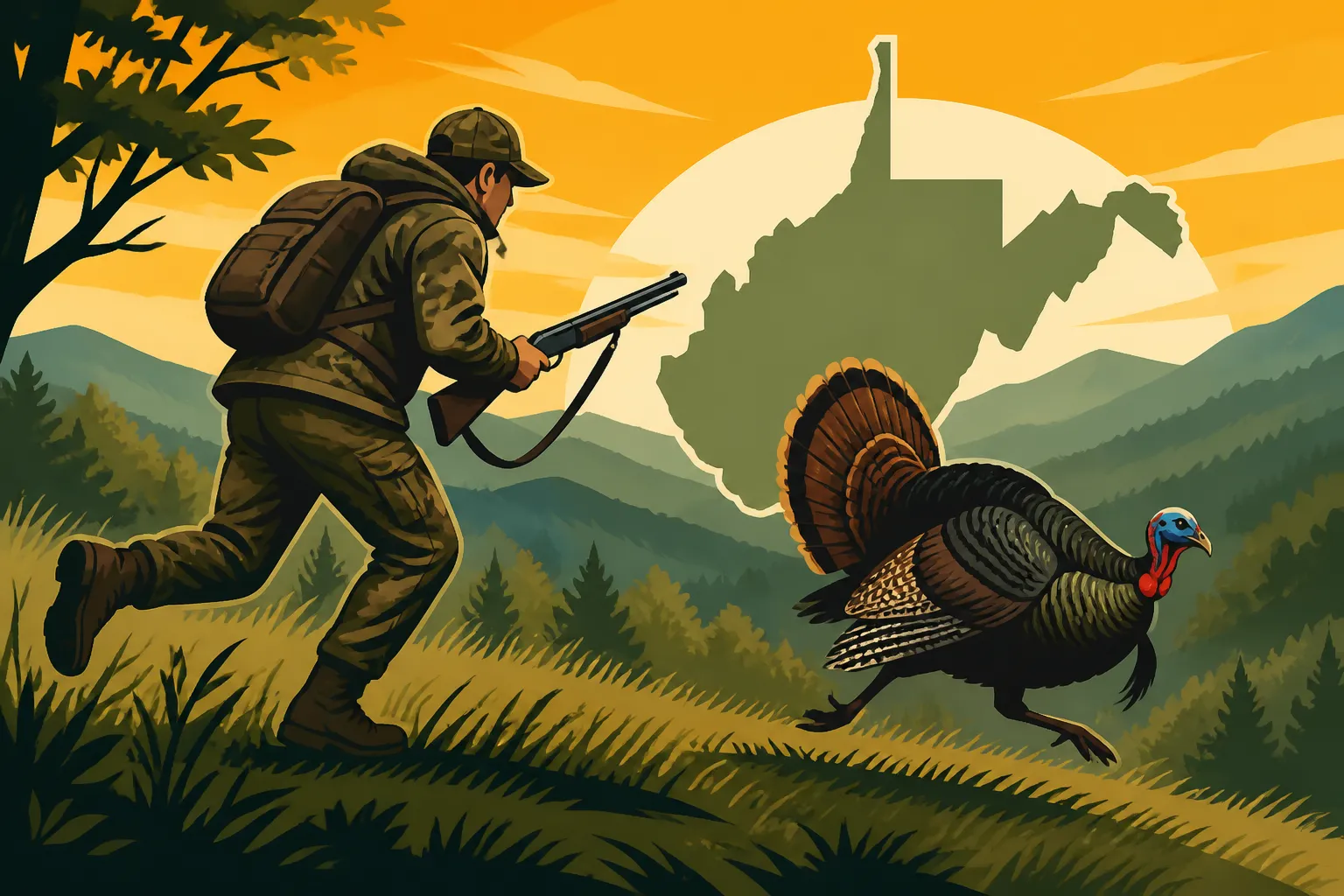
The run-and-gun approach flips the script. Instead of waiting for the turkey to come to you, you're actively seeking out the turkey, covering ground, and engaging birds on their terms, but always with the intent to close the distance rapidly. The core principles are movement, aggressive calling, quick setups, and ruthless adaptability. You're not sitting and calling for an hour; you're calling, listening, moving, and then calling again, much like you might when scouting for deer in the off-season.
This means being constantly alert, using your ears and eyes more than your decoys. It's about being able to make a quick decision – "That gobbler is 300 yards out, I need to get 150 yards closer, now." It's about reading the terrain, anticipating where a bird might go, and positioning yourself to cut it off. This style demands physical fitness and a willingness to cover miles of challenging West Virginia topography. But the reward is often more interactions, more close encounters, and a much higher chance of success when those pressured birds simply won't play by the traditional rules. It gives you the flexibility to adapt to changing conditions and the unpredictable nature of wild turkeys.
Essential Gear for the Mobile Turkey Hunter in West Virginia
When you're committed to covering ground and reacting quickly, your gear becomes critical. Every ounce matters, and every piece of equipment needs to serve a purpose for rapid deployment and mobility. Gone are the days of hauling in heavy blinds and a full spread of decoys. We're talking minimalist, efficient, and versatile.
Lightweight and Versatile Calling Systems
Your calls are your primary tools for run-and-gun hunting, and you need a system that offers both versatility and ease of use. Mouth calls, or diaphragm calls, are arguably the king of run-and-gun. They allow you to call hands-free, which is invaluable when you're moving, setting up, or shouldering your shotgun. You can gobble, yelp, cluck, and purr without breaking stride. Keep several different cuts on hand to vary your sound, as some birds respond to one over another.
Slate and box calls still have their place, but they're typically best used when you've stopped to work a bird, or perhaps for louder locator calls. A good quality pot call with a few different strikers (wood, carbon, aluminum) can replicate a wide range of hen vocalizations and project sound across long distances. Box calls are excellent for loud, aggressive cutting to get a distant gobbler's attention, especially when you're trying to locate one in a thick hollow. The key is to have a combination that allows you to be quiet and subtle when a bird is close, and loud and aggressive when you need to reach out and touch one from afar. Remember, even a single locator call can save you miles of walking. For a deeper dive into call options, check out this guide on Turkey Calls Worth Carrying in West Virginia.
Minimalist Vest and Decoy Choices
Forget the bulky, heavily padded turkey vests designed for all-day sits. For run-and-gun, you want something sleek, lightweight, and functional. Many hunters opt for a simple hip pack or a small, hydration-style vest with just enough pockets for calls, a headlamp, a snack, and perhaps a small ground pad. The goal is to carry only what you absolutely need, reducing bulk and allowing for unhindered movement through thick timber and over steep ridges. A minimalist approach keeps you agile, reducing snagging on brush and making it easier to navigate challenging terrain.
When it comes to decoys, think "less is more." A full-strut gobbler or a jake and hen combo might look great in an open field, but it's often too much to carry and set up quickly in the woods. For run-and-gun, many successful hunters swear by a simple fan decoy, often carried in a vest pocket or strapped to a pack. This allows you to quickly mimic a gobbler or jake, presenting a visual cue that can sometimes pull in a wary bird that hangs up out of sight. Some might carry a single, foldable hen decoy, but even that is often seen as optional. The idea is to have just enough visual realism to seal the deal if needed, without sacrificing your mobility. While a Turkey Vests With a Kickstand Seat can be great for static hunts, in run-and-gun scenarios, you'll often be using natural cover or a small foam pad to quickly sit against a tree.
Navigation and Scouting Tools
On West Virginia public land, getting lost or not knowing the exact terrain can cost you valuable time and opportunities. A reliable navigation system is non-negotiable. Modern GPS apps for your smartphone, like GoHunt, are invaluable. These apps combine detailed topographic maps with satellite imagery, allowing you to identify potential roosting areas, subtle benches, old logging roads, and creek bottoms—all crucial features for turkey movement. You can mark waypoints for gobblers heard, roost trees, or even potential setup locations. Having this information at your fingertips, even offline, allows you to confidently push into unfamiliar territory and know how to get back out.
Beyond the GPS, a good pair of compact binoculars (8x or 10x) is essential for spotting distant birds or identifying subtle movements in thick cover. They're also great for verifying if that dark blob is a stump or a gobbler strutting in an open patch. Finally, a small headlamp is a must for navigating in the pre-dawn hours or walking out after an evening hunt. Always carry a portable charger for your phone; relying solely on its battery for GPS can be a risky gamble in the backcountry.
Pre-Season Scouting and In-Season Adaptability
Success with run-and-gun tactics often starts long before opening day. Understanding the terrain and general turkey patterns of your chosen public land area can give you a significant advantage. This foundational knowledge then combines with your in-season ability to read the moment and adapt on the fly.
Identifying Key Public Land Hotspots Before the Hunt
Even with a run-and-gun strategy, you don't want to just wander aimlessly. Pre-season scouting, primarily using maps and satellite imagery, helps you identify high-probability areas that are likely to hold birds. Look for mature timber on ridge tops that could serve as roosting sites, especially near steep hollows where birds fly up and down. Identify potential feeding flats, old logging decks, or even small clearings where birds might gather after flying down. Creek bottoms and old logging roads often serve as natural travel corridors, guiding turkeys from one area to another. Knowing these potential "intersections" allows you to plan efficient routes and anticipate where a gobbler might move once you engage him.
Focus on areas that are harder to access, as these often see less hunting pressure. Steep terrain, long walks from parking areas, or areas requiring a creek crossing might deter other hunters, leaving you with more unpressured birds. Tools like GoHunt can reveal property lines and access points, helping you pinpoint those overlooked honey holes within the vast public land tracts. By doing your homework, you're not just running and gunning; you're running to a high-probability location and then gunning. For more detailed tips on pre-season reconnaissance, check out Scouting West Virginia Public Land Before Season.
Reading the Terrain and Listening for Clues
Once you're actually in the woods, your ability to read the terrain and listen intently becomes paramount. As you move, constantly scan the landscape for subtle benches, rises, or natural funnels that could influence turkey movement. If you hear a distant gobble, immediately start planning your approach, considering how the topography will allow you to close the distance without being seen or heard. Can you use a drainage or a thick stand of pines for cover? Is there a subtle rise you can crest to get a visual?
Listening for more than just gobbling is also key. The soft clucks and yelps of hens, the drumming of a gobbler, or even the sound of birds flying down from the roost at first light can give you crucial information. If you hear a lone hen yelping excitedly, there's likely a gobbler nearby. Understanding these subtle cues allows you to fine-tune your approach. For example, if you're Roost Hunting West Virginia Gobblers at dawn, and you hear a gobbler fly down to a specific flat, you know exactly where to direct your initial run. Even later in the morning, knowing these general roosting areas helps you predict their travel paths as they move to feeding or loafing areas throughout the day.
| Feature/Tactic | Traditional Static Setup | Run-and-Gun Tactics |
|---|---|---|
| Movement | Minimal; often sitting for extended periods | Constant, active movement across terrain |
| Calling Style | Often subtle, repetitive, patient waiting | Aggressive, varied, louder calls to locate; softer to close |
| Decoy Use | Multiple, elaborate setups (full strut, hen, jake) | Minimal to none; fan decoys or single compact hen |
| Setup Time | Lengthy, focus on concealment and comfort | Rapid, utilizes natural cover, prioritizes quick shot |
| Patience | High tolerance for long waits | Low tolerance for inactivity; constantly adapting |
| Gear Weight | Can be heavy (blind, multiple calls, chairs) | Lightweight, essential items only (vest, calls, gun) |
| Hunting Pressure | Can be ineffective on pressured public land birds | Designed to counteract pressure by staying mobile |
| Terrain Focus | Finding a good hide and clear shot lane | Using terrain for cover, approach, and cutting off birds |
Executing the Run-and-Gun Strategy
Now that we've covered the mindset and gear, let's talk about putting it all into action. Run-and-gun isn't just fast walking and loud calling; it's a deliberate, calculated dance with a wild turkey. It requires confidence, quick thinking, and a willingness to be aggressive when the situation calls for it.
Aggressive Calling and Fast Movement
The heart of run-and-gun is the strategic combination of movement and calling. You'll start by moving briskly through potential turkey habitat, pausing every few hundred yards to let out a series of aggressive locator calls. These could be loud yelps, cuts, or even a gobble tube to try and shock a bird into sounding off. Don't be shy; you're trying to cover ground and get a response. Once you hear a gobble, triangulate its position as best you can, mark it on your GoHunt app, and immediately begin closing the distance.
Your movement should be swift but silent, utilizing terrain and cover to your advantage. If a bird gobbles consistently, try to get within 100-150 yards before setting up. The closer you can get without being detected, the better your chances. As you get closer, your calling should become more measured. If the gobbler is hot and sounding off every time you call, you might continue with some excited yelping. If he's a bit more hesitant, switch to softer clucks and purrs to pique his curiosity without spooking him. The key is to adapt your calling to his response. For strategies on getting that initial vocalization, this article on Calling a West Virginia Gobbler Off the Roost offers great insight, even if you're engaging a mid-morning bird.
Quick Setups and Shot Opportunities
When a gobbler finally sounds off within striking distance, or you spot him, it's time for a rapid setup. This isn't about setting up a blind; it's about quickly finding a tree or natural cover that breaks up your silhouette and allows you to remain still. Get against a tree wider than your shoulders, facing the direction you expect the bird to come from. Clear any leaves or debris from your immediate area to prevent noisy movements. Get your gun up, safety off, and be ready. This entire process should take mere seconds. The faster you can transition from moving to ready, the less likely you are to spook a wary bird.
Decoy use in this scenario is minimal. If you're using a fan, quickly prop it up or hold it out to the side, ensuring you're not silhouetting yourself. The goal is to provide a quick visual, not an elaborate scene. Pay attention to your background; you want a clear shot lane but also something that camouflages you. When a bird is coming in hot, sometimes the best decoy is no decoy at all—just excellent calling and a steady hand. For more on how strategic visuals can help, even with minimal effort, refer to Decoy Placement for Pressured West Virginia Birds. Whether it's a small fan or just setting up against a good vantage, choosing a spot like Setting Up Against a Big Oak can make all the difference in quickly concealing yourself and getting ready for the shot.
Dealing with Hang-Ups and Pressured Gobblers
The classic public land conundrum is the "hang-up." You've called him in, he's close, but he just won't take those last few steps into range. This is often a sign of a highly pressured gobbler. Don't panic, but don't stay static too long either. If he's hanging up and gobbling, he's likely looking for the hen to come to him. This is your cue to change tactics.
One effective strategy is to "reverse" the run-and-gun. If he's hung up at 70 yards, and you're safely concealed, consider cutting off your calling and, after a few minutes of silence, slowly and quietly circling to try and get ahead of him or move closer from a different angle. Another option is to change your calls entirely; if he's not responding to yelps, try soft clucks and purrs, or even just scratch the leaves like a feeding hen. Sometimes, a "decoy" move where you subtly change positions, or even aggressively cut a few times and then go silent, can often make that wary bird curious enough to take a few more steps. The reality of Hunting Pressure on West Virginia Public Land means these birds are smart, and you have to be even smarter, constantly adapting to their reluctance to commit fully.
Strategic Considerations for West Virginia Public Lands
Hunting turkeys run-and-gun style on West Virginia's public lands isn't just about speed and sound; it's also deeply tied to strategy. Understanding how hunting pressure impacts birds and how their behavior shifts through the season can drastically improve your odds.
Navigating High-Pressure Zones
West Virginia's public lands are a treasure, but popular areas, especially those with easy access, can get hit hard by hunters. In these high-pressure zones, turkeys quickly become even more wary. They learn to associate human presence with danger, making them extremely difficult to call in. When hunting such areas, your run-and-gun strategy needs to be even more refined. Start your hunts even earlier, often hiking in well before dawn, to get deep into the woods before other hunters arrive. This allows you to intercept birds closer to their roosts or as they make their initial moves for the day.
Focus on terrain that is naturally difficult to access: steep hollows, dense laurel thickets, or areas that require a long, arduous hike. These are the spots where other hunters might turn back, leaving more unpressured birds for you. Using your GoHunt app to identify these remote pockets and plotting your routes through them can be a game-changer. Remember, turkeys don't care about elevation gain; they care about safety. The harder you work to get into those hidden spots, the more likely you are to find a gobbler willing to play the game. Finding those less-traveled areas is key, and you can get some great ideas from our article on Finding Ground That Sees Fewer Hunters.
Understanding Seasonal Shifts in Turkey Behavior
A gobbler's behavior in early April can be vastly different from his behavior in late May, and your run-and-gun tactics need to adapt accordingly. Early in the Spring Turkey Hunting in West Virginia season, gobblers are often still establishing dominance and are eager to respond to calls, especially those of a lone hen. They might be more willing to cover ground to find a potential mate. This is a prime time for aggressive calling and quick closes.
As the season progresses into late April and May, hens start nesting, and gobblers become "henned up," meaning they spend more time with actual hens. When a gobbler has a harem, he has less incentive to respond to your calls. This is when run-and-gun becomes even more crucial. You'll need to be even more persistent in locating those birds, and once you do, your tactics might shift to trying to "steal" a gobbler from his hens. This could involve trying to get ahead of the group, setting up, and making subtle calls to draw him away from his ladies. If the birds are still in a group, breaking up a fall turkey flock can be effective in the spring as well, but this is a much more advanced tactic. When West Virginia Gobblers Go Quiet in May, your ability to cover ground, find subtle responses, and adapt your approach is more important than ever.
Safety First: Awareness of Other Hunters
Hunting public land, especially with a mobile, aggressive strategy like run-and-gun, means you're almost certainly going to encounter other hunters. Safety is paramount. Always, always, positively identify your target before you shoot. That sound you heard? Was it a turkey, or another hunter making a call? That subtle movement in the brush? Is it a gobbler, or a hunter walking through? In the excitement of a close encounter, it's easy to get tunnel vision. Take that extra second.
Wearing blaze orange or blaze pink when you are moving between setups is not just a good idea; it's often legally required or strongly recommended in many areas of West Virginia, even during turkey season (though often you remove it once stationary to call). Communicate loudly if you see another hunter, especially if you think they might be approaching your position or working the same bird. A simple "Hey, hunter!" can prevent a serious accident. Be a responsible steward of the land and a respectful participant in the shared experience of public land hunting. Your primary goal is to return home safely.
Disclaimer
Hunting is an inherently risky activity. This guide provides general information and tactics for run-and-gun turkey hunting in West Virginia. Always consult the most current West Virginia hunting regulations, practice proper gun safety, and hunt within your personal skill and fitness limits. The author and publisher are not responsible for any accidents, injuries, or legal infractions that may occur.