Timber Cuts and Where Deer Move After
Finding deer after the timber company rolls through and leaves a changed landscape can feel like starting from scratch, can't it? One day you have a familiar woodlot, the next it's a jumbled mess of stumps and downed tops. It's frustrating to see your go-to spots disappear, but the truth is, these areas often become prime deer habitat—if you know how to read the changes. This guide will walk you through understanding how deer react to timber cuts in West Virginia and equip you with strategies to find those elusive whitetails in the altered environment.
Understanding the Immediate Impact of Timber Harvests on Deer Habitat
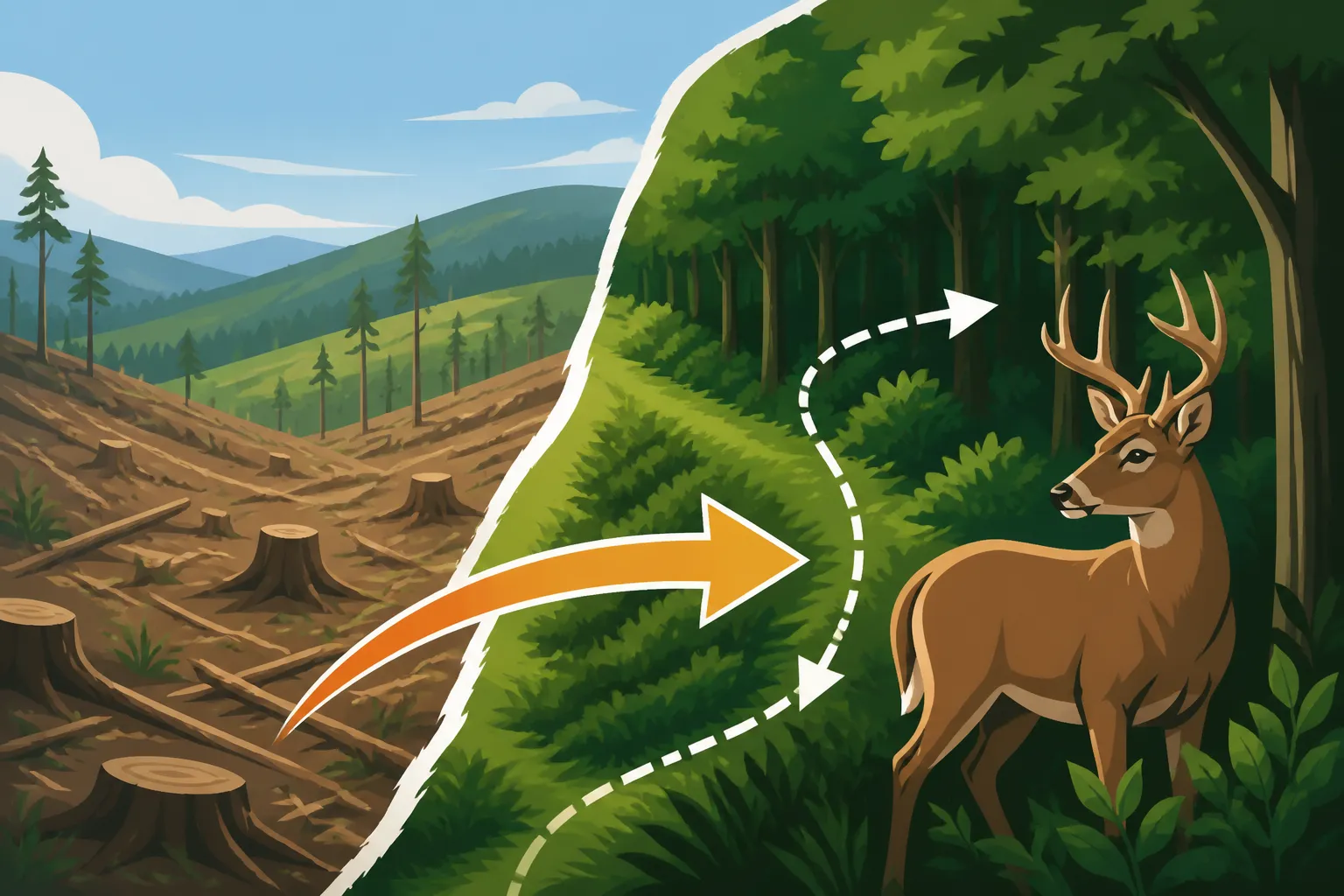
When the chainsaws start humming and heavy machinery rumbles through the woods, it's naturally going to send deer scattering. But this initial disruption quickly gives way to new opportunities that reshape their movement and feeding patterns. It's a dynamic process, not a permanent exodus.
Sudden Disruption and Initial Displacement
Imagine your living room suddenly having a wall knocked out and heavy equipment tearing through your backyard. That's essentially what a clear-cut or even a heavy selective timber harvest can feel like to deer. The sheer noise, the constant human presence, and the destruction of their immediate cover will inevitably push them out of the area, at least temporarily. For a few days, maybe even a week or two, the deer will seek refuge in adjacent, undisturbed timber. They'll gravitate towards thickets, laurel patches, or remote hollows that offer security and a sense of calm. This initial phase can be disheartening for a hunter scouting the area, as fresh sign might be sparse or non-existent in the immediate aftermath of the cutting.
However, this doesn't mean the area is permanently barren. Deer are resilient and driven by their fundamental needs: food, water, and cover. As soon as the noise subsides and the human activity dwindles, their curiosity, combined with the lure of new resources, will begin to pull them back. You might find initial forays happening under the cover of darkness, as they test the waters and cautiously re-enter their former home range to assess the changes. It's a period of adjustment for them, just as it is for us, the hunters.
Exposed Food Sources and New Browse Opportunities
While the immediate disturbance sends deer packing, the timber harvest itself creates an instant buffet. When trees are felled, they expose the forest floor to sunlight, which is crucial for new plant growth. But even before that new growth sprouts, there's a wealth of food right there for the taking. Freshly fallen treetops, particularly oaks and maples, will have a scattering of nuts, buds, and tender twigs that deer will eagerly devour. These are often high-energy food sources that were previously inaccessible. Deer will specifically target these fallen branches, stripping them clean of any edible leaves or buds.
Beyond the immediate windfall, the increased sunlight hitting the forest floor kickstarts a rapid succession of plant growth. Within weeks, you'll see a flush of new forbs, grasses, and young saplings sprouting up. These succulent, nutrient-rich plants are incredibly attractive to deer, offering a diverse diet they might not have had in the mature, shaded forest. This burst of new browse can transform a seemingly desolate cut-over into a vibrant feeding ground. You'll often find deer focusing on the edges of these clearings or within pockets where sunlight penetrates deep enough to encourage this fresh, tender growth, making these spots excellent places to investigate for Late-Season Food Sources for West Virginia Whitetails.
Changes to Cover and Security
Timber cuts dramatically alter the existing cover that deer rely on for security and thermal regulation. In a mature forest, the dense canopy provides shade in summer and some protection from wind and snow in winter. When that canopy is removed, deer are suddenly exposed. This can initially make them feel vulnerable to predators, including hunters. Therefore, their first movements back into a cut area might be cautious, sticking to the remaining strips of timber or the very edges of the clearings.
However, this exposure is temporary. The same sunlight that drives new food growth also creates new forms of cover. Within a year or two, the regrowth will begin to form dense thickets of young saplings, briars, and various understory plants. This young, regenerating forest, often called "early successional habitat," offers incredibly dense visual cover. It's so thick that a deer can literally disappear just a few yards in. While it may not provide the same thermal insulation as mature timber, this dense, interwoven vegetation becomes prime bedding cover, especially for does and fawns, and often for bucks seeking refuge. Understanding these changes in cover is critical to predicting where deer will feel safe enough to bed down or travel during daylight hours.
Long-Term Habitat Evolution and Deer Movement Patterns
The landscape isn't static after a timber cut; it's constantly evolving, and deer adapt their movements accordingly. What might be a temporary feeding spot one year could become a bedding sanctuary the next.
The Regrowth Stage: A Deer Magnet
This is arguably the sweet spot for deer habitat. Typically, about 3 to 5 years after a timber cut, the area has transformed into a veritable jungle of young saplings, briars, and other brushy growth. This isn't just good cover; it's fantastic cover and food, all rolled into one. The plants are still young enough to be highly palatable and nutritious, providing a constant source of browse. At the same time, the density of this growth offers unparalleled security. A deer can bed down just inside the edge of such a thicket and be virtually invisible from a short distance away.
Think of it as a nursery and a cafeteria combined. Fawns and does thrive in these areas due to the abundance of food and protection from predators. Bucks will also use these dense patches for bedding, especially after the initial rut or during times of heavy hunting pressure. You'll find extensive networks of deer trails snaking through these thickets, often leading to more open feeding areas or water sources. These areas are magnets, and knowing how to identify them, perhaps using tools like onX Hunt to overlay timber harvest maps with satellite imagery, can give you a significant advantage. This stage offers tremendous opportunities for Hunting a Clear-Cut Regrowth Edge.
Mature Regrowth and Transitional Zones
As the regrowth matures, typically 5 to 15 years post-cut, the habitat begins to change again. The saplings grow taller, forming a pole timber stand. While it still offers some cover, the lower branches often die off due to competition for sunlight, and the understory becomes less dense. This means less palatable browse within the stand itself. Deer still use these areas, but often as travel corridors or for bedding in specific pockets of thicker growth, rather than as primary feeding grounds.
During this stage, the most productive areas for hunting often become the transitional zones: the edges where this maturing regrowth meets older timber, agricultural fields, or other habitat types. Deer will travel along these edges, using the thicker growth for security while accessing food in the adjacent, more open areas. Funnels and pinch points created by these boundaries become critical. Look for areas where a finger of mature regrowth extends into a more open area, or where two different habitat types converge. Understanding how deer utilize these transition lines is key to placing a stand effectively.
Understanding Deer Funnels Created by Cuts
Timber cuts, whether clear-cuts or selective harvests, often inadvertently create natural funnels and pinch points that dictate deer movement. When a large area is cut, deer are forced to navigate around this new obstacle. They will naturally seek the path of least resistance or the most secure route between bedding and feeding areas. This often means funneling into narrower strips of remaining timber, along the edges of the cut, or through small, untouched patches within the cut.
For example, a long, narrow clear-cut running along a ridge might force deer moving from one side of the ridge to another into a saddle that was previously just a wide expanse of timber. Similarly, a finger of uncut timber extending into a large clear-cut can become a natural travel corridor, or a "highway" for deer entering or exiting the thick new growth. Even small, isolated islands of timber left within a clear-cut can act as cover, drawing deer to them and creating predictable travel routes in and out. Identifying these natural funnels, especially in the steep and broken terrain of West Virginia, is paramount. These are ideal locations for Hunting a Funnel Between Two Hollows or for observing movement when you're Still-Hunting Cranberry WMA Ridges.
Scouting Strategies for Hunting Timber Cuts
Finding deer in these dynamic environments requires dedicated scouting. It’s not just about looking for deer sign, but understanding the why behind their movements in relation to the cut.
Pre-Season Aerial Reconnaissance
Before you even step foot in the woods, the best place to start is from above. Satellite imagery and topographical maps are your best friends when trying to decipher timber cuts. Tools like onX Hunt or GoHunt allow you to pinpoint recent logging activity, identify different stages of regrowth, and visualize how these cuts relate to surrounding terrain features, old logging roads, and water sources. Look for distinct boundaries, varying shades of green indicating different ages of timber, and even areas that look completely stripped.
Pay close attention to the shape of the cut and how it interacts with topography. Does it create a long, linear edge that deer might travel? Are there natural saddles or draws that now act as obvious crossings through or around the cut? Identify any fingers of timber that extend into the cut or small patches of uncut woods within it. These are all potential hot spots. By doing your homework from home, you can narrow down vast tracts of public land, like those in Monongahela National Forest Hunting, and focus your boots-on-the-ground efforts on the most promising areas. Use different layers on your mapping app to see ownership, topography, and even past timber sales if available.
Boots-on-the-Ground Sign Reading
Once you've identified potential areas from your aerial scouting, it's time to hit the woods. This is where you confirm your hypotheses and discover the subtle nuances of deer movement. Look for fresh deer sign, but don't just look for it; try to understand why it's there. Are rubs concentrated along a specific edge of the cut? Are beds found deep within the thickest regrowth, or are they nestled just inside the mature timber adjacent to the cut? Follow deer trails to see where they lead—do they connect bedding cover in the regrowth to a mature oak flat that wasn't cut?
Focus on transition areas. Where does the young, dense regrowth meet older timber? These edges are often heavily traveled. Look for scrape lines along logging roads or at the mouths of hollows that funnel into the cut. If you find heavy browsing on specific plant species within the cut, it tells you what the deer are currently keying in on. Pay attention to how deer are using remaining cover. Are they skirting the edge of the clear-cut, or are they making bold crossings through pockets of standing timber? This kind of detailed ground scouting, especially in the late summer or early fall, is crucial for understanding how deer are currently utilizing the altered landscape. It’s about more than just finding tracks; it’s about Finding Sign in Big Monongahela Timber and interpreting it.
Considering Wind, Thermals, and Access
West Virginia's mountainous terrain means that wind and thermals play an even more critical role in deer movement, especially around timber cuts. Open clear-cuts can dramatically alter air currents, creating swirling winds or new thermal drafts that weren't present in the mature forest. You need to understand how these changes affect your scent and how deer will use them. On a steep ridge, a thermal might rise in the morning and fall in the evening, but a clear-cut on that ridge could cause cross-winds or eddies that make scent control even more challenging.
When planning your hunt, consider your entry and exit routes carefully. How can you get to your chosen stand location without spooking deer that might be using the cut? Old logging roads can offer easy access, but they also get heavily used by other hunters, especially during Opening Weekend Crowds on West Virginia Public Land. Sometimes, a longer, more arduous walk through dense regrowth or adjacent timber is worth it to approach from a direction that keeps your scent out of the primary deer movement zones. Always factor in how deer will use the wind and thermals to their advantage, and plan your approach and setup to minimize your impact. This kind of planning is vital, whether you are Hunting Steep Allegheny Ridges or trying to understand Wind and Thermals on a Steep Ridge.
Hunting Tactics for West Virginia Timber Cuts
Once you've scouted and understood the deer's response to the timber cut, it's time to put those insights into action. The tactics you employ will depend on the stage of the cut and the specific features of the landscape.
Still-Hunting and Stand Placement in Early Regrowth
The dense, brushy regrowth found in timber cuts after a few years is perfect for still-hunting. The thick cover provides excellent concealment for the hunter, allowing you to move slowly and deliberately, taking a few steps, stopping, and carefully scanning for deer. Your goal isn't to walk through it quickly, but to slip through it, becoming part of the landscape. Focus on the edges of the thickest patches, where deer might move between feeding and bedding. Use small openings or slight rises in the terrain to get a better vantage point. This method is incredibly effective because it covers ground while allowing you to react to unexpected encounters.
When it comes to stand placement, the edges of these regrowth areas are often golden. Look for points or fingers of the regrowth that jut out into more open timber, or conversely, areas where mature timber creates a bottleneck around the thick stuff. Set your stand up to overlook a well-used trail that leads into or out of the dense cover. Sometimes, a strategically placed ground blind, brushed in carefully within the cut, can also be very effective, especially if you anticipate deer moving through a specific corridor. This allows for excellent concealment in areas where large trees for treestands might be scarce. Using a Ground Blind on West Virginia Public Land can be a real game-changer in these situations.
Utilizing Funnels and Pinch Points
As discussed, timber cuts often create distinct funnels and pinch points that concentrate deer movement. These are prime locations for ambush hunting. Identify these areas during your scouting—they might be narrow strips of standing timber between two large clear-cuts, saddles that have become primary crossings due to surrounding cuts, or even natural topographical features like hollows or creek bottoms that deer now use to navigate around new obstacles.
Set your stand up to intercept deer as they travel through these funnels. Consider how deer will approach the funnel based on the prevailing wind and thermals. You want to be downwind, of course, and positioned to take advantage of their predictable travel patterns. A well-placed stand in a funnel can sometimes be productive all season long, as deer consistently use these corridors between feeding and bedding areas, regardless of hunting pressure. Whether it’s along an old logging road or a narrow band of pines, these constricted travel paths are high-percentage spots to intercept a buck moving through.
Patience and Adapting to Pressure
Timber cuts, especially those on public land, can quickly become popular hunting spots because of their known attraction to deer. This means you might be dealing with increased hunting pressure. When pressure is high, deer often become more nocturnal or utilize the densest parts of the cut during daylight hours, making them even harder to spot. In these situations, patience is crucial. Don't be afraid to hunt deeper into the cut than most hunters are willing to go, or to sit longer, particularly during the middle of the day when many hunters are back at camp.
Consider hunting during weekdays, or even during inclement weather, when fewer people are in the woods. Deer that are pressured will often seek out the most inaccessible areas, and a thick, regenerating clear-cut certainly fits that bill. While hunting pressure can be a challenge, understanding how deer react to it can give you an edge. They will still need to feed and bed, so finding those overlooked pockets within or adjacent to the cut where they feel secure can pay off handsomely. It's about Finding Ground Others Walk Past and being willing to work for it.
| Stage of Timber Cut | Deer Behavior & Attraction | Hunting Strategy Focus |
|---|---|---|
| Initial Disturbance | Temporary displacement, cautious return after noise ceases. | Scout adjacent thick cover, wait for activity to die down. |
| Fresh Cut (0-2 Years) | Browsing on fallen tops, immediate new forbs/grasses. | Hunt edges, watch for deer feeding on exposed mast/buds. |
| Early Regrowth (3-5 Years) | Prime bedding and feeding (dense browse, security cover). | Still-hunting, stands on trails leading into/out of thickets. |
| Mature Regrowth (5-15 Years) | Travel corridors, edge use, pockets of remaining browse/cover. | Focus on transition zones, funnels, and pinch points. |
Timber cuts in West Virginia are more than just scars on the landscape; they're dynamic habitats that, with a little understanding and dedicated effort, can become some of your most productive hunting grounds. Adapt your approach, lean on your scouting tools, and embrace the ever-changing nature of the mountains.
Disclaimer
This article is for general informational purposes only and does not constitute professional advice. Laws, prices and regulations vary by location and change over time. Consult a qualified professional for guidance on your specific situation.