Opening Weekend Tactics for Buck Gun Season
That crisp, cold air of opening day. There's nothing quite like it, but let's be honest, it often comes with a massive headache: hunter orange everywhere you look and deer that seem to vanish into thin air after the first few shots. Navigating the unique challenges of West Virginia's buck gun season opener can be frustrating, but with the right tactics and a clear head, you can turn potential chaos into a memorable hunt. This guide is all about giving you the practical, real-world strategies to find success when the woods are buzzing with activity.
Understanding Opening Weekend Pressure and Deer Behavior
Opening weekend of buck gun season in West Virginia is a full-blown event, a tradition for many, and a challenge for all. The sheer volume of hunters hitting the woods simultaneously creates a dynamic unlike any other time of the year. You can't just hunt the same way you would during the quiet archery weeks; the deer are different, and so are the tactics you need to employ.
The Initial Rush and Its Impact
Think about it: from the pre-dawn darkness, trucks are lining every public road, headlamps bobbing into the timber, and before daylight even truly breaks, you hear the first distant shots. This initial surge of human activity pushes deer in ways they haven't experienced all year. What was once a comfortable bedding area might become a deer highway as animals seek refuge. Deer that were leisurely browsing clearings suddenly become nocturnal or seek out the thickest, most impenetrable cover they can find. If you're planning on being out there during West Virginia's Buck Gun Season, understanding this immediate displacement is key.
This sudden influx of hunters means that deer, especially mature bucks, will abandon their predictable routines. They won't be lingering in the open fields or along well-worn trails unless they are actively moving away from pressure. Their survival instinct kicks into overdrive, and they prioritize concealment and escape. As hunters flood the ridges and hollows, deer will react, often moving to areas previously undisturbed or known safe havens. It's a game of chess, and the deer are already several moves ahead if you're not anticipating their reactions.
The sheer noise – doors slamming, voices carrying, and the sporadic crack of rifles – creates an auditory landscape that signals danger to every deer within earshot. This means that a buck you've been watching on trail camera for months might be miles away from your stand within the first hour of legal shooting light. Your best bet isn't always to hunt where you think they'll be, but rather where they'll go when they feel threatened. This adaptive thinking is crucial for opening weekend success.
Deer Response to Hunter Movement
Deer in West Virginia are incredibly adept at sensing and reacting to human presence, especially during the gun season opener. They quickly learn to differentiate between casual hikers and hunters, often by scent, sound, and even body language. When the woods are filled with hunters moving through, deer will adjust their travel patterns to utilize terrain features that offer maximum concealment, like steep hollows, dense rhododendron thickets, or deep draws. They become masters of stealth, often moving with surprising speed and quietness through what seems like impassable cover.
It’s not just about running; it's about strategic evasion. Deer will often utilize terrain to their advantage, slipping silently over a ridge and dropping into a hidden bench or crossing a creek to put a barrier between themselves and perceived danger. They know where the thickest escape routes are, and they will use them. This is where tools like GoHunt can be invaluable for understanding the topography and identifying potential escape corridors on public lands. By studying aerial maps and contour lines, you can often anticipate where a pressured deer will try to go.
This reactive behavior means that deer drives, which are common tactics for Deer Drives on West Virginia Public Land, can be incredibly effective, but also that solitary hunters need to position themselves intelligently. If you're sitting a stand, you're not just waiting for a deer to walk by; you're waiting for a deer to be pushed to you. Understanding the general direction of hunter movement on opening day can give you a significant advantage in predicting where deer will try to slip through.
Predicting Deer Movement After the First Shots
The first volley of shots isn't just noise; it's a huge data point. When those initial cracks echo through the hills, it's a signal for deer to shift gears. Those deer that haven't been pushed out of the area entirely will go into lockdown mode or attempt to navigate the landscape as discreetly as possible. They might bed down extremely tight in thick cover, hoping to be overlooked, or they might move strategically along the path of least resistance away from the immediate danger.
Often, deer will move to traditional security cover that is less accessible to hunters. Think of steep, brushy hillsides that most people avoid, or the deepest parts of laurel thickets. They will also move to areas with complex topography, like multiple small ridges and draws, where they can constantly re-evaluate their surroundings and stay out of sight. Observing how other hunters are moving can help you visualize these escape routes. Are most hunters walking the main ridge tops? Then deer are probably dropping into the adjacent hollows or sneaking along secondary benches.
The key is to think like a deer under pressure. If you were being hunted, where would you go? This often means moving against the grain of typical human travel. If you've been Scouting West Virginia Public Land Before Season, you should have a good idea of these thickets and hidden benches. Remember, deer are not running aimlessly; they are seeking safety. They might pause, listen, and then move again, often traveling parallel to major hunter paths but deep within cover. The most successful hunters on opening weekend are those who understand this nuanced movement and position themselves accordingly.
Strategic Location Selection for Success
Choosing where to hunt on opening weekend is arguably the most critical decision you'll make. It's not enough to simply pick a spot where you've seen deer during the summer; those spots might be completely deserted once the orange army invades. Instead, you need to think about how deer will react to pressure and select locations that capitalize on their defensive movements.
Targeting Sanctuaries and Thick Cover
On opening weekend, pressured deer don't just disappear; they seek refuge in what we call sanctuaries. These are often the nastiest, most unforgiving pieces of terrain, whether it's an impenetrable rhododendron thicket, a dense clear-cut, or a swampy bottomland that most hunters simply don't want to slog through. These areas, while unpleasant to navigate, are goldmines for holding deer when the pressure is on. Bucks, in particular, will hunker down in these spots, often moving only after dark or when forced out by direct pressure.
To identify these sanctuaries, pull out your topo maps or a mapping app like GoHunt. Look for areas with steep elevation changes, dense vegetation indicated by dark green shading, or features that create natural barriers to human access, such as wide creeks, cliffs, or property lines that funnel hunters in certain directions. These are the places where deer can literally hide in plain sight, letting the initial rush of hunters pass them by. Your stand setup, whether it's a traditional ladder stand or a more mobile saddle setup, should be strategically placed on the edges of these thickets, watching the subtle trails deer use to enter or exit.
Remember, the goal isn't necessarily to bust into the middle of the sanctuary, but to position yourself where deer are likely to filter out as they feel more comfortable, or when they're pushed just hard enough to move. A small, overlooked thicket surrounded by easier-to-hunt timber can often hold several bucks that other hunters walk right past. Don't be afraid to put in the extra effort to access these less appealing spots; the reward can be significant.
Identifying Funnels and Escape Routes
Deer, especially pressured deer, are creatures of efficiency. They will use the path of least resistance to move between bedding areas and feeding areas, or more importantly, between a pressured area and a safe one. These natural travel corridors are known as funnels, and on opening weekend, they become critical ambush points. Funnels can be anything from a narrow strip of woods between two open fields, a saddle between two steep ridges, a pinch point along a creek bottom, or a transition line between different types of timber. Understanding these is vital for Hunting Steep Allegheny Ridges.
Escape routes are a specific type of funnel that deer use when they are being pushed. Imagine a deer being bumped from its bedding area. It's not going to run haphazardly; it's going to use the most covered, safest path to get to another piece of security cover. These routes often follow the lowest points in hollows, skirt the edges of thick brush, or utilize subtle changes in elevation that keep them out of sight. Hunters who anticipate these movements can set up along these escape routes, often catching deer that are actively trying to evade other hunters.
To effectively hunt funnels and escape routes, you need to understand the prevailing wind and thermal patterns in your hunting area. Deer will almost always try to use the wind to their advantage, circling downwind of potential threats. Therefore, setting up downwind of a funnel, where deer are likely to cross, is paramount. Furthermore, knowing where other hunters are likely to be active can help you predict the direction of deer movement into these funnels. Using mapping apps to mark these features during your pre-season scouting will pay huge dividends.
Overlooked Public Land Nooks and Crannies
The biggest challenge with public land on opening weekend is the sheer volume of hunters. But even the most heavily hunted public lands in West Virginia have small, overlooked corners that can hold deer. These "nooks and crannies" are often difficult to access, just outside the comfort zone of most hunters, or simply don't look appealing on a map. However, these are precisely the places where smart bucks will retreat.
Think about areas that require extra effort: crossing a deep creek, navigating a thorny briar patch, or hiking an additional mile or two past the initial wave of hunters. Often, the steepest, rockiest, or most brush-choked terrain just off a main trail will hold deer that have been pushed from more accessible areas. Look for small, isolated patches of thick cover that are surrounded by open timber – these act as mini-sanctuaries. Even a small bench or flat spot on an otherwise impossibly steep hillside can be a bedding area for a buck that wants to avoid detection.
Another often-overlooked spot is adjacent to private property lines. While you must always respect private land boundaries, deer often learn that these lines represent a reduction in pressure. They might use thick cover right on the public side of a fence line, knowing that most hunters won't venture too close. Utilize your mapping tools, like the public/private land layers on GoHunt, to identify these transition zones. Sometimes, simply walking an extra quarter-mile past where the obvious trails end can put you into an undisturbed pocket of woods that holds deer reacting to the pressure from everyone else. This strategy is also useful for Finding Ground Others Walk Past.
Stand and Still-Hunting Tactics
Once you've chosen your location, the next step is deciding how to hunt it. Opening weekend pressure demands adaptable tactics. You can't just climb into your favorite pre-season stand and expect deer to parade by. You need to consider how deer are moving because of other hunters.
Elevated Stands for Early Morning Advantage
For many, an elevated stand is the quintessential gun season setup. On opening morning, it provides several distinct advantages. First, it gets your scent up and out of the primary deer travel lanes, making you harder for wary bucks to detect. Second, it offers an enhanced field of view, which is crucial for spotting deer slipping through dense cover or catching movement from a distance, particularly important in the low light of early morning. When setting up, consider your entry and exit routes carefully, ensuring minimal disturbance. A quiet approach is paramount, especially on public land where other hunters are nearby.
Positioning your stand near those previously identified funnels or on the downwind side of thick cover is often your best bet. Deer might be on the move at first light, actively seeking new bedding areas after being disturbed overnight, or pushed by the initial wave of hunters. A stand overlooking a saddle, a creek crossing, or a logging road edge that leads into a sanctuary can be incredibly effective. Consider what deer will do if they encounter other hunters – will they try to circle back, or will they push deeper into the cover you're overlooking? Your stand should be ready for either scenario.
It's also important to consider long, cold sits. The peak movement might be brief, but deer can move at any time as new hunters enter or shift positions. Be prepared with appropriate clothing for Cold-Weather Sitting Strategy in the Mountains, and minimize unnecessary movement. An illuminated reticle on your scope can be a lifesaver in the dim light of dawn or dusk in the deep West Virginia hollows. Remember, the goal is to be patient and ready for that fleeting opportunity.
The Art of Still-Hunting Pressured Deer
While stand hunting is popular, still-hunting—moving slowly and deliberately through the woods, pausing frequently to observe—can be incredibly effective on opening weekend, especially in areas with moderate to heavy cover. This tactic allows you to cover ground and actively seek out deer that might be bedded tightly in thickets or slowly sneaking through escape routes. The key is to move at a snail's pace, taking only a few steps every few minutes, and spending most of your time observing. Use your binoculars to pick apart every shadow and patch of cover.
Still-hunting is particularly useful in areas with dense vegetation, like laurel thickets or young clear-cuts, where visibility from a stand might be limited. You're essentially moving through the deer's living room, trying to spot them before they spot you. Pay close attention to subtle signs like freshly turned leaves, tracks, or the faint outline of an ear or a patch of hair. The more you pause and look, the more likely you are to detect a deer that is trying to remain hidden. This is where your Optics for Steep Allegheny Terrain really shine.
Wind direction is paramount when still-hunting. Always try to move into the wind or with a crosswind, so your scent is carried away from where deer are likely to be. Move silently, avoiding snapping twigs or rustling leaves. This might mean taking an extra-long, circuitous route to stay quiet and keep the wind in your face. Remember, you're not trying to push deer; you're trying to find them before they detect you. This requires an immense amount of patience and a keen eye.
Adapting to Mid-Day Lulls and Changing Winds
The mid-day hours on opening weekend often see a significant lull in visible deer activity. Many hunters head back to camp for lunch, and the woods become quieter. However, this can be an opportune time to catch a buck moving. Deer that were pushed hard at dawn might start to feel comfortable enough to relocate or grab a quick bite. Other hunters returning to their stands might inadvertently bump deer. This "lull" can actually be when some of the biggest bucks decide to make a move.
During this mid-day period, focus your efforts on the thickest bedding areas or the transition zones around them. A savvy buck might slowly work its way along a creek bottom or a brushy finger ridge that provides cover, moving from one safe haven to another. It's also a good time to still-hunt slowly through those overlooked public land pockets that are typically passed over by the morning rush. The decreased human activity can make deer feel more at ease.
Wind and thermals are constantly changing throughout the day, especially in West Virginia's mountainous terrain. Mornings often have thermals rising, while evenings see them falling. Mid-day can be more unpredictable. Always be aware of how the wind is behaving and adjust your strategy accordingly. If the wind shifts, you might need to quietly relocate your stand or change your still-hunting route to maintain a favorable wind advantage. Don't be afraid to change tactics based on real-time conditions; flexibility is a hunter's best friend on opening weekend.
Gear and Preparation for the Frenzy
Success on opening weekend isn't just about knowing where to go or how to hunt; it's also about being prepared with the right gear and having a plan. The conditions can be unforgiving, and the unexpected often happens.
Essential Optics and Navigation Tools
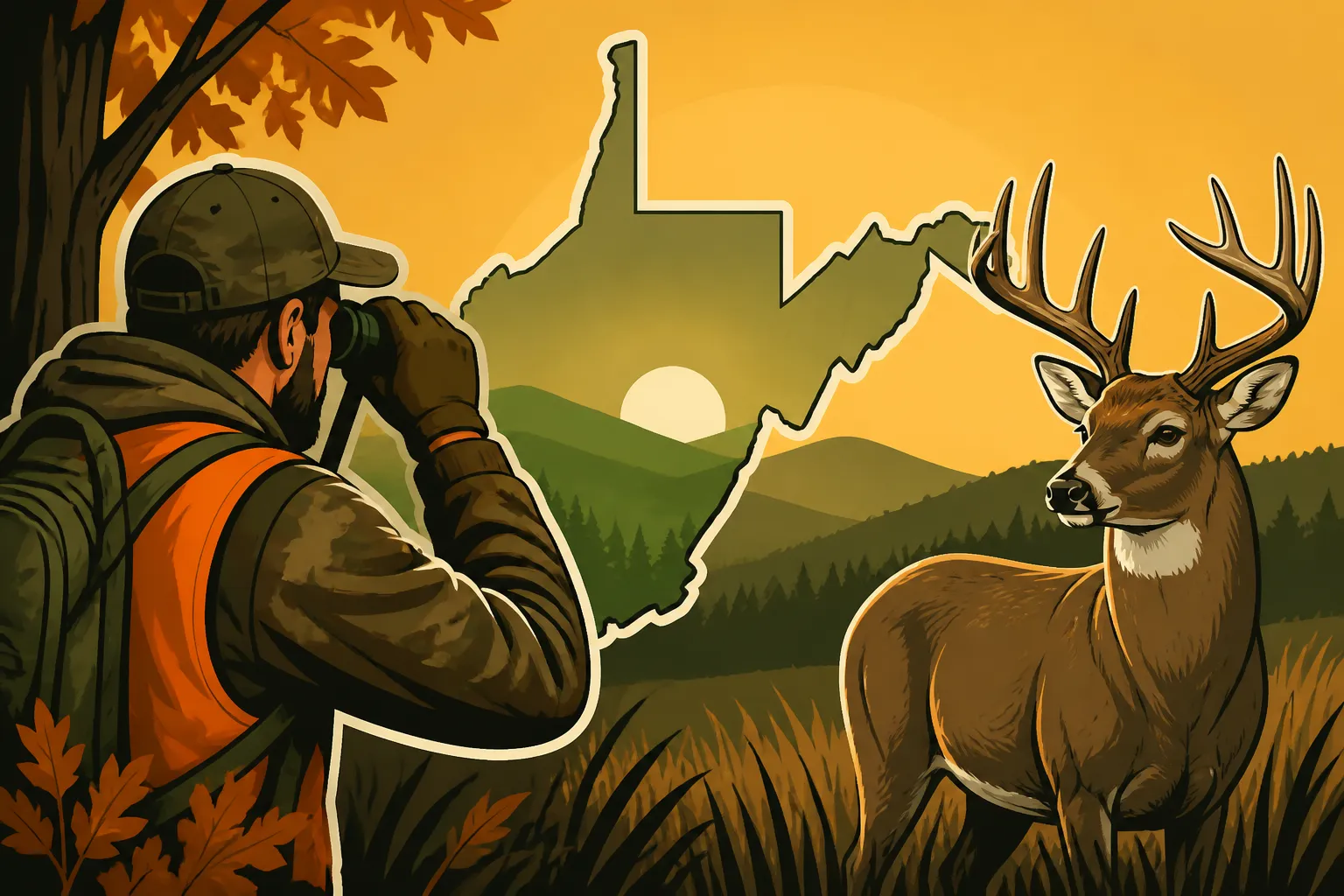
On opening weekend, good optics are not a luxury; they are a necessity. A quality pair of binoculars, like an 8x or 10x, will allow you to scan dense cover, pick out deer at long distances, and confirm legal antler requirements without raising your rifle. In the thick West Virginia woods, where shots can be fleeting, identifying your target clearly and quickly is paramount. Don't skimp here; clear glass makes a massive difference in low light and when trying to identify a buck amidst brush.
A rangefinder is equally important, especially if you're hunting in varied terrain with steep angles. Knowing the exact distance to your target helps ensure an ethical shot. Many hunters use a Rifle Setups for West Virginia Deer Hunting with a scope, but still use a handheld rangefinder for quick measurements. When the moment of truth comes, you don't want to be guessing yardage. Pre-range key landmarks around your stand before first light so you have reference points.
For navigation, a reliable GPS unit or a robust smartphone app like GoHunt is indispensable. Cellular service can be spotty or nonexistent in many parts of West Virginia's public lands, so make sure your maps are downloaded for offline use. These tools allow you to pinpoint your location, track your movement, identify property boundaries, and navigate back to your vehicle in the dark. Don't underestimate the importance of knowing exactly where you are, especially when dealing with the increased hunter traffic and pressure.
Clothing and Comfort for Cold, Long Sits
West Virginia's late November weather can swing wildly, from mild and rainy to bone-chilling cold with snow. Dressing in layers is crucial for adapting to these conditions and for maintaining comfort during long sits. Start with moisture-wicking base layers, add insulating mid-layers like fleece or wool, and top it off with a waterproof and windproof outer shell. Wool is an excellent choice for hunting clothing as it retains warmth even when wet and is naturally quiet.
Good boots are also non-negotiable. You'll likely be doing a lot of walking, often on steep, uneven, and potentially muddy or snowy terrain. Invest in comfortable, waterproof, insulated boots that provide good ankle support. Nothing ruins a hunt faster than cold, wet feet. Additionally, bring plenty of hand warmers, a warm hat, and gloves. Your core temperature drops quickly when you're sitting still in cold weather, and keeping your extremities warm is key to staying in the stand longer.
Remember to prioritize safety. West Virginia has strict Blaze Orange Requirements during firearms season. Wear a minimum of 400 square inches of blaze orange, including a hat, to ensure you are highly visible to other hunters. Blaze pink is also a legal option. This isn't just a rule; it's a critical safety measure to prevent accidents in a crowded woods.
Post-Harvest Planning and Gear
A successful hunt doesn't end with the shot. Having a plan and the right gear for post-harvest care is just as important. Dragging a deer out of a steep West Virginia hollow can be an arduous task, so consider investing in a deer sled or a sturdy game cart if you expect to be hunting areas with easier access roads. For backcountry hunts, knowing how to bone out a deer and pack it out in a frame pack can save immense effort and ensure your venison stays pristine.
Always carry a sharp field dressing knife, a small saw or bone cutters, and game bags. Even in cold weather, field dressing quickly is important for cooling the meat. If you anticipate warm temperatures, bringing a few large trash bags for the hide and a cooler with ice in your vehicle is a smart move. Understand the proper procedures for Field Dressing a Deer in Cold Weather to preserve the meat quality.
Finally, be aware of West Virginia's deer checking requirements. Most hunters use the convenient online system or the Go Outdoors WV app to report their harvest immediately. Knowing these regulations and having your license and tags readily accessible will make the process smooth and hassle-free, allowing you to focus on the celebration and the delicious venison ahead.
Safety and Ethical Considerations
Opening weekend brings a unique set of safety concerns and ethical responsibilities that every hunter must embrace. Being prepared isn't just about your gear; it's about your mindset and your respect for the environment, the animals, and your fellow hunters.
Prioritizing Hunter Safety and Visibility
The most important aspect of opening weekend is safety, particularly with the increased number of hunters in the woods. Always assume every movement you see or sound you hear is another hunter until you can positively identify it. Never shoot at sound or movement. Identify your target and what's beyond it before pulling the trigger. This is a non-negotiable rule. Double-check your surroundings, your shooting lanes, and make sure your shot is clear and safe.
Adhering strictly to Blaze Orange Requirements is not merely a formality; it's a life-saving measure. The more visible you are, the safer everyone is. Consider adding additional blaze orange to your pack or other gear. If you're hunting with a group, communicate your positions clearly, especially during drives or when spreading out. Handheld radios can be incredibly useful for maintaining contact and ensuring everyone knows where others are located.
Beyond visibility, ensure your firearm is always handled safely. Keep the muzzle pointed in a safe direction, keep your finger off the trigger until ready to shoot, and ensure the firearm is unloaded when crossing obstacles or entering/exiting a vehicle. A momentary lapse in judgment can have tragic consequences, especially in a crowded hunting environment. Take your time, be deliberate, and prioritize safety above all else.
Respecting Land and Other Hunters
West Virginia's public lands are a shared resource, and opening weekend puts that shared aspect to the test. Respect for other hunters is paramount. This means not setting up too close to another hunter's stand, respecting their space, and being mindful of noise. If you see another hunter, a friendly wave or a quiet greeting is appropriate; avoid loud conversations or movements that could disturb their hunt. Understand that everyone is out there to enjoy the experience, even if their methods differ from yours.
Respect for the land itself involves practicing Leave No Trace principles. Pack out everything you pack in, including spent shell casings, food wrappers, and any other trash. Do not damage trees or vegetation unnecessarily. If you use a treestand or ground blind, ensure it is set up according to WVDNR regulations and removed at the end of the season. Leave the woods cleaner than you found them, preserving the experience for future generations.
Furthermore, always know and respect property boundaries. If hunting near private land, confirm you have permission or that you are indeed on public ground. Never trespass, even to retrieve game, without explicit permission. Using mapping apps to delineate these boundaries is critical. A respectful and ethical approach ensures that hunting remains a positive and sustainable tradition in West Virginia.
Responsible Harvest and Game Recovery
Taking an ethical shot is a hunter's responsibility. This means knowing your rifle's capabilities, practicing regularly, and only taking shots at distances where you are confident in a clean, humane kill. Pass on shots that are too far, obstructed, or that offer a poor angle. The goal is a quick, clean harvest, not just any harvest.
After the shot, give the animal time if necessary, especially if you suspect a marginal hit. While the excitement is immense, patience can be the difference between recovering your deer and losing it. Then, track it diligently. West Virginia's terrain and leaf litter can make blood trailing challenging, but taking your time, looking for every sign, and working as a team if with others, will maximize your chances. Tracking a Deer Through West Virginia Leaf Litter can be particularly tough.
If you wound a deer, your primary objective becomes recovering that animal. This means dedicating the time and effort needed, even if it pushes into darkness or requires returning the next morning. It's a commitment you make when you pull the trigger. Once recovered, properly field dress and care for the meat. This ensures a valuable resource isn't wasted and honors the animal. Responsible harvest is the cornerstone of ethical hunting.
Disclaimer
Please remember that hunting regulations, season dates, and specific rules for public lands can change. Always consult the official West Virginia Division of Natural Resources (WVDNR) hunting regulations annually before heading afield. This guide provides general information and tactical advice but does not supersede official state regulations. Stay safe, hunt ethically, and enjoy the wild beauty of West Virginia.