West Virginia Bison History Before Settlement
Hunting in West Virginia today, we often think of the whitetail deer, the black bear, or maybe a gobbler strutting through the woods. But it might surprise some folks to learn that our wild mountains and fertile river bottoms once supported a truly majestic animal that no longer roams our hills: the American bison. It's easy to dismiss it as a faraway plains creature, but the ghost of the bison still lingers in old stories, ancient paths, and even some of our place names. This guide is going to take a journey back in time, unraveling the fascinating history of bison in West Virginia before European settlement, exploring their eventual disappearance, and seeing how their legacy continues to shape our understanding of this wild and wonderful state.
The Historical Presence of Bison in West Virginia
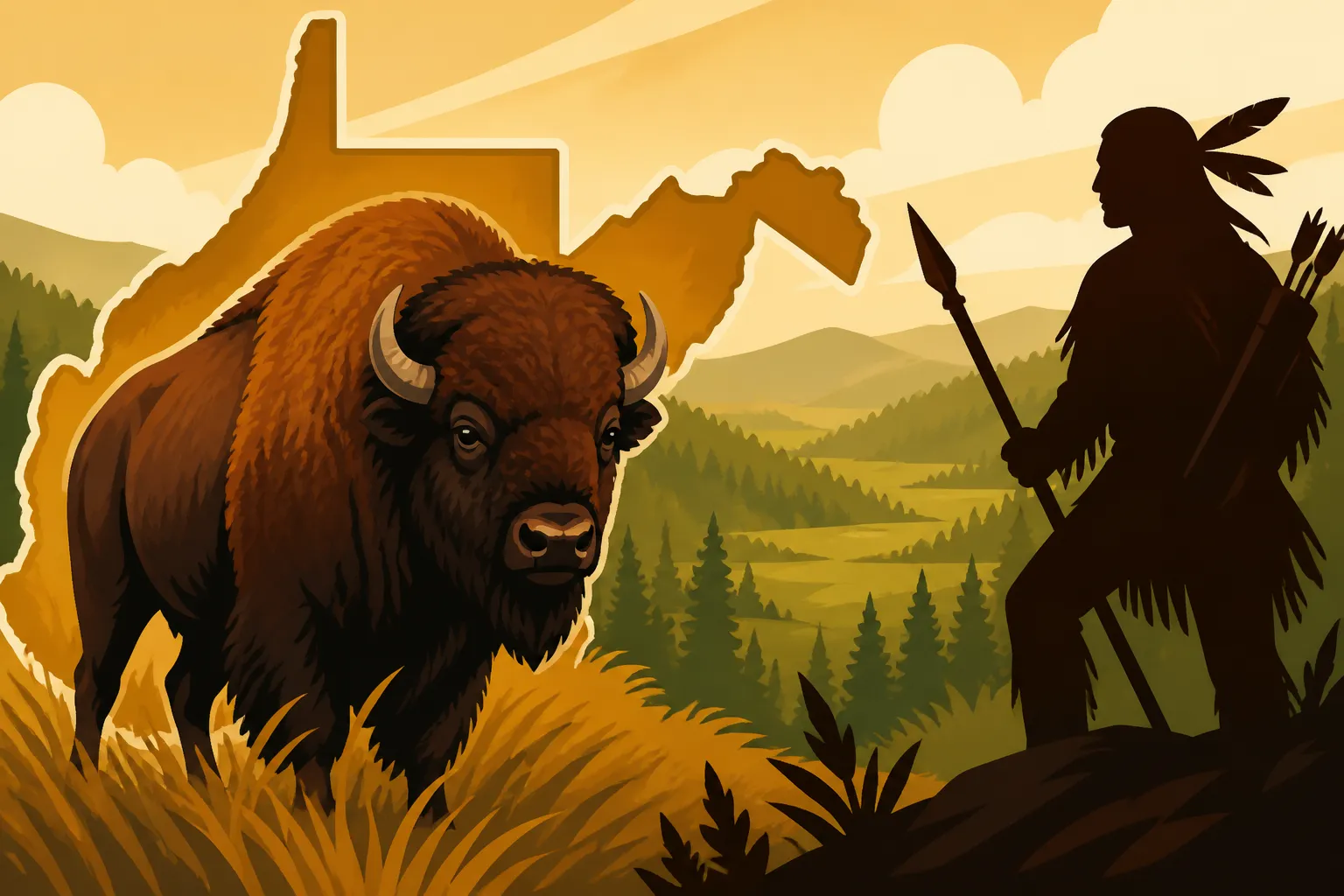
It's hard to imagine, isn't it? Picture yourself standing on a ridge overlooking the Ohio River, not far from what we now call Wheeling or Parkersburg. Instead of barges and power lines, you'd see vast cane breaks and open woodlands, and perhaps, a herd of massive, shaggy beasts grazing peacefully. That's not just a romanticized vision; it's a historical reality. Bison, specifically the eastern woodland variety, were once a vibrant part of West Virginia's ecosystem, playing a critical role in shaping the landscape and serving as a vital resource for Indigenous peoples for thousands of years before any European set foot here.
These weren't necessarily the same bison you'd picture thundering across the Great Plains, though they were closely related. The eastern woodland bison were adapted to a more forested environment, thriving in a mosaic of open grasslands, canebrakes, and woodlands created by natural fires and Indigenous land management. They were an immense presence, their sheer size and numbers impacting everything from vegetation patterns to soil composition. Thinking about how a large animal like our White-Tailed Deer Across West Virginia impacts the landscape, imagine that on a much grander scale.
Early European Accounts and Indigenous Knowledge
When the first European explorers and settlers ventured into what would become West Virginia, their journals and maps often spoke of the "buffalo" they encountered. These weren't fleeting glimpses; some accounts describe significant herds. For instance, early explorers like Christopher Gist and others traveling through the Ohio River Valley in the mid-1700s made note of the abundance of bison and the well-worn trails they created. These weren't isolated sightings; they were evidence of a well-established population.
Before any written European records, however, Indigenous peoples held a profound and ancient knowledge of the bison. Tribes such as the Shawnee, Cherokee, and Delaware, who inhabited or traversed this region, relied on bison for sustenance, hides, and tools. Their oral traditions, archaeological findings, and the remnants of their hunting grounds speak volumes about the deep relationship they had with these animals. These communities understood the bison's migratory patterns, preferred habitats, and played a role in managing the landscape through controlled burning, which in turn helped create the very habitats bison preferred.
Understanding their habits and movements was critical for survival for these early peoples, much like knowing the patterns of our Wild Turkeys in West Virginia or West Virginia's Black Bear Comeback is for modern hunters. The bison provided an incredible bounty, supporting entire communities. Their meat was preserved, their hides crafted into clothing and shelter, and their bones and horns utilized for tools and ceremonial objects. The sheer scale of their importance is hard to overstate.
Evidence from Natural Salt Licks and Trace Routes
One of the most compelling pieces of evidence for West Virginia's bison history lies in its geography: the natural salt licks and the intricate network of "buffalo traces" or trails that crisscrossed the landscape. Bison, like many other herbivores, have a strong physiological need for salt and minerals. Throughout West Virginia, from the Ohio River to the Eastern Panhandle, natural salt springs and mineral deposits attracted these animals in vast numbers. Places like the Kanawha Valley were particularly famous for their salt licks, which drew not only bison but also elk, deer, and other game.
These licks became critical hubs, acting as magnets for wildlife and, consequently, for the Indigenous hunters who pursued them. Over centuries, the constant movement of massive bison herds to and from these salt licks carved deep, wide paths into the earth. These "buffalo traces" weren't just animal trails; they were superhighways of the wilderness, often running for miles and connecting river valleys, mountain passes, and prime grazing areas. If you've ever explored our public lands, perhaps using a tool like GoHunt to find old logging roads, imagine these trails, but worn by hooves instead of tires, and far older.
Many of these ancient buffalo traces were so well-established and efficient that early European settlers adopted them, widening them into wagon roads and, eventually, some even became modern highways. The paths we drive on today might very well follow the same routes that bison took thousands of years ago in search of minerals. It's a powerful reminder of their enduring impact on our topography. Just as we use modern mapping tools like GoHunt today to analyze terrain and potential game movement when Scouting West Virginia Public Land Before Season, those ancient paths were the original "maps" of the wilderness.
Why Bison Disappeared from West Virginia
The story of bison in West Virginia, like much of the eastern United States, is one of rapid decline and eventual extirpation. It wasn't a slow fade; it was a dramatic disappearance driven by human activity. By the early 19th century, these magnificent animals were largely gone from the state, a stark contrast to their former abundance. Understanding why this happened is crucial for appreciating the challenges that faced and continue to face our wildlife populations, including the successful return of West Virginia's Restored Elk Herd in recent years.
The reasons for their disappearance are complex but primarily boil down to two interconnected factors: relentless hunting pressure and the destruction of their habitat. It's a sobering lesson in how quickly even vast populations can be decimated when faced with unchecked exploitation and widespread changes to their environment.
Pressures from Westward Expansion and Market Hunting
As European settlement pushed westward across the Appalachian Mountains and into the Ohio Valley, it brought with it an unprecedented level of hunting pressure. Unlike the sustainable hunting practices of Indigenous peoples, who were deeply integrated into the ecosystem, the new settlers often hunted for commercial gain, driven by the expanding markets of the east. Bison hides were valuable, and their meat, while not the primary target, was also utilized.
Market hunting became a major force. Hunters, many of them newcomers, saw the vast herds as an endless resource to be exploited. It wasn't just about feeding a family; it was about profit. This commercial hunting, coupled with subsistence hunting by a rapidly growing population, quickly took a toll. The sheer numbers of bison made them an easy target, especially at critical gathering points like salt licks or river crossings. A prime example of historical hunting pressure that led to extirpation, the bison's story contrasts with species we hunt today, where careful regulation ensures healthy populations, such as West Virginia's Black Bear Comeback.
Furthermore, the general disruption caused by expanding settlements, including the noise, deforestation for timber and agriculture, and the sheer human presence, pushed bison out of their traditional ranges. They were migratory animals, and their ability to move freely across the landscape was essential for their survival. As settlements grew, these migratory routes were blocked or fragmented, leaving herds isolated and vulnerable, making it impossible for them to adapt.
Habitat Loss and Fragmentation
Beyond direct hunting, the most profound impact on West Virginia's bison populations was the drastic alteration and destruction of their habitat. The very act of settlement meant transforming the wilderness into farms, towns, and transportation routes. Forests were cleared for agriculture, especially in the fertile river bottoms, which were prime bison grazing areas. The open woodlands and canebrakes that bison relied on were converted into pastures for domestic livestock or simply disappeared under the ax and plow.
This loss wasn't just about acreage; it was about the specific mosaic of habitats that the eastern woodland bison needed. They thrived in areas where natural disturbances, like fire, created open meadows and rejuvenated forage. With human settlement, these natural processes were suppressed, further degrading suitable habitat. The fragmentation of the landscape meant that even if pockets of suitable habitat remained, they were often isolated, making it impossible for larger herds to sustain themselves or migrate effectively. Many of the areas we now refer to as Hunting the Ohio River Valley or Hunting the Eastern Panhandle were profoundly changed.
Imagine how a species like the elk, whose diet and habitat needs are somewhat similar, would fare without vast, interconnected ranges. The reintroduction efforts for elk in southern West Virginia (How Elk Returned to Southern West Virginia) highlight the importance of not just having animals, but having the right kind of expansive, healthy habitat for them to thrive. The bison simply ran out of room and resources in the face of this relentless habitat transformation.
| Factor | Description | Impact on Bison |
|---|---|---|
| Market Hunting | Commercial hunting for hides and meat, unregulated. | Rapid population decline due to unsustainable harvest rates. |
| Subsistence Hunting | Hunting by settlers for food and necessities. | Added pressure to already declining herds, especially as human population grew. |
| Agricultural Expansion | Forests cleared, river bottoms converted to farmland. | Direct loss of prime grazing and foraging habitat. |
| Infrastructure Development | Roads, settlements, fences. | Fragmentation of remaining habitat, disruption of migratory routes, increased human-wildlife conflict. |
| Suppression of Natural Fires | Alteration of natural ecosystem processes. | Reduction of open woodlands and grasslands essential for bison forage. |
Tracing the Legacy: Where Bison Left Their Mark
Even though the last wild bison in West Virginia was likely gone by the early 1800s, their presence left an indelible mark on the landscape and culture of the state. It's a subtle legacy, often overlooked, but once you start looking for it, you can see the echoes of these magnificent animals in unexpected places. For anyone who spends time outdoors, whether hunting on Monongahela National Forest Hunting land or just exploring, appreciating these historical layers adds a whole new dimension to our appreciation of the land.
The story of the bison reminds us that ecosystems are dynamic and that human actions have long-lasting consequences. Their disappearance highlights the importance of wildlife management and conservation efforts that we see today for species like deer, bear, and elk. The impact of their historical grazing habits also gives us a glimpse into the past ecological conditions of West Virginia, informing us about the historical biodiversity of the region.
Place Names and Geographical Markers
One of the most enduring legacies of bison in West Virginia is etched into the very map of the state through its place names. Rivers, creeks, and hollows often carry names like "Buffalo Creek" or "Buffalo Fork," testaments to where these animals once roamed or were frequently encountered. These names aren't just quaint historical curiosities; they serve as geographical markers, pointing to areas that were historically important for bison, perhaps serving as watering holes, crossing points, or calving grounds.
Think about the sheer number of places with "Buffalo" in their name across the state. This isn't a coincidence. It tells us that these animals were so prevalent and significant that they became embedded in the common language and descriptive geography of the early settlers. When you’re looking at a topographical map, maybe using a mapping app from GoHunt, and see a "Buffalo Hollow," it's not just a name – it's a silent nod to a creature that once moved through that very terrain.
These place names are tangible links to a lost past, helping us visualize a time when West Virginia's wilderness was different, wilder, and home to truly monumental wildlife. They invite us to imagine the sounds and sights of a primeval landscape, rich with a diversity of large mammals, much like the one that existed when West Virginia Timber Rattlesnake Range was more expansive in an untouched forest.
Modern Conservation and the Echoes of the Past
While wild bison no longer roam West Virginia, their story continues to influence modern conservation efforts and our understanding of what a truly healthy, diverse ecosystem looks like. The successful reintroduction of elk, another large ungulate that was once extirpated from the state, draws parallels to the bison's history. Learning from past mistakes, wildlife agencies and conservationists have carefully planned and executed the elk reintroduction, focusing on suitable habitat, public education, and responsible management, including West Virginia Wildlife Disease Monitoring to protect the herds.
The historical presence of bison also reminds us of the incredible carrying capacity of West Virginia's landscape. Our mountains and river valleys, when managed thoughtfully, can support a wide array of wildlife, from the smallest small game to the largest predators. For those of us who spend our time hunting and enjoying the outdoors, it's a call to be mindful stewards of the land, whether it's understanding How Many Acres of Public Land West Virginia Has or advocating for habitat preservation on private tracts.
The memory of the bison serves as a powerful symbol of both loss and the potential for recovery. It teaches us about the interconnectedness of species, habitat, and human activity. As we explore West Virginia's wild places today, we walk paths that bison carved, we hear echoes of their thunder in the wind, and we carry forward a legacy that calls us to protect the wildness that remains.
Disclaimer
This article is for general informational purposes only and does not constitute professional advice. Laws, prices and regulations vary by location and change over time. Consult a qualified professional for guidance on your specific situation.