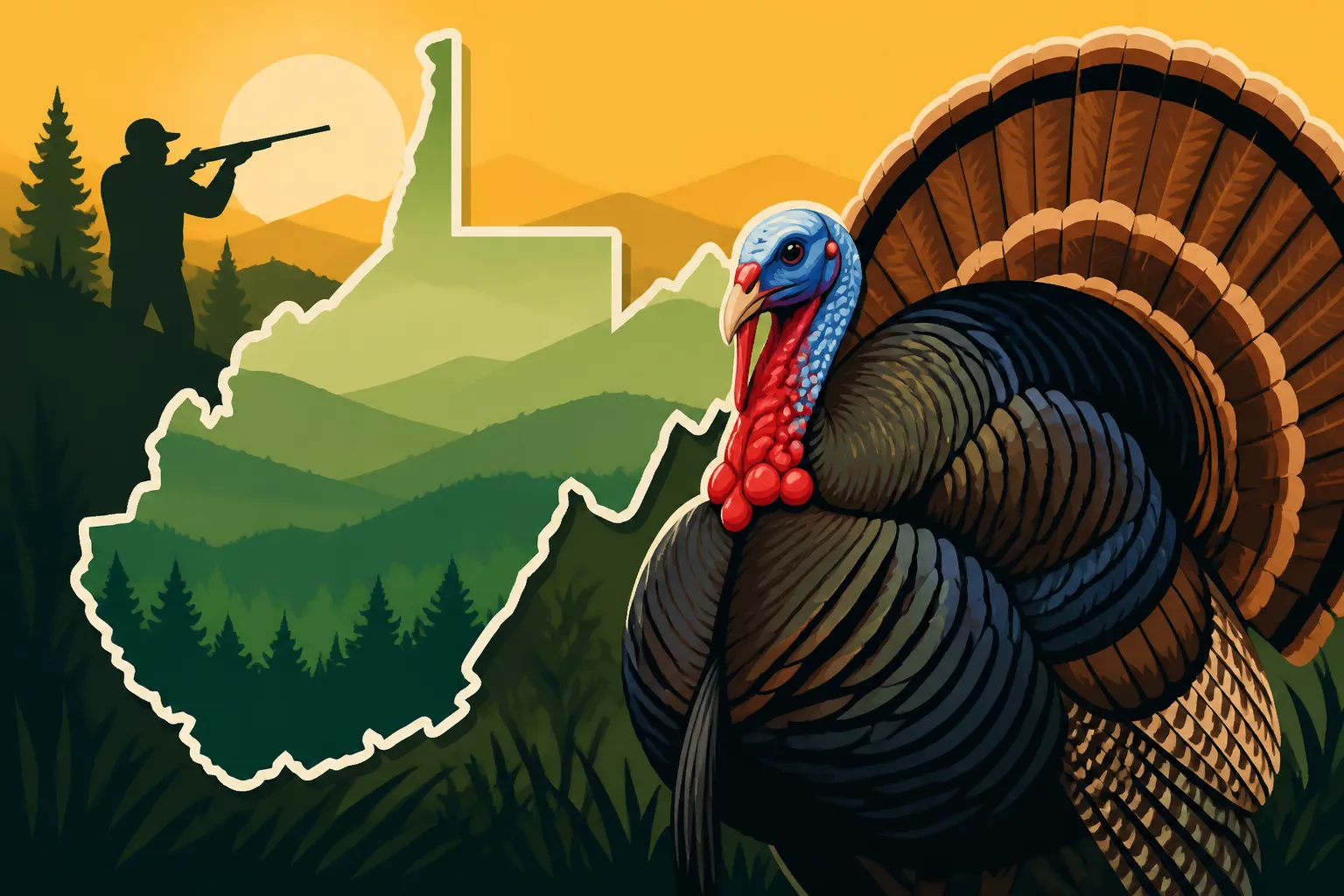
West Virginia Wild Turkey Subspecies
For many of us who love chasing gobblers through the mountains and hollows of West Virginia, there's often a lingering question: just what kind of wild turkey are we actually hunting? With different subspecies recognized across North America, it can get a little confusing trying to figure out which ones call our beautiful state home. This guide will clear up that mystery, detailing the specific wild turkey subspecies you'll encounter here and why understanding them is key to a successful hunt.
The Eastern Wild Turkey: West Virginia's Dominant Native
Let's get right to it: when you're out stomping through West Virginia's woods, listening for that booming gobble echoing across the ridge, you are overwhelmingly pursuing the Eastern wild turkey. This isn't just a subspecies in our state; it's the subspecies. West Virginia sits squarely within the heart of the Eastern's historical and current range, and these magnificent birds are the backbone of our thriving turkey hunting tradition. They are the same birds that populated the forests when early settlers arrived, and their tenacious spirit has allowed them to rebound dramatically after near extirpation.
Characteristics and Appearance of the Eastern
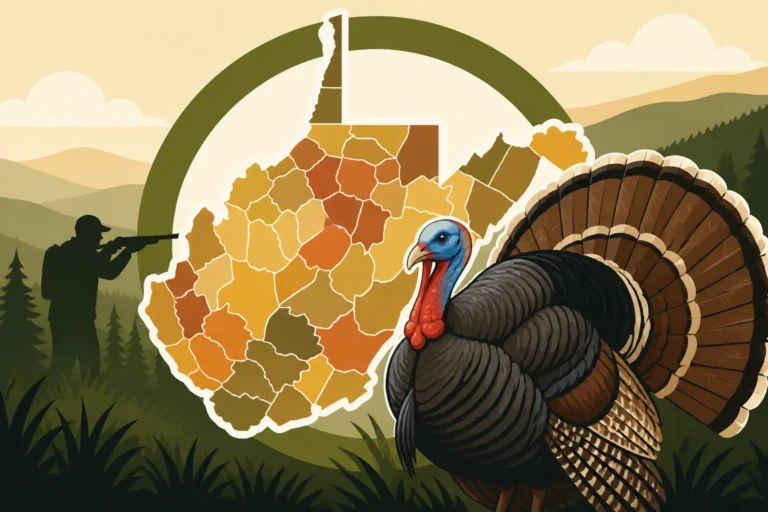
The Eastern wild turkey (Meleagris gallopavo silvestris) is renowned for its striking appearance and robust build. Picture a classic wild turkey – that's likely an Eastern. They are typically the largest of the wild turkey subspecies, with mature gobblers often weighing in at 20-25 pounds, though some true giants can push past 30. Their plumage is a vibrant, iridescent display, ranging from coppery bronze to green and red depending on the light, which helps them blend into the dappled sunlight of the deciduous forests they inhabit. The tips of their tail feathers and upper tail coverts are typically a rich, dark chestnut brown. This chestnut banding is a key identifier when comparing them to other subspecies found elsewhere, such as the white-tipped Merriam's or the buff-tipped Rio Grande.
Their heads and necks are largely featherless, displaying a kaleidoscope of red, white, and blue hues that become incredibly vivid during the spring breeding season. The snood, a fleshy appendage that hangs over the beak, can grow impressively long on excited gobblers, as can the wattle under their chin. Spurs, those sharp bony protrusions on the back of a gobbler's legs, can grow to formidable lengths, indicating age and dominance, and are a prized trophy for many hunters. Beards, a tuft of coarse bristles protruding from the chest, are another classic feature, though sometimes hens can also grow short, thin beards, which can occasionally throw a new hunter for a loop.
Historical Range and Restoration Efforts in West Virginia
The Eastern wild turkey once roamed nearly all of the eastern United States, including every corner of what we now call West Virginia. However, habitat destruction from logging and unregulated market hunting in the late 19th and early 20th centuries pushed their populations to the brink. By the 1930s and 40s, wild turkeys were scarce in many parts of the state, relegated to only the most remote and rugged pockets of the Allegheny Mountains. It's truly a testament to conservation efforts that they're so abundant today.
The remarkable comeback of the Eastern wild turkey in West Virginia is a fantastic success story, largely due to dedicated efforts by the West Virginia Division of Natural Resources (WVDNR) and collaborating conservation groups. These efforts primarily involved trap-and-transfer programs. Wild turkeys were trapped from healthy populations in secluded areas, often using rocket nets, and then relocated to suitable habitats where populations were depleted or nonexistent. This was paired with careful habitat management, including promoting healthy forest diversity and creating openings that benefit turkeys. You can read more about How Turkeys Were Restored to West Virginia. These efforts were so successful that by the late 20th century, the Eastern wild turkey had re-established itself in every county across the state, providing the robust hunting opportunities we enjoy today.
Why Understanding Subspecies Matters for West Virginia Hunters
While West Virginia boasts a strong population of Eastern wild turkeys, understanding the specific characteristics of this subspecies, even if it's the only one present, offers significant advantages to hunters. It's not just about textbook knowledge; it's about translating that information into successful strategies in the field. Every detail, from their preferred habitat to their vocalizations, influences how and where we choose to hunt.
Habitat Preferences and Behavior Differences
Eastern wild turkeys thrive in mature deciduous and mixed forests, often interspersed with open fields, clearings, and agricultural lands. This describes much of West Virginia's landscape perfectly. They rely on these varied habitats for different aspects of their life cycle. Mature forests provide crucial roosting trees – often large, old oaks or pines – and offer mast crops like acorns and beechnuts, which are vital food sources, especially in fall and winter. These forests also offer dense cover for nesting hens and poults. The open areas, whether natural clearings, logging cuts, or farm fields, are important for feeding, dusting, and strutting displays in the spring.
Unlike some other subspecies that might frequent more open plains or arid environments, the Eastern in West Virginia is a creature of the timber. Their behavior is intrinsically linked to the forest. They'll often feed along creek bottoms and benches, move between ridges, and utilize thick rhododendron or laurel patches for escape cover. Knowing this helps you predict their travel patterns and set up effectively. For instance, a gobbler spotted in a field will often retreat to the timber edge when approached, rather than running across the open expanse. Understanding these tendencies, which are specific to the Eastern in its forest environment, is critical for planning your approach and knowing where to anticipate their next move. The West Virginia Turkey Roost Tree Preferences are often dictated by the dominant tree species in these specific forest types.
Impact on Hunting Strategies and Success
Recognizing that you're hunting Eastern wild turkeys in West Virginia directly influences your calling techniques and overall hunting strategy. Easterns are known for being vocal, especially in the spring, but they can also be incredibly wary and educated, particularly on public lands. Their full range of calls – from sharp alarm putts to soft yelps, clucks, purrs, and the distinctive gobble – are all part of an Eastern hunter's repertoire. There's a particular cadence and tone to Eastern turkey calls that differs slightly from, say, the more aggressive or higher-pitched calls you might use for a Rio Grande. Mastering these specific sounds is paramount.
When you're chasing Easterns in the rugged terrain of West Virginia, tactics like a "run-and-gun" approach can be highly effective, especially on public land. This involves covering ground, stopping to call, and moving quickly if you don't get a response. Easterns are often willing to travel to a call if they believe a hen is receptive. However, they are also prone to "hang up" – stopping just out of range, often behind a rise or in thick cover, expecting the hen to come to them. Understanding this tendency for a gobbler to want the hen to close the last bit of distance is crucial. This often means being patient, knowing when to switch to softer calls, or even trying a subtle stalk if the terrain allows. Using tools like GoHunt can help you scout and analyze public land topography, revealing hidden rises or thickets where a gobbler might hang up, allowing you to plan your approach more effectively. If you're looking for more specific tactics, check out Run-and-Gun Turkey Tactics on Public Land.
Common Misconceptions and Local Variations
It's natural for hunters, especially those new to the state or those who've hunted turkeys in other regions, to wonder if different turkey subspecies might exist in West Virginia. The hunting community is always full of rumors and anecdotal sightings, but when it comes to official recognition and biological presence, the picture is quite clear. Still, even within the Eastern subspecies, you'll find interesting local variations that can impact your hunting experience.
Debunking Other Subspecies Sightings
Occasionally, you might hear talk of other wild turkey subspecies in West Virginia, like the Osceola, Merriam's, or Rio Grande. Let's be clear: biologically and geographically, these are not present in West Virginia. The Osceola is found exclusively in Florida, while the Merriam's primarily inhabits the mountainous regions of the western United States, with a distinct white-tipped tail. Rio Grandes are a southwestern and plains bird, with buff-tipped tail feathers. These subspecies simply do not naturally occur in our state. Any claims of seeing one are almost certainly a misidentification of an Eastern wild turkey with some atypical plumage, or perhaps a domestic turkey that has gone feral (which can happen, but these birds generally lack the wild instincts and coloration of a true wild turkey).
The WVDNR's extensive biological surveys, population tracking, and banding programs consistently confirm the Eastern wild turkey as the sole native subspecies across West Virginia. While sometimes a turkey's coloration might appear lighter or darker than the "average" Eastern, these are just natural variations within the subspecies, not an indicator of a different genetic lineage. Environmental factors, diet, and age can all subtly influence a bird's appearance. Trust the science and the established range maps – in West Virginia, it's all about the Eastern.
Regional Differences in Eastern Turkey Populations
Even though we only have one subspecies, the Eastern wild turkey population in West Virginia isn't entirely uniform. There are certainly regional differences that seasoned hunters have observed. For instance, turkeys in the more agricultural Eastern Panhandle might behave differently than those in the vast, rugged expanses of the Monongahela National Forest. Birds in farm country might be more patterned, using field edges for feeding, and can sometimes be easier to locate with locator calls from a distance. You can learn more about Turkey Tactics for Eastern Panhandle Field Edges.
On the other hand, turkeys in the deep woods of the Allegheny Highlands, where vast tracts of unbroken forest dominate, might be more nomadic, covering greater distances to find food, and requiring more aggressive scouting and walking. Their calls might carry differently through the steep hollows and thick timber, influencing how you set up. Population densities can also vary. Some counties might simply have more birds per square mile due to ideal habitat or lower hunting pressure. Using a platform like GoHunt can provide valuable data on historical harvest trends by county, helping hunters understand where densities might be higher or lower, and how successful past seasons have been in specific areas. This can influence where you choose to focus your efforts. These aren't subspecies differences, but rather fascinating adaptations of the Eastern to the diverse micro-habitats within West Virginia.
| Subspecies Feature | Eastern Wild Turkey (West Virginia) |
|---|---|
| Primary Range | Eastern United States (including all of West Virginia) |
| Tail Feather Tips | Dark chestnut brown |
| Overall Plumage Color | Iridescent copper, bronze, green, red |
| Average Gobbler Weight | 20-25 lbs (can exceed 30 lbs) |
| Typical Habitat | Mature deciduous/mixed forests, interspersed with fields/clearings |
| Vocalizations | Wide range of yelps, clucks, purrs, gobbles; often responsive |
| Hunting Strategy Impact | Forest-focused, patient calling, aware of "hanging up" |
So, there you have it, fellow hunters! While the thought of chasing different turkey subspecies might be a fun fantasy for some, the reality in West Virginia is that we are blessed with a fantastic and widespread population of the Eastern wild turkey. Understanding their unique characteristics, habitat preferences, and behaviors is your best tool for success in the field. From the highest peaks to the lowest river bottoms, the Eastern reigns supreme, offering incredible challenges and rewards for those willing to put in the time and effort. Now go hit the woods and listen for that magnificent gobble!
Disclaimer
This article is for general informational purposes only and does not constitute professional advice. Laws, prices and regulations vary by location and change over time. Consult a qualified professional for guidance on your specific situation.