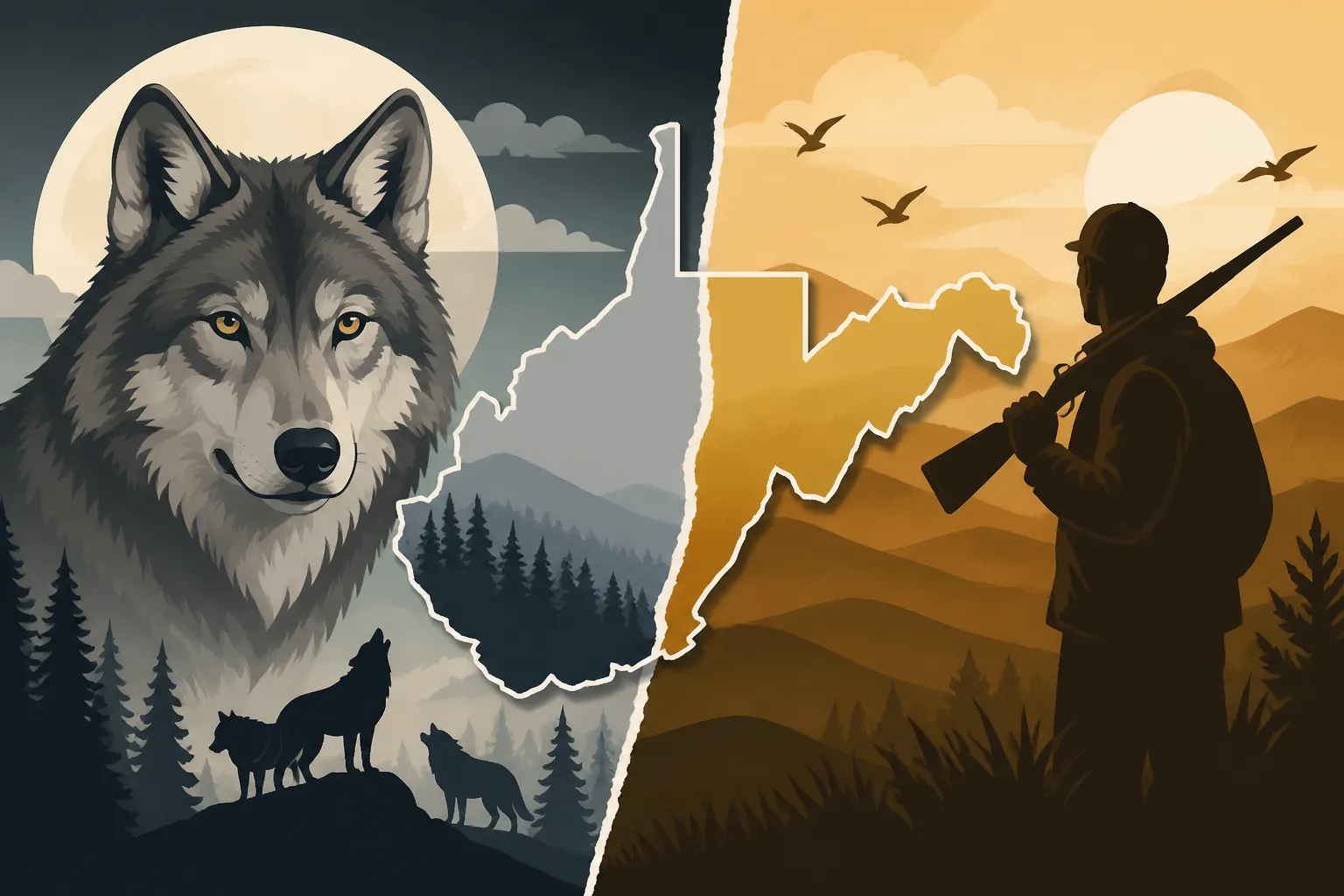
West Virginia Wolf History and Extirpation
It’s easy to look at the rugged mountains and dense forests of West Virginia today and imagine them as they’ve always been, a wild haven for deer, bear, and turkey. But if you listen closely, beyond the rustle of leaves and the distant cry of a coyote, you might almost hear the echoes of a deeper, wilder past. It’s a past that includes one of North America’s most iconic predators, the wolf, whose presence once shaped these landscapes but whose voice was ultimately silenced by human expansion. This guide will take you back through time, exploring the fascinating history of wolves in our state and the tragic story of their extirpation.
The Original Wilds: West Virginia's Primal Wolf Presence
Imagine the Appalachian landscape centuries ago, before settlers pushed westward, before logging roads crisscrossed every hollow, and long before the whispers of modern civilization replaced the wild symphony of nature. In that ancient West Virginia, the gray wolf, or timber wolf as it was often called, was a dominant figure in the food chain. These were not just any wolves; they were creatures perfectly adapted to the rugged, forested terrain of what would become the Mountain State, playing a crucial role in maintaining the health and balance of the ecosystem.
Wolves as Keystone Predators
In those bygone days, the wolf wasn't just another animal; it was a keystone species, an animal whose presence disproportionately affects an ecosystem. Wolves hunted the vast herds of elk and West Virginia Bison History Before Settlement that once roamed our valleys and plateaus, keeping their numbers in check and ensuring the survival of the fittest. They targeted the old, the weak, and the sick, preventing overgrazing and the spread of disease, which in turn fostered healthier populations of their prey. This natural selection wasn't cruel; it was vital, strengthening the genetic pool of deer and other herbivores, making them more resilient to harsh winters and environmental changes. Without wolves, prey populations could boom, strip the land of vegetation, and then crash, leading to widespread suffering and ecological instability. Their presence ensured a dynamic balance, a constant ebb and flow that sustained the immense biodiversity of primeval Appalachia.
Native American Coexistence and Lore
Long before European settlers arrived with their livestock and their fear of the wild, Native American tribes lived alongside the wolf, often holding it in high regard. For many indigenous cultures, the wolf was a symbol of strength, cunning, loyalty, and a deep connection to the spirit world. It was a teacher, a hunter, and a guardian. While they certainly hunted wolves when necessary, often for their pelts or to protect their camps, their relationship was generally one of respect and, in many cases, reverence. They understood the wolf's role in nature, not as a malevolent beast, but as an integral part of the living world. Stories and legends passed down through generations often depicted wolves as wise beings or powerful spirits, reflecting a nuanced understanding that stood in stark contrast to the fear and hatred that would later fuel their extermination. This long period of coexistence speaks volumes about the possibility of shared landscapes, a lesson often forgotten in the fervor of settlement.
The Inevitable Clash: European Settlement and Wolf Persecution
The arrival of European settlers in West Virginia marked a turning point for the wolf. These newcomers brought with them not only their culture and traditions but also a dramatically different perspective on wildlife, especially large predators. The vast, untamed wilderness, once seen as a source of sustenance and spiritual connection by Native Americans, was now viewed as something to be conquered, cleared, and made productive. And in this new vision of the land, the wolf quickly became an enemy.
Livestock and the Threat to Livelihoods
As settlers pushed deeper into the Appalachian mountains, clearing forests for farms and establishing communities, they brought with them livestock – sheep, cattle, and hogs. These animals, often left to graze freely or with minimal protection, represented a significant investment and the very foundation of a family's livelihood. To a wolf, a domestic sheep or calf was simply another source of food, often easier to catch than a wary wild deer. The resulting conflicts were immediate and devastating for the settlers. A single wolf attack could wipe out a season's profits, threatening a family's ability to survive in the harsh frontier. This direct economic impact fueled intense animosity. Unlike the occasional skirmishes with game animals that provided meat, the loss of livestock was a personal assault on one's ability to feed their family and carve out a life in a new land. This very real threat quickly transformed the wolf from a respected predator into a hated varmint.
Bounties and Organized Extermination Efforts
The response to these depredations was swift and brutal. Colonial and later state governments, alongside local communities, quickly instituted bounties on wolves. These were not just casual payments; they were significant sums of money, often enough to entice professional hunters and trappers to dedicate themselves to wolf eradication. Records from the 1700s and 1800s show that bounties were a widespread and effective tool across West Virginia and surrounding states. Every wolf hide, every set of ears, represented a cash payment, turning the hunting of wolves into a lucrative enterprise. Hunters would track them relentlessly, employing traps, poisons, and firearms. Predator Hunting in West Virginia was a common practice, but with wolves, it became an all-out war. The goal was clear: remove the wolf entirely from the landscape. This systematic approach, driven by economic necessity and a deep-seated fear of the wilderness, led to a rapid and dramatic decline in wolf populations.
The Silence Falls: West Virginia's Wolves Disappear
The relentless pressure of bounties, habitat loss, and human expansion proved to be too much for West Virginia's wolf population. What had once been a vibrant, ecologically essential predator found itself on a rapid path to extinction within the state's borders. The process wasn't instantaneous, but it was thorough, leaving a permanent void in the region's natural heritage.
The Last Stand and Final Sightings
By the mid-1800s, wolf populations in West Virginia were already critically low, pushed back into the most remote and rugged corners of the Appalachians. The Eastern Panhandle, with its growing agricultural communities, likely saw them disappear earlier, while the deep, untamed forests of the Allegheny Highlands probably held onto their last few packs for a bit longer. Reports of wolf sightings became increasingly rare, transitioning from common occurrences to anecdotal tales passed down by old-timers.
Pinpointing the exact "last wolf" in any state is notoriously difficult, often shrouded in folklore and conflicting accounts. However, historical records and local lore generally suggest that the last confirmed wolf kills in West Virginia occurred in the late 19th and early 20th centuries. There are accounts of lone wolves being trapped or shot in counties like Randolph or Pocahontas, deep within the Monongahela National Forest region, sometime around the 1890s or very early 1900s. These weren't thriving packs; they were desperate, isolated individuals, remnants of a once-powerful presence. Their demise was often met with relief by the local populace, who were unaware of the ecological consequences their absence would bring.
Contributing Factors to Extirpation
The disappearance of the wolf from West Virginia wasn't due to a single cause but a confluence of interconnected pressures that relentlessly chipped away at their existence:
- Intense Persecution and Bounties: This was arguably the most significant factor. The financial incentive to kill wolves meant there was constant pressure, year-round, on every single animal. Unlike other game that had seasons, wolves were hunted without reprieve.
- Habitat Loss and Fragmentation: As settlers cleared forests for timber, agriculture, and infrastructure, the vast, unbroken wilderness that wolves needed to thrive began to shrink and fragment. This reduced their hunting grounds, pushed them closer to human settlements, and broke up migratory corridors.
- Decline of Prey Species: The overhunting of deer, elk, and bison by early settlers for food and hides also reduced the primary food source for wolves, adding another layer of challenge to their survival.
- Misunderstanding and Fear: The deep-seated fear of wolves, often fueled by myths and a lack of scientific understanding, meant there was little public will to protect them. They were seen purely as a menace, not as a vital component of the ecosystem.
- Disease: While less documented than direct persecution, diseases introduced by domestic animals or spread among stressed, dwindling populations could also have contributed to their final decline.
The table below illustrates the primary drivers of the wolf's extirpation in West Virginia:
| Factor | Description | Impact on Wolves |
|---|---|---|
| Bounties/Persecution | Government and local financial incentives for killing wolves, often with no season or bag limits. | Direct and intentional extermination. Led to widespread hunting, trapping, and poisoning. Most significant factor in their rapid decline. |
| Habitat Destruction | Clearing of vast forests for agriculture, logging, and settlement; creation of roads and towns. | Reduced available hunting grounds, denning sites, and secure territories. Fragmented remaining populations, isolating them and making them more vulnerable. |
| Prey Depletion | Overhunting of primary prey species like deer, elk, and bison by settlers and market hunters. | Reduced food availability, forcing wolves to either starve, move to less suitable areas, or prey on domestic livestock, thus escalating conflicts with humans. |
| Fear and Misconception | Widespread cultural fear and negative portrayal of wolves, often as vicious, bloodthirsty predators. | Led to a lack of public support for their conservation or protection. Fueled the intensity of extermination efforts and justified their eradication. |
| Disease | Potential transmission of diseases from domestic animals to wild wolf populations. | Could have weakened already struggling populations, reducing reproductive success and increasing mortality, particularly in areas where wolves were in close contact with human settlements. |
By the early 20th century, the silence had indeed fallen. The howls that once echoed through the Appalachian hollows were gone, replaced by the calls of West Virginia Coyote Range and Density, an animal that would eventually fill some of the ecological void left by the wolf, though with a different ecological footprint.
Beyond Extirpation: Echoes of the Wolf and Modern Conservation
The extirpation of the wolf from West Virginia, and indeed from much of the eastern United States, represents a profound loss for the state's natural heritage. While the event itself is over a century old, its ecological and cultural ramifications continue to resonate, shaping our understanding of conservation and the importance of large predators.
The Ecological Void Left Behind
With the absence of wolves, West Virginia's ecosystems underwent a significant shift. The intricate web of predator-prey relationships was disrupted, leading to potential imbalances. For instance, without the top predator to selectively cull weaker deer, West Virginia Deer Population Estimate could sometimes grow unchecked in certain areas, leading to overbrowsing of vegetation, which in turn impacts forest regeneration and habitat for other species. While other predators like black bears (How Many Black Bears West Virginia Has Today) and coyotes (a relatively newer arrival) occupy some of the predator niche, they don't fully replicate the ecological role of the wolf. The historical impacts of wolves on West Virginia Predator Impact on Fawn Recruitment would have been different, leading to a different overall herd health. The loss of the wolf serves as a stark reminder of the delicate balance of nature and how the removal of even one key component can have cascading effects throughout an entire ecosystem.
No Immediate Plans for Reintroduction
Given the extensive research and effort required for species reintroduction, especially for large, controversial predators like wolves, there are currently no active plans or serious proposals for wolf reintroduction in West Virginia. The challenges would be immense, including identifying suitable habitat, ensuring a sufficient prey base, and, perhaps most critically, gaining social acceptance from a populace that still largely fears large predators and is concerned about livestock depredation. While public lands like the Monongahela National Forest offer vast tracts of wilderness, the human-wildlife interface, even in remote areas, is far different than it was centuries ago. The reality is that the conditions that led to their extirpation – particularly widespread human settlement and fear – are still potent forces today. For now, the wolf remains an echo from West Virginia's deep past, a reminder of what once was.
Learning from History: Lessons for Today's Wildlife Management
The story of the wolf in West Virginia offers invaluable lessons for modern wildlife management and conservation efforts. It highlights the importance of understanding ecological roles, the long-term consequences of species removal, and the complex interplay between human needs and wildlife conservation. Today, we work hard to manage our existing predator populations, like our thriving West Virginia's Black Bear Comeback and increasing coyote numbers, striving for a balance that allows both wildlife and human communities to flourish. The wolf's story also underscores the ongoing need for public education about wildlife, fostering respect and understanding rather than fear. While we can't bring the wolves back to their historical haunts in West Virginia anytime soon, we can learn from their absence to better protect the wild creatures that still call our beautiful Mountain State home. Their story serves as a cautionary tale and a powerful testament to the enduring wildness that once defined, and still inspires, West Virginia.
Disclaimer
This article is for general informational purposes only and does not constitute professional advice. Laws, prices and regulations vary by location and change over time. Consult a qualified professional for guidance on your specific situation.