Why Hampshire County Became West Virginia’s CWD Ground Zero
It's a sinking feeling, isn't it? That moment when you hear about something like Chronic Wasting Disease (CWD) hitting close to home. For West Virginia hunters, the news that CWD had been detected in Hampshire County was exactly that – a gut punch that brought a new layer of concern to our beloved deer seasons. This guide dives deep into why Hampshire County became the unfortunate ground zero for CWD in our beautiful state, exploring the biological, geographical, and even human factors that converged to make it so.
Understanding Chronic Wasting Disease (CWD) and Its Emergence
When CWD first reared its head in West Virginia, it changed the conversation around deer hunting forever. It wasn't just another disease; it was something insidious, with long-term implications for our herds and our traditions.
What Exactly is CWD?
Chronic Wasting Disease is a serious, fatal neurological disease affecting deer, elk, and moose. It's caused by abnormal proteins called prions, not a virus or bacteria, which makes it particularly challenging. These prions slowly degrade the animal's brain, leading to a host of terrifying symptoms over time. You'll often see affected deer losing weight drastically – hence the "wasting" in its name – becoming emaciated despite eating. They might show behavioral changes like listlessness, a vacant stare, excessive drooling, or an abnormal gait. Eventually, CWD is always fatal. There's no known cure, and it's a disease that attacks the very essence of the animal's health.
The prions are incredibly resilient, surviving in the environment for years in soil, plants, and even water sources, making eradication incredibly difficult once established. Deer can transmit it through direct contact, but also indirectly by shedding prions through saliva, urine, and feces. When healthy deer come into contact with contaminated soil or vegetation, the cycle continues. It’s a silent, persistent threat that can undermine the health of an entire deer population over time, which is why the initial discovery in West Virginia sent shockwaves through the hunting community.
The Initial Shock: CWD Hits West Virginia
I remember the murmurs, then the official announcements. The first confirmed case of CWD in West Virginia was a jarring reality for hunters and wildlife officials alike. It meant that a disease we'd heard about in other states, a problem that felt distant, was now on our doorstep. This wasn't just a matter of losing a few deer; it was about the potential for widespread impact on our state's most popular big game species.
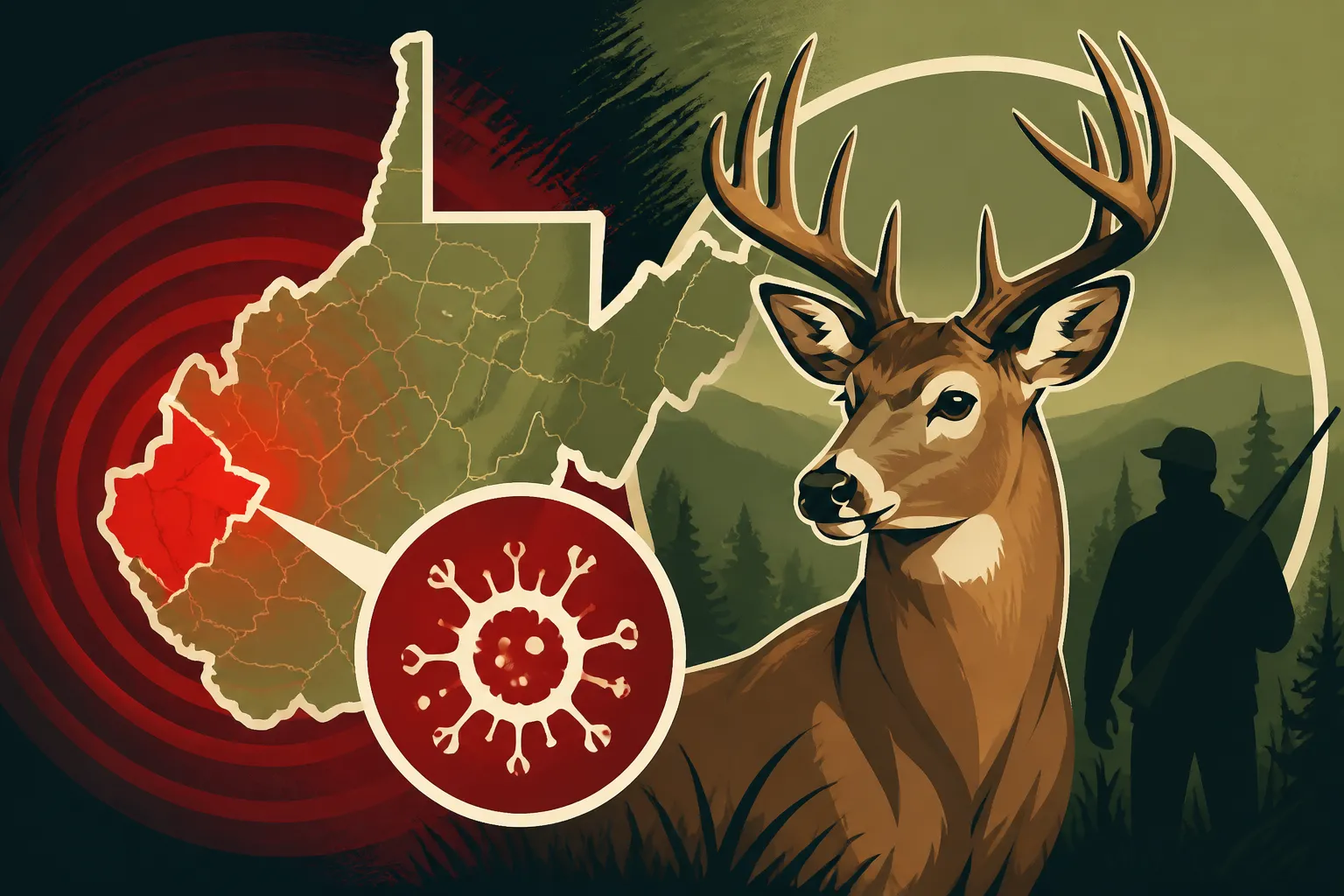
The initial detection led to immediate and intense concern. Wildlife agencies had to quickly pivot, educating hunters, establishing testing protocols, and defining areas where the disease was present. It put a spotlight on our deer herds like never before, forcing us all to confront a new reality where every harvested deer might be part of a larger monitoring effort. This kind of event can feel overwhelming, changing how we think about everything from field dressing to sharing our harvest with friends and family. Knowing that Which West Virginia County Confirmed CWD First in West Virginia was Hampshire County suddenly made it very real for a lot of us.
Hampshire County: A Perfect Storm for CWD Introduction
Hampshire County didn't just randomly become the epicenter of CWD in West Virginia. A confluence of geographical features, deer population dynamics, and even human activities created an environment ripe for the disease to take hold and spread.
Border Proximity and Deer Movement
Think about a map for a moment. Hampshire County sits right there, nestled in the Eastern Panhandle, sharing borders with states where CWD had already been detected for years, like Maryland and Virginia. Our deer don't recognize state lines, do they? A buck chasing a doe or a group of does moving to new feeding grounds will cross that invisible boundary without a second thought. River corridors, like the Potomac River and its tributaries, often serve as natural highways for deer movement, connecting populations across state borders. Similarly, the long, unbroken ridge systems common in this region provide continuous habitat, allowing for natural dispersal.
This constant, natural flow of deer between West Virginia and already-infected neighboring states was a critical factor. It's not hard to imagine an infected deer from an adjacent county in Maryland or Virginia simply wandering into Hampshire County. These animals, perhaps in the early stages of the disease and showing no outward symptoms, would then begin shedding prions in their new environment, contaminating the soil and vegetation that other West Virginia deer would inevitably encounter. It's a sobering thought, realizing how something so seemingly insignificant as a deer's everyday travel could spark such a significant problem for our entire state.
Habitat Diversity and High Deer Density
Hampshire County offers a smorgasbord of habitats that deer absolutely thrive in. You've got expansive agricultural fields, providing prime food sources like corn and soybeans, interspersed with dense woodlands and smaller woodlots. Then there are those transitional zones where rural farmlands meet developing residential areas – places where deer often feel safe from pressure and find reliable food. This diverse landscape supports a robust and healthy West Virginia Deer Population Estimate, and in many areas, the deer density is quite high. You can imagine that in some of these areas, especially those offering prime forage, deer are practically bumping elbows with each other.
Higher deer density means more opportunities for direct contact among individual animals. They're sharing common feeding areas, rubbing posts, bedding sites, and water sources. When CWD prions are shed into these environments, the likelihood of other deer picking them up increases exponentially. It’s like a crowded bus — if one person has a cold, it’s much more likely to spread. This combination of rich habitat supporting a dense deer population essentially laid out a welcome mat for CWD, allowing it to become established and begin its insidious spread once it arrived. You can see why understanding factors like Deer Density by West Virginia Region is so vital for wildlife management.
Human-Assisted Spread: The Unintended Consequences
While natural deer movement is a major vector, we can't ignore the potential role human activities might play, sometimes inadvertently, in CWD introduction and spread. For instance, the practice of supplemental feeding, while often well-intentioned, concentrates deer in unnaturally high numbers at a single site. Think about a backyard feeder or a corn pile left out – these become hotspots for direct deer-to-deer contact and environmental contamination with CWD prions. It's why wildlife agencies strongly discourage such practices, especially in CWD-affected areas.
Another significant concern is the movement of deer carcasses or parts. If a hunter harvests a CWD-infected deer, even in another state, and brings the entire carcass back to West Virginia for processing, they could inadvertently introduce or spread prions. This is why strict West Virginia Carcass Movement Restrictions are put in place within and around CWD containment areas. While not always directly implicated in Hampshire County's initial ground zero status, such practices have contributed to CWD spread in other regions and are a constant threat. It's a reminder that every hunter has a responsibility to understand and follow these rules to protect our herds, and tools like GoHunt can be invaluable for quickly accessing the latest regulations.
The Immediate Response and Long-Term Implications
Once CWD was confirmed in Hampshire County, the West Virginia Division of Natural Resources (WVDNR) sprang into action. Their response was swift, aimed at containing the spread and gathering critical information.
Establishing the Containment Area and New Regulations
The WVDNR quickly established what became known as the CWD Containment Area, with Hampshire County at its core. This wasn't a decision taken lightly, but a necessary step to manage the disease. Within this containment area, specific, often stricter, regulations were put in place for hunters. These included Mandatory Testing Inside the CWD Containment Area for deer harvested during certain seasons, and very specific rules about how deer carcasses or parts could be moved out of the zone. The idea was to prevent further human-assisted spread while monitoring the disease's prevalence.
For many hunters, these new rules felt like a burden, and I get that. But they are vital. Imagine the frustration of having to alter your traditional hunting practices, from where you can field dress a deer to how you transport it. However, these regulations are designed to be a protective measure for the broader deer population, trying to keep CWD from establishing itself more widely. Understanding How West Virginia's CWD Containment Area Works is crucial for anyone hunting in or near these zones, ensuring we all contribute positively to the management efforts.
The Hunter's Critical Role in CWD Management
As hunters, we are literally on the front lines of CWD management. We are out in the woods, interacting with the deer population more directly than almost anyone else. This makes our participation in CWD surveillance and adherence to regulations absolutely critical. Submitting samples from harvested deer for testing provides invaluable data to wildlife biologists, helping them track the disease's progression and prevalence. If you suspect you've seen a sick or unusually behaving deer, reporting it to the WVDNR is a crucial step.
It’s not just about submitting samples; it's also about mindful hunting practices. Being aware of and following carcass movement restrictions is paramount. If you harvest a deer in the CWD containment area, you need to know what parts you can legally take out and how to properly dispose of the rest. Resources like the WVDNR website are your best friend here, and tools like GoHunt can help you quickly find official information, CWD sampling station locations, and understand the specific requirements for West Virginia CWD Testing for Hunters. Our collective efforts are the best defense we have against this pervasive threat.
Research, Monitoring, and the Future of West Virginia Deer
The battle against CWD is ongoing, and it's a marathon, not a sprint. The WVDNR and other partners continue to invest heavily in research and monitoring efforts to understand CWD better and to protect our deer herds.
Unpacking the Spread: Research and Surveillance Efforts
Since the initial detection in Hampshire County, extensive research and surveillance have been underway. This includes intensified CWD testing of harvested deer across a wider geographical area, which helps track How Many West Virginia Counties Have Found CWD and where the disease might be spreading. Studies involving tracking deer with collars, like the insights gained from What Collared Deer Research Revealed in Hampshire County, provide vital information on deer movement patterns, habitat use, and potential transmission pathways. This kind of data is essential for understanding how CWD moves through the landscape and for developing more effective management strategies.
Biologists are constantly analyzing data to monitor West Virginia CWD Prevalence in the Containment Area, looking for trends and hot spots. This isn't just about counting sick deer; it's about understanding the disease's dynamics in a wild population. These efforts are labor-intensive, requiring dedicated field staff, laboratory analysis, and careful data interpretation. The goal is to gain as much knowledge as possible to mitigate the impact of CWD and protect the long-term health of West Virginia's deer. It’s a testament to the commitment of our wildlife professionals.
Adapting Hunting Practices for a CWD World
As hunters, we all need to adapt to this "CWD world." This means being more vigilant than ever when we're in the field. Look for deer that appear abnormally thin, show neurological signs, or are behaving strangely. If you see such an animal, do not harvest it if possible, and definitely report it to the WVDNR. When hunting in CWD areas, consider leaving the high-risk parts (brain, spinal cord, lymph nodes) at the kill site or at a designated carcass disposal site to minimize potential spread. Many hunters are also choosing to bone out deer in the field to reduce the weight and volume of material needing transport or disposal.
Learning to navigate the specific rules for your hunting area is non-negotiable. Whether it's knowing how to properly tag and report your deer or where to find a CWD sampling station, staying informed is key. Tools like the GoHunt app or the WVDNR website can provide real-time updates and maps. By taking these proactive steps, we as hunters become active partners in CWD management, helping to safeguard our deer herds for future generations. It’s a challenge, for sure, but one that united we can face to continue our cherished traditions of hunting in West Virginia.
| CWD Symptoms in Deer (What to Look For) | Description | Hunter Action |
|---|---|---|
| Wasting/Emaciation | Significant weight loss, ribs and backbone prominent despite apparent foraging. | Do not harvest. Report sighting to WVDNR. |
| Behavioral Changes | Listlessness, depression, blank stare, abnormal posture, difficulty moving, isolation from herd. | Do not harvest. Report sighting to WVDNR. |
| Excessive Salivation/Drooling | Wet fur on chin and neck, foamy saliva around mouth. | Do not harvest. Report sighting to WVDNR. |
| Increased Thirst/Urination | Frequently visiting water sources, visible signs of increased urination. | Do not harvest. Report sighting to WVDNR. |
| Lowered Head/Droopy Ears | Head and ears may be held in an unusually low or droopy position. | Do not harvest. Report sighting to WVDNR. |
| Loss of Fear of Humans | Deer acting unusually tame or unconcerned by human presence. | Exercise caution. Do not approach. Report sighting to WVDNR. |
Disclaimer
This article is for general informational purposes only and does not constitute professional advice. Laws, prices and regulations vary by location and change over time. Consult a qualified professional for guidance on your specific situation.