Hunting New River Gorge Adjacent Ground
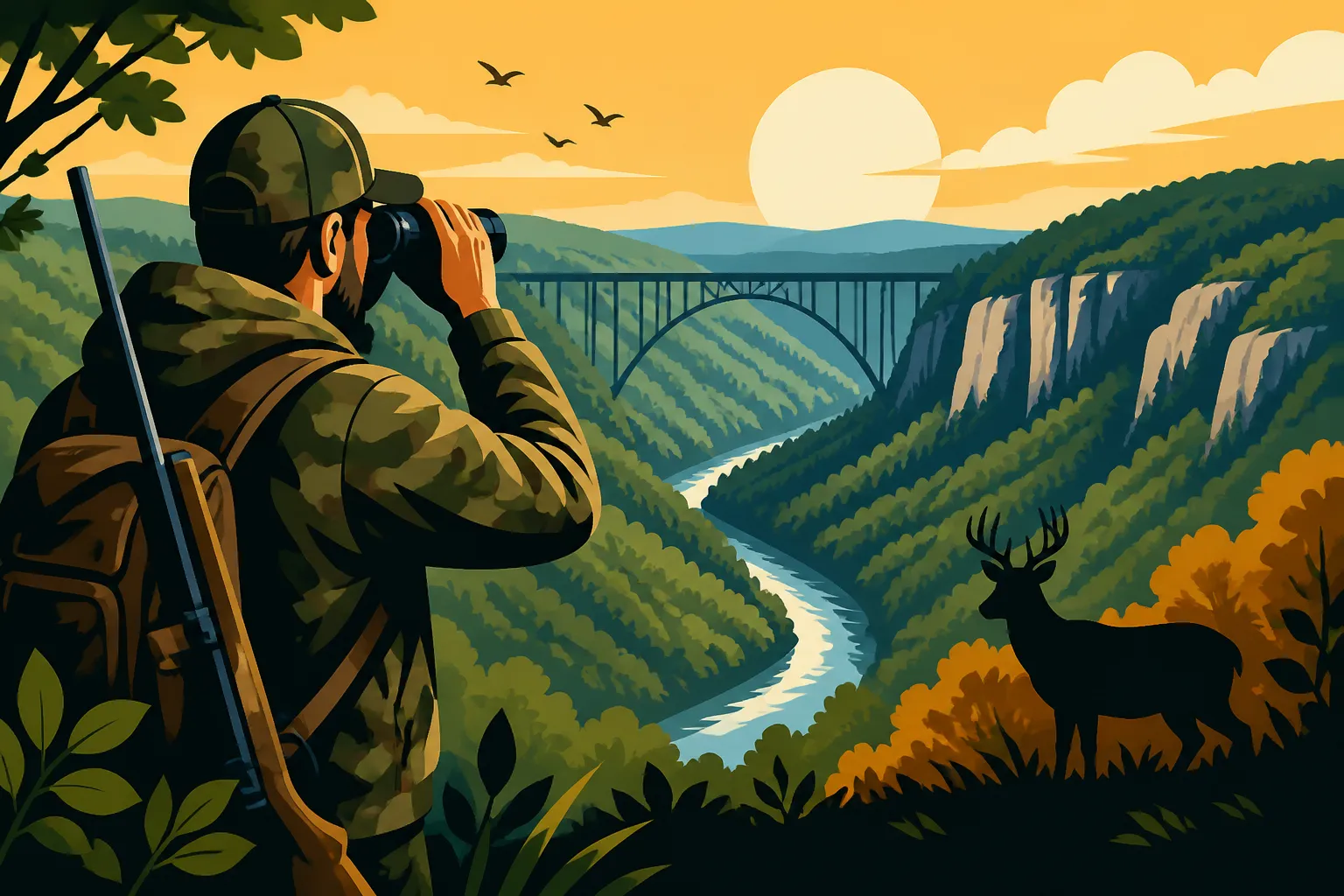
There’s nothing quite like the majestic, rugged beauty of West Virginia, and few places embody that wild spirit more than the New River Gorge. For many hunters, the idea of pursuing game in such a breathtaking, challenging landscape is incredibly appealing, yet the reality can be daunting. The sheer cliffs, the dense timber, the deep hollows, and the general lack of easy access can make even seasoned hunters feel overwhelmed. This guide is designed to cut through that complexity, offering practical, realistic advice for successfully hunting the public lands adjacent to the iconic New River Gorge National Park and Preserve.
Understanding the Unique Terrain of the New River Gorge Region
Hunting around the New River Gorge isn't like hunting a flat farm field or a rolling hardwood ridge in other parts of the state. This is a place where gravity is your constant companion, and every step is a calculation. The landscape itself presents a series of challenges and opportunities that demand a different approach.
Topography and Habitat Diversity
The most striking feature of the New River Gorge area is its dramatic topography. We're talking about incredibly steep canyon walls that plunge hundreds of feet to the river below, deeply incised hollows, and narrow ridgetops that demand respect. The terrain is often a mix of mature hardwood forests, dense rhododendron and mountain laurel thickets, and occasional pockets of old-growth hemlock along the cooler, north-facing slopes. This variety creates a diverse habitat, but it also means that game animals have countless places to hide, making them masters of their environment. You might find deer bedding on a tiny bench halfway down a cliff face, or turkeys roosting in tall timber along a secluded tributary. Understanding these micro-habitats within the larger, challenging landscape is crucial. Remember, the game here is accustomed to navigating this broken terrain, and so must you.
Weather and Microclimates
The weather in the New River Gorge region can be notoriously fickle, and the deep canyon creates its own unique microclimates. What might be a sunny, mild day on the plateau above could be a damp, shaded, and significantly cooler experience down in the hollows or closer to the river. Thermals play a massive role here, especially in the early mornings and late evenings. Cold air sinks into the gorge, carrying your scent directly to game below, and as the sun warms the slopes, those thermals reverse, pulling scent upwards. Ignoring these dynamics can lead to busted hunts before they even truly begin. Hunters need to be acutely aware of how Wind and Thermals on a Steep Ridge interact with the terrain, constantly monitoring changes throughout the day. A slight breeze might feel constant on a ridgetop, but it can swirl unpredictably just a few hundred feet down a steep incline. Dressing in layers is paramount, as you can easily experience significant temperature swings from the time you start your hike in the pre-dawn dark to the full sun of midday, and back again.
Key Species and Seasons for New River Gorge Adjacent Ground
While the ruggedness of the New River Gorge might deter some, it provides excellent habitat for a variety of game species, often offering a hunting experience that feels more remote and wild than other, more accessible areas. Knowing what to pursue and when is vital.
Deer Hunting Opportunities
White-tailed deer are the primary draw for many hunters in this region, and the New River Gorge adjacent lands hold a healthy population. Due to the challenging terrain and often lower hunter density in the steepest areas, bucks can sometimes reach older age classes, though they rarely carry the massive racks seen in more agricultural parts of the state. Deer here are often smaller-bodied but incredibly tough and cunning. They utilize the steep slopes and dense cover to their advantage, making them masters of evasion. You'll often find them browsing on succulent vegetation along creek bottoms, feeding on mast crops on accessible benches, or bedding in dense laurel thickets on steep sidehills. The general deer seasons in West Virginia apply, with the long archery season running from early fall into December, followed by the popular buck gun season, and then the muzzleloader season. Archery hunters often find success in the early season when deer patterns are more predictable, while gun hunters need to be prepared for longer shots across hollows or quick opportunities in thick cover. Understanding West Virginia Deer Season Structure Explained is critical to planning your hunts.
Turkey Hunting Prospects
The New River Gorge area can offer fantastic turkey hunting, especially during the spring gobbler season. The steep, timbered slopes provide ideal roosting habitat, and the mature forests offer plenty of foraging opportunities. Hearing a gobbler thunder from across a deep hollow as the sun rises over the canyon is an unforgettable experience. However, actually getting to that gobbler can be an exhausting challenge. Turkeys here are often conditioned to the terrain, and their movements can be influenced by human activity in the gorge below, as well as the ever-present changes in thermals. Fall turkey hunting is also an option, though it requires different tactics, often focusing on breaking up flocks and calling in lost birds. Given the difficulty of accessing some areas, turkeys can be less pressured than in other parts of the state, but they are still extremely wary. Successful turkey hunting in this region often involves a good set of lungs, excellent calling skills, and the willingness to cover a lot of ground.
Small Game and Predator Potential
Beyond deer and turkey, the New River Gorge adjacent lands also offer opportunities for small game and predator hunting. Squirrels, especially gray squirrels, are abundant in the mature hardwood forests, particularly in areas with healthy oak and hickory stands. Bushytails provide an excellent reason to explore the deep woods and can be a rewarding hunt, especially for those who enjoy still-hunting or using squirrel dogs. Rabbit populations, while not as dense as in agricultural areas, can be found in brushy clearings, old logging roads, and along the edges of dense cover. For the more adventurous, predator hunting, primarily coyotes, can be fruitful. The broken terrain offers excellent ambush points and opportunities for calling, though consistent success requires significant scouting and understanding of coyote travel patterns. Predator Hunting in West Virginia can be a thrilling way to spend time in the woods during the deer off-season, and the New River Gorge offers some truly wild country for it. Always check the current regulations for specific small game and predator seasons, as they can vary.
Accessing and Navigating Public Lands Near the Gorge
One of the biggest hurdles to hunting the New River Gorge adjacent ground is simply figuring out where you can go and how to get there. While there are vast tracts of public land, easy access is often limited, demanding extra effort and preparedness.
Identifying Public Land Boundaries
The New River Gorge National Park and Preserve itself is mostly closed to hunting, but it is bordered by significant amounts of public land managed by the West Virginia Division of Natural Resources (WVDNR) in the form of Wildlife Management Areas (WMAs), as well as some portions of National Forest. The key is to distinguish between these different designations. WMAs like Plum Orchard Lake WMA, Burnsville Lake WMA, and portions of Meadow River WMA can be found in the broader New River Gorge region, offering varied hunting opportunities. It’s crucial to use up-to-date mapping resources to verify boundaries. While a free West Virginia DNR map is a good start, investing in a robust mapping app like GoHunt can be a game-changer for precise boundary identification, allowing you to confidently know where you are at all times, even without cell service. Relying solely on paper maps in this rugged country can be a mistake, as the terrain can be disorienting. Always confirm that you are on legal hunting ground before setting foot in the woods.
Navigating Trail Systems and Access Points
Unlike some other public lands, established trail systems within the immediate vicinity of the New River Gorge National Park are often geared towards hikers and mountain bikers, not necessarily hunters. While these trails can provide initial access, you’ll frequently need to leave them to get into prime hunting areas. Expect unimproved logging roads, old coal trails, and faint game trails as your primary routes once you get off the beaten path. Parking can be extremely limited, often just pull-offs along narrow county roads or designated WMA parking lots that fill up quickly during peak seasons. Having a reliable vehicle with good ground clearance can be a real asset. When planning your route, consider both your entry and exit points, especially if you anticipate having to drag out game. The phrase "what goes down must come up" is particularly true here, so don't bite off more than you can chew with a steep, remote location. Hunting Steep Allegheny Ridges can provide valuable insights into managing ascents and descents with heavy gear.
Using Advanced Mapping Tools
For effective navigation and scouting in this complex terrain, modern mapping applications are indispensable. Platforms like GoHunt, OnX Hunt, or BaseMap offer satellite imagery, topographic maps, and public/private land boundary overlays right on your phone or GPS device. These features are invaluable for identifying likely game travel corridors, potential bedding areas on benches or saddles, and identifying water sources or feeding locations. The ability to drop waypoints, measure distances, and track your movements in real-time gives you a significant advantage. Before heading out, download offline maps for the area, as cell service is often nonexistent in the deep hollows of the Gorge. Learning to read the topography, identify subtle terrain features like benches or funnels, and understanding these nuances often requires hours studying topographic maps, satellite imagery, and even utilizing advanced features from GoHunt to identify potential travel corridors, which is time well spent before your boots hit the ground.
Strategic Hunting Approaches for the Rugged Terrain
Successfully hunting the New River Gorge adjacent lands demands a blend of physical fitness, strategic thinking, and adaptability. This isn't a place for casual hunting; it requires effort and smart tactics.
Scouting Techniques and Pre-Season Prep
Effective scouting is paramount in the New River Gorge region. Because the terrain is so vast and challenging, you can't just wander in and expect to find game easily. Pre-season scouting, long before opening day, helps you identify pinch points, bedding areas, food sources (like mast crops), and rub or scrape lines that indicate deer activity. Look for subtle benches on steep hillsides where deer might travel or bed, especially those offering thermal advantages. Identifying fresh sign like tracks, droppings, and browse is key. Consider using trail cameras in high-traffic areas or near potential food sources, but be aware of the specific rules for Trail Camera Rules on West Virginia Public Land. Hiking in during the off-season, even without a weapon, allows you to learn the land, understand thermal currents, and discover hidden pockets where game might seek refuge. Think about how you'll approach these areas quietly and how you'll extract an animal if successful.
Stand Placement and Still-Hunting Strategies
Given the steep and broken terrain, traditional stand hunting can be challenging but highly effective when done correctly. Instead of trying to find the perfect level tree, focus on strategic locations that offer good visibility and control your scent. Saddles between ridgetops, benches along steep slopes, and funnel points where game is naturally channeled by terrain features are all prime locations. Using a mobile setup like a climbing stand or a saddle hunting system allows you to adapt to changing conditions and move quickly if needed. When it comes to Treestand Setups in Monongahela National Forest, which shares similar terrain characteristics, many hunters find success by identifying subtle terrain changes that concentrate deer movement. For those who prefer to be on the move, still-hunting is a highly effective tactic in the dense cover of the Gorge. Moving slowly, pausing frequently to glass and listen, and using the terrain to your advantage to stay hidden can lead to close-range encounters. Pay close attention to wind direction and thermals, always trying to keep them in your favor.
Calling and Decoy Strategies
Calling can be a powerful tool for both deer and turkey hunting in the New River Gorge, but it needs to be adapted to the environment. For deer, subtle grunt calls and rattling can be effective during the rut, especially if you're set up in a high-traffic area. The steep terrain can carry sound a long way, but also absorb it, so experiment with volume. For turkeys, locator calls like owl hoots or crow calls are excellent for getting a gobbler to sound off in the morning, helping you pinpoint his location. Once you've located a bird, patient calling, mimicking hens, can often draw them in. However, turkeys in this rugged country are often reluctant to cross deep hollows or climb excessively steep hills, so positioning is key. Decoys can be useful for both species, especially in more open areas or along old logging roads, but they add weight and bulk to your pack. If using them, ensure they are visible and positioned naturally. A good understanding of Rattling and Grunting in West Virginia tactics, adjusted for the acoustics of the gorge, will be beneficial.
Gear Considerations for Rugged Country
Hunting in the New River Gorge demands durable, reliable gear. Your boots are arguably your most important piece of equipment; invest in high-quality, waterproof, and supportive boots that can handle steep, rocky, and wet terrain. A good backpack capable of carrying water, emergency supplies, and potentially game meat is also crucial. For those long hauls up and down the mountain, a comfortable pack is non-negotiable. Navigation tools, as mentioned, are a must. Consider trekking poles to aid with stability on steep descents and ascents, especially when carrying a heavy load. Finally, always pack a first-aid kit, a headlamp, and sufficient water and snacks, as help can be a long way off in the more remote sections of this beautiful but unforgiving landscape.
Species Best Season Typical Habitat Strategy Notes Deer Spring (late March – May) Often in the spring when green-up happens, they utilize fresh growth near southern-facing slopes or accessible benches. Later, they might move higher.
Turkey Spring (April – May) Roost high on ridges overlooking hollows, feed on bugs and soft mast in open woods or field edges. Run-and-gun tactics in the morning, listening for gobblers off the roost. Be prepared for steep climbs and calling challenges due to terrain.
Deer Archery, M gun, Muzzleloader Steep hillsides, benches, hollows, thickets. Scouting for fresh sign, hunting saddles or benches, still-hunting through thick cover, watching wind and thermals.
Population Data West Virginia (WV) According to the West Virginia Department of Natural Resources (WVDNR), the white-tailed deer population in the state is estimated to be around 1.3 million. The wild turkey population is estimated at approximately 150,000 birds. Bear populations are thriving, with recent estimates suggesting over 15,000 black bears across the state. Coyote numbers are healthy, though precise population estimates are difficult to obtain for such a widespread and elusive species. Small game populations like gray squirrels and cottontail rabbits fluctuate based on habitat quality and mast crops, but generally remain robust where suitable cover and food are present. The WVDNR uses various survey methods, including aerial surveys, hunter harvest reports, and landowner observations, to monitor these populations and make informed management decisions. These figures demonstrate the healthy and diverse wildlife populations available to hunters in West Virginia.
Location Data
Hunters West Virginia (WV) Hunters looking to secure their license in West Virginia have several reliable avenues. The most straightforward is through the West Virginia Division of Natural Resources (WVDNR) official website, where the Go Wild West Virginia platform facilitates online license purchases. This online portal provides options for residents and non-residents, covering everything from annual hunting licenses to specific stamps required for deer, bear, and turkey. Alternatively, hunters can visit local authorized license agents throughout the state, which typically include sporting goods stores, bait shops, and some general merchandise retailers. These agents can process license purchases on the spot. For those who prefer direct contact, WVDNR offices also offer in-person license services. It's always a good idea to purchase licenses well in advance of the season to avoid any last-minute complications. Whether online or in person, ensuring you have the correct and up-to-date licenses and stamps is essential for a legal and enjoyable hunting experience in the Mountain State.
Disclaimer
This article is for general informational purposes only and does not constitute professional advice. Laws, prices and regulations vary by location and change over time. Consult a qualified professional for guidance on your specific situation.