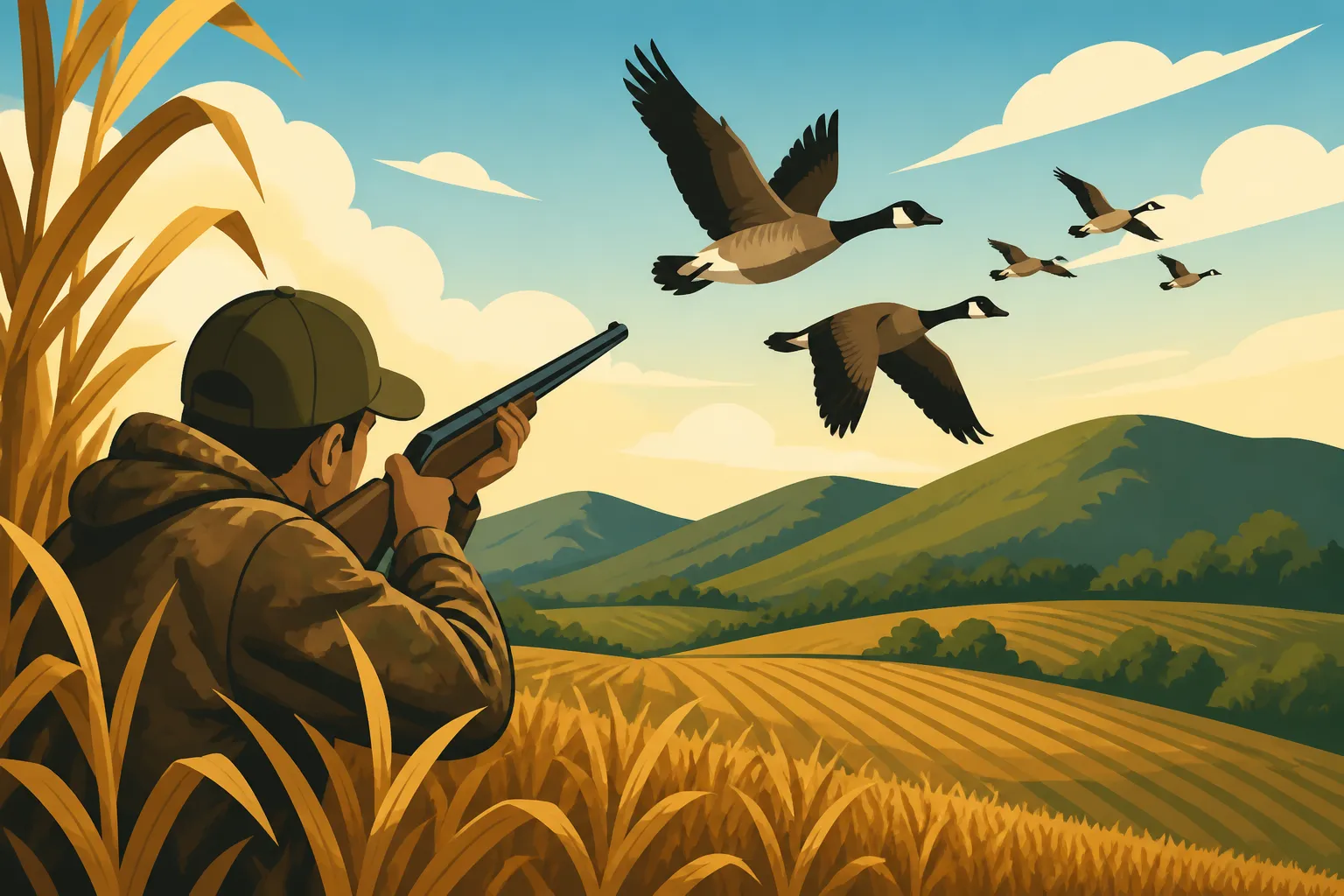
Canada Geese on West Virginia Farmland
For many hunters in West Virginia, there's a unique challenge and opportunity presenting itself right on our doorsteps: the ever-growing presence of Canada geese on agricultural lands. These intelligent birds, while a joy to behold, can become a real nuisance for farmers, turning perfectly good fields into feeding buffets and creating a hunting puzzle. This comprehensive guide will walk you through everything you need to know to successfully hunt Canada geese on West Virginia farmland, from understanding their habits to mastering the art of the decoy spread and navigating private land access.
Understanding the Canada Goose Presence on West Virginia Farmland
It's no secret that Canada geese have adapted incredibly well to human-altered landscapes, and West Virginia's agricultural areas are no exception. What once might have been an occasional sighting has, in many places, become a regular congregation, and for good reason. These fields offer a smorgasbord of food and wide-open spaces, making them incredibly attractive to geese looking for an easy meal and a safe place to rest.
The Lure of Agricultural Fields
Imagine you're a goose. What's better than a perfectly manicured lawn? A perfectly manicured and planted field! West Virginia's farmlands, with their rows of corn, wheat, soybeans, and even pastures, are veritable buffets for Canada geese. They provide abundant, high-energy food sources that are easy to access. Young shoots of winter wheat are particularly appealing, offering tender, nutritious forage. Stubble fields left after a corn or soybean harvest are also prime feeding grounds, littered with dropped kernels and beans that are simple for geese to glean. They don't have to work hard to find sustenance, which makes these fields far more attractive than digging for roots or picking through natural vegetation.
Beyond just food, these fields offer security. Geese prefer open areas where they can see predators coming from a distance. A vast cornfield or a sprawling pasture provides an unobstructed view, giving them plenty of time to take flight if danger approaches. This combination of readily available food and a sense of security creates an irresistible draw, often leading to large flocks setting up shop on local farms for extended periods, sometimes even for the entire winter season. This makes them a prime target for hunters who understand Hunting a Standing Soybean Field or Hunting a Green Field Planted for Deer could also yield goose opportunities.
Resident Versus Migratory Populations and Their Impact
When we talk about Canada geese in West Virginia, it's crucial to distinguish between two main groups: the resident population and the migratory birds passing through. Our resident geese are those that breed and live in West Virginia year-round. These birds have established themselves in parks, golf courses, suburban ponds, and, yes, increasingly on farms. They're often less wary than their migratory cousins, as they're more accustomed to human activity. Their numbers have steadily increased over the decades, leading to a year-round presence that impacts landowners long after the migratory birds have left.
Migratory Canada geese, on the other hand, are birds that travel from their northern breeding grounds, often in Canada (hence the name!), to warmer wintering areas, with West Virginia being a stopover or final destination for many. These birds arrive in the fall and often depart in late winter or early spring. They tend to be much warier, having been hunted more extensively along their journey. Both populations, however, contribute to the overall goose presence on West Virginia farmland. The resident birds can begin the damage early in the growing season, while the influx of migratory geese in the fall can exacerbate crop destruction and provide hunters with additional targets. Understanding these two groups helps hunters predict behavior and adapt their tactics, as the resident birds might respond differently to calls or decoys than the more heavily pressured migratory flocks.
Crop Damage and Hunter Opportunity
The impact of large goose flocks on agricultural land is not to be underestimated. Farmers often face significant crop damage, whether it's young wheat shoots being grazed to the ground, corn or soybeans being trampled and consumed, or pastures being fouled with droppings. This can lead to substantial financial losses for agricultural operations. Imagine a farmer who has invested countless hours and resources into planting a winter wheat crop, only to see large sections flattened and eaten by hundreds of geese. It's a frustrating reality for many.
This unfortunate situation, however, presents a unique opportunity for hunters. Many farmers are desperate for help in managing these burgeoning goose populations. By offering to hunt geese on their land, you can provide a valuable service to the landowner while enjoying some fantastic hunting. It's a win-win situation: the farmer gets relief from crop depredation, and you gain access to prime hunting ground. This often makes securing Asking a West Virginia Farmer for Permission for goose hunting a bit easier than for other game species, as there's a clear benefit for the landowner. The key is approaching them with a solution-oriented mindset, demonstrating that you are a responsible and effective hunter who can help alleviate their problem.
Prime Farmland Goose Hotspots and Scouting Strategies
Finding the right piece of farmland for goose hunting isn't as simple as just picking a field. Geese are creatures of habit, and they'll gravitate towards specific areas that offer them the best combination of food and security. Successful goose hunting starts long before you set out your decoys; it begins with meticulous scouting and understanding where these birds like to be.
Identifying Key Agricultural Areas in West Virginia
West Virginia, with its diverse topography, has agricultural areas scattered throughout the state, but some regions are definitely more goose-friendly than others. The more open, rolling terrain of the Eastern Panhandle, for instance, with its extensive corn, wheat, and soybean fields, is a prime area. Counties like Berkeley, Jefferson, and Morgan often see significant goose activity. The Ohio River Valley bottomlands, particularly near the river itself and its tributaries, also offer vast stretches of fertile farmland that attract large numbers of geese. Think areas around Huntington, Parkersburg, and Wheeling.
Even in more mountainous regions, smaller valleys and floodplains can hold surprising numbers of geese, especially if there are larger bodies of water nearby for roosting. Look for areas with a patchwork of crop fields, especially those near larger rivers, impoundments, or even large ponds and lakes. These water sources provide safe roosting sites, and the geese will commute daily to nearby feeding fields. Using satellite imagery or online mapping tools, even a basic search, can help identify these potential hotspots by revealing concentrations of agricultural land. The key is to think like a goose: find the food and find the water, and you're likely to find the birds.
Pre-Season Scouting and In-Season Observation
Effective scouting is the backbone of any successful goose hunt. You can't just show up on opening day hoping for the best; you need to know where the geese are, what they're eating, and how they're flying. Pre-season scouting involves driving rural roads, observing fields from a distance, and looking for telltale signs like droppings, grazed crops, or even feathers. Pay attention to typical flight paths from roosting areas to feeding grounds. These patterns are often consistent, especially with resident birds.
Once the season starts, in-season observation becomes even more critical. Geese can change their preferred fields rapidly based on food availability, hunting pressure, or even weather conditions. Spend time watching birds from a distance, ideally with binoculars or a spotting scope, to pinpoint exactly which fields they are using and at what times of day. Are they feeding actively? Are they just loafing? Note their entry and exit points. This real-time intelligence is invaluable. A tool like GoHunt can be incredibly useful here. While often associated with big game, its mapping features can help identify land ownership, track public land boundaries, and even mark potential roosting ponds or frequently used fields. You can use it to log your observations, create waypoints for optimal blind placement, and even identify access routes without disturbing the birds. This systematic approach, combining visual scouting with digital mapping, gives you a significant advantage.
Reading Goose Behavior and Flight Patterns
Geese are intelligent birds, and understanding their behavior is key to anticipating their movements. When they're flying, pay attention to their altitude and their approach. Are they coming in high, circling multiple times, or making a direct line for a field? High-flying, cautious birds might be heavily pressured or scouting a new area. Birds making direct approaches are often confident and have a specific field in mind. Watch how they land – do they funnel into a particular corner of the field, or do they spread out? This tells you where to concentrate your decoy spread.
On the ground, observe their feeding habits. Geese graze, pulling up grass or picking up fallen grain. They'll often move across a field as a group, leaving a "front" of feeding birds. Knowing this helps you understand where to place your decoys to mimic a natural feeding scenario. Also, pay close attention to any sentinel birds that stand tall, keeping watch while others feed. These sentinels are incredibly wary. If you see birds bunched up and looking nervous, they've likely been pressured recently. Understanding these subtle cues—from their wingbeats in the air to their posture on the ground—allows you to adapt your setup and calling to match the birds' mood, making your hunt more successful. The West Virginia Waterfowl Migration Timing might also influence behavior, as new birds arrive or old ones leave.
Essential Gear and Decoy Spreads for Field Hunting
Hunting Canada geese on West Virginia farmland requires specific gear to be successful. Unlike hunting in a timber stand or jump-shooting ducks on a creek, field hunting demands excellent concealment, realistic decoys, and the right tools to bring those wary birds within range. Skimping on these essentials will often lead to a frustrating day.
Blinds, Layouts, and Concealment
The absolute most critical piece of gear for field hunting geese is effective concealment. Geese have incredible eyesight, and they will spot anything out of place in their open feeding grounds. This is where a good blind comes into play. Layout blinds are arguably the most effective for field hunting. These low-profile blinds allow you to lie down directly in the field, becoming virtually invisible when brushed in correctly. They come in various patterns to match corn stubble, cut wheat, or bare dirt, and often have stubble straps where you can add natural vegetation from the field itself to break up your outline even further.
Beyond layout blinds, pop-up ground blinds can also be effective, especially if you can set them up along a fencerow or in a patch of standing cover adjacent to a field. However, these require much more meticulous brushing in to ensure they blend seamlessly with the surroundings. The key, regardless of the blind type, is brushing it in. Don't just throw out a blind and hope for the best. Gather corn stalks, wheat stubble, weeds, or anything else from the immediate environment and cover every inch of your blind until it looks like just another clump of vegetation. Your goal is to completely disappear into the landscape. Many hunters even wear face masks and gloves to eliminate any shiny skin that could flare wary birds. Remember, a goose's eyes are their best defense, so making yourself invisible is paramount.
Decoy Spreads: Types, Numbers, and Effective Arrangements
Decoys are your silent partners in the field, and a well-designed spread is crucial for attracting geese. There's a wide range of decoy types available, each with its pros and cons. Full-body decoys are incredibly realistic but expensive and bulky to transport. Shells are lighter and more compact but less realistic. Silhouettes are the easiest to carry and deploy in large numbers, creating the illusion of a big flock. Spreader stakes or "Texas rigs" can make setting up and picking up easier. Many successful hunters use a mix of these, with full bodies closer to the blind for realism and silhouettes or shells further out to create bulk.
The number of decoys you need depends on the pressure the birds are under and the size of the typical flocks you're seeing. On unpressured birds or smaller fields, a spread of two or three dozen might be enough. However, when geese are wary or you're hunting larger fields, you might need 50, 100, or even more decoys to create a truly convincing "super flock" that draws birds from a distance. The arrangement is just as important as the number. Geese typically land into the wind, so position your blinds downwind of your main decoy spread, leaving an open landing zone directly in front of you. A classic setup involves a main "feeding" flock, with a smaller "family group" or "satellite" group slightly upwind and off to the side, mimicking birds arriving or loafing. This creates an inviting, natural look. For a detailed guide on specific layouts, consider exploring how to maximize your Layout Blinds for River Bottom Corn or similar field environments.
| Decoy Type | Pros | Cons | Ideal Use |
|---|---|---|---|
| Full-Body | Highly realistic, great visibility | Heavy, bulky, expensive | Close to blinds, focal points, highly visible |
| Shells | Lighter than full bodies, more compact | Less realistic than full bodies | Bulk of the spread, mid-range realism |
| Silhouettes | Very light, compact, inexpensive | Least realistic from all angles | Mass numbers, creating large visible flocks |
| Windsocks/Fliers | Motion, very light | Less realistic, can look unnatural if windy | Adding motion to the spread, attracting attention |
Shotguns, Ammunition, and Calls
For Canada geese, a 12-gauge shotgun is the standard, offering the power and shot payload needed to cleanly take these large birds. A 3-inch or 3.5-inch magnum chambering is preferred, especially when dealing with larger geese at extended ranges. A modified or improved modified choke is a good starting point, providing a balance of pattern density and spread. When it comes to ammunition, non-toxic shot is a federal requirement for all waterfowl hunting, and steel shot is the most common and economical choice. Sizes like BB, BBB, or T shot are popular for geese, providing enough pellet energy and mass to penetrate feathers and break bone. Make sure you pattern your chosen load and choke combination before the season to understand its effective range.
Goose calls are your voice in the field. There are many types, from short-reed calls that mimic deep honks and clucks to flute calls for longer-range hailing. A good short-reed call is often essential for finishing birds, while a flute call can be great for getting the attention of high-flying flocks. Learning to call effectively takes practice, but mastering basic greetings, clucks, and honks will significantly improve your success. Watch videos, listen to expert callers, and practice, practice, practice. You want your calling to sound natural and inviting, not like a distressed alarm. Combine your calling with the visual appeal of your decoy spread to create an irresistible invitation for passing geese. Always ensure you have your West Virginia Federal Duck Stamp Requirement and West Virginia HIP Certification for Bird Hunters in order, along with your regular hunting license.
Effective Hunting Tactics for Field-Feeding Geese
Even with the best gear, success ultimately hinges on executing effective hunting tactics. Geese are smart, and they learn quickly, especially when under pressure. Mastering the art of the setup, calling, and managing the entire hunt is what separates a consistent goose hunter from one who simply hopes for the best.
Setting Up for Success
The foundation of a successful field goose hunt is your setup. Firstly, choose your field based on your recent scouting. Once you've identified an active field, determine the prevailing wind direction. Geese, like all birds, almost always land into the wind. Your blinds should be placed downwind of your decoy spread, leaving an open "landing strip" directly in front of you. This ensures that when the geese commit to land, they are flying directly into your spread and often presenting a shot broadside or slightly quartering away.
Consider sun position as well. Ideally, you want the sun at your back or to the side, shining into the geese's eyes as they approach. This not only makes it harder for them to spot your blinds but also illuminates your decoys beautifully, making them more attractive. Set up your blinds quickly and quietly, paying meticulous attention to brushing them in. Once the blinds are ready, strategically place your decoys. The main bulk of your spread should mimic feeding birds, creating a natural appearance. A "hook" or "J" shape with an opening pointing into the wind can be very effective, guiding incoming birds right into your shooting zone. Ensure your blinds are positioned within effective shooting range of this landing zone, typically 25-40 yards. Don't crowd your blinds too closely to the decoys; give the geese room to work and land comfortably.
Calling Strategies and Situational Awareness
Calling is an art form, and effective goose calling is about more than just making noise; it's about communicating. Start with a loud, attention-grabbing hail call for high-flying birds, letting them know there's a party happening. Once they acknowledge and turn towards your spread, soften your calls to more inviting clucks, murmurs, and feeding sounds. The goal is to sound like a contented, natural flock. If birds are wary and circling, use fewer, softer calls. If they're committing hard, you can be more aggressive.
Situational awareness is critical. Watch the birds' reactions to your calls. Are they responding positively, or are they flaring? Adjust your calling intensity and cadence accordingly. As they get closer, watch their wingtips and heads. If they have their legs down and are cupping their wings, they're likely committed to land. If they're still looking around nervously or climbing, they're likely suspicious. It's often better to call less as they get within range, letting the decoys do the work. Overcalling can sometimes spook wary birds. Knowing when to stop calling and when to pick up your gun is a crucial skill developed through experience. Remember that the West Virginia Goose Season Dates will dictate when you can apply these techniques.
Managing the Hunt
A successful goose hunt isn't just about calling and shooting; it's about managing the entire experience from start to finish. This includes safety, timing, and teamwork if you're hunting with others. First and foremost, safety is paramount. Always know where your fellow hunters are and maintain a safe zone of fire. Ensure everyone understands the plan, including who will call the shot. Communication is key.
Regarding timing, resist the urge to jump up too soon. Many new goose hunters "sky bust," taking shots at birds that are too far away, which often results in wounded birds and educating the rest of the flock. Wait until the geese are well within your effective range, with their feet down and wings set, typically 25-35 yards. Let the lead bird get into position, and then have a designated caller or "shot caller" yell "Take 'em!" This ensures everyone shoots at the same time, maximizing your chances of a clean kill and often resulting in multiple birds dropping from the flock. After the shot, be quick to retrieve any downed birds. Wounded geese can run surprisingly fast, and you want to ensure a humane recovery. A good retriever dog, if you have one, is an invaluable asset. If no dog is present, coordinate with your hunting partners to quickly mark and recover all birds. Remember, leaving cripples is poor sportsmanship and wastes game.
Navigating Regulations and Landowner Relations
Hunting Canada geese on farmland often involves private land, which brings its own set of responsibilities. Understanding West Virginia's waterfowl regulations and, perhaps more importantly, cultivating positive relationships with landowners are non-negotiable for consistent success. Without good relations, access vanishes, and so do opportunities.
West Virginia Waterfowl Regulations and Federal Requirements
Like all migratory bird hunting, Canada goose hunting in West Virginia is governed by a combination of state and federal regulations. Federally, you must possess a valid Migratory Bird Hunting and Conservation Stamp (the "Duck Stamp") and be HIP (Harvest Information Program) certified. These are annual requirements and are crucial for supporting conservation efforts and tracking harvest data. Failure to have these can result in significant fines.
On the state level, you'll need a valid West Virginia hunting license. Additionally, be aware of specific season dates, bag limits, and shooting hours for Canada geese, which can vary by zone or time of year. For instance, there might be early resident goose seasons or specific late-season dates that differ from general duck seasons. Always consult the current West Virginia hunting regulations pamphlet or the WVDNR website before heading afield. Ignorance of the law is never an excuse. Pay attention to legal shooting hours, which often run from one-half hour before sunrise to sunset. Remember, using lead shot for waterfowl is prohibited, so ensure your ammunition is non-toxic. Also, be mindful of magazine capacity restrictions—shotguns used for migratory bird hunting are generally limited to holding no more than three shells (one in the chamber, two in the magazine). This means ensuring your shotgun has a plug installed if its capacity is greater than two in the magazine.
Securing Private Land Access and Building Relationships
This is arguably the most critical aspect of consistent farmland goose hunting. Most prime agricultural fields are privately owned, meaning you need explicit permission to hunt them. The best way to secure access is to knock on doors, introduce yourself, and respectfully ask for permission. Don't show up with your shotgun; go clean-cut, polite, and explain why you're there – often that you want to help them with their goose problem. Bring a small, thoughtful gift like a local pie or some homemade jam.
When asking, emphasize your respect for their property, your commitment to safety, and your desire to help manage the geese. Offer to share some of your harvest. Be clear about when you plan to hunt and ask about any specific areas they want avoided (e.g., near livestock, residences, or sensitive crops). Always get permission each season, even if you've hunted there before. Relationships are built on trust, and trust is earned through consistent, respectful behavior. Think of it as a long-term partnership rather than a one-off favor. This is where West Virginia Trespass and Permission Law becomes highly relevant; understanding it will guide your approach.
Respecting Property and Leaving No Trace
Maintaining access to private land depends entirely on how you conduct yourself. When granted permission, treat the landowner's property as if it were your own, or even better. Always park in designated areas, or where you've been instructed. Drive slowly on farm roads and paths, being mindful of livestock, equipment, and crops. Never leave gates open.
Crucially, leave no trace. This means picking up all your spent shell casings, any trash (empty water bottles, food wrappers, etc.), and making sure your blinds are completely de-brushed and removed. You want the field to look exactly as you found it, or even cleaner. If you use a dog, ensure it's well-behaved and doesn't chase livestock or wander onto other properties. If you accidentally cause any damage, no matter how small, immediately inform the landowner and offer to repair it. A small act of goodwill, like helping them move a hay bale or fixing a fence, can go a long way in solidifying your hunting privileges. Remember, your behavior reflects not only on you but on all hunters, and responsible conduct helps preserve hunting opportunities for everyone. This dedication to respect and responsibility is what GoHunt emphasizes in its community guidelines for ethical hunting.
Post-Harvest Care and Culinary Considerations
The hunt doesn't end when the geese hit the ground. Proper post-harvest care is essential for ensuring the meat is delicious and safe to eat. Canada geese offer a fantastic lean, dark meat, but it requires the right treatment to unlock its full culinary potential.
Field Dressing and Transporting Geese
As soon as you retrieve a downed goose, the clock starts ticking, especially on warmer days. Rapid cooling is crucial to prevent spoilage and ensure the best flavor. Field dressing, or gutting, the bird immediately helps cool the carcass from the inside out. Make a small incision near the vent, being careful not to puncture the intestines, and remove all the internal organs. You can usually reach up inside the chest cavity and pull everything out in one go. Some hunters also remove the crop, which is often full of grain. Once gutted, wipe out the cavity with a clean cloth or grass, and try to get some airflow through it.
If you're hunting multiple birds, consider placing them in a cooler with ice, but keep the birds out of direct meltwater if possible (use ice packs or a raised grate). For transport back home, keep them cool and protected. If you're going directly to a processor, ensure they remain chilled. When driving, don't just toss them in the back of a hot truck; put them in a cooler or at least a shady, well-ventilated spot. The goal is to get the body temperature down as quickly as possible. This rapid cooling after the shot is vital, much like with any big game after a successful Tracking a Deer Through West Virginia Leaf Litter or Blood Trailing After Dark in West Virginia experience.
Processing and Preparing Your Harvest
Once you're back home, you'll need to decide how to process your goose. You can breast out the bird, removing just the breast meat, which is often the easiest and quickest method. The breast meat from a Canada goose is lean, dark, and flavorful. Some hunters also take the legs and thighs, which are excellent for slow-cooking due to their tougher texture and rich flavor. Plucking a whole goose is more labor-intensive but yields more meat and crispy skin if you plan to roast it whole.
When preparing goose meat, remember it's very lean, so it can dry out quickly if overcooked. Many recipes call for slow cooking, braising, or using marinades to keep the meat moist and tender. Goose breasts can be seared quickly to medium-rare, much like steak, or sliced thin for stir-fries. The legs and thighs, with their richer fat content and connective tissue, are perfect for confit, stews, or pulled goose sandwiches. Consider marinating the meat overnight in buttermilk or a savory brine to tenderize it and reduce any gamey flavor. Don't be afraid to experiment with different recipes, like a rich goose stew with root vegetables or smoked goose breast for sandwiches.
Donating Waterfowl and Ethical Hunting Practices
Not everyone has the freezer space or culinary ambition to process all their harvested geese, especially during a successful hunt. If you find yourself with more birds than you can use, consider donating them. Many local food banks and hunger relief organizations accept donations of wild game. Programs like "Hunters for the Hungry" exist in many areas, providing an excellent avenue to share your harvest with those in need. Contact your local food bank or WVDNR for information on approved donation centers. This is a wonderful way to give back to the community and ensure that no meat goes to waste.
Beyond donation, ethical hunting practices extend to how we treat the resource and our fellow hunters. This includes taking clean shots, making every effort to retrieve downed birds, respecting bag limits, and ensuring you're legally compliant at all times. It also means educating new hunters, sharing knowledge, and promoting a positive image of hunting. By being responsible stewards of the land and its wildlife, we ensure that hunting opportunities for species like Canada geese on West Virginia farmland remain available for generations to come.
Disclaimer
This article is for general informational purposes only and does not constitute professional advice. Laws, prices and regulations vary by location and change over time. Consult a qualified professional for guidance on your specific situation.