West Virginia Federal Duck Stamp Requirement
For many West Virginia waterfowl hunters, the joy of watching ducks cup their wings or geese descend into a field can quickly turn to confusion when it comes to licenses and stamps. Understanding the various federal and state requirements, especially the nuances of the Federal Duck Stamp, can feel like navigating a legal labyrinth. This comprehensive guide is here to untangle those rules, ensuring you're fully compliant and ready to hit the water or marsh with confidence and peace of mind.
Understanding the Federal Migratory Bird Hunting and Conservation Stamp
Let's cut right to it: the Federal Duck Stamp is a crucial piece of the puzzle for anyone wanting to hunt waterfowl in West Virginia, or anywhere else in the United States for that matter. It's a federal requirement, not a state one, and its purpose is incredibly vital to the very sport we love.
What Exactly is the Federal Duck Stamp?
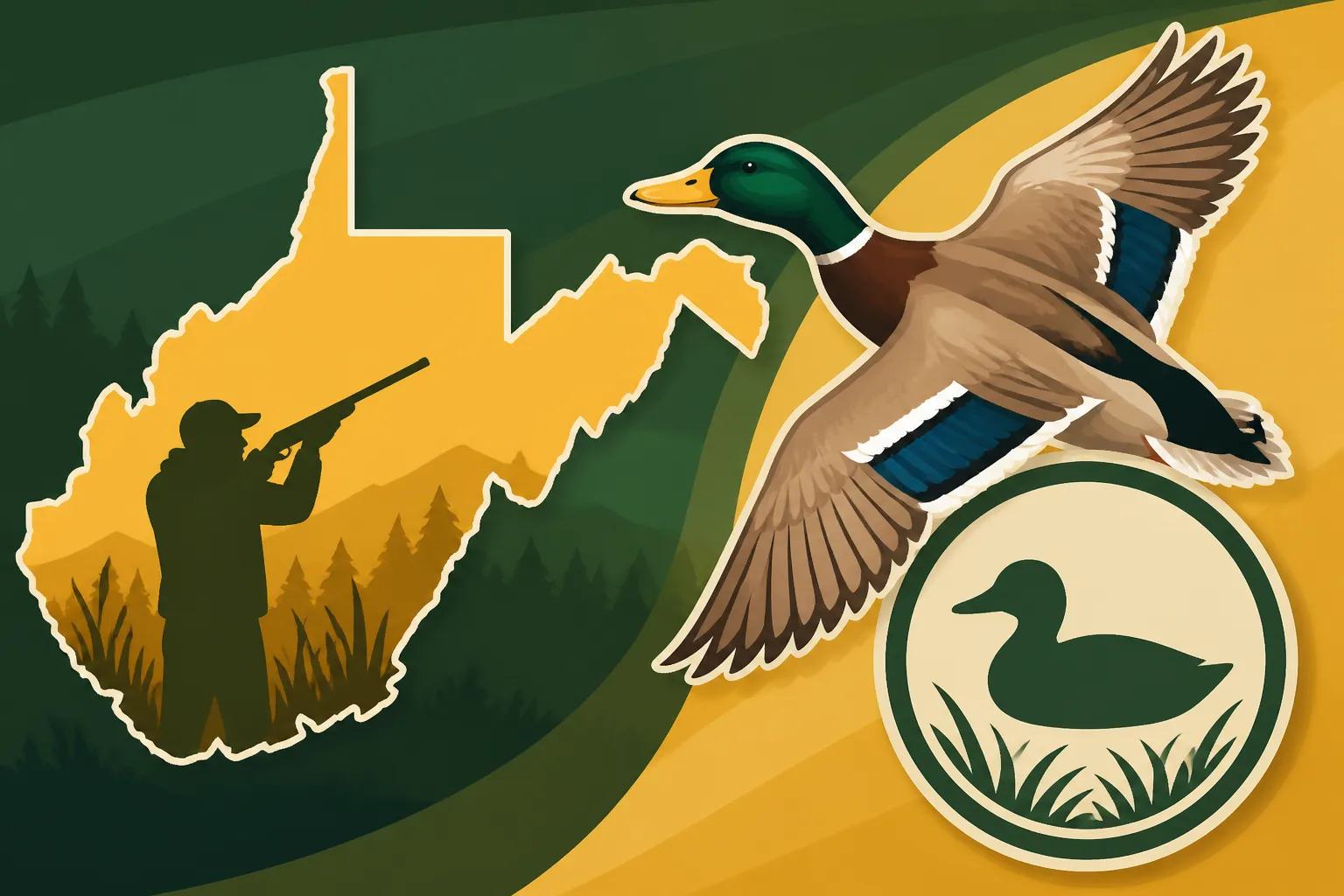
At its heart, the Federal Duck Stamp, officially known as the Migratory Bird Hunting and Conservation Stamp, is an adhesive stamp issued by the U.S. Fish and Wildlife Service. While it might look like a collector's item (and for many, it is!), its primary function is far more practical for us hunters. This stamp acts as a permit, granting you the legal right to hunt migratory waterfowl. But here's the kicker, and why it's so important: 98% of the revenue generated from these stamp sales goes directly into the Migratory Bird Conservation Fund.
Think about that for a moment. Nearly every dollar you spend on that little stamp is funneled into conserving wetlands and waterfowl habitat across the nation. This isn't just some bureaucratic fee; it's a direct investment in the future of duck and goose hunting. Since its inception in 1934, the Federal Duck Stamp program has helped conserve over 6 million acres of wetland habitat. For us here in West Virginia, those funds indirectly benefit migratory birds that pass through or winter in our state, from the fertile Ohio River Valley Bottomland to smaller ponds and rivers. It helps ensure there are places for these birds to rest, feed, and breed along their migratory routes, ultimately contributing to healthier populations that visit our state's waterways each fall and winter.
Who Needs a Federal Duck Stamp in West Virginia?
This is where some folks get a little tripped up, so let's make it crystal clear. If you are 16 years of age or older and intend to hunt any migratory waterfowl species in West Virginia—this includes ducks, geese, mergansers, and swans—you must possess a valid Federal Duck Stamp. There are no two ways about it. Whether you're chasing West Virginia Duck Season Dates or West Virginia Goose Season Dates, if you're pulling the trigger on a waterfowl species, you need this stamp.
Now, it's worth noting the age stipulation. Young hunters under 16 years old are exempt from needing the Federal Duck Stamp. This is a fantastic initiative to encourage youth participation in hunting without adding extra financial burden. However, once that 16th birthday rolls around, it's time to get your stamp. Also, this requirement applies specifically to hunting migratory waterfowl. If you're simply observing birds, photographing them, or even guiding a hunt but not actively participating in the take, you generally don't need the stamp. But if you're carrying a gun and there's a chance you'll be shooting, it's a non-negotiable item. Always remember, the spirit of the law is about protecting and funding the conservation of these specific game birds, so if you're part of the harvest, you're part of the funding.
Obtaining Your Federal Duck Stamp
Getting your Federal Duck Stamp is actually pretty straightforward, but knowing your options and what to expect can save you a headache when hunting season rolls around. Don't wait until the morning of your hunt to try and sort this out!
Where to Purchase Your Stamp
You've got a few convenient ways to secure your Federal Duck Stamp. Historically, the U.S. Post Office was the go-to spot, and it still is. Many post office locations across West Virginia will have them in stock. However, in our increasingly digital world, other options have become just as popular, if not more so, for hunters looking for convenience.
Most major sporting goods retailers, like Cabela's or Bass Pro Shops, and even many independent local outdoor stores in West Virginia, will carry Federal Duck Stamps. It's often the same place you pick up your West Virginia Hunting Licenses and What They Cost or a box of non-toxic shot for Waterfowl Gear for Ohio River Bottoms. This makes it easy to grab everything you need in one stop.
For those who prefer to handle things online, the U.S. Fish and Wildlife Service offers an e-stamp program. You can purchase your stamp through various authorized vendors, often directly linked from state wildlife agency websites, including the West Virginia Department of Natural Resources (WVDNR) portal. This digital option is a game-changer for many, allowing you to buy your stamp from the comfort of your home. You'll usually receive an immediate confirmation or a temporary e-stamp that you can print out or display on your smartphone. Just make sure whatever platform you're using is legitimate. For example, if you use a service like GoHunt to manage your licenses, they often have direct links or integrations that guide you to the official e-stamp purchase process, ensuring you're getting a valid federal stamp.
Digital vs. Physical Stamp and Carrying Requirements
Here's the critical detail about the e-stamp: when you purchase it online, you'll typically receive an electronic proof of purchase or a temporary e-stamp that's valid for a short period, usually 45 days. This temporary proof is perfectly legal for hunting. However, the actual physical, adhesive Federal Duck Stamp will then be mailed to you, often within a few weeks.
Once you receive your physical stamp, you must sign it across the face with indelible ink. This signature is what officially validates the stamp as yours. When you're out hunting, you need to have either your signed physical stamp or your valid temporary e-stamp proof in your possession. Conservation officers can and will check for it. Getting caught without a valid Federal Duck Stamp while hunting migratory waterfowl can result in fines and potentially other penalties, so it's simply not worth the risk. I've heard too many stories of hunters getting a ticket because they forgot to sign their stamp or left their e-stamp printout at home. Just like your driver's license, always have proof on your person when afield.
Federal Duck Stamp vs. State Migratory Bird Requirements
| Requirement | Federal Duck Stamp | West Virginia HIP Certification | West Virginia Migratory Bird Stamp |
|---|---|---|---|
| Purpose | Funds national waterfowl habitat | Tracks migratory bird hunters | Funds state-level conservation |
| Who Needs It | Hunters 16+ for all migratory waterfowl | All migratory bird hunters | Required for specific species (e.g., crows), or not a separate stamp for ducks/geese; covered by base license and HIP |
| Cost (Approx.) | ~$25 | Free (after base license) | Varies/Included |
| Where to Get It | Post Office, Sporting Goods, Online (USFWS, GoHunt links) | WVDNR License Vendors, Online Go Wild WV | WVDNR License Vendors, Online Go Wild WV |
| Proof Required | Signed physical stamp or valid e-stamp | License/permit with HIP endorsement | License/permit with relevant endorsement |
| Conservation Impact | Direct funding for critical wetlands | Data collection for management | State-specific habitat projects |
Note: West Virginia's basic hunting license typically covers the state's migratory bird stamp requirement for most species, with HIP certification being the primary additional state-level migratory bird regulation beyond the Federal Duck Stamp.
The Broader Impact of Your Purchase
When you buy a Federal Duck Stamp, you're doing more than just satisfying a legal requirement; you're actively contributing to a legacy of conservation that benefits far more than just waterfowl. It's a powerful statement about a hunter's commitment to the resource.
How Your Stamp Contributes to Conservation
As we touched on, roughly 98 cents of every dollar spent on a Federal Duck Stamp goes directly to the Migratory Bird Conservation Fund. This fund, managed by the U.S. Fish and Wildlife Service, is primarily used to acquire and protect wetland and grassland habitats. These areas are then incorporated into the National Wildlife Refuge System, becoming critical breeding, migration, and wintering grounds for countless bird species, not just ducks and geese.
Consider the ripple effect: a healthy wetland provides habitat for Wood Ducks in West Virginia River Bottoms, but it also supports countless other species like frogs, turtles, muskrats, and even larger mammals that rely on wetland ecosystems. These funds are also often used to acquire easements from private landowners, ensuring that valuable habitat remains protected even on private property. This collaborative approach means that even though the stamp is federal, its conservation impact stretches into states like West Virginia, bolstering state-level projects that might be supported by things like Pittman-Robertson Act funds (generated from excise taxes on firearms and ammunition). It's a beautiful example of how hunters' dollars directly translate into tangible, on-the-ground conservation success.
Importance of Wetland Habitat in West Virginia
West Virginia, with its rugged mountains and winding rivers, might not be the first state that comes to mind when you think of vast, sprawling wetlands. However, our state offers a surprising diversity of crucial waterfowl habitats that benefit immensely from conservation efforts, some directly and some indirectly from Federal Duck Stamp funds.
Along the broad expanse of the Ohio River Valley, you'll find significant bottomland habitats that are vital for migrating Canada Geese on West Virginia Farmland and various duck species. These areas, often adjacent to agricultural fields, provide essential feeding and resting grounds. Inland, we have numerous smaller rivers, creeks, and impoundments like the backwaters of Summersville Lake or Bluestone Lake that draw in migrating birds. Even farm ponds scattered throughout the state become temporary havens. The conservation of these diverse habitats, whether through direct acquisition by the National Wildlife Refuge System or through partnerships with state agencies and private landowners, is paramount. They provide the necessary food, cover, and safe resting areas that waterfowl need to survive their arduous migrations and successfully raise their broods. Without dedicated funding streams like the Federal Duck Stamp, maintaining and improving these critical wetlands would be an uphill battle, directly impacting the quality and quantity of White-Tailed Deer Across West Virginia available for hunting in our state.
Common Questions and Misconceptions
It's natural to have questions when dealing with multiple layers of hunting regulations. Let's clear up some of the common points of confusion related to waterfowl hunting requirements in West Virginia.
What About State Migratory Bird Stamps or HIP Certification?
This is a big one, and it's where many hunters, especially new ones, can get confused. The Federal Duck Stamp is federal. In addition to that, West Virginia has its own state-level requirements for migratory bird hunters. The most prominent of these is the Harvest Information Program (HIP) certification.
Here's the deal: if you plan to hunt any migratory birds in West Virginia (and this includes doves, woodcock, snipe, rails, in addition to ducks and geese), you must register with the HIP program annually. This is generally a quick, free process you complete when you purchase your West Virginia Hunting Licenses and What They Cost through the Go Wild West Virginia system. Essentially, you answer a few questions about your hunting success from the previous year, and this data helps wildlife agencies manage migratory bird populations more effectively. It's not a physical stamp, but an endorsement on your hunting license. So, for waterfowl, you need your base West Virginia hunting license, your Federal Duck Stamp, and your HIP certification. Think of it as a three-legged stool: if one leg is missing, you're going to fall over with a violation. For more in-depth information, check out our guide on West Virginia HIP Certification for Bird Hunters.
It's also worth clarifying that unlike some other states, West Virginia does not require a separate state migratory bird stamp for ducks and geese on top of the base license and Federal Duck Stamp. Your standard Class A (resident) or Class E/H (nonresident) license, combined with HIP and the Federal Duck Stamp, generally covers your legal obligations for waterfowl. Always double-check the latest WVDNR regulations, but this has been the standard for a while.
Checking Your County's Waterfowl Seasons
Another crucial aspect that can sometimes be overlooked amidst the stamp and license requirements is the specifics of the season dates and bag limits themselves. West Virginia's waterfowl seasons are set within federal frameworks but can have specific splits, zone delineations, and bag limits that vary year-to-year and sometimes even by region within the state.
For instance, diving duck seasons might open or close differently than dabbling duck seasons. There can be specific zones for certain goose species, or regulations might differ in the lower Ohio River counties compared to the mountain regions. It's not enough to just know that duck season is open generally; you need to know the specific dates, shooting hours, and daily/possession limits for the species you intend to hunt in your specific area. The WVDNR publishes an annual hunting and trapping regulations synopsis, which is your go-to resource. A quick check on the WVDNR website, or even using an app like GoHunt which often integrates WVDNR data, will provide the most up-to-date information. Don't rely on last year's regulations or hearsay from a buddy. Knowing these details is just as important as having your Federal Duck Stamp. For more in-depth information on specific tactics, you might want to explore articles like Hunting Ohio River Valley Bottomland or Layout Blinds and River Boats to get ready for your hunt.
Disclaimer
The information provided in this guide is for general informational purposes only and does not constitute legal advice. Hunting regulations in West Virginia and at the federal level can change frequently. It is the responsibility of every hunter to consult the most current West Virginia Department of Natural Resources (WVDNR) regulations and federal migratory bird hunting regulations before engaging in any hunting activities. Always ensure you are fully compliant with all applicable laws and possess the required licenses, stamps, and permits.