West Virginia Fall Turkey County Tiers
It's incredibly frustrating, isn't it, when you're trying to plan your fall turkey hunt in West Virginia, only to find the regulations aren't a simple "statewide season"? Instead, you're faced with a confusing patchwork of opening and closing dates that change from county to county. This guide will meticulously break down West Virginia's fall turkey county tier system, helping you understand why it exists and how to navigate its complexities for a successful autumn pursuit of gobblers.
Understanding West Virginia's Unique Fall Turkey Landscape
The Mountain State offers some truly fantastic turkey hunting, but the fall season brings a whole different set of challenges and rules compared to the spring. It's not just about changing your calling tactics; it's about understanding the fundamental shifts in turkey behavior and the very structure of the hunting season itself. If you approach fall turkey hunting with a spring mindset, you're in for a rude awakening, and potentially, a quiet and unproductive day in the woods.
Why Fall Turkey Hunting Differs from Spring
In the spring, everything revolves around breeding. Gobblers are vocal, strutting, and actively seeking hens, making them somewhat predictable and vulnerable to calling. Hunters focus on locating those drumming birds and bringing them into shotgun range with enticing hen calls. The energy in the woods is palpable, driven by the primal urge to reproduce. It's an exciting time, full of anticipation and the thrill of a responsive bird.
Fall, however, is a completely different ballgame. After the breeding season, turkeys regroup into larger flocks, often segregated by sex and age. Hens and poults form maternal flocks, while gobblers gather in bachelor groups. Their primary focus shifts from breeding to survival: finding abundant food sources to fatten up for winter, evading predators, and staying warm. This means they are far less vocal, much more wary, and can cover significant ground daily in search of acorns, beechnuts, wild grapes, and other mast crops. You won't hear much gobbling, and your classic hen yelps might get you a cold shoulder. The tactics shift dramatically to locating these larger groups, often by observing feeding patterns, and then trying to break them up to call scattered birds back in, mimicking lost turkeys.
The Importance of Knowing Your County
This fundamental difference in turkey behavior directly influences how the West Virginia Division of Natural Resources (WVDNR) manages the fall season. Because turkey populations, habitat quality, and hunting pressure vary so significantly across the state's diverse geography—from the rich farmlands of the Eastern Panhandle to the steep, forested ridges of the Allegheny Highlands—a one-size-fits-all approach just wouldn't work. The WVDNR uses scientific data, including harvest reports and poult-to-hen ratios from spring brood surveys, to tailor season lengths to ensure sustainable harvests and robust turkey numbers for future generations.
This means that if you're planning a fall turkey hunt, simply knowing the statewide general season dates isn't enough. You absolutely must know the specific county you'll be hunting in, because that will dictate the exact opening and closing dates, as well as the permitted season length. Hunting outside of these designated county tiers can lead to fines, citations, and the potential loss of hunting privileges. It's not just about following the rules; it's about respecting the hard work that goes into managing this incredible resource. Misidentifying your county's tier can mean you either miss out on valuable hunting days or, worse, hunt illegally, undoing the very conservation efforts designed to keep turkeys thriving.
The Core of the Tier System: Why It Exists
The idea of different season lengths for various counties might seem overly complicated at first glance. Why can't we just have one set of dates for everyone? The truth is, the WVDNR's fall turkey county tier system is a carefully crafted management tool, designed with the long-term health of West Virginia's wild turkey population in mind. It's a reflection of the state's commitment to both providing ample hunting opportunities and ensuring these magnificent birds continue to thrive across their diverse habitats.
Population Management and Conservation Goals
At its heart, the tier system is a direct response to varying turkey population dynamics across the state. Not all counties are created equal in terms of turkey numbers, habitat quality, or the amount of hunting pressure they receive. Some areas, particularly those with excellent mast production and less fragmented forests, might consistently support higher turkey densities and better poult survival rates. Conversely, other regions might experience lower reproductive success due to factors like harsh weather during nesting season, high predator populations, or limited suitable habitat. The WVDNR monitors these factors closely, along with annual harvest data, to get a clear picture of how healthy the turkey population is in each county.
Based on this data, counties are assigned to tiers that dictate their fall season length. Counties with robust, healthy populations that can sustain more hunting pressure might receive a longer season, allowing hunters more opportunities. Those with lower or more vulnerable populations, perhaps due to a few consecutive years of poor hatches, will have shorter seasons. This adaptive management approach ensures that hunters can still enjoy the tradition of fall turkey hunting while preventing overharvest in areas where populations might be struggling. It's a delicate balance, and the WVDNR works tirelessly to strike it, ensuring that West Virginia's wild turkey population, a true conservation success story, remains strong.
Historical Context of West Virginia's Fall Turkey Splits
The tiered fall turkey season structure isn't something that appeared overnight. It's evolved over decades, reflecting changing wildlife management philosophies, advances in scientific understanding of turkey populations, and shifts in hunting pressure. Back in the early 20th century, wild turkeys were practically non-existent in many parts of West Virginia, largely due to unregulated hunting and extensive timbering that destroyed their habitat. It took monumental efforts, including trap-and-transfer programs that relocated wild-trapped turkeys to re-establish populations, to bring them back. This incredible How Turkeys Were Restored to West Virginia story is one of the WVDNR's proudest achievements.
As populations rebounded, the WVDNR began to reintroduce hunting seasons, initially with very conservative limits and short durations. Over time, as data accumulated and populations flourished, seasons expanded. However, it became clear that a blanket statewide season didn't account for localized differences. Hunters in the Eastern Panhandle, for instance, might be experiencing fantastic turkey numbers, while those in certain southern or central counties might be seeing fewer birds. To maximize recreational opportunity while safeguarding vulnerable populations, the concept of localized management through varying season lengths began to take shape. The current tier system is the most refined version of this approach, allowing for precise control and responsiveness to annual population fluctuations. This flexibility ensures that turkey hunting remains a sustainable pursuit, adapting to the dynamic nature of wildlife populations and environmental factors.
Diving Deep into the Fall Turkey County Tiers
Now, let's get into the nitty-gritty of what these tiers actually mean for you, the hunter. West Virginia's fall turkey seasons are typically structured into one-week, two-week, and four-week segments, each with specific rules and, naturally, implications for how you plan your hunt. Understanding these differences is absolutely critical, not just for legal compliance, but for crafting a successful strategy.
One-Week Fall Turkey County Rules
Imagine you've been scouting hard, found some promising sign, and have your calls dialed in, only to realize you have just seven days to make it happen. That's the reality for hunters in counties assigned to the one-week fall turkey tier. These counties typically have more conservative seasons because their turkey populations are either lower, experiencing a temporary dip, or are under greater hunting pressure. The WVDNR uses this shorter season length as a protective measure, limiting harvest to ensure the population can rebound or remain stable.
For these counties, the season usually opens in late October, often running for just the first full week. The bag limit remains consistent with the statewide fall limit, but the compressed timeframe means every moment in the woods counts. Hunters pursuing birds in One-Week Fall Turkey County Rules need to be incredibly efficient with their scouting and execution. Pre-season work is paramount – identifying specific roosting areas, major feeding zones, and travel corridors beforehand is non-negotiable. When the season opens, you'll want to hit the woods hard, focusing on breaking up any flocks you locate and quickly working to call in scattered birds. There's little room for error or for "waiting until next weekend" when you only have a handful of days. Examples of counties that might fall into this category often include those in more developed areas or those with less contiguous turkey habitat.
Two-Week Fall Turkey County Rules
The middle ground in West Virginia's fall turkey tiers offers a bit more breathing room for hunters. Counties designated for a two-week season usually have stable, moderate turkey populations that can withstand a slightly longer hunting period than their one-week counterparts. This tier provides a good balance between recreational opportunity and conservation efforts, acknowledging that these populations are healthy but might not be as robust as those in the four-week counties.
For hunters in these two-week zones, the season typically starts at the same time as the one-week seasons but extends for an additional seven days. This extra week can be a game-changer. It allows for more flexibility in dealing with adverse weather, conflicting schedules, or simply providing more time to fine-tune your approach if initial scouting didn't pan out perfectly. You might have the chance to hunt different food sources as they become available or adapt your tactics if the birds prove particularly wary. While the urgency isn't quite as intense as in a one-week county, consistent effort is still key. The extended period also allows for a bit more exploration, letting you cover more ground or revisit areas where you found sign earlier in the season. These counties represent a significant portion of the state, often including areas with good habitat but perhaps some historical population fluctuations or moderate hunting pressure.
Four-Week Fall Turkey County Rules
Now, if you're lucky enough to live near or hunt in a county with a four-week fall turkey season, you're looking at some of the best opportunities the state has to offer. These counties are home to the most thriving and resilient turkey populations in West Virginia, capable of sustaining a more extended harvest period without detriment to their overall numbers. Often, these are areas with vast, unbroken tracts of mature timber, excellent mast production, and perhaps historically lower overall hunting pressure, allowing turkey numbers to truly flourish.
The Four-Week Fall Turkey County Rules typically kick off alongside the other tiers but give hunters a full month to pursue birds. This extended season provides incredible flexibility. You can hunt through various weather patterns, from early autumn warmth to late fall chills, and adapt to shifting food sources as acorns drop and trees lose their leaves, making visibility better. It also means you can often work around family commitments, other hunting seasons, or simply enjoy a more relaxed pace. The longer season allows for extensive scouting during the hunt itself, the chance to move locations if your initial spot is unproductive, and even the opportunity to experiment with different calling techniques. Many of the state's prime turkey hunting areas, particularly in the central and eastern highlands, often fall into this coveted four-week category, making them destinations for dedicated fall turkey enthusiasts.
Navigating the County List and Season Gaps
The WVDNR is transparent with its regulations, but knowing where to look and understanding the nuances is crucial. It’s not just about finding the list of counties; it’s about understanding when those seasons actually run and the strange, often frustrating, mid-season break that impacts every fall turkey hunter.
Identifying Your Specific County's Tier
The single most important step for any fall turkey hunter in West Virginia is to pinpoint the exact tier for their chosen hunting county. Relying on outdated information or hearsay is a recipe for disaster. The WVDNR's official Hunting and Trapping Regulations Summary is your bible. This document is published annually, typically in the spring or early summer, and outlines all seasons, bag limits, and specific county designations. You can easily find it on the WVDNR website, download a PDF, or pick up a physical copy wherever hunting licenses are sold. This is the definitive source for Finding Your County's Fall Turkey Tier.
Beyond the official guide, digital tools have become indispensable for modern hunters. Mapping applications like GoHunt offer incredibly detailed overlays that can show public land boundaries, property lines, and even county lines with precision. If you're hunting near a county border, using a tool like GoHunt on your phone or GPS device can be a lifesaver, ensuring you stay within the correct zone. Always remember that these tiers can be dynamic; population changes or new management strategies might shift a county from one tier to another from year to year. Therefore, a quick check of the current year's regulations is an absolute must before you ever step foot in the woods.
Understanding the October Break in Fall Turkey Splits
One of the most perplexing aspects of West Virginia's fall turkey season for many hunters is the distinct break that occurs, usually around late October into early November. You'll often see the season open, run for its designated one, two, or four weeks, and then completely close for a period before potentially reopening later in November or even December in some specific areas. This isn't an arbitrary closure; it's a deliberate management decision.
The primary reason for this mid-season gap is often tied to hunter effort and deer season. The WVDNR observes that during this late October window, hunting pressure can significantly increase, especially as deer archery seasons are in full swing and many hunters are already in the woods. Closing the turkey season during this time provides the birds with a much-needed reprieve, reducing overall stress and disturbance when they are actively foraging and trying to put on weight for winter. It also helps to prevent potential conflicts or confusion with the upcoming buck gun season, ensuring that hunters can focus on one species at a time. This strategic pause, explored further in Why Fall Turkey Splits Around a Late-October Gap, allows the WVDNR to collect harvest data and observe turkey behavior, ensuring that the population isn't unduly pressured during a critical period. It’s a conservation measure that benefits both the birds and the long-term hunting opportunities.
Example Counties and Their General Fall Turkey Tiers
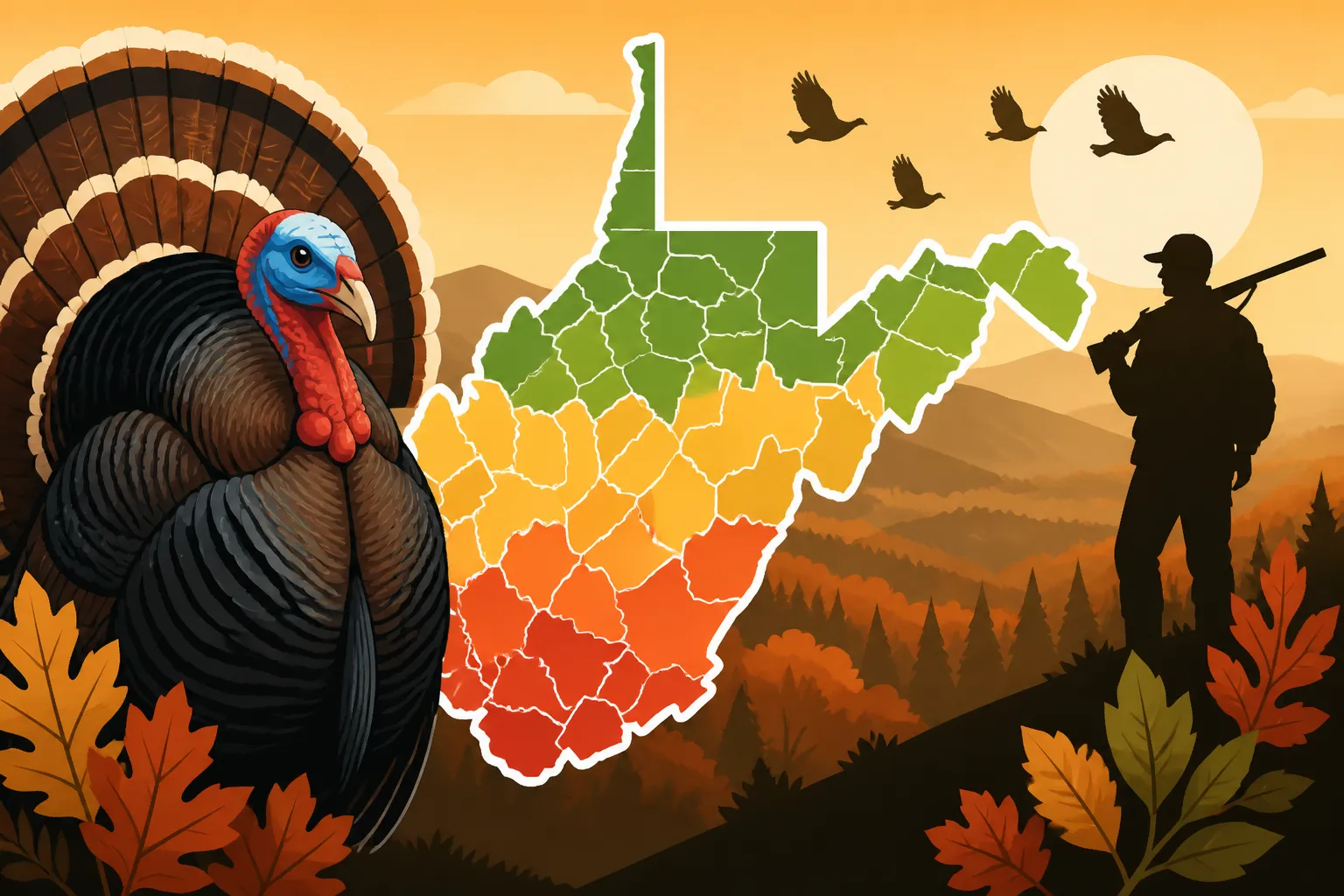
While the specific tiers can shift year to year based on WVDNR population assessments and data, here's a general table illustrating how counties might be categorized. Always consult the current year's official West Virginia Hunting and Trapping Regulations Summary for the most accurate and up-to-date information. This table is for illustrative purposes only to give you an idea of the tier distribution.
| Tier | Typical Season Length | Example Counties (General) |
|---|---|---|
| One-Week Counties | Approx. 1 week | Brooke, Hancock, Ohio, Pendleton, Wetzel, Wyoming |
| Two-Week Counties | Approx. 2 weeks | Barbour, Calhoun, Clay, Doddridge, Gilmer, Tyler |
| Four-Week Counties | Approx. 4 weeks | Greenbrier, Pocahontas, Randolph, Preston, Tucker, Monongalia |
This table provides a snapshot, but it's crucial to understand that these assignments are fluid. For instance, a county that experienced a particularly poor poult hatch one year might move from a two-week to a one-week tier to protect its population, only to move back up if conditions improve. The WVDNR is constantly monitoring these factors, making adjustments to ensure the health and sustainability of West Virginia's wild turkey resource.
Strategic Considerations for Fall Turkey Success in Tiered Counties
Regardless of which tier your chosen county falls into, successful fall turkey hunting in West Virginia demands a specific approach. It’s less about fancy calls and more about keen observation, understanding turkey behavior, and a willingness to put in the miles. The varying season lengths, however, do influence how you might prioritize your efforts and adapt your plans.
Scouting and Habitat Prioritization
Effective fall turkey hunting begins long before opening day, perhaps even before leaves start to turn. Unlike spring, where turkeys are more concentrated around breeding areas, fall birds are spread out, covering vast amounts of territory in search of food. Therefore, pre-season scouting is absolutely paramount. You need to identify key food sources: stands of mature oaks dropping acorns, beech nuts, wild grapes, or even abandoned apple orchards. These are often the magnets that will hold flocks. Pay attention to fresh scratching, droppings, and tracks, especially along logging roads, creek bottoms, and ridge lines.
Understanding the specific habitat types within your chosen county is also critical. In the steep Allegheny ridges, turkeys might concentrate on benches and saddles where mast is plentiful, offering easier travel. In more agricultural regions, they might spend significant time in harvested cornfields or along field edges, especially in the Eastern Panhandle. Using a mapping app like GoHunt can help you identify these habitat changes and potential travel corridors. In counties with shorter seasons, this scouting needs to be intense and focused. You won't have time during the hunt to "figure things out." You need to know exactly where you plan to go and what you expect to find. Even in counties where Sundays are closed to hunting, such as outlined in Fall Turkey Tactics Where Sundays Are Closed, this extra day can be invaluable for non-hunting scouting missions.
Tactics for Breaking Up a Fall Flock
The quintessential fall turkey hunting tactic is the "flock bust." This strategy capitalizes on the turkeys' strong social bonds and their natural instinct to regroup after being scattered. The process usually involves locating a flock, whether by sight, soft clucks, or simply stumbling upon them, and then actively running in to flush the birds in all directions. It sounds counterintuitive to scare turkeys away, but the goal is to break up the tight-knit group. Once scattered, the individual birds will feel vulnerable and will often begin to send out "kee-kee" or "kee-kee run" calls—distinctive whistle-like yelps—as they try to locate their flock mates.
After the bust, the key is to set up quickly and quietly near the point of the flush, or where you anticipate birds will try to regroup. Give it some time, maybe 20-30 minutes, then start mimicking those lost bird calls. Soft kee-keees and lost yelps can often draw in curious or desperate birds looking to rejoin their kin. This tactic is particularly effective on maternal hen-and-poult flocks. Adult gobblers are often harder to call back in once scattered, as their social bonds aren't quite as strong as those within hen flocks. Mastering this "run and gun" approach, as detailed in Breaking Up a Fall Turkey Flock, requires patience, persistence, and a good ear for turkey vocalizations.
Weather and Food Source Impact
Fall weather in West Virginia can be incredibly variable. Early fall might bring warm, sunny days, while late fall can deliver bitter cold, heavy rains, or even early snow. These weather patterns, combined with the availability of natural food sources, significantly impact turkey behavior and movement. Warm, dry weather can keep turkeys scattered and actively foraging, making them harder to pattern. A sudden cold snap or heavy rain might push them to seek shelter in dense cover or concentrate around readily available food that offers quick energy.
Mast crops, particularly acorns and beechnuts, are king in the fall turkey woods. A bumper acorn crop can mean turkeys are widely dispersed, feeding throughout the forest, making them harder to pinpoint. A poor mast year, however, will force turkeys to concentrate around more limited food sources, such as persistent wild grapevines, abandoned apple trees, or even agricultural fields like corn and soybeans. Knowing the mast forecast for your hunting area can be a huge advantage. If you're hunting in a four-week county, you'll likely experience a full range of weather and mast conditions, allowing you to adapt your strategy over time. In shorter seasons, you have less flexibility, so you need to capitalize on the existing conditions and food sources immediately. Keep an eye on the long-term forecast and adjust your hunting areas based on what Mother Nature and the food supply are dictating.
Legalities, Ethics, and Best Practices for West Virginia Fall Turkey
Beyond understanding the county tiers and hunting strategies, every responsible West Virginia turkey hunter must be intimately familiar with the legal requirements, ethical considerations, and best practices that govern the sport. These aren't just rules for rule's sake; they are vital components of a sustainable and respectful hunting tradition. Ignoring them not only risks legal trouble but also undermines the collective efforts to conserve these magnificent birds.
West Virginia Fall Turkey Bag Limit and Possession Rules
One of the most critical legal aspects to nail down is the bag limit. For West Virginia's fall turkey season, the statewide bag limit is typically one turkey. This means you can harvest one bird, regardless of its sex or age, during the entire fall season. It’s a significantly more conservative limit than the spring season, where hunters often have a two-bird limit. This stricter fall limit reflects the WVDNR's careful management to protect populations that are not actively breeding, ensuring enough birds survive to contribute to future spring hatches. It is absolutely crucial to be clear on West Virginia Fall Turkey Bag Limit.
The "possession limit" also comes into play. While you can only harvest one bird during the fall, the possession limit generally refers to the maximum number of lawfully taken game birds or animals that a person may possess at any one time. For fall turkeys, this is usually the same as the annual bag limit – one bird. This means that if you've already harvested your one fall turkey, you cannot legally go out and attempt to harvest another, even if you’re hunting in a multi-week county. Once that tag is filled, your fall turkey season is over. Being clear on West Virginia Fall Turkey Possession Limit prevents any confusion when transporting or storing your harvested bird.
Blaze Orange Requirements and Safety
Safety is paramount in the woods, especially during the fall when multiple hunting seasons often overlap. West Virginia has specific blaze orange requirements that all hunters must adhere to, and fall turkey season is no exception. During the firearms deer seasons, including the buck gun season and any special antlerless seasons that might coincide, all hunters, regardless of what species they are pursuing (even if you're only turkey hunting), are required to wear blaze orange.
Specifically, West Virginia law typically mandates that a hunter wear at least 400 square inches of blaze orange (or blaze pink, which is also permitted) as an outer garment above the waist, visible from all sides. This often means a blaze orange vest or jacket. While some may find it cumbersome, this regulation is a critical safety measure, significantly reducing the risk of accidental shootings by making hunters highly visible to one another. Even if you're hunting in an archery-only county or during an archery-only period for deer, if any firearms deer season is open in that county, the blaze orange rule applies. Always check the current regulations for the specific dates and How Much Blaze Orange West Virginia Requires in your hunting area. Prioritizing safety benefits everyone in the woods.
Responsible Hunting Practices
Beyond the legal minimums, ethical and responsible hunting practices are the cornerstone of our heritage. This includes ensuring a clean, quick kill, which means taking responsible shots within your effective range and only when you have a clear, unobstructed view of the turkey's head and neck area – the most humane kill zone. Chasing a wounded bird for miles is not only frustrating but also an indication that the initial shot might have been questionable. Take your time, confirm your target, and make that first shot count.
Once you’ve harvested a turkey, the responsibility continues. You must report your harvest accurately and promptly to the WVDNR. This is not just a formality; the data collected from hunter harvest reports—including the date, county, and sex of the bird—is absolutely vital for the WVDNR to make informed management decisions. It's this very data that helps them determine the health of local turkey populations and, consequently, whether a county should be a one-week, two-week, or four-week tier in future seasons. Hunters are directly contributing to conservation science through this simple act. Moreover, always respect private land boundaries, even if you’re on public land adjacent to private property. Using a mapping tool like GoHunt can help you visualize these boundaries and avoid inadvertent trespass. Remember, our actions in the field reflect on all hunters, and upholding a strong ethical standard is crucial for public perception and the future of hunting.
Planning Your Fall Turkey Hunt: Beyond the Tier
Knowing your county's tier is a huge step, but a truly successful fall turkey hunt in West Virginia requires a holistic approach. It's about blending your turkey strategy with the broader hunting landscape, leveraging modern technology, and cultivating the patience unique to autumn pursuits. Don't let the details of the tier system overshadow the bigger picture of enjoying the woods and making the most of your time afield.
Combining Fall Turkey with Other Seasons
One of the great advantages of fall hunting in West Virginia is the overlap of various seasons. The fall turkey season often coincides with early archery deer season, squirrel season, and rabbit season. This can create fantastic opportunities for multi-species hunts, allowing you to maximize your time in the woods. Imagine sitting for turkeys early in the morning, and if things are quiet, transitioning to squirrel hunting later in the day, or keeping an eye out for a deer while you're calling for a turkey. West Virginia Deer Season Overlap With Small Game makes for some exciting choices.
However, this overlap also necessitates heightened awareness and preparation. If you're carrying a rifle for deer or a small game shotgun, but also calling for turkeys, you need to be acutely aware of the blaze orange requirements. Always follow the most stringent safety requirements for the open seasons. Also, be mindful of other hunters. The woods can be a busy place in the fall, and knowing that deer hunters or small game hunters might be in your vicinity means being extra cautious with your movements and calling. Planning a combined hunt requires careful consideration of all regulations and a commitment to safe practices.
Utilizing Digital Tools and Resources
In today's world, technology has made scouting and planning more efficient than ever before. The West Virginia Division of Natural Resources (WVDNR) website is a treasure trove of information. Not only can you find the official regulations summary there, but also interactive maps of public lands, wildlife management areas (WMAs), and potentially even turkey harvest data and brood survey results. These resources can give you a clearer picture of population trends and habitat distribution.
Beyond the WVDNR, third-party mapping applications like GoHunt offer incredible utility. GoHunt allows you to view detailed topographic maps, satellite imagery, and critical land ownership overlays. You can mark waypoints for potential food sources, roosting areas, or where you've busted a flock. The ability to verify property lines on your phone in real-time, especially when hunting near private land, is invaluable and helps prevent accidental trespassing. These digital tools allow you to do significant "e-scouting" from your couch, narrowing down promising areas before you even put boots on the ground, making your time in the woods more productive.
Patience and Persistence in the Autumn Woods
Ultimately, fall turkey hunting, especially within the confines of a tiered season, often comes down to patience and persistence. Turkeys in the fall are wild, wary, and focused on survival. They won't always gobble, they won't always come to a call, and they certainly won't always be where you expect them. This is particularly true in shorter, one-week counties, where the pressure is on to make things happen quickly. In longer seasons, you might have the luxury of waiting out a tough day or exploring new areas.
The beauty of fall turkey hunting lies in the quiet immersion in the autumn woods. It’s about listening for the subtle sounds of scratching leaves, observing the patterns of falling mast, and enjoying the crisp air and changing colors. Don't get discouraged if you don't immediately find birds or if your calls go unanswered. Keep moving, keep scouting, and keep trying different tactics. The reward of hearing that first kee-kee of a scattered poult or seeing a flock materialize from the timber after a successful bust is a profound experience that makes all the effort worthwhile. Embrace the challenge, learn from every outing, and cherish your time pursuing West Virginia's wild turkeys.
Disclaimer
The information provided in this guide is for general informational purposes only and is not intended as legal advice. Hunting regulations in West Virginia are subject to change annually and can have specific nuances. Always consult the most current official West Virginia Hunting and Trapping Regulations Summary published by the West Virginia Division of Natural Resources (WVDNR) before engaging in any hunting activities. It is the hunter's responsibility to know and follow all applicable laws and regulations.