Why Fall Turkey Splits Around a Late-October Gap
For many of us who eagerly anticipate fall turkey season in West Virginia, that odd, late-October gap in the calendar can be incredibly frustrating. Just when the woods feel right, and the birds are starting to flock up, the season closes down, leaving us scratching our heads. This guide is here to shed some light on the reasoning behind West Virginia's unique split fall turkey season, explaining the biological and management factors that contribute to this sometimes-confusing schedule.
Understanding West Virginia's Fall Turkey Season Structure
West Virginia's fall turkey season isn't a continuous stretch of days, and that's precisely where the confusion lies for many hunters. Instead, it's typically broken into distinct segments, often with a noticeable hiatus right in the middle, usually spanning part of late October. This "gap" is deliberate and plays a crucial role in how the wild turkey population is managed across the Mountain State.
The state is divided into different zones or "tiers" for fall turkey hunting, each with its own season length. You'll find counties with a shorter, more conservative season and others that enjoy a more liberal, extended period. For instance, some counties might have a one-week season, while others, particularly those with robust turkey populations, could see a four-week season. The split itself, regardless of county-specific length, is a common thread that impacts hunters statewide. Understanding these nuances is vital for any hunter planning to pursue turkeys once the leaves start to turn, and it’s always smart to double-check the latest regulations on the WVDNR website or a reliable hunting app like GoHunt to confirm dates for your specific hunting area.
The Phased Approach to Fall Turkey Seasons
West Virginia's approach to fall turkey hunting is anything but uniform, especially when you consider the varying county tiers. The season might kick off in mid-October in some counties, offer a short window, and then shut down. Other counties, often those with higher turkey densities, might have an earlier start and a longer stretch. This mosaic of seasons reflects the West Virginia Division of Natural Resources (WVDNR)'s strategy to tailor hunting pressure to local turkey populations. For example, you might experience a brisk opening weekend in a county with a One-Week Fall Turkey County Rules structure, only to find yourself sidelined as that season closes while another county nearby is still open.
This tiered system attempts to balance hunter opportunity with sustainable turkey management. It's a recognition that not all turkey populations are created equal, even within the same state. A strong population in the Eastern Panhandle, for instance, might be able to sustain a longer season than a more sensitive population in the Allegheny Highlands. Hunters need to pay close attention to the specific regulations for their chosen hunting spot. The GoHunt app, for example, often updates these regulations promptly, helping you stay informed about your county's particular fall turkey tier.
The Late-October Hiatus Explained
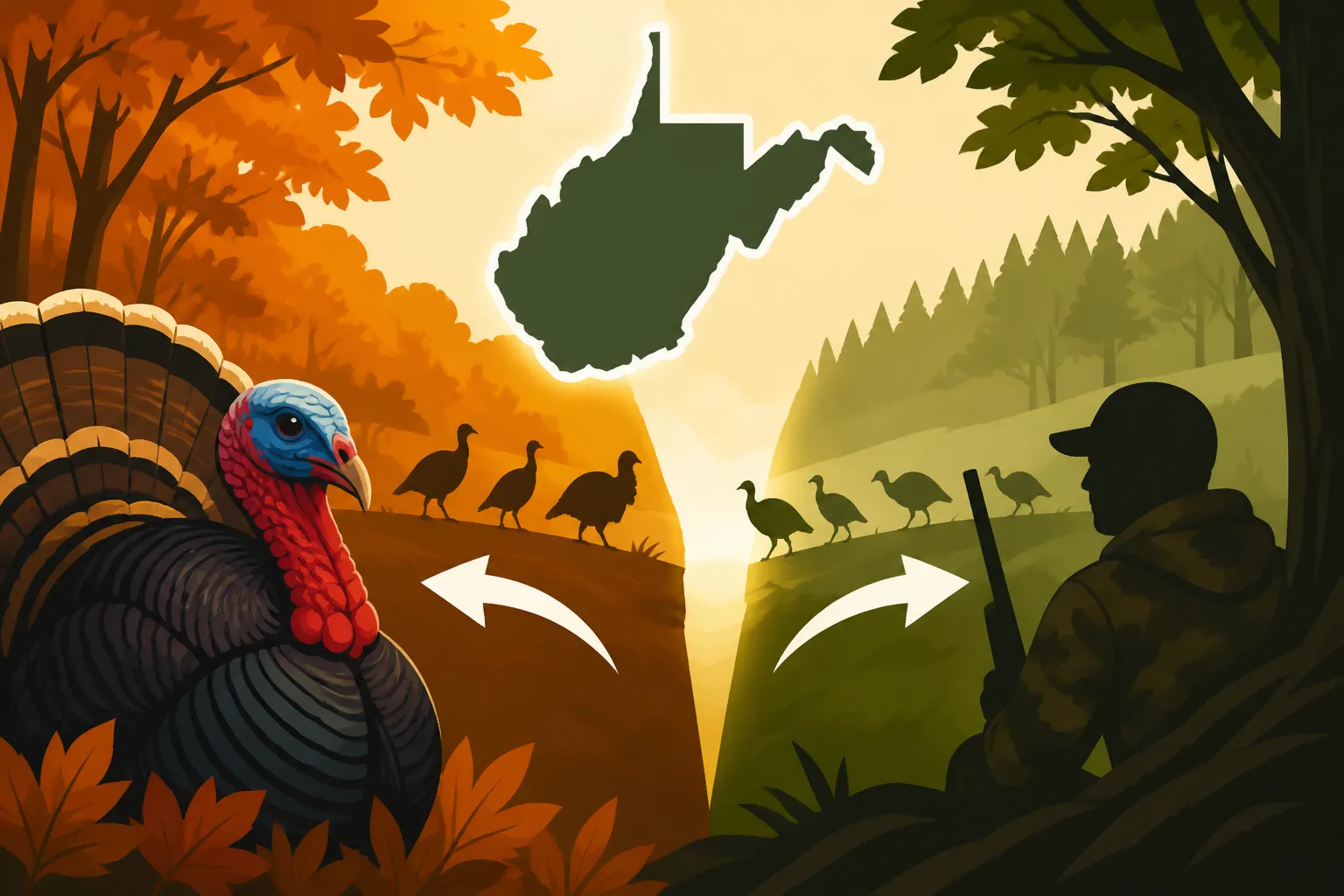
The real head-scratcher for many is that late-October break. Imagine you've been putting in the miles, found a promising flock, and then, bam, the season is paused. This gap, typically around the last week of October, is not an arbitrary decision. It’s a carefully timed period designed to coincide with specific biological and behavioral patterns of wild turkeys. Essentially, the WVDNR uses this gap to manage hunting pressure during a critical time in the birds' annual cycle, aiming to protect the breeding stock and allow for natural dispersal and regrouping.
While it can feel inconvenient, this hiatus is a key component of the state's long-term strategy to ensure healthy and thriving turkey populations for years to come. It’s part of the broader effort to manage the Wild Turkeys in West Virginia and reflects a deep understanding of turkey ecology.
Biological Reasons for the October Gap
The WVDNR doesn't just pull season dates out of a hat. Every decision, including the timing of the fall turkey season and its infamous late-October gap, is rooted in biological science and a deep understanding of wild turkey behavior. This specific break in hunting pressure is strategically placed to align with a crucial period in the turkeys' annual cycle, primarily revolving around the dispersal of young birds and the re-establishment of pecking orders within flocks.
It's a time when young-of-the-year birds, often referred to as poults, are maturing and beginning to transition into more independent roles. Simultaneously, the adult hens are consolidating their winter flocks. Disrupting these natural behaviors with hunting pressure during this sensitive time could have unintended consequences for the overall health and stability of the turkey population.
Poult Dispersal and Flock Dynamics
One of the primary biological drivers behind the October gap is the timing of poult dispersal. Young turkeys, hatched in the spring, spend their summer with their mother hens. By early fall, as they grow larger and become more self-sufficient, these family units begin to break down, and young birds start to disperse more widely. This dispersal is a natural process that helps prevent overcrowding, reduces inbreeding, and allows turkeys to spread out and exploit available food sources more efficiently.
During late October, this dispersal is often in full swing. Hunters in the woods could inadvertently exert too much pressure on these vulnerable young birds, especially if they haven't fully integrated into larger, more resilient winter flocks. Furthermore, the break allows for a natural re-establishment of flock dynamics without the added stress of hunting. This helps ensure that strong, healthy flocks form heading into the leaner winter months. The WVDNR monitors factors like West Virginia Turkey Brood Survey Results to understand these population dynamics better.
Minimizing Pressure on Breeding Stock
Another critical biological consideration for the October gap is the protection of the adult hen population, which forms the backbone of next spring's breeding success. During late October and early November, as the breeding season approaches, adult hens are often starting to consolidate into larger winter flocks. These flocks represent the primary reproductive potential for the following year.
The presence of hunters targeting these flocks, especially during a time when birds might be more stressed from dispersal and forming new social structures, could disproportionately impact the adult hen population. By closing the season during this period, the WVDNR provides a crucial respite, allowing hens to regroup and conserve energy without added human disturbance. This ensures they enter the critical winter and early spring breeding seasons in the best possible condition, contributing to the overall West Virginia Turkey Population Trends and long-term health of the species. It's a preventative measure to safeguard the future of turkey hunting in the state.
Management Strategies and Historical Context
The decision to implement a split fall turkey season in West Virginia wasn't made on a whim. It's the result of decades of careful study, data collection, and adaptive management by the WVDNR. This strategy balances hunter opportunity with the biological needs of the wild turkey population, aiming for sustainable harvest levels while ensuring the health of the resource. Understanding the historical context and the current management philosophy helps to demystify the logic behind the late-October gap.
The WVDNR continuously monitors turkey populations, harvest data, and environmental factors to make informed decisions about season lengths and structures. This includes tracking things like poult survival, adult hen numbers, and habitat quality across the state. The split season is one tool in a larger toolbox designed to fine-tune hunting pressure and achieve specific conservation goals.
WVDNR's Adaptive Management Approach
The WVDNR employs an adaptive management approach to fall turkey season setting. This means they don't just set rules and forget them; they constantly evaluate the outcomes of their management decisions and adjust as needed. The split season is a perfect example of this. Initially, West Virginia's fall turkey seasons might have looked different, but through observation, research, and analysis of harvest data, the current structure evolved. They consider various factors like mast crop conditions, spring gobbler harvest numbers, and even hunter feedback when making annual adjustments.
This adaptive strategy is crucial in a state with diverse topography and varying turkey densities. For instance, the turkey populations in the high-elevation hardwood forests of the Monongahela National Forest might respond differently to hunting pressure than those in the more fragmented agricultural landscapes of the Eastern Panhandle. The WVDNR's goal is always to maximize recreational opportunities while ensuring the long-term viability of the turkey resource. Their data-driven approach, supported by tools like those offered by GoHunt for staying on top of regulations, helps hunters understand the nuances of the season.
Balancing Hunter Opportunity and Conservation
The delicate balance between providing ample hunting opportunities and ensuring the conservation of the turkey population is at the heart of the split season. West Virginia prides itself on its strong turkey tradition, and hunters are a vital part of the conservation equation. However, unchecked hunting pressure, especially on vulnerable populations or during critical biological periods, can quickly deplete the resource.
The late-October gap is a strategic pause designed to relieve this pressure. By temporarily closing the season, the WVDNR allows flocks to settle, integrate, and disperse naturally without human interference. This strategy is particularly important for counties with Four-Week Fall Turkey County Rules where overall hunting pressure might be higher. It's about ensuring that when the season reopens, there are still healthy populations available for hunters, while also guaranteeing that enough breeding stock survives to perpetuate the species for future generations. This careful stewardship has allowed West Virginia to maintain its reputation as a fantastic destination for fall turkey hunting.
Adapting Your Fall Turkey Hunting Strategy to the Split Season
While the late-October gap can be a bit of a scheduling puzzle, it also presents unique opportunities for the savvy hunter. Instead of viewing it as a frustrating interruption, consider how you can adapt your tactics to make the most of the open periods before and after the break. This often involves understanding how turkey behavior changes through the fall and adjusting your scouting and hunting methods accordingly.
Many West Virginia hunters have learned to embrace the split season, using the closed period for intensified scouting or shifting their focus to other game. When the season reopens, often around early November, you might find different turkey patterns and behaviors, requiring a fresh approach.
Scouting During the Closed Period
The closed period in late October isn't just a time to hang up your turkey vest; it's an excellent opportunity to become an even better scout. While you can't carry a firearm or bow for turkeys, you can still be in the woods, observing, listening, and learning. This is a prime time to locate fresh turkey sign, identify travel corridors, and pinpoint potential roosting areas without disturbing the birds. You might be surprised at how much you can learn about local turkey movements when there's no hunting pressure.
Look for fresh scratchings, droppings, and dusting bowls. Pay attention to food sources that are peaking during this time, such as hard mast like acorns or soft mast like dogwood berries. Knowing where turkeys are feeding and traveling during the closed season will give you a significant advantage when the season reopens. Consider using a mapping tool like those found on GoHunt to mark sign and create a scouting overlay. This strategic scouting can drastically improve your chances of success once the next segment of the season begins.
Changing Tactics for Post-Gap Hunting
When the fall turkey season reopens after the late-October gap, often moving into early November, you'll likely encounter birds with slightly different behaviors. The earlier part of the season might have seen more family groups, while after the gap, larger, consolidated winter flocks are more prevalent. This shift demands an adjustment in your calling and hunting tactics.
Before the gap, locating smaller family groups and using more subtle hen or kee-kee calls might have been effective. After the gap, as birds have regrouped, louder, more aggressive hen yelps or even gobbler yelps might be more successful in drawing attention from larger flocks. Techniques like Breaking Up a Fall Turkey Flock and then calling them back together can be incredibly effective when birds are highly socialized in larger groups. Also, consider the impact of the approaching deer gun season, as increased human activity in the woods can make turkeys warier. The key is to be adaptable and observant, understanding that the fall woods, and the turkeys in them, are constantly changing.
Here's a quick comparison of turkey behavior before and after the late-October gap:
| Behavior Aspect | Pre-Gap (Early-Mid October) | Post-Gap (Early November) |
|---|---|---|
| Flock Structure | Smaller family groups, some dispersal. | Larger, consolidated winter flocks. |
| Vocalizations | Moderate calling, kee-keees, subtle hen yelps. | More aggressive hen calls, gobbler yelps, louder. |
| Food Sources | Early mast crops, persistent soft mast. | Primary focus on abundant hard mast (acorns). |
| Movement | More scattered, navigating dispersal. | More predictable, focused on consistent food. |
| Response to Call | Can be curious, might respond to soft calls. | Can be wary; breaking flocks often effective. |
Leveraging Knowledge of West Virginia Fall Turkey Splits
Understanding the specific West Virginia Fall Turkey County Tiers for your hunting area is non-negotiable. Knowing if you're in a one-week, two-week, or four-week county will dictate how you plan your hunting trips. For instance, if you're in a county with a shorter season, you'll need to maximize those brief open windows, perhaps by focusing intently on Hunting the One-Week Fall Turkey Counties during their specific dates. Conversely, if you're in a more liberal zone, you might have more flexibility to hunt before and after the gap.
Don't forget to account for specific regulations like Fall Turkey Tactics Where Sundays Are Closed, which can further impact your hunting schedule. The more you know about these rules, the better you can plan your time afield. By paying attention to these details, and using all the tools at your disposal, you can transform the challenge of a split season into a strategic advantage, ensuring you have the best possible chance to fill your tag.
Disclaimer
This article provides general information and recommendations for hunting West Virginia's fall turkey season. Hunting regulations and conditions can change. Always consult the official West Virginia Division of Natural Resources (WVDNR) regulations for the most current and accurate information before heading into the field. Safety should always be your top priority while hunting.