Finding Your County’s Fall Turkey Tier
It's no secret that West Virginia's hunting regulations can sometimes feel like a tangled briar patch, especially when it comes to fall turkey season. You're trying to plan your hunt, maybe scouting some promising public land, and suddenly you're wondering, "Wait, is this county a one-week season or a four-week one?" It's a common frustration, and understanding your county's fall turkey tier is absolutely crucial to a successful and legal hunt. This guide will walk you through how to pinpoint your specific county's fall turkey season length, making sure you're always on the right side of the law and maximizing your time in the woods.
Understanding West Virginia's Fall Turkey Season Tiers
West Virginia, with its diverse landscapes and varied turkey populations, doesn't operate on a one-size-fits-all model for fall turkey hunting. Instead, the state implements a tiered system, categorizing counties based on factors like turkey population density, reproductive success, and historical harvest data. This system is designed to provide robust hunting opportunities where populations can sustain it, while also safeguarding the birds in areas where they might be more vulnerable. It’s a smart approach, but it definitely puts the onus on us, the hunters, to do our homework.
The core idea behind these tiers is conservation. If a county has a thriving, healthy turkey population, the West Virginia Division of Natural Resources (WVDNR) might allow for a more liberal, longer fall season. Conversely, if a county's turkey numbers have been struggling, perhaps due to poor hatch rates, habitat loss, or disease outbreaks, the season might be shortened or even closed entirely to help the birds rebound. This dynamic management means that what was a two-week county last year might shift to a one-week or even four-week county this year, depending on the data. This constant evolution is why checking the regulations annually is non-negotiable, and it's also why many hunters find themselves asking, "When West Virginia's Fall Turkey Season Rules are established, how does my county fit in?"
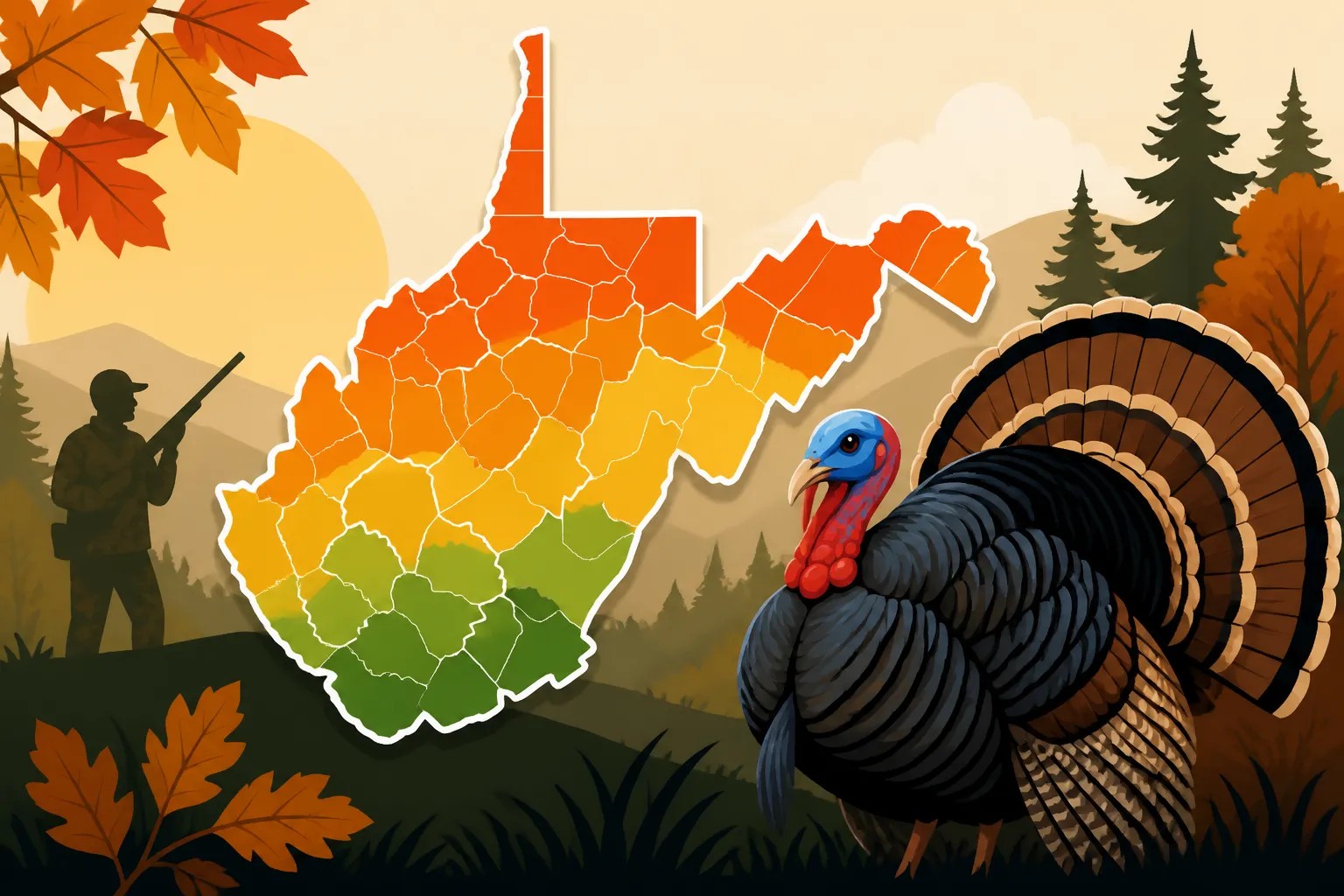
The most common tiers you'll encounter are counties with no fall season, one-week seasons, two-week seasons, and four-week seasons. The longer seasons are often split into two segments, typically a short segment in late October or early November, followed by a longer segment later in November and even into December. This "split season" can add another layer of complexity, but it also gives hunters more chances to get out. It's truly a unique approach, designed to balance hunter opportunity with sustainable management. Knowing which tier your hunting grounds fall into is the first step to planning effective Fall Turkey Tactics Where Sundays Are Closed and ensuring you're present during the open periods.
Why Tiers Vary Across the State
You might be asking why one county can have a four-week season while its neighbor only has one. It really boils down to science and observation. The WVDNR conducts annual surveys, listening for gobbling activity in the spring, performing poult-to-hen ratio counts in the summer, and tracking harvest data from previous seasons. They also consider habitat quality, disease prevalence (like avian influenza, which can impact wild bird populations), and even predator impact on nests. For example, some counties in the mountainous regions might have more consistent hard mast crops and less hunting pressure, leading to stable or growing turkey numbers. Meanwhile, areas with more fragmented habitat or higher predator populations might see more fluctuations.
Another major factor is simply the starting population size and how quickly birds rebound. The Eastern Panhandle, for instance, often boasts healthier turkey populations due to a mix of agriculture and timber, while some of the more rugged, densely forested counties in the southern coalfields might have fewer birds overall. This isn't just about hunter preference; it's about the biological capacity of the land to support a certain number of turkeys. The WVDNR's biologists meticulously analyze all this data to make informed decisions that benefit both the turkey population and the hunting community. It’s a testament to their dedication to managing West Virginia's Wild Turkeys effectively.
How to Identify Your County's Specific Season Length
Now that we understand why there are tiers, let's get down to the brass tacks of how to find out your specific county's tier. The good news is that the information is readily available; you just need to know where to look. Getting this right is absolutely essential to avoid fines or accidentally hunting out of season.
Consulting the Official West Virginia Hunting Regulations
Your absolute first stop should always be the official West Virginia Hunting and Trapping Regulations booklet. This isn't just a suggestion; it's the law. The WVDNR publishes a new booklet every year, typically available by late summer or early fall, before the seasons open. You can pick up a physical copy at most license retailers, sporting goods stores, or WVDNR offices. Even better, you can download the entire document as a PDF from the WVDNR website.
Inside this booklet, you'll find a dedicated section for fall turkey hunting. This section will include a table or a list that clearly outlines each county and its corresponding fall turkey season length. It will specify if a county has a One-Week Fall Turkey County Rules, a Two-Week Fall Turkey County Rules, or a Four-Week Fall Turkey County Rules. It will also explicitly state any counties that are closed to fall turkey hunting entirely. Pay close attention to the dates as well, especially for the longer seasons that are often split into two distinct periods. Don't just skim it; read the fine print, noting the exact start and end dates for both segments if applicable. This official document is your Bible for the season.
Using the WVDNR Website and Online Tools
In this digital age, the WVDNR website (wvdnr.gov) is an invaluable resource. The online version of the hunting regulations is identical to the printed booklet and is often updated immediately if any changes occur (though major changes are rare mid-season). Beyond the static PDF, the WVDNR also provides interactive maps and searchable databases that can make finding your county's information even easier.
When you visit the WVDNR site, navigate to the "Hunting and Trapping" section, and then look for "Regulations" or "Turkey Hunting." You'll often find a direct link or an embedded map that allows you to click on a county to see its specific regulations. This can be particularly helpful if you're planning to hunt near a county line, as it allows you to quickly verify the regulations for both sides of your intended hunting area. The WVDNR also offers a "Go Wild West Virginia" platform, which is primarily for license sales but often has links to the regulations and information. While it's not a mapping app in the traditional sense, it's a gateway to all official information. For those who like to be prepared, even when offline, downloading the PDF is still a smart move, but the website is excellent for quick lookups.
Navigating WVDNR Resources and Digital Aids
The West Virginia Division of Natural Resources has made significant strides in providing accessible information for hunters. Beyond the traditional regulations booklet, there are several digital tools and resources that can help you stay informed about your county's fall turkey tier and broader hunting regulations. These tools are designed to streamline the process, but like any technology, they require a bit of know-how to use effectively.
Leveraging the WVDNR Mobile App
In today's world, our phones are practically extensions of ourselves, and the WVDNR has a mobile app that can be incredibly useful. While the app's primary function is often for checking game (West Virginia Turkey Checking Requirements are mandatory for successful harvests), it also frequently includes direct links or even embedded sections of the current regulations. This means you can have the official rules right in your pocket, even if you're deep in the woods without a signal, provided you've downloaded the content beforehand.
The app is fantastic for quickly pulling up information when you're on the go, whether you're at camp, scouting a new area, or just having a debate with a buddy about season dates. It usually offers clear navigation to the various game species' regulations, including fall turkey. While it might not have the same detailed mapping features as a dedicated mapping platform, it's an official source you can trust. Always make sure your app is updated to ensure you have the most current information, as season dates and tiers can sometimes be adjusted from year to year.
Utilizing Mapping Applications with Integrated Data
For the truly modern hunter, mapping applications like GoHunt, onX Hunt, or BaseMap have become indispensable. These apps go far beyond simply showing you property lines; many now integrate layers of public land boundaries, specific Wildlife Management Area (WMA) rules, and even general hunting season dates. While you should always cross-reference with official WVDNR regulations, these apps can be a fantastic visual aid for understanding where different county tiers begin and end.
Imagine you're Scouting West Virginia Public Land Before Season and you've found a promising ridge that straddles two counties. With a mapping app, you can clearly see the county line. Then, you can use the WVDNR's official resources to confirm the fall turkey tier for each side of that line. Some apps, like GoHunt, even strive to incorporate regulatory data directly, providing a handy overview. However, remember that third-party apps are not the official source, and errors can occur. Always use them as a guide and confirm crucial details like season dates and bag limits with the WVDNR's printed or online regulations. This layered approach ensures you're both well-informed and compliant.
Practical Implications for Your Fall Turkey Hunt
Understanding your county's fall turkey tier isn't just about following rules; it fundamentally shapes how you approach your hunt. The season length, the timing of the split seasons, and the very presence of a fall season all dictate your strategy, your scouting efforts, and your overall success. Overlooking these details can lead to wasted time, missed opportunities, or worse, a wildlife violation.
Planning Your Season Around Specific Dates
Once you've identified your county's fall turkey tier, the next step is to meticulously mark those dates on your calendar. A one-week season, for example, demands a much more intense and focused effort than a four-week season. If you're in a county with a short season, you'll want to maximize every possible day you can be in the woods. This might mean taking time off work or carefully coordinating with family. For counties with longer, split seasons, you have the flexibility to hunt during different periods, which can be advantageous. Maybe you prefer the early archery-only segment, or perhaps you save your efforts for the later shotgun season when birds might be more concentrated.
Consider a hypothetical scenario: you're hunting in a county with a two-week split season. You might use the first few days of the early segment to locate flocks and gauge their patterns, knowing you have a longer stretch later in November to make your move. This strategic planning around specific open periods is vital. For more context on managing these seasons, check out resources like Hunting West Virginia's Fall Turkey Splits.
Adapting Your Tactics to Season Length
The length of your county's fall turkey season can also influence your hunting tactics. In shorter seasons, especially early in the fall, birds are often still in their large family flocks. Tactics like Breaking Up a Fall Turkey Flock and then calling individuals back together can be highly effective. You might need to be more aggressive with your calling, as your window of opportunity is limited.
In contrast, during a longer season, particularly later in the year, birds might be more scattered, and younger birds might have dispersed from their hens. You might employ more subtle calling or spend more time still-hunting and listening. If you're primarily focused on public land, knowing the season length in your area helps you anticipate hunter pressure. A short season might mean a rush of hunters on opening weekend, while a longer, later season might offer more solitude. This knowledge can also inform your scouting; for example, you might focus on finding Late-Season Food Sources for West Virginia Whitetails which might also attract turkeys if your season extends into December.
| Fall Turkey Tier | Typical Season Length | Common Characteristics | Strategic Hunting Considerations |
|---|---|---|---|
| No Fall Season | Closed | Low turkey populations, conservation focus | Hunt adjacent open counties; focus on spring season. |
| One-Week Season | ~7 days (often early Nov) | Targeted opportunity, potentially higher pressure | Highly focused effort, scout intensively, aggressive calling. |
| Two-Week Season | ~14 days (split periods) | Moderate populations, good hunter opportunity | Flexibility for early/late segments, moderate pressure. |
| Four-Week Season | ~28 days (split periods) | Healthy populations, liberal opportunity | Extended hunting, can adapt tactics for different periods, less overall pressure per day. |
Remember, no matter your county's tier, safety should always be your top priority. Ensure you're wearing appropriate blaze orange when required, especially during overlapping firearms seasons. Confirming your county's specific regulations each year is an act of responsible hunting that benefits both you and the wild turkey resource in West Virginia.
Disclaimer
Hunting is an inherently dangerous activity. The information provided in this guide is for informational purposes only and is not a substitute for reading and understanding the official West Virginia Division of Natural Resources (WVDNR) hunting regulations. Regulations can change annually. Always consult the most current WVDNR hunting and trapping regulations booklet before engaging in any hunting activities. Adherence to all local, state, and federal laws is the sole responsibility of the individual hunter.