Sitting a Saddle Between Two Peaks
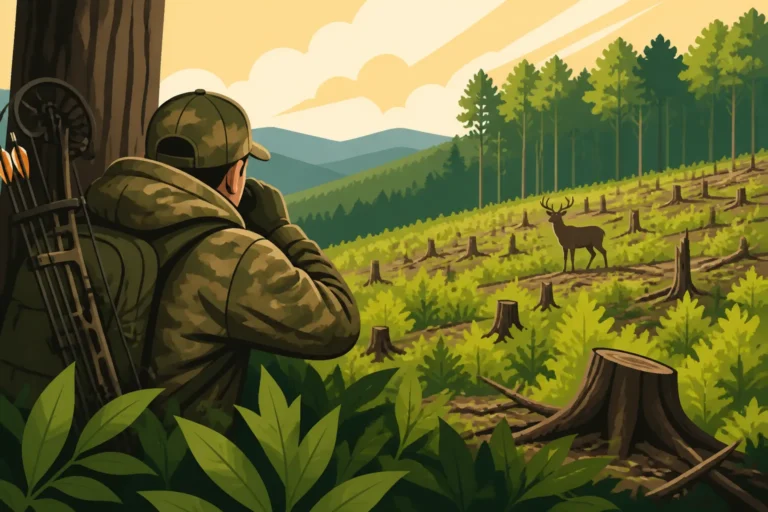
The struggle of finding consistent deer movement in West Virginia's rugged mountains is real. Hunters often spend countless hours slogging through steep hollows, only to find sparse sign or deer that seem to vanish before they can get a shot. This comprehensive guide is all about simplifying that challenge, focusing on how to effectively hunt saddles between two peaks, turning these natural funnels into prime ambush points for whitetails.
Understanding Mountain Saddles as Deer Magnets
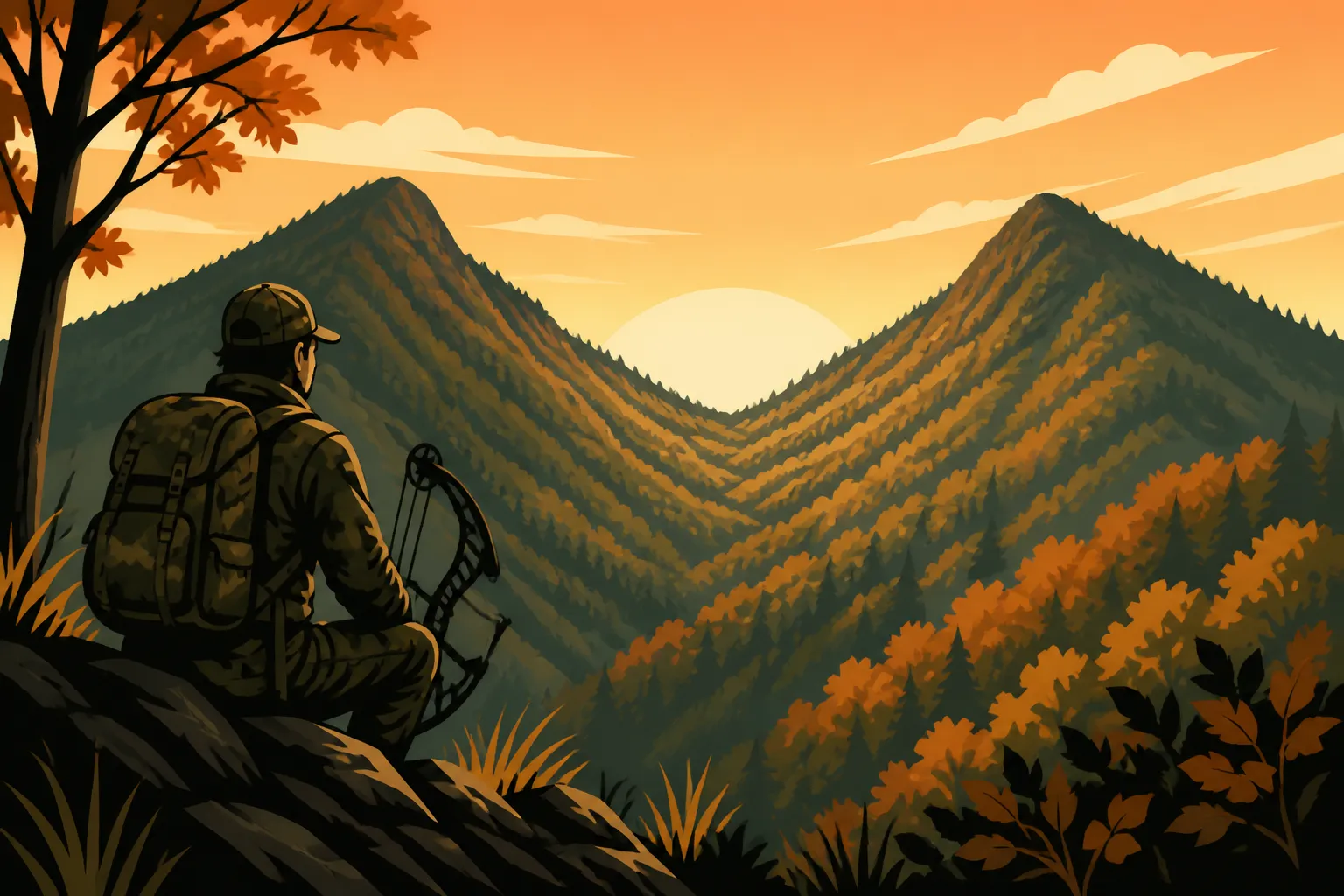
When you're trying to figure out how deer move through steep, broken terrain, think about their inherent laziness (or, more accurately, their incredible efficiency). Whitetails, especially mature bucks, aren't going to climb straight up and down a mountain if there's an easier way around or through. That's where saddles come into play. A saddle is essentially a low point, a dip, or a natural depression in a ridge line that connects two higher peaks or knolls. In the challenging topography of West Virginia, where steep Allegheny ridges dominate much of the landscape, these saddles become absolute highways for deer. They offer a less strenuous route for deer to travel between different parts of their home range, making them incredibly magnetic to deer movement.
Identifying Productive Saddle Features
Not all saddles are created equal, and this is where a little pre-season legwork and map study can really pay off. A truly productive saddle isn't just any dip in a ridge; it's one that connects specific, vital areas for deer. Think about it: a saddle becomes a goldmine if it links a preferred bedding area on one side of a mountain to a primary feeding area on the other. It's their shortcut, their easy button.
When you're scouting, look for additional features that might enhance a saddle's appeal. Are there secondary ridges or subtle benches that lead directly into the saddle? These act as feeders, funneling even more deer into that central travel corridor. Denser cover nearby, perhaps a thicket of laurel or a stand of pines, provides security for deer before and after they use the saddle, making them feel safer. Old logging roads or faint game trails that crisscross or run through the saddle are also huge indicators of frequent use. Sometimes, proximity to a reliable water source, even a small spring seep, can make an already good saddle even better, especially during dry spells. Tools like those offered by GoHunt can be invaluable here, allowing you to pore over topographical maps and aerial imagery, pinpointing these subtle features before you ever step foot in the woods. This digital scouting can save you miles of walking and help you focus your on-the-ground efforts.
How Deer Utilize Saddles for Travel and Security
Deer are masters of energy conservation and security. Saddles cater to both of these instincts perfectly. From a travel perspective, these dips in the terrain provide the path of least resistance. Instead of exerting valuable energy climbing over the highest point of a ridge, deer simply drop into the saddle and traverse the lower, flatter ground. This is particularly true for does and fawns, but bucks also rely heavily on these routes.
During the pre-rut and especially the peak of the West Virginia rut in November, saddles transform into prime cruising lanes for bucks. They'll use these elevated (but still relatively easy to navigate) corridors to scent-check for does on either side of the ridge, or to travel efficiently between different doe groups. A buck can cover significant ground with less effort, conserving energy for sparring or chasing. Beyond just travel, saddles often offer a strategic vantage point. While not always at the very top, the slightly elevated position within a saddle can provide deer with a good view of the terrain below, helping them detect predators or other threats while still being somewhat concealed by the rise on either side. It's a natural "pinch point" where deer movement is concentrated, forcing them into a predictable corridor that a savvy hunter can exploit. When deer feel pressure from hunters in one hollow, they'll often use a saddle to slip over to the next, making them vital escape routes as well.
Scouting Saddles for Optimal Stand Placement
Okay, so you understand why saddles are important. Now comes the hard part: finding the right saddle and figuring out where to sit. This isn't a "drive up and hunt" scenario in West Virginia's rugged backcountry. Effective saddle hunting demands diligent pre-season scouting, boots on the ground, and a keen eye for subtle details. The effort you put in now will directly translate to your success later, saving you countless hours of unproductive hunting. Don't be afraid to put in some serious legwork before the season even opens; it's the only way to truly understand deer movement in these complex areas.
Reading Sign for Recent Deer Activity
When you're walking through a saddle, you're not just enjoying the scenery; you're looking for a story written by deer. The ground and trees around you are covered in clues. Look for heavily used deer trails that converge in or pass directly through the saddle. Are there multiple trails? Are they worn down to dirt? The more defined the trail, the more frequently it's used. Keep an eye out for fresh deer droppings; their presence and freshness are a clear indicator that deer have been using the area recently.
During the pre-rut and rut, rubs and scrapes are your absolute best friends. A fresh rub line leading into a saddle, or a series of active scrapes within it, screams "buck activity." These are territorial markers and communication hubs, telling you a buck is actively working that corridor. Pay attention to how deer are working a scrape line along a logging road that might feed into a saddle. Don't just look for obvious sign; also scan for subtle clues like disturbed leaves, bent grass, or even a faint deer track in softer soil. You'll also want to look for bedding areas nearby – usually on a south-facing slope for warmth, or a thick, brushy bench for cover. Finding where Monongahela Forest bucks bed in relation to the saddle will give you a huge advantage for pinpointing morning or evening movements.
Understanding Wind and Thermals in Saddle Locations
This is, arguably, the most critical and often overlooked aspect of hunting West Virginia's mountain saddles. Wind and thermals in mountainous terrain can be incredibly unpredictable, swirling and shifting in ways that would make a flat-land hunter scratch their head in frustration. A saddle, by its very nature, acts as a funnel for air currents, making it both a blessing and a curse.
Understanding Wind and Thermals on a Steep Ridge is essential here. In the mornings, as the sun warms the earth, thermals generally rise, pulling your scent uphill. In the evenings, as the air cools, thermals tend to fall, carrying your scent downhill. But in a saddle, these general rules can be complicated by the way the wind is channeled between the two peaks. You might have a prevailing wind blowing from the west, but within the saddle, it could be swirling from the north or south, or even creating a downdraft when it hits the opposing ridge. This is why a simple wind checker isn't just a suggestion; it's an absolute necessity. You need to check the wind constantly, not just when you get to your stand, but throughout your sit. Your entry and exit strategies, which we'll discuss next, absolutely must account for these swirling winds, or you risk blowing out every deer in the area before you even climb into your stand. Many a hunter has been busted by a subtle thermal shift they didn't anticipate.
Strategic Hunting Approaches for Peak Saddles
Now that you've done your homework, scouted the terrain, and understood the nuances of wind and thermals, it's time to put your plan into action. Hunting a saddle effectively requires a combination of careful planning, strategic setup, and impeccable execution. The goal is to be invisible, silent, and in a position to capitalize when a deer decides to use that natural highway.
Setting Up for Success: Stand or Ground Blind Placement
Choosing between a treestand or a ground blind in a saddle really depends on the specific characteristics of the terrain, the available cover, and your personal hunting style. Both have their advantages and disadvantages in West Virginia's rugged mountains.
A treestand offers several benefits: you're elevated, which helps with scent control as your scent plume dissipates higher off the ground, and it often provides a better vantage point for spotting deer moving through the saddle. However, hanging a stand on a steep Allegheny ridge, especially in the gnarly, often crooked trees found in these areas, can be incredibly challenging and sometimes noisy. This is where lightweight, portable climbing sticks are crucial, allowing you to access suitable trees even if the bark is rough or the trunk isn't perfectly straight. Treestands are fantastic for intercepting bucks cruising through a saddle during the rut, or for those specific Treestand Setups in Monongahela National Forest where you have good cover.
Ground blinds, on the other hand, offer excellent concealment, especially if you can find a natural depression or thick cover to set up in. They also allow for more movement, which is a blessing on those long, cold late-season sits. You'll need to brush in a blind on a field edge or in dense cover, making sure it blends seamlessly with its surroundings. The downside is that your scent is closer to the ground, and your visibility might be limited, requiring more thought about clearing shooting lanes. Regardless of your choice, your placement within the saddle is paramount. Consider the prevailing wind direction for your specific stand location, not just the general area. Look for a tree or position that offers cover from multiple directions, especially from where deer are most likely to approach. Also, be mindful of the angle of your shot; elevated shots on steep ground require practice to ensure ethical hits. Remember that GoHunt mapping tools aren't just for scouting; you can use them to mark your precise stand locations and identify natural features that will help break up your silhouette.
Mastering Entry and Exit Routes Without Spooking Game
This is the make-or-break aspect of saddle hunting. You can find the best saddle in West Virginia, have the perfect stand setup, but if your entry and exit routes aren't absolutely dialed in, you'll educate and spook every deer in the area. Deer, particularly mature ones, are incredibly sensitive to human intrusion, and bumping them on your way in or out will render your spot useless for days, if not weeks.
Your primary goal is stealth and avoiding detection. Plan your route meticulously to avoid walking through obvious bedding areas or heavily used travel corridors. If you're hunting in the morning, approach from the downwind and, if possible, downhill side, allowing rising thermals to carry your scent away from where deer might be bedded or moving. For an evening hunt, reverse that, approaching uphill and downwind, letting falling thermals keep your scent low. But as we discussed, mountain winds are tricky, so always be prepared for shifts.
Move slowly, deliberately, and quietly. Every rustle of leaves, every snapped twig, sends a warning signal. Use natural terrain features like draws, creek bottoms, or the backside of small ridges for concealment. Think about it like a tactical infiltration. You want to appear out of nowhere and disappear just as quickly. A great analogy is hunting a funnel between two hollows; the principles of silent, wind-conscious movement are identical. Don't be afraid to take the long way around if it means maintaining stealth. For Cold-Weather Sitting Strategy in the Mountains, minimizing movement during entry and exit is also key to staying warm and effective. Getting in and out clean is more important than convenience.
Overcoming Common Challenges in Saddle Hunting
Even with the best planning and execution, hunting West Virginia's mountain saddles comes with its own set of unique challenges. These spots are deer magnets, yes, but that also makes them magnets for other hunters. Plus, Mother Nature in West Virginia is a fickle beast, and deer patterns can change on a dime. Being prepared for these realities is part of becoming a successful mountain hunter.
Dealing with Hunting Pressure on Prime Saddle Spots
Let's face it: West Virginia public land, especially prime deer habitat, can get crowded. And if you've found a truly outstanding saddle that funnels deer consistently, chances are someone else has too, or will. Opening Weekend Crowds on West Virginia Public Land will often gravitate to obvious features like saddles or visible logging roads, especially during buck gun season. The frustration of arriving at "your" spot only to find another truck parked there is something every public land hunter can relate to.
To mitigate this, you need to adapt. Consider hunting mid-week when pressure is typically lighter. Or, better yet, be willing to hike farther than most. Those saddles located a mile or two off the main trails often see significantly less pressure. Using mapping applications like GoHunt can help you identify lesser-known access points or subtle terrain features that might deter less determined hunters. Your mission becomes finding ground others walk past. This might involve navigating thicker cover, steeper slopes, or simply choosing a less obvious saddle that doesn't scream "deer highway" on a map but still holds promise based on your detailed scouting. The more effort you put in to reach those harder-to-get-to saddles, the less competition you'll generally face.
Adapting to Weather and Changing Deer Patterns
West Virginia weather is notoriously fickle, particularly in the mountains. One day it's unseasonably warm, the next a cold front rolls in bringing rain, or even early snow. These drastic shifts can significantly impact deer behavior and movement patterns. A saddle that was hot last week might be cold this week if the weather or food sources have shifted.
For example, after a poor acorn year, deer might not be using saddles as much if they're focused on alternative food sources lower in the hollows or in agricultural fields. Conversely, a sudden Hunting Deer After a Cold Front can ignite deer movement, making those saddles incredibly active as deer move to feed and seek out does. During the peak of the rut, saddles become even more critical, regardless of some weather fluctuations, as bucks are constantly on the move. Your job is to be flexible and constantly assess the conditions. This means checking the forecast daily, understanding how specific weather events might influence deer, and being willing to shift your strategy or location if needed. Your gear choices are also paramount. Layering strategies, as discussed in Clothing for a West Virginia Late Season, are essential for staying comfortable and effective when the mountain weather decides to throw everything it has at you.
Ultimately, hunting a saddle between two peaks in West Virginia is a dynamic, challenging, and incredibly rewarding endeavor. It combines strategic thinking, physical exertion, and a deep understanding of deer behavior and mountain conditions.
| Saddle Feature | Advantage for Deer | Hunter's Consideration | Optimal Approach |
|---|---|---|---|
| Natural Travel Corridor | Easiest path between peaks/ridges | Position stand to intercept predictable travel | Set up on downwind side, 20-30 yards off main trail |
| Elevated Viewpoint | Security and observation of surroundings | Offers hunter good visibility, but also exposes them | Use natural cover, break up silhouette, wear camo |
| Wind Funnel | Concentrates scent from below, aids detection | Swirling winds require careful planning, scent control | Constantly monitor wind/thermals, adjust position if needed |
| Connecting Bed/Feed | Direct route between vital areas | Key for morning/evening hunts, high traffic times | Hunt during transition times (dawn/dusk) and rut |
| Dense Cover Nearby | Escape routes, bedding cover | Provides ambush points, but also hides deer | Set up on the edge of cover, focus on shooting lanes |
Disclaimer
The information provided in this guide is for general educational purposes only and is not intended as legal advice. Hunting regulations, seasons, and licensing requirements in West Virginia can change. Always consult the latest West Virginia Division of Natural Resources (WVDNR) hunting regulations and local ordinances before engaging in any hunting activities. Adherence to all safety guidelines and ethical hunting practices is paramount.