Hunting Standing Cover Left After Harvest
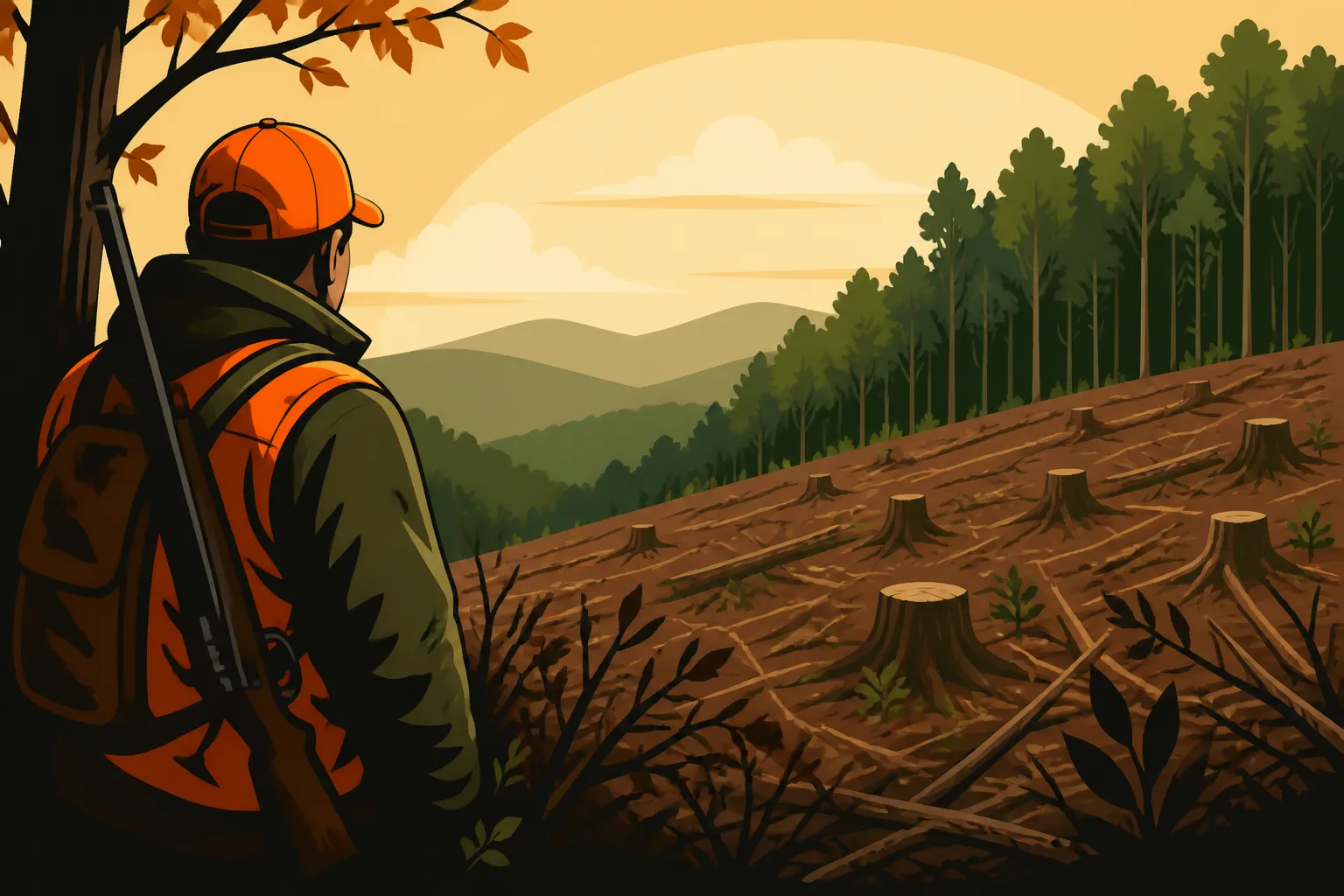
It's late season in West Virginia, and the combines have been through, leaving behind a barren landscape where once stood acres of prime deer cover. You're left wondering where all those bucks and does have vanished to. This guide dives deep into the incredible value of those often-overlooked patches of standing cover – be it a stubborn strip of corn, a forgotten brush row, or a thicket bordering a cut field – and how you can effectively hunt them to tag your deer.
The Lure of Leftover Cover: Why Deer Hide Here
When the big machinery rolls through and changes the landscape overnight, deer don't just disappear; they relocate to the nearest available security and food. Those seemingly insignificant patches of standing cover that were spared the harvest become absolute magnets for whitetails seeking refuge and sustenance.
Thermal and Security Blanket
Imagine being a deer in late November or December in West Virginia. The wind can cut right through you, and those frigid mountain nights are no joke. Standing cover, especially tall crops like corn or dense brush thickets, offers a critical thermal buffer against the elements. It breaks the wind, traps a bit of warmth, and gives deer a place to escape the biting cold. They're not just looking for warmth, though; they're looking for safety. After the fields are laid bare, deer feel incredibly exposed. These remaining pockets of cover provide a crucial sense of security, allowing them to bed down or move with less fear of being spotted by predators – including us hunters. You'll often find deer using these strips as invisible highways, moving from bedding areas to food sources completely out of sight. It's a natural instinct for them to seek out the densest, most secluded spots left.
Remnant Food Sources
Even after a field is harvested, it's rare that every single kernel or berry is taken. Standing corn, for instance, often leaves behind shattered grain on the ground, or even entire ears missed by the combine. These scraps might seem minor to us, but for a deer looking to pack on calories in the late season, they're gold. Beyond the immediate crop, the undisturbed soil and undergrowth within these unharvested sections can hold other small forage, like persistent weeds, leftover browse, or even the occasional insect and grub. These aren't just empty hiding spots; they're often mini-buffets, providing a reason for deer to linger longer than you might expect. Don't underestimate the nutritional value of what's left behind, especially when other easily accessible food sources like acorns might be long gone or covered by snow.
Funnels and Travel Corridors
One of the most valuable aspects of standing cover is how it dictates deer movement. In a vast, open field, deer can cross anywhere, making them unpredictable. But when you have a long, narrow strip of standing corn or a thick brush line left between two harvested areas, it creates a natural funnel. Deer will almost invariably follow the path of least resistance and greatest concealment. These patches become predictable travel corridors connecting bedding areas to remaining food plots or other distant cover. Often, this cover will naturally border other terrain features like a creek bottom, a logging road, or the base of a ridge, further channeling deer into tight, identifiable lanes. Learning to read these natural bottlenecks is key to Hunting a Funnel Between Two Hollows or understanding how deer navigate the landscape after major changes.
Scouting and Strategy for Standing Cover
Successfully hunting these specific cover types requires a nuanced approach, blending pre-season foresight with post-harvest adaptability. It’s not just about stumbling upon a patch of cover; it's about understanding how deer will use it.
Pre-Season and Post-Harvest Reconnaissance
The best time to start scouting for these opportunities is actually before the harvest, if possible. Identify fields that tend to leave strips of standing corn, or fence rows that are perpetually thick with brush. This initial reconnaissance helps you anticipate where deer will likely relocate. After the harvest, however, is when the real work begins. Hit the ground running, looking for fresh sign around the perimeter of these remaining cover patches. Pay close attention to tracks entering and exiting, fresh rubs on small trees, and late-season scrapes that might indicate a buck still cruising for does. Tools like GoHunt or similar mapping applications are incredibly helpful here. You can identify field edges, brush lines, and unharvested pockets from an aerial view, saving you valuable boots-on-the-ground time. Use these maps to mark potential stand sites or blind locations, paying attention to prevailing winds and known deer trails. Remember, fresh deer sign immediately after harvest is a golden ticket, telling you exactly where the deer have decided to make their new home. You might even find where Monongahela Forest Bucks Bed by studying similar thickets in national forest lands.
Wind, Thermals, and Approach
No matter how good your chosen patch of standing cover is, ignoring the wind and thermals will send deer scattering every time. When hunting these often linear or isolated pieces of cover, wind direction is paramount. You need to position yourself so your scent is blowing away from where you expect deer to approach or bed. This often means hunting on the downwind side of a predominant travel corridor within the cover. West Virginia's rugged, hilly terrain adds another layer of complexity with thermals. In the mornings, cold air sinks into hollows and draws, carrying scent downhill. In the evenings, as the air warms, thermals rise, taking your scent uphill. Understanding Wind and Thermals on a Steep Ridge is crucial even when hunting flat field edges that might be adjacent to a slope. Always plan your entry and exit routes meticulously. Deer in these confined spaces are incredibly wary, and a noisy, scent-laden approach will blow your hunt before it even starts. Walk slowly, use natural terrain features for concealment, and avoid silhouetting yourself against the sky.
Stand Placement and Ground Blind Tactics
Once you’ve identified promising areas and understood the wind, it’s time to think about your setup. For tree stand hunting, look for trees that offer good concealment and a clear shot into the cover or along its edges. Downwind of dominant trails, overlooking pinch points where the cover narrows, or where the standing cover meets an open area are classic setups. Make sure your stand is high enough to avoid detection but still allows for an ethical shot. If viable trees are scarce, or if you prefer a more concealed approach, ground blinds can be incredibly effective. Whether it's a pop-up blind or a natural setup you've built yourself, the key is proper brushing in. Make it blend seamlessly with the surrounding environment. Brushing In a Blind on a Field Edge ensures that deer don't suddenly encounter an unnatural structure. Always consider the sun's position throughout your hunt. You don't want to be silhouetted by the morning or evening sun, nor do you want direct sun glare in your eyes when that big buck finally steps out.
Tactical Hunting Approaches in Leftover Cover
Hunting standing cover requires adaptability and often a more intimate approach. You won't always be glassing vast distances; sometimes, you'll be within spitting distance of your quarry, which makes every move count.
Still-Hunting the Edges and Interior
Still-hunting is perhaps one of the most effective and rewarding ways to hunt these specific types of cover. This isn't about rushing through the woods; it's about moving at a snail's pace, taking one or two steps, then pausing for several minutes to scan, listen, and simply observe. Focus intently on the downwind edges of standing corn, thickets, or brush rows. Deer often feel secure enough to feed or bed just inside these edges. Look for subtle movements—an ear flick, a tail twitch, the horizontal line of a deer's back against the vertical lines of cover. Use your binoculars constantly, even at close range, to pick apart the cover. If the cover is dense enough, you can even still-hunt the interior, but this requires extreme stealth and a keen eye. Think of it as stalking, but with even more patience. You might spend an entire morning covering just a few hundred yards. This slow, deliberate method is fantastic for areas where deer are heavily pressured and are relying on the thick cover for survival. It's a skill that pays off, particularly when you're Still-Hunting Cranberry WMA Ridges or other similar dense public land.
Small-Scale Deer Drives
Sometimes, the cover is just too thick to effectively still-hunt alone, or deer are simply not moving. This is where a small, well-executed deer drive can be incredibly productive. These aren't the large, noisy drives you see in some hunting shows; we're talking about two to four hunters working a contained patch of cover. The goal is not to push deer out wildly, but to gently nudge them past strategically placed standers. One or two hunters act as "pushers," moving slowly and deliberately through the cover, making just enough noise to encourage deer to move. Meanwhile, one or two "standers" are positioned downwind, overlooking likely escape routes or pinch points where deer will try to slip out. Communication is key, often through two-way radios or pre-determined signals. Safety is paramount: always know where your partners are and have a clear understanding of shooting lanes and zones of fire. This tactic is especially effective in smaller, isolated blocks of standing cover that deer are using as a daytime refuge. It’s a great option for Deer Drives With Three or Four Hunters on public land, where you want to be efficient and strategic.
Leveraging Late-Season Food and Water
As the season progresses into late fall and early winter in West Virginia, understanding a deer's core needs for food and water becomes even more critical. Standing cover doesn't just provide concealment; it often harbors the last vestiges of available nutrition. This might be waste grain from a harvested crop, or browse that is simply better protected from heavy snow or frost within the dense cover. By scouting thoroughly, you can identify these specific "hot spots" within the standing cover where deer are actively feeding. Furthermore, water sources become increasingly important. When small ponds freeze over and ephemeral streams dry up, deer will concentrate around reliable water. If a patch of standing cover is adjacent to a spring, a flowing creek, or a section of river, it becomes a dual-purpose haven. Hunting these areas, especially during cold snaps, can be incredibly productive, as deer will not travel far from their food, water, and security blanket. It’s all about putting yourself between Late-Season Food Sources for West Virginia Whitetails and the protective cover they desperately need.
Gear Considerations for Standing Cover Hunting
The right gear can make or break your hunt in these often tight, cold, and wet conditions. Stealth, warmth, and quick handling are your best friends when pursuing deer in standing cover.
Clothing and Footwear for Stealth and Warmth
When you're still-hunting inches away from a deer or sitting tight in a small thicket, noise is your enemy. Choose quiet, layered clothing that won't rustle or snag as you move through brush or over crunchy leaves. Wool or fleece are excellent choices for outer layers because they're inherently quiet and provide good warmth, even when damp. Scent control is also paramount. Deer in these tight spots will be close, and any human odor can alert them instantly. Wear scent-eliminating clothing or spray down thoroughly. As for footwear, West Virginia's late season can be brutal, with cold rain, snow, and wet ground. Insulated, waterproof boots are non-negotiable. Look for boots with good traction for navigating potentially slippery conditions in creek bottoms or on frozen ground. Rubber boots are often preferred for keeping your feet dry and minimizing scent transfer. Remember, a miserable hunter is a distracted hunter, and you need to be focused when that buck slips out of the standing corn.
Weapon Choice and Optics
The dense nature of standing cover often means shots will be at close to moderate ranges, and quick target acquisition is vital. This is where your weapon choice can make a big difference. For archery hunters, a bow or crossbow is ideal. They are inherently quieter and excel at short-range shots, allowing you to thread an arrow through gaps in the cover. Ensure your broadheads are sharp and your shot placement is precise, as opportunities can be fleeting. If you're using a firearm, a shotgun with slugs or a short, maneuverable rifle (like a lever-action .30-30 or a compact bolt-action) can be perfect. These are easy to handle in thick brush and allow for quick, confident shots. For optics, resist the urge for high magnification. A low-power rifle scope (1-4x or 2-7x) or even a red dot sight on a shotgun or crossbow will give you a wide field of view and rapid target acquisition in close quarters. You need to be able to find your target quickly without having to fiddle with magnification. Finally, always carry a powerful headlamp. Blood Trailing After Dark in West Virginia through dense cover is a challenge, and a reliable light source is critical for safe and successful recovery.
| Feature | Still-Hunting Standing Cover | Small-Scale Deer Drives |
|---|---|---|
| Hunters Needed | 1 (or 2-3 loosely spread) | 2-4 (pushers and standers) |
| Approach | Slow, methodical, silent, observation-focused | Coordinated, controlled movement to funnel deer |
| Best Conditions | Crisp, calm days; light snow; downwind movement | Deer are bedded tight; when other tactics fail; windy days |
| Primary Goal | Spotting bedded or subtly moving deer before they see you | Moving deer past stationary, well-positioned hunters |
| Ideal Cover Type | Any dense cover patch (corn, brush, thickets) | Contained, well-defined pockets of cover |
| Risk Factors | Spooking deer due to noise/scent; missing subtle cues | Safety (knowing locations); deer breaking out unexpectedly |
| Pros | High stealth, intimate hunt, often targets bedded deer | Effective for moving stubborn deer, good for smaller groups |
| Cons | Requires extreme patience; can be slow; easy to miss deer | Requires coordination; safety concerns; can be noisy |
| Key Gear | Quiet clothing, good optics, compass/GPS, patience | Radios, blaze orange, clear communication, pre-scouted routes |
Disclaimer
Hunting is an inherently dangerous activity. Always prioritize safety by adhering to all West Virginia hunting regulations, wearing appropriate blaze orange (where required), and maintaining clear communication with hunting partners. The information provided in this guide is for educational and informational purposes only and should not replace professional instruction or personal judgment. Always hunt ethically and legally.