Squirrel Hunting a West Virginia Oak Ridge
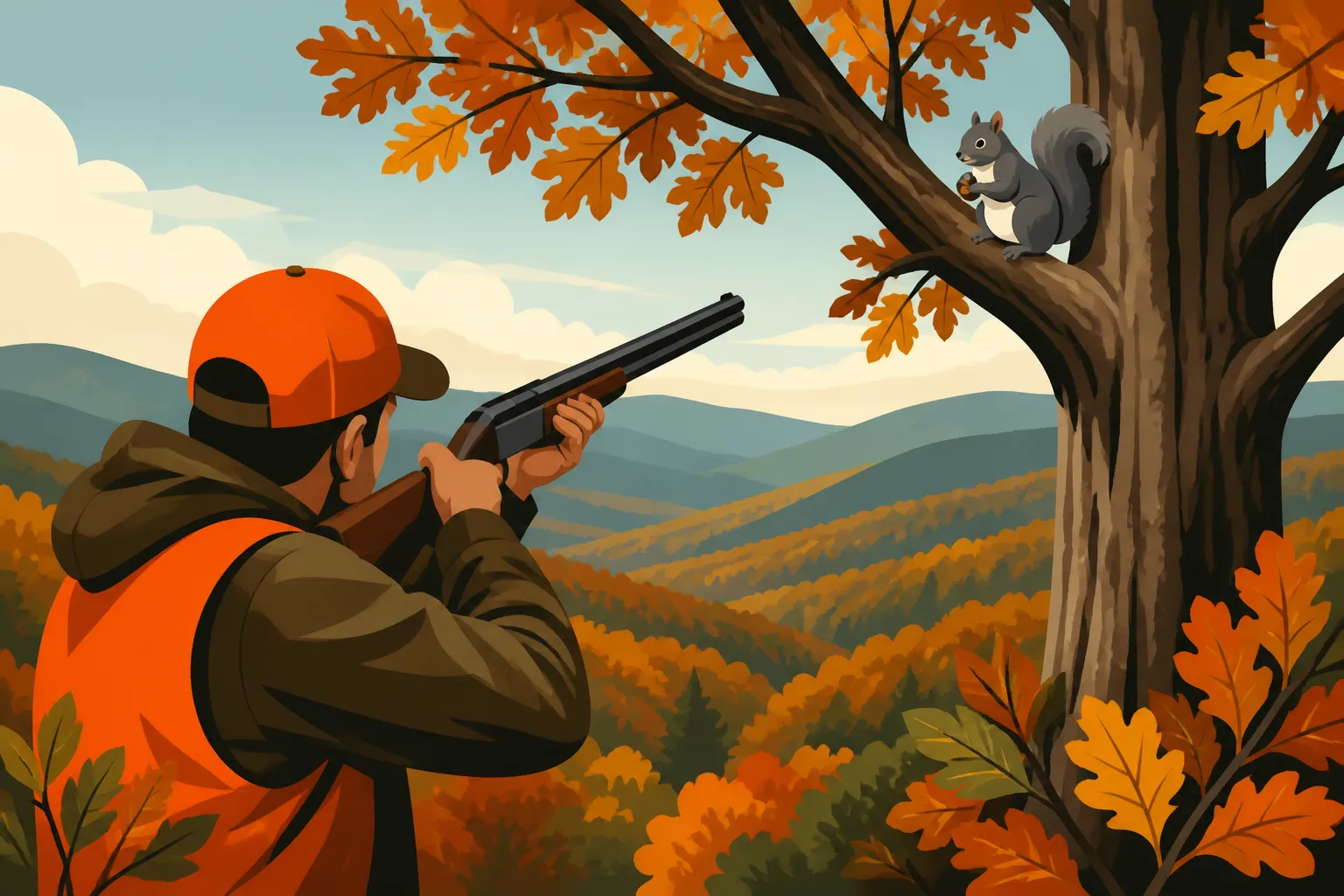
There's a special kind of magic that settles over West Virginia's oak ridges when the fall colors start to paint the mountainsides, and with it comes the tell-tale sign of busy squirrels. Many hunters find themselves frustrated, however, trying to pinpoint where these elusive bushy-tails are most active amidst a forest full of towering oaks. This comprehensive guide will walk you through the nuances of scouting, tactics, and essential gear to make your squirrel hunting experience on a West Virginia oak ridge both productive and incredibly rewarding.
Understanding West Virginia's Oak Ridges as Squirrel Habitat
West Virginia is truly a hunter's paradise, and its diverse hardwood forests, particularly the expansive oak ridges, are prime real estate for squirrels. These ridges aren't just pretty scenery; they're bustling cafeterias and safe havens for gray and fox squirrels, provided you know what to look for and when. It's all about the acorns, and understanding the different oak species and their unique cycles is your first step to success.
Identifying Key Oak Species
Our mountains are home to a variety of oak trees, and not all acorns are created equal in the eyes (or mouths) of a squirrel. Generally, oaks fall into two main categories: white oaks and red oaks. White oaks, like the beloved white oak, chestnut oak, and swamp white oak, produce acorns that are less bitter, lower in tannic acid, and preferred by most wildlife. These acorns mature and drop in a single growing season, usually starting in early fall. Red oaks, which include species like northern red oak, scarlet oak, and pin oak, have acorns that take two years to mature and contain higher levels of tannins, making them more bitter. Squirrels will still eat red oak acorns, especially later in the season or during years of poor white oak production, but they're typically not the first choice.
Knowing the difference is critical because it dictates when and where squirrels will concentrate. Early in the season, when the white oak acorns begin to drop, those specific trees will be buzzing with activity. Later, as the white oak supply dwindles, squirrels will turn their attention to the red oaks, which often hold their acorns longer into the winter months. Take the time to learn the leaves and bark patterns; a quick glance at the forest floor or canopy can tell you a lot about the menu for the day.
Why Acorns are Squirrel Magnets
For squirrels, acorns are the ultimate energy source, packed with carbohydrates, fats, and proteins essential for surviving the lean winter months. They are simply irresistible. Think of an oak ridge as a grocery store for squirrels—a place where they can gather a massive amount of high-calorie food efficiently. They'll spend their days burying acorns for future use, caching them in tree hollows, and, of course, eating them on the spot.
This intense focus on acorns means that if you find a ridge where the oak mast is dropping, you've found where the squirrels will be. They'll travel surprising distances from their dens to feed in a productive oak stand. The rustling of leaves as they scamper, the sound of falling acorns, and the tell-tale "cuttings" on logs or rocks are all undeniable indicators that you're in the right place. These food sources are not only vital for survival but also for reproduction, driving the overall population health of White-Tailed Deer Across West Virginia and other forest inhabitants.
Seasonal Acorn Cycles and Squirrel Behavior
The timing of your hunt profoundly impacts squirrel behavior. Early fall, when the first white oak acorns begin to drop, is often frenetic. Squirrels are in a harvesting frenzy, preparing for winter. This is when you'll see them most active from dawn until mid-morning, and again in the late afternoon. They'll be on the ground, scurrying up and down trees, and generally highly visible.
As the season progresses, and especially after a good hard frost, much of the mast has either been consumed or cached. Squirrels might become a bit more wary, and their activity could shift to more subtle foraging, perhaps digging up buried nuts or relying on red oaks. In a year where there's been Hunting After a Poor Acorn Year, squirrels might be even more spread out, desperately searching for any available food, which can make them harder to locate in concentrations. Later in the season, especially in the cold snap of December, you'll often find them hunkered down during the coldest parts of the day, only venturing out during warmer spells or when driven by hunger. Understanding these cycles helps you plan your hunt for optimal activity.
Reading the Sign and Locating Squirrels
The true art of squirrel hunting on an oak ridge isn't just walking until you see one; it's about becoming a detective, reading the subtle clues that the forest offers. Squirrels leave a breadcrumb trail of activity, and by recognizing these signs, you can dramatically increase your chances of finding them, even before you hear a single chatter.
Fresh Cuttings and Middens
This is perhaps the most obvious and valuable sign you'll find. Squirrels don't just eat an acorn whole; they meticulously peel away the shell, leaving behind distinct fragments. These are called "cuttings." A "midden" is simply an accumulation of these cuttings. When you find a log, rock, or stump covered in fresh acorn shell fragments, you've found a squirrel's dining table. The fresher the cuttings, the more recently a squirrel has been feeding there.
Look closely: are the edges of the shell fragments crisp and still light-colored? Or are they weathered, dark, and brittle? Fresh cuttings often still have a slight moisture to them. The size of the fragments can even give you a hint about the nut type. Larger, thicker pieces might indicate hickory or black walnut, while smaller, thinner pieces are typically from acorns. If you find a midden of fresh white oak cuttings, you know you’re in a hotspot. For a deeper dive into this crucial scouting technique, check out our guide on Reading Cuttings Under an Oak.
Den Trees and Nests
While squirrels will travel to feed, they don't wander too far from home. Identifying den trees and nests (dreys) helps you understand the core population in a specific area. Den trees are typically mature hardwoods with natural cavities—often old oak or maple trees with broken limbs or large knot holes. Squirrels use these cavities for shelter from predators and harsh weather, and for raising their young. Dreys, on the other hand, are leaf nests constructed in the crooks of tree branches, often high up. They look like messy bundles of leaves and twigs.
While dreys offer less protection than a tree cavity, they are used year-round for shelter and sometimes for rearing young. If you find multiple den trees or dreys clustered on a ridge, it indicates a healthy, established squirrel population in that vicinity. When scouting, especially with a tool like the GoHunt app that allows you to mark waypoints, it’s a great idea to pin these locations. They can give you clues about where squirrels might retreat to when spooked or where they’ll emerge from in the morning.
Tracks and Trails
Although not as clear as deer tracks, squirrels do leave discernible signs on the forest floor, especially in soft earth, mud near water sources, or a light dusting of snow. Their tracks show four toes in the front and five in the back, often with a bounding gait where the hind feet land ahead of the front feet. More importantly than individual tracks, look for "squirrel trails" or "highways." These are often subtle paths, worn smooth by countless tiny paws, connecting den trees to primary feeding areas or water sources.
These trails might wind along the base of a ridge, cross a small saddle, or follow a barely perceptible bench cut. Learning to spot these faint lines of travel can direct you to high-traffic areas. When combining this with evidence of cuttings and den trees, you start to paint a complete picture of squirrel movement patterns on the ridge.
Using Technology for Scouting
Modern technology has become an invaluable asset for hunters, even for something as traditional as squirrel hunting. Mapping apps, like the GoHunt platform, allow you to study topo maps and aerial imagery of West Virginia's public lands right from your phone or computer. Before you even set foot in the woods, you can identify potential oak ridges, saddles, and hollows that might serve as natural funnels or high-activity zones.
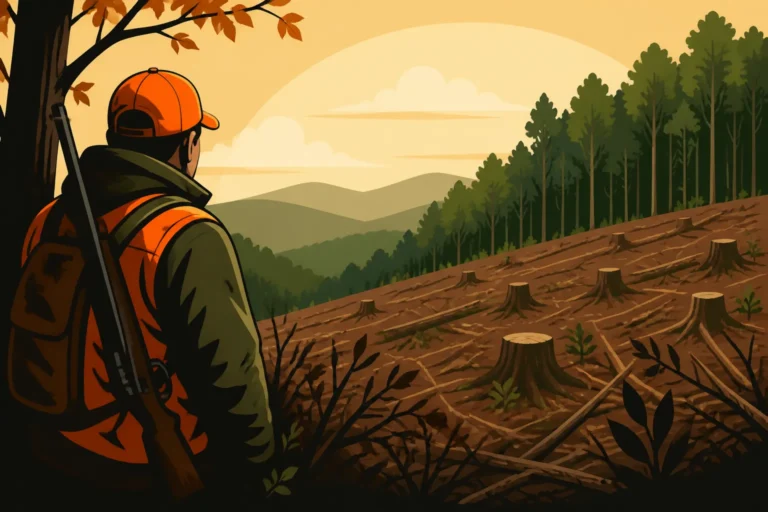
You can mark promising areas identified from old aerial photos (where clear cuts or distinct timber stand types are visible), pinpoint known den trees, or note areas where you found significant fresh cuttings. This pre-season scouting, as detailed in our guide Scouting West Virginia Public Land Before Season, helps you arrive on opening day with a solid plan, rather than just wandering aimlessly. Using these digital tools also lets you verify property boundaries, ensuring you're always hunting legally on designated public land or with permission on private ground.
Effective Hunting Tactics on Oak Ridges
Once you've done your scouting and understand the lay of the land, it's time to put boots on the ground. Squirrel hunting on West Virginia's oak ridges demands a blend of patience, stealth, and sometimes, a little vocal persuasion. The key is adapting your approach to the conditions and the squirrels' mood.
Still-Hunting Strategies
Still-hunting is arguably the most effective tactic for squirrel hunting on a ridge, especially when the mast is actively dropping. It's a slow, deliberate method of moving through the woods, pausing frequently to observe and listen. The rhythm goes something like this: take a few extremely slow steps, then stop for several minutes. During your stops, scan every branch, every tree trunk, and listen intently for the subtle rustle of leaves, the bark of a squirrel, or the delicate sound of acorn pieces hitting the ground.
The secret here is patience and using your ears as much as your eyes. When still-hunting, always try to move into the wind or crosswind, if possible, to keep your scent from drifting ahead and to make it harder for squirrels to hear your approach. Focus on the ground first for fresh cuttings, then slowly scan up the trees. If you spot a squirrel, resist the urge to rush. Sometimes, simply freezing in place will cause a squirrel to forget you're there and resume its activity, offering you a better shot. This patient approach is similar to Still-Hunting Cranberry WMA Ridges for larger game, just scaled down for smaller quarry.
The Art of the Sit and Wait
Sometimes, the best approach is to find a prime feeding area, set up comfortably, and let the squirrels come to you. This "sit and wait" tactic works wonderfully in areas where you've found abundant fresh cuttings, or if you've located a cluster of white oak trees actively dropping acorns. Choose a spot with good visibility, ideally against a wide tree trunk for concealment, or tucked into some thick undergrowth.
Early mornings, especially just after dawn, are often the best times for a sit. Squirrels are usually at their most active then, eager to begin their day's foraging. Stay still, minimize movement, and scan. You'll be amazed at how many squirrels emerge once you've been quiet for a while. A small, portable hunting stool or cushion can make a world of difference for comfort during longer sits. While not always necessary for squirrels, the principles of setting up a hidden position are well covered in our guide to Using a Ground Blind on West Virginia Public Land. Just remember to dress warmly enough for extended periods of inactivity, especially during cooler fall mornings.
Calling Squirrels
Yes, you can call squirrels! While not as popular as turkey or deer calling, squirrel calls can be incredibly effective, especially if activity has slowed or you're trying to locate a wary squirrel. The most common calls mimic a squirrel's chatter or bark. A good squirrel call can often entice a curious squirrel to reveal its position or even come closer.
There are various types, from bellows calls to bark-shaker calls. A series of sharp barks can often get a response from a squirrel that's seen you or heard you, making it bark back and giving away its location. A soft, continuous chatter can sometimes convince a distant squirrel that all is well, drawing it closer. Just like any calling, don't overdo it. Use calls sparingly and listen carefully for a response before trying again.
Navigating West Virginia's Steep Terrain
Hunting West Virginia's oak ridges often means dealing with significant elevation changes. These aren't flat, easy walks in the park! The steepness can present both challenges and opportunities. For starters, it makes moving quietly much harder. Loose leaves and rocks on a steep incline can be noisy, so pick your footfalls carefully.
Understanding Wind and Thermals on a Steep Ridge is also paramount. In the mornings, cold air sinks down the hollows, creating a downward thermal draft. As the sun warms the slopes, the thermals reverse and begin to pull scent uphill. Factor this into your approach to avoid spooking game. Also, look for benches or less severe slopes that run horizontally across the ridge—these are often natural travel corridors for squirrels and other game. When contemplating the challenges of these mountains, it's worth reviewing how best to hunt Hunting Steep Allegheny Ridges for any game species. Don't be afraid to use trekking poles for stability and to reduce fatigue on those long, uphill climbs.
Essential Gear for Oak Ridge Squirrel Hunting
You don't need a massive amount of specialized gear to hunt squirrels, but having the right tools for the job can significantly enhance your comfort, safety, and success, especially when navigating West Virginia's rugged terrain.
Firearm and Ammunition Choices
For squirrel hunting, the .22 LR rifle is the classic choice, and for good reason. It's accurate, quiet, and economical, allowing for precise headshots that preserve meat. Many hunters prefer a bolt-action or semi-automatic .22, topped with a low-power scope (e.g., 4x or 2-7x variable) for better visibility in the dense timber and for more precise aiming. Ensure your .22 is sighted in accurately at 25 or 50 yards, as most shots will be in this range.
Alternatively, a shotgun, typically a 20-gauge or .410, loaded with small shot (like #6 or #7.5), can be effective, especially for squirrels moving quickly through branches or for hunters who prefer a larger pattern. Shotguns are also a good choice in very thick cover where precise rifle shots are difficult. Whatever you choose, practice with your firearm before hitting the woods to ensure you're comfortable and proficient.
Optics and Hearing Protection
A good pair of binoculars, even a compact 8×20 or 10×25, can be incredibly useful. Squirrels often blend into the bark or freeze perfectly still, making them hard to spot with the naked eye. Binoculars allow you to scan tree trunks and canopies, picking out the subtle twitch of an ear or the outline of a bushy tail. They are essential for confirming whether that bump on a branch is a squirrel or just a knot.
Hearing protection is also a must, especially if you're using a rifle. Even a .22 LR can cause hearing damage over time. Lightweight earplugs or electronic earmuffs are both excellent options. Electronic earmuffs have the added benefit of amplifying ambient sounds like squirrel barks and rustling leaves while still protecting your hearing from gunshots, making them ideal for still-hunting.
Clothing and Footwear
Layering is key for West Virginia's unpredictable fall weather. Mornings can be chilly, but by midday, you might be shedding layers as you climb ridges. Start with a moisture-wicking base layer, add an insulating mid-layer (fleece or wool), and top it off with a durable, quiet outer layer that offers some wind and water resistance. Camouflage is beneficial, but even earth-toned clothing that blends with the forest can work. Remember to check the West Virginia Blaze Orange Requirements for small game, as this may vary from other seasons.
For footwear, a comfortable, supportive, and waterproof pair of hunting boots is non-negotiable. You'll be doing a lot of walking over uneven, potentially slippery terrain, from slick leaves to wet rocks and muddy patches. Ankle support is crucial to prevent twists and sprains. Our guide Boots for Walking West Virginia Ridges offers excellent advice on choosing the right pair for our mountains.
Carrying Your Harvest and Essentials
A small daypack is essential to carry your gear and, hopefully, your harvest. Look for a pack that's comfortable, quiet, and offers enough capacity for water, snacks, extra layers, a small first-aid kit, and a game bag for your squirrels. A simple mesh game bag or even a plastic grocery bag can work to keep your squirrels clean and separated from other gear.
You'll also want to carry a sharp knife for field dressing, which helps cool the meat quickly, especially on warmer days. A small map (physical or digital, like on GoHunt) and a compass or GPS are also wise, as it's easy to get disoriented in the winding hollows and ridges. For general pack advice applicable to many hunting scenarios, consider reading our insights on Choosing a Daypack for a Backcountry Bear Hunt. Don't forget bug spray, especially in the early fall when ticks can still be active.
Disclaimer
Please remember that hunting regulations and seasons can change. Always consult the latest West Virginia Division of Natural Resources (WVDNR) hunting regulations before heading afield. Ensure you have the proper licenses and stamps. Safety should always be your top priority.