Breaking Up a Fall Turkey Flock
Fall turkey hunting can feel like a completely different ballgame compared to the spring season. Instead of eager gobblers strutting and sounding off at every call, you're often dealing with silent, wary flocks that seem to vanish into the timber the moment they sense a disturbance. The frustration is real when you spend hours scouting, finally locate birds, and then they melt away without a peep. But here's the secret weapon for autumn success: mastering the art of breaking up a fall turkey flock and calling those birds back in. This guide will walk you through the essential strategies to turn those disappearing acts into exciting, close-range encounters.
Understanding Fall Turkey Dynamics: Why the Break-Up is Key
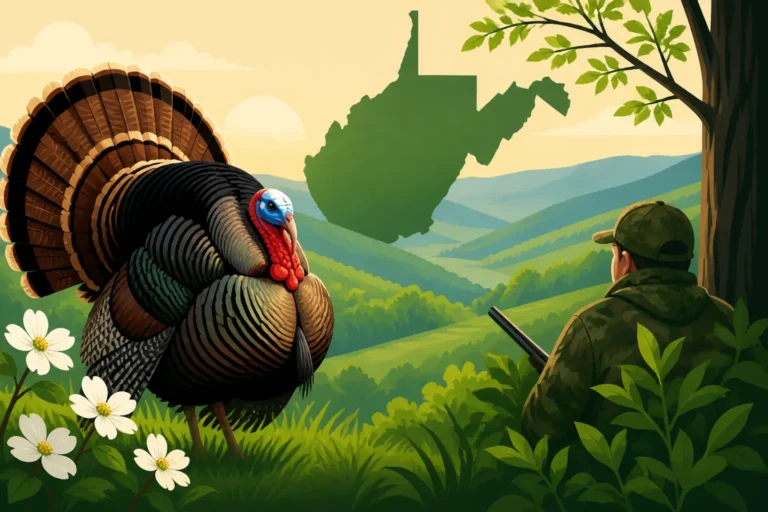
Unlike the springtime pursuit of lovesick gobblers, fall turkey hunting revolves around the tight-knit family units that dominate the landscape. These flocks, typically made up of a hen and her poults from the spring hatch, or sometimes groups of jakes or even mature gobblers, operate with a strong sense of security in numbers. Their primary instinct is survival, and they stick together for protection, feeding, and roosting.
The Flock Mentality: Safety in Numbers
Imagine a group of twenty turkeys, all constantly alert, with dozens of eyes and ears scanning the woods for danger. That's a fall flock. They move through the timber, scratching for acorns, grubs, and insects, communicating with subtle clucks and purrs, but rarely anything louder unless they're genuinely alarmed. Their strength is their collective vigilance. Trying to call a whole, undisturbed flock to you in the fall is usually an exercise in futility. They have no reason to break ranks; they already have everything they need right there with their family. This is why a direct, aggressive approach is often necessary, counterintuitive as it might seem to some traditional turkey hunters.
The "Lost Bird" Instinct: Your Hunter's Edge
The moment you forcefully scatter a flock, you instantly dismantle that sense of security. Individual birds are suddenly alone, disoriented, and vulnerable. This triggers a powerful, innate urge to regroup with their family. A poult, separated from its mother, will become anxious and start giving soft, pleading calls, often a "kee-kee" or a "kee-kee run." Hens will begin issuing "assembly yelps" to gather their brood. This primal need to re-establish the flock connection is the cornerstone of successful fall turkey hunting. Without the initial, violent break, this crucial calling sequence would never even begin.
Contrasting Fall and Spring Behavior
It’s vital to distinguish between spring and fall turkey behavior. In spring, the male turkey (gobbler) is the prize, driven by the urge to breed. He's looking for hens, and a hunter mimics a hen to draw him in. Vocalizations are often loud and assertive. In fall, however, the focus shifts. You're no longer primarily after a gobbler's ego, but rather exploiting the flock's instinct to stay together. The calls you'll use—primarily the kee-kee run and assembly yelp—mimic lost young birds or a mother hen, not necessarily a seductive hen looking for a mate. This fundamental difference in motivation means that tactics, calls, and even your setup must adapt drastically. If you try to hunt fall turkeys like you hunt spring turkeys, you'll likely be met with silence and disappointment. This isn't about outsmarting a single bird; it's about disrupting a whole social structure and then patiently appealing to deep-seated family bonds.
Executing the Break: Tactics for Scattering a Flock
The moment of truth in fall turkey hunting is the actual break. This isn't a subtle finessing of calls or a patient wait for a bird to commit; it's often a sudden, aggressive, and sometimes chaotic maneuver designed to send turkeys scattering in every direction possible. The goal is to maximize the distance between individual birds, creating the perfect conditions for them to want to regroup.
The Element of Surprise and Aggression
You've spent hours hiking ridges, glassing clearings, and maybe even using your GoHunt app to pinpoint likely turkey haunts, when suddenly, there they are—a flock of thirty birds feeding in a timbered hollow. This is not the time for stealthy approach and soft clucks. This is the moment to transform into a turkey-scaring maniac. The key is to get as close as possible without being detected, then explode into action.
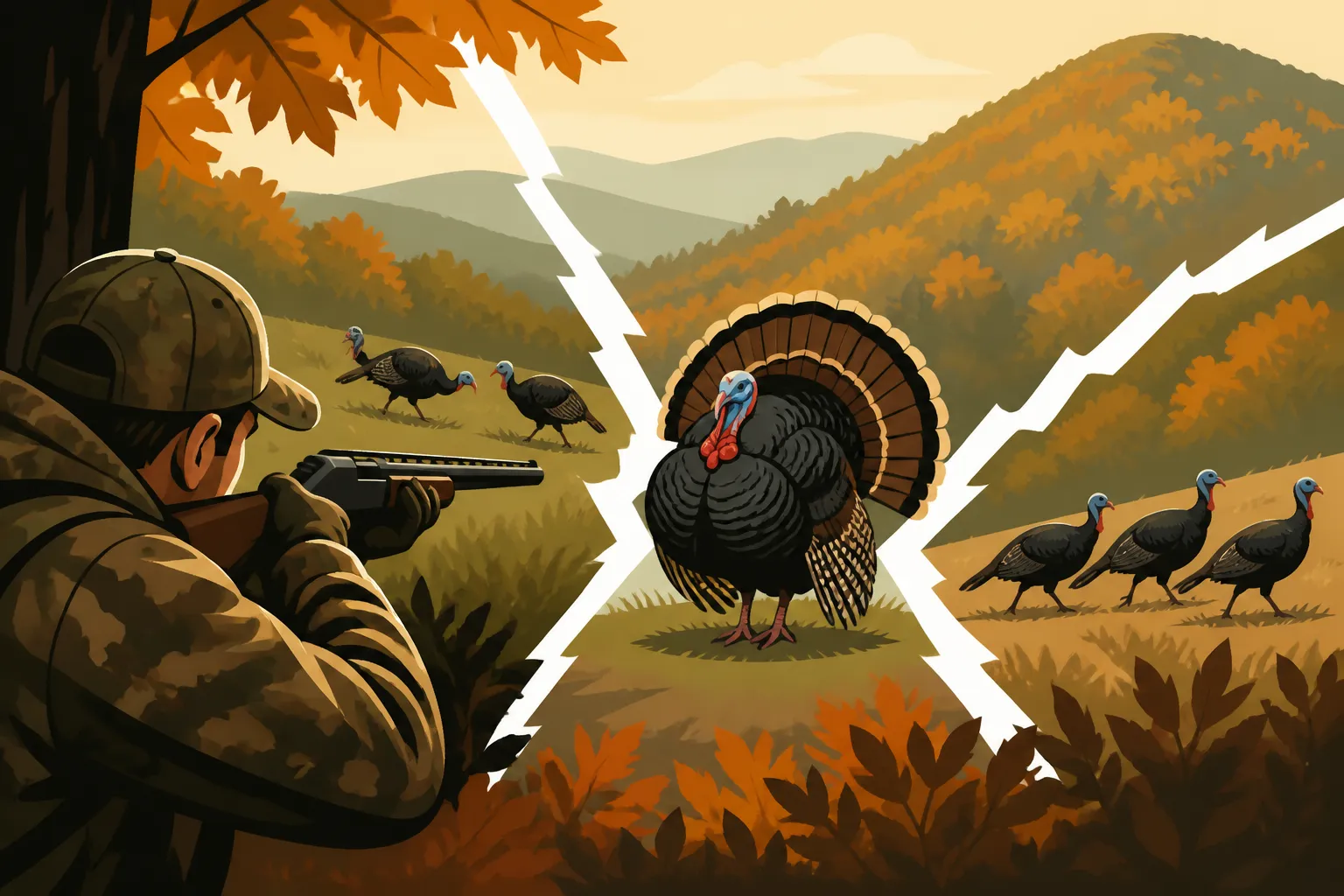
What does "explode into action" mean? It means running directly at the flock, yelling, waving your arms, maybe even clapping your hands or stomping your feet. Think of it like trying to scatter pigeons in a park, but with much more intent. The goal is to make the turkeys feel profoundly threatened and disoriented. You want them flying in all directions, crashing through branches, and running as if their lives depend on it (because, in a natural sense, they do). The more scattered they become, the more likely they are to be truly "lost" and vulnerable, making them responsive to your calls later. A poor break—where birds just run a short distance and immediately regroup—will significantly hinder your chances. If you can make them fly over a ridge or into a thick bottom, even better. This aggressive tactic is contrary to much of what we learn as hunters, but for fall flocks, it is absolutely essential.
Choosing Your Break-Up Method
While the aggressive charge is the most common, there are nuances to how you achieve that critical break. Your chosen method often depends on the terrain, the size of the flock, and how close you manage to get before they bust.
-
The Physical Charge: This is the bread and butter of fall flock breaking. Once you’ve located the flock and determined your approach, you literally run into them. Don't be shy. Yell, scream, wave your hat—whatever it takes to make them panic and fly. The sound of a hunter charging through dry leaves can be incredibly startling to turkeys. This method is most effective when you can close the distance to within 50-75 yards before they notice you. The closer you are, the more violent the scatter. A sudden, loud burst of activity when they least expect it will send them scrambling, and that’s precisely what you want.
-
Shotgun Blast (As a Scare Tactic): Some veteran fall turkey hunters, particularly those struggling to get a clean visual on birds in thick cover, might consider firing a blank or even a shot into the ground away from the birds as a scare tactic. The concussive blast and sudden noise can be extremely effective in scattering a flock. However, this is a method that requires careful consideration of safety, ethical practices, and local hunting regulations. You must ensure you are firing safely, into a backstop, and not at or in the direction of any bird. The primary intent is noise and shock, not to harm. Always check if this is even permitted in your specific hunting area, as rules can vary, particularly on public lands like those you might find while Hunting the Potomac Highlands Public Land.
-
Natural Obstacles: Sometimes, you can use the terrain to your advantage. If a flock is moving towards a thick laurel patch, a deep creek, or a steep drop-off, a strategic push from behind can funnel them into these natural barriers, forcing them to fly or run in different, separated directions. While not as active as a full charge, understanding terrain and anticipating their escape routes can help you achieve a cleaner, more dispersed break. For instance, a steep West Virginia hollow can naturally split a flock, with some birds flying up one side and others down the drainage. As you are scouting, use your GoHunt app to identify these natural barriers that could assist in a break.
Positioning After the Break
The moments immediately following a successful break are critical. You've created the chaos; now you need to capitalize on it. Do not remain in the exact spot where the break occurred. Turkeys have excellent eyesight and memory, and they'll associate that spot with danger.
Your immediate priority is to find a good, concealed setup location. Ideally, this means:
- Moving quickly: Don't waste time. Turkeys might try to regroup fairly quickly if they land close by.
- Choosing elevated terrain: A slight rise, a bench on a ridge, or a knoll will allow sound to carry better and give you a visual advantage, especially if birds are coming back in from different directions. This is particularly important when Hunting Steep Allegheny Ridges.
- Seeking natural cover: A thick blowdown, a cluster of pines, or a wide tree trunk can conceal your movement and your silhouette.
- Positioning yourself centrally: Try to get as close to the "center" of where the birds scattered from as possible. This puts you in a prime position to hear calls from various directions and minimizes the distance a bird has to travel to reach your calls.
- Listening: Once you're set up, remain absolutely still and listen intently. The woods will likely be silent for a while as the birds recover from the shock. But soon, if the break was good, you'll start to hear those first, tentative calls.
Patience here is key. It might take 15-30 minutes, or even longer, for the first lost calls to begin. Don't be tempted to call too soon; let the turkeys tell you when they're ready to start regrouping.
The Art of the Re-Group Call: Bringing Them Back In
Once the chaos of the break has subsided and you've nestled into your chosen setup, the real finesse of fall turkey hunting begins. This is where your calling skills, patience, and ability to read the woods truly come into play. The goal is simple: convince a lost turkey that you are its long-lost family.
The Yelping Strategy: Kee-Kees and Assembly Yelps
The "kee-kee" and the "assembly yelp" are your bread and butter for fall turkeys. These aren't the aggressive, often loud, gobbler-provoking calls of spring. These are softer, more plaintive, and designed to appeal to the deeply ingrained instinct of a flock to come back together.
-
The Kee-Kee: This call mimics a young, lost poult. It's typically a series of three to five high-pitched, whistled notes. It sounds like "kee-kee-kee." Start softly, almost hesitantly, as a genuinely lost bird might. If you hear a distant kee-kee in response, you know you've hit a nerve. Sometimes, a "kee-kee run" (kee-kee-kee-yelp-yelp-yelp) is even more effective, simulating a poult that's spotted its mother and is running towards her while still calling. This shows a sense of urgency and direction, which can pull in a hesitant bird.
-
The Assembly Yelp: This is the call of a mother hen trying to gather her scattered brood. It's similar to a regular yelp but typically longer, more drawn out, and carries a tone of urgency and authority. It's often a series of 5-10 yelps, delivered with increasing excitement, followed by a slight pause, and then perhaps another series. When you make this call, imagine a worried mother calling her scattered children. You can start with softer, more questioning assembly yelps and increase the volume and intensity if you get no response or if a bird starts moving in.
It's common to alternate between soft kee-kees and more assertive assembly yelps, trying to mimic both the lost young and the searching adult. Many hunters find that a slate or glass call works beautifully for these softer, more realistic fall sounds, though a good mouth call can also produce excellent kee-kees. Don't be afraid to experiment to find what works best for the birds in your area, as individual flocks can have their own nuances.
Patience and Silence: Let Them Come to You
This is perhaps the hardest part for many hunters. After the excitement of the break, the ensuing silence can feel deafening. But this silence is critical. Turkeys, especially after being scared, will often remain silent for 15-30 minutes, sometimes longer, as they try to get their bearings and ensure the danger has passed.
Resist the urge to call immediately and incessantly. Too much calling can make you sound unnatural or, worse, reveal your exact location to a bird that might be circling cautiously. Instead, become a statue. Listen intently. Birds might be clucking softly, purring, or even flying down from a distant tree. The first calls you hear will likely be soft, tentative kee-kees or clucks.
Once you hear a turkey call, wait a few minutes before responding. Let the bird call again. This makes you sound less like an aggressive predator and more like a genuinely lost turkey searching for companionship. When you do respond, mirror the urgency and type of call you heard. If it was a soft kee-kee, respond with a soft kee-kee. If it was a series of yelps, match that. The goal is to build a conversation, gradually drawing the bird closer.
Reading the Response: What Are They Telling You?
Interpreting turkey vocalizations in the fall is a skill that comes with practice. Turkeys communicate a lot with subtle sounds and patterns.
- Soft, Distant Kee-Kees or Yelps: This means a bird is scattered, likely still quite a distance away, and is cautiously searching. Respond with similar soft, pleading calls.
- Clucks and Purrs: As birds get closer, they often switch to softer clucks and purrs, indicating contentment or curiosity. Stop calling loudly and focus on soft clucks or purrs. A bird purring and clucking as it approaches is often ready to commit.
- Silence, then Movement: Sometimes, a bird will respond a couple of times and then go silent. Don't assume it's gone. It's often heading directly towards you. Be ready! Scan for movement. This is where knowing the terrain through your GoHunt app can really help; anticipating a bird's approach from behind a rise or through a thicket.
- Multiple Callers: If you have multiple birds calling from different directions, it can be a blessing and a curse. You need to decide which bird to focus on. Often, the closest or most vocal bird is your best bet. Try to steer that bird towards you without overly alarming the others. If they are far apart, you might have to pick one and commit.
Remember, the goal is not just to call at them, but to call with them. Engage in a natural dialogue, letting their responses guide your next move. For more general fall turkey strategies, you might find more helpful tips in articles like Hunting West Virginia's Fall Turkey Splits or specifically for certain areas, Turkey Tactics for Eastern Panhandle Field Edges.
Advanced Tips and Troubleshooting for Fall Flocks
Even with a solid understanding of breaking up flocks and calling them back, fall turkeys can throw some curveballs. They're wild animals, after all, and their behavior isn't always predictable. Having a few extra tricks up your sleeve and knowing how to troubleshoot common issues can make all the difference.
Scouting for Success: The Pre-Season Advantage
The best way to ensure success in the fall isn't just about calling; it's about knowing where the birds are in the first place. Pre-season scouting is absolutely paramount. Turkeys are creatures of habit, especially when it comes to feeding and roosting.
Spend time in the woods weeks, even months, before the season opens. Look for:
- Roosting Areas: Turkeys often roost in tall trees over deep hollows or along prominent ridge lines. Look for droppings and feathers at the base of large trees. If you can locate a regular roost, you can plan an early morning approach to break the flock as they fly down. Consider familiarizing yourself with Roost Hunting West Virginia Gobblers techniques, which can be adapted for fall.
- Feeding Sign: Scratch marks in the leaves, especially under oak or beech trees, indicate turkeys have been foraging for acorns or nuts. Fields with waste grain, wild grape thickets, or areas with persistent insect activity are also prime spots. Knowing their feeding areas helps you intercept them.
- Travel Corridors: Turkeys will use specific routes between roosting, feeding, and watering areas. These might be old logging roads, ridgetop saddles, or benches along hillsides. Identifying these pathways allows you to set up for an ambush or a planned break. Using a mapping platform, like the one available from GoHunt, can be incredibly helpful for identifying these features and marking sign. For more detailed advice, check out Scouting West Virginia Public Land Before Season.
Knowing your potential hunting ground, whether it's Hunting the One-Week Fall Turkey Counties or a longer season area, empowers you to make more informed decisions.
Dealing with Tough Breaks and Shy Birds
Sometimes, despite your best efforts, the flock doesn't scatter perfectly. They might just run a short distance, fly a hundred yards, and then quickly regroup without much calling. Or, you might get a good break, but the birds are incredibly wary and reluctant to respond.
- The Second Break: If the initial scatter was poor and the birds are regrouping too quickly, don't be afraid to try a second, even more aggressive break. Sometimes, a double dose of shock is what's needed to truly disorient them and make them feel vulnerable.
- Mobile Calling (Run-and-Gun): If a bird is calling consistently but moving away, or if you can't get it to commit, you might need to try a modified run-and-gun approach. Make a series of calls, then quickly and quietly move 50-100 yards in the direction you think the bird is coming from, set up again, and call. This can sometimes convince a hesitant bird that the "lost" turkey is moving, and it might spur it to close the distance. This strategy has parallels with Run-and-Gun Turkey Tactics on Public Land in spring, though the calls and intent differ.
- Patience and Persistence: Some birds are just naturally shyer or more pressured. If they're responding weakly or not closing the distance, sometimes the best tactic is simply to be extremely patient. Sit still, call sparingly and softly, and be prepared to wait them out. A shy bird might take an hour or more to feel comfortable enough to approach.
Weather Considerations for Fall Hunting
Weather can have a significant impact on fall turkey behavior and your success.
- Rain: Turkeys often go quiet in heavy rain, and their calls don't carry as well. Light drizzle might not affect them much, but a downpour can send them to roost or into dense cover. Your best bet might be to hunt during breaks in the rain or target days with stable, clear weather.
- Wind: High winds make it difficult to hear turkeys and for them to hear you. They also tend to make turkeys more wary and less vocal. On windy days, try to hunt in sheltered hollows or on the leeward side of ridges where sounds can travel better.
- Cold Fronts: A sudden cold snap can sometimes make turkeys more active as they feed heavily before the weather worsens, or it can make them hunker down. Pay attention to how the birds in your area react to temperature drops.
Safety First: Always Be Aware
Fall turkey hunting, especially with aggressive break-up tactics and then calling birds back in, requires an extra layer of safety consciousness.
- Identify Your Target: When a turkey comes to your calls, it might not be the direct route you expect. It could come from behind, from the side, or approach silently. Always be 100% sure of your target and what is beyond it before you even think about raising your gun.
- Blaze Orange: In West Virginia, during any firearms deer season, all hunters (except waterfowl hunters) are required to wear at least 400 square inches of blaze orange or blaze pink. Even if you're bowhunting for turkeys during a firearms deer season overlap, you must wear it. During archery-only deer seasons, or if no firearms deer season is open, orange is not required for turkey hunting, but it's always a good idea when moving through the woods, especially if you're trying to scatter a flock. Be familiar with West Virginia Blaze Orange Requirements to stay safe and legal.
- Know Your Area: Be aware of other hunters, property lines, and safety zones. The GoHunt app's mapping features can help you identify these critical boundaries.
| Fall Turkey Call | Description | Primary Use | When to Use It |
|---|---|---|---|
| Kee-Kee | High-pitched, whistling "kee-kee-kee" (3-5 notes). Mimics a lost young poult. | Attracting scattered young birds and curious hens. | Start softly after a break. Use when you hear distant, soft turkey sounds. Good for getting an initial response. |
| Kee-Kee Run | "Kee-kee-kee-yelp-yelp-yelp." A kee-kee followed by yelps, suggesting a poult moving with urgency. | More aggressive than a simple kee-kee, conveying movement and urgency. | When a bird is responding but seems hesitant to close the distance, or you want to imply the "lost" bird is actively searching and moving. |
| Assembly Yelp | Longer, more urgent series of 5-10 yelps, sometimes with increasing volume and excitement. Hen call. | Gathering dispersed flock members, especially hens and poults. | After you've established contact with kee-kees, or when you believe a hen is trying to round up her brood. Can be used to draw in a more mature bird. |
| Clucks and Purrs | Soft, contented "cluck" or "purrr." Indicative of a relaxed, feeding turkey. | Reassuring close-range birds, adding realism, or bringing in a wary turkey. | When a bird is very close (within 50 yards) and you need to keep it calm and convince it to take those last few steps. Stop loud calling and switch to soft, subtle sounds. |
| Puts | A sharp, single "putt." Alarm call. | Avoid using this call; it indicates danger. | Never intentionally use this call when trying to attract turkeys. If you hear it, it means a turkey has seen or heard something it doesn't like, and your setup is likely blown. |
Remember, successful fall turkey hunting is a game of strategy, patience, and adapting to the birds' natural instincts. Embrace the challenges, learn from every outing, and soon you'll be consistently turning scattered flocks into opportunities. And always remember to check your specific county rules; for instance, understanding Fall Turkey Tactics Where Sundays Are Closed will prevent unexpected surprises in the field.
Disclaimer
Hunting is an inherently dangerous activity. Always prioritize safety, follow all local, state, and federal hunting regulations, and be mindful of ethical hunting practices. The information provided here is for informational purposes only and should not replace proper hunter education or professional guidance. Consult the West Virginia Division of Natural Resources for the most current regulations and safety guidelines.