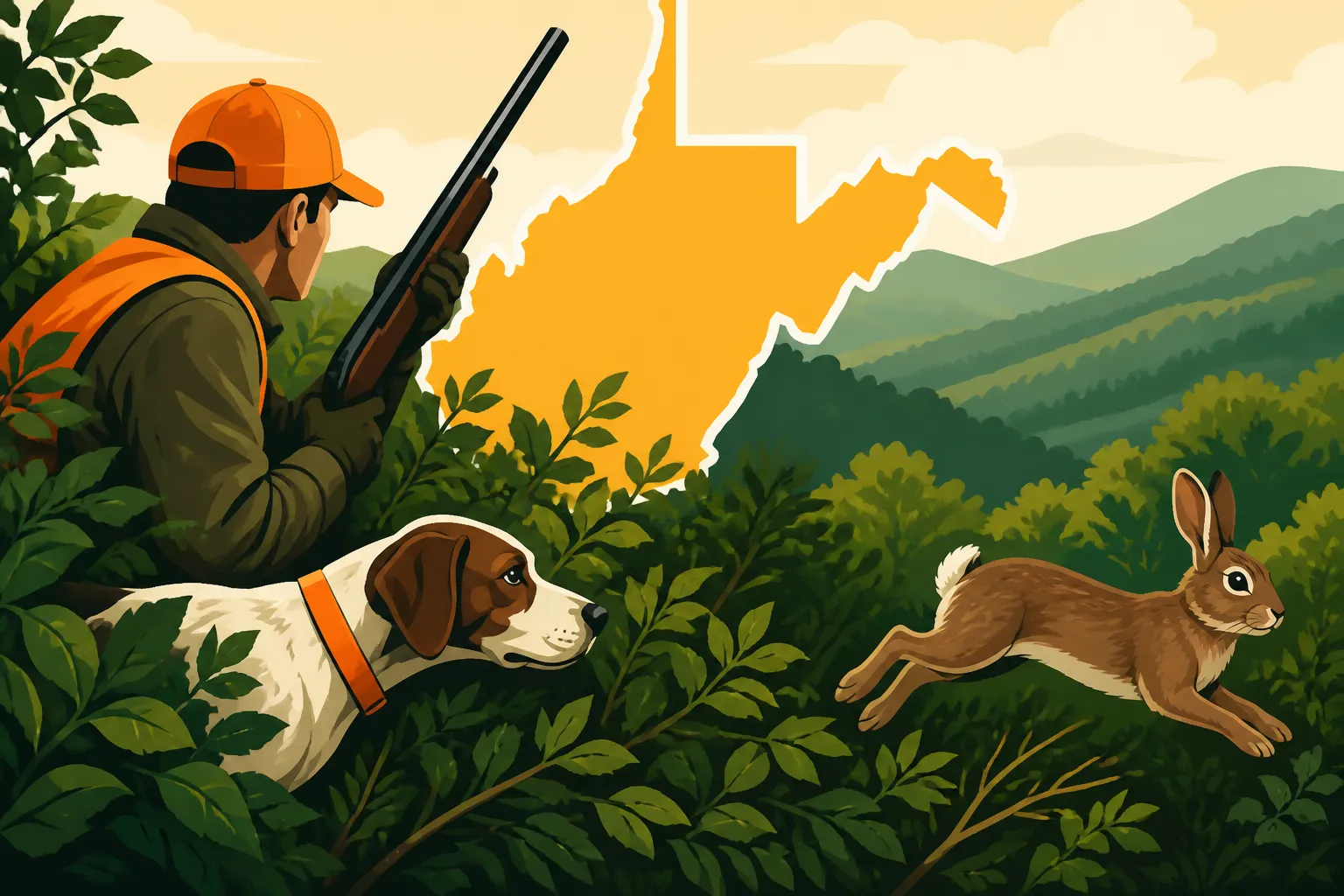
Rabbit Hunting Thick West Virginia Brush
There’s nothing quite like a crisp fall morning in West Virginia, a hint of woodsmoke in the air, and the promise of chasing cottontails. But if you’ve spent any time at all trying to find rabbits here, you know they don’t exactly hang out in open fields waiting for you. No, our Mountain State bunnies are masters of camouflage, burrowing deep into the gnarliest, thickest brush you can imagine. It’s frustrating, it’s thorny, and it can feel impossible. This guide is all about equipping you with the know-how, gear, and tactics to confidently plunge into that dense West Virginia cover and come out with a rabbit or two.
Understanding West Virginia's Rabbit Habitats in the Thick Stuff
West Virginia is a state of hills, hollers, and an incredible amount of regrowth. This landscape naturally produces exactly the kind of dense, tangled vegetation that rabbits thrive in, making them a challenging but rewarding quarry for hunters willing to get a little scratched up.
Why Rabbits Love Dense Cover and Why You Hate It
Rabbits are prey animals, plain and simple. Their survival hinges on avoiding predators like coyotes, foxes, hawks, and even the occasional bobcat. Thick brush provides an almost impenetrable fortress against these threats, offering immediate concealment and a maze of escape routes. It’s not just for safety, though; these dense areas are also prime feeding grounds, often loaded with tender shoots, clover, and other forbs that rabbits munch on. Plus, the tangled mess creates excellent thermal cover, shielding them from harsh winter winds and heavy snows.
For us hunters, this preference for thickets presents a real dilemma. You know the rabbits are in there, but getting to them is another story. The thorny tangles of multiflora rose, the suffocating embrace of honeysuckle, and the sharp spines of blackberry bushes make simply walking through these areas a challenge. Visibility drops to almost zero, making it incredibly hard to spot a rabbit before it bolts, and even harder to get a clean shot. The dense vegetation also muffles sounds, making it tough to hear a flushing rabbit until it’s practically underfoot, or already gone.
Specific to West Virginia, our old farmsteads and reclaimed timber cuts are particularly notorious for harboring these thick, almost impassable rabbit havens. Think about an old homestead where the apple trees have long since died, but the fence lines are choked with briars, or a clear-cut from 10 years ago where the young saplings are now so dense you can barely walk through them. These are the spots where rabbits feel safest, and consequently, where they’re hardest to hunt.
Key Brush Types and Where to Find Them
West Virginia's diverse landscape means we have a variety of "thick stuff" that rabbits call home. Knowing what to look for can save you a lot of aimless wandering and thorny encounters. Chief among these are the ubiquitous briar patches and the insidious multiflora rose. Briar patches, often a mix of blackberry and greenbrier, form nearly impenetrable walls of thorns, especially common along old logging roads, field edges, and disturbed ground. Multiflora rose, an invasive species, creates dense, thorny clumps that can grow into substantial thickets, providing incredible cover and forage. Both are excellent rabbit cover, making them miserable to navigate but productive once you push through.
Beyond the thorns, you'll find Japanese honeysuckle and young clear-cuts. Honeysuckle, another widespread invasive, forms dense mats that can completely smother undergrowth, creating shaded, tunnel-like spaces where rabbits love to hide. Young clear-cuts, those areas timbered 5-15 years ago, are often choked with small, tightly packed trees, shrubs, and brush, offering both food and unparalleled concealment. These areas are particularly common on public lands and private timber tracts across the state, and scouting them out before the season can be a real game-changer.
Don't overlook creek bottoms and fencerows either. Creek bottoms, especially those with good moisture, tend to have lush, heavy growth – think dense alders, willows, and thickets of wild grapevines. These riparian zones offer rabbits a consistent food source and a ready supply of water, making them attractive year-round. Similarly, Rabbit Hunting West Virginia Fencerows is a tactic in itself because fencerows, whether old or new, often accumulate thickets of briars, multiflora rose, and overgrown saplings, creating natural travel corridors and hiding spots that connect larger patches of cover. These linear features can be hunted effectively by walking one side while a partner walks the other, or by using a dog to push through.
Essential Gear and Tactics for Tackling Thick Brush
Hunting thick West Virginia brush for rabbits isn't like hunting squirrels in a mature oak stand. It requires a specific approach, both in what you carry and how you move, to be safe and successful.
Choosing the Right Shotgun and Loads
When you're fighting your way through briar patches, a long-barreled shotgun is just going to get snagged and become a nuisance. For the kind of close-quarters, snap-shooting opportunities that rabbit hunting in thick cover provides, maneuverability is key. A shorter barrel, something in the 24-26 inch range, is much easier to swing quickly and navigate through dense growth. As for gauge, a 20-gauge shotgun is often preferred by seasoned rabbit hunters. It’s lighter to carry all day, offers reduced recoil, and still provides plenty of punch for cottontails. A 12-gauge will certainly do the job too, but its added weight can be noticeable by the end of a long day of pushing brush.
Choke selection is equally important. Forget your full choke; you’ll be shooting rabbits at spitting distance most of the time. An improved cylinder or even a skeet choke will give you a wider pattern at close range, increasing your chances of connecting with a fast-moving rabbit that might only offer a split-second glimpse. Modified choke is a good all-around choice if you expect a mix of closer and slightly longer shots. For shot size, 7 ½ or 6 shot are the workhorses of rabbit hunting. They carry enough energy to humanely dispatch a rabbit without over-penetrating and ruining too much meat, and the higher pellet count ensures a dense pattern for those quick, close shots. Always make sure to pattern your shotgun with your chosen load before the season to understand its effective range.
It's tempting to think that since rabbits are small, any load will do. But a clean, ethical kill is paramount. I've seen folks try to get by with target loads, only to wound rabbits they should have taken cleanly. Invest in good game loads – they're designed for this. And remember, in the dense cover we’re discussing, most shots will be within 15-25 yards, making that wide, forgiving pattern from an improved cylinder choke your best friend.
Dressing for the Briars and Beyond
If you're going into thick West Virginia brush without the right attire, you're going to have a bad time. And probably bleed a little. The number one item on your list should be heavy-duty, briar-proof pants or chaps. Denim simply won't cut it against multiflora rose, greenbrier, and blackberry canes. Look for pants made from tough nylon or canvas with a thorn-resistant facing. Many brands offer dedicated brush pants that will shed thorns and water, keeping you comfortable and intact. Similarly, a durable briar-proof vest or jacket is a smart investment, especially if you plan to carry extra shells, game, and water.
Beyond the briar protection, sturdy, waterproof boots are non-negotiable. You’ll be traversing uneven terrain, wet creek bottoms, and potentially muddy areas. Good ankle support is crucial for preventing twists and sprains, and waterproofing will keep your feet dry and warm on chilly days. Rubber boots are an excellent choice for navigating damp lowlands and protecting against snake bites in warmer weather. Thick, puncture-resistant gloves are also essential for pushing through thorny sections, retrieving rabbits, and just generally protecting your hands. You'll thank yourself after the first brush with a particularly nasty greenbrier patch. You can even find specialized Brush Pants for West Virginia Laurel Thickets that are designed to withstand the roughest cover we have.
Layering your clothing is also critical for West Virginia’s variable weather. A breathable base layer, an insulating mid-layer (like fleece or wool), and your briar-proof outer shell will allow you to adjust to temperature changes throughout the day. Don't forget your blaze orange! How Much Blaze Orange West Virginia Requires is a critical safety consideration, especially when hunting with partners or dogs in dense cover. A blaze orange hat and vest are minimums, but more visibility is always better.
Tactics for Pushing and Flushing Rabbits
Rabbit hunting in thick brush is rarely a sit-and-wait game; it's an active, push-and-flush endeavor. If you’re hunting solo, your best bet is a slow, methodical approach. Walk deliberately, pausing frequently for a few seconds. Rabbits often sit tight, hoping you’ll pass them by. These pauses can sometimes make them nervous enough to flush, giving you a shot. Focus on working the edges of thickets, known travel lanes, and areas where you’ve seen fresh sign. Zigzagging through cover can be more effective than walking in a straight line, as it covers more ground and creates unexpected angles that might make a rabbit bolt.
When hunting with partners, teamwork is essential. A common and highly effective strategy is to have one or two "drivers" push through the thick cover, while one or more "blockers" position themselves quietly at the downwind end or along known escape routes. The drivers should move slowly, systematically covering the patch, making enough noise to encourage rabbits to move without sending them rocketing out too fast. The blockers remain still and alert, ready for a shot when a rabbit breaks cover. Communication is key, so make sure everyone knows the plan and their role. For safety, always be aware of where your partners are and your firing lanes. You can use mapping apps like GoHunt to clearly mark positions and plan routes, which can be invaluable in dense, confusing terrain.
Of course, the classic West Virginia rabbit hunting experience often involves a pack of beagles. Nothing quite compares to the sound of hounds opening up on a hot rabbit track. Running Beagles on West Virginia Cottontails is a time-honored tradition for a reason: beagles excel at rooting out rabbits from the densest cover and pushing them in circles, often bringing them back past the waiting hunter. If you have access to good rabbit dogs, they are by far the most efficient way to hunt thick brush. They do the hard work of going into the nastiest stuff, allowing you to focus on finding a good vantage point along a likely escape route, like a logging road or the edge of a field.
| Cover Type | Why Rabbits Like It | Hunting Tip |
|---|---|---|
| Briar Patches | Dense, thorny, impenetrable protection from predators | Push slowly, pause frequently; use dogs if available. |
| Multiflora Rose | Forms thick, thorny clumps; excellent concealment & food | Walk around large clumps; shoot when rabbit breaks cover at edges. |
| Japanese Honeysuckle | Creates dense, low mats; good thermal & visual cover | Kick through patches; rabbits often bolt from underfoot. |
| Young Clear-cuts | Dense saplings offer food & cover as they grow up | Work with partners, one driving, others blocking likely escape routes. |
| Creek Bottoms | Lush, heavy growth; food, water, and cover | Focus on dry areas within the thick growth; rabbits use these as travel lanes. |
| Fencerows | Linear cover, travel corridors; connect larger patches | Walk both sides simultaneously with partners; good for solo hunting on small farms. |
Scouting and Locating Prime Rabbit Haunts in Dense West Virginia Cover
You can have the best gear and the sharpest tactics, but if you're not hunting where the rabbits are, it’s all for naught. Scouting is paramount, especially when dealing with the kind of dense cover cottontails prefer in West Virginia.
Reading the Landscape for Rabbit Sign
Before you even step foot in the brush with your shotgun, you need to know where to step. Rabbits, despite their secretive nature, leave plenty of clues. The most obvious sign is droppings: small, round, pea-sized pellets. Finding a concentration of fresh, dark, moist droppings indicates that rabbits are actively using that area. Look for them around the base of bushes, along worn trails leading into thickets, or in small, sheltered openings within the dense cover.
Beyond droppings, keep an eye out for "cuttings." Rabbits, like deer, browse on vegetation, but they leave distinct, angled cuts on twigs and plant stems. These will be small, usually no more than a few inches off the ground, and often found on tender shoots of briars, clover, or other herbaceous plants within or on the edge of their thick cover. Fresh cuttings are a definitive sign of recent activity. You might also spot tracks, especially after a light rain or snowfall. Small, distinct footprints leading into and out of dense cover are a dead giveaway. Focus on muddy trails, soft dirt near creek banks, or patches of bare earth where rabbits might stop to groom.
Finally, look for worn travel lanes or "runways" through the thickets. These are small, tunnel-like paths created by repeated use by rabbits. They're often hidden deep within the brush, but you might spot the entrance or exit points where they lead to a more open feeding area or connect two dense patches of cover. Identifying these runways will help you position yourself for a shot when pushing a thicket, as rabbits often follow these predictable escape routes.
Using Technology and Local Knowledge
In today's hunting world, technology can be a huge asset in pinpointing rabbit hotspots. Mapping applications, like GoHunt, are invaluable for pre-season scouting. Use the satellite imagery to identify areas of dense, overgrown vegetation, old clear-cuts, thick fencerows, and creek bottoms. Look for transitions – where a mature timber stand meets a young clear-cut, or where an open field borders a briar patch. These "edge habitats" are rabbit magnets. Mark these potential spots on your map, then go visit them in person before the season opens to confirm rabbit sign.
While satellite maps are a great starting point, nothing beats boots-on-the-ground scouting. Take a walk without your shotgun a few weeks before the season. Look for the actual sign we discussed – droppings, cuttings, tracks. Try to visualize how you’d hunt each area, considering wind direction, escape routes, and potential hiding spots. And don't underestimate the power of local knowledge. Talking to landowners (if you have permission to hunt their land), farmers, or other seasoned local hunters can provide invaluable insights into traditional rabbit strongholds. They often know where the biggest briar patches are, or which old farm fields consistently hold rabbits. Always be respectful and appreciative of any information shared.
Sometimes, the best rabbit hunting spots are those that get overlooked by deer hunters because they're simply too thick to comfortably sit in a stand. Using GoHunt to review aerial photos of these less-pressured areas can reveal hidden gems. Think about connecting these observations with other small game opportunities, such as combining your rabbit hunt with a general Squirrel and Small Game Hunting in West Virginia outing, as many of these brushy areas will also hold squirrels.
Timing Your Hunts for Success
Even in the densest cover, rabbits aren't active 24/7. Timing your hunts strategically can significantly increase your chances of success. Generally, rabbits are most active during the early morning and late afternoon hours, coinciding with dawn and dusk. This is when they're most likely to be moving out of their primary cover to feed in more open areas or along the edges of thickets. Hunting during these periods means you’re more likely to encounter moving rabbits, rather than those hunkered down tight.
Weather conditions also play a huge role. Cold, overcast days, especially after a light snowfall, can be fantastic for rabbit hunting. The cold weather encourages rabbits to seek out dense cover for warmth, concentrating them in predictable spots. A fresh dusting of snow also makes it incredibly easy to spot tracks, helping you confirm rabbit presence and even track them to their hiding places. However, avoid hunting on extremely windy days, as rabbits tend to hunker down even tighter, and the wind makes it harder for you to hear them flush. Similarly, heavy rain will usually keep them tucked away.
Finally, consider the time of year. While West Virginia's rabbit season typically opens in early fall, the hunting often improves as the season progresses and vegetation dies back. The late season, particularly in December and January when much of the deciduous undergrowth has dropped its leaves, makes it easier to spot rabbits and navigate the cover. Combine this with tracking opportunities in the snow, and the late season can be incredibly productive, even though it's colder. Just make sure you understand all the West Virginia Small Game Season Rules before heading out.
Disclaimer
Hunting is an inherently dangerous activity. Always prioritize safety, understand and follow all West Virginia hunting regulations, and ensure you have proper training and equipment. The information provided here is for educational purposes and should not replace professional guidance or personal judgment.