Scrape Lines Along a Logging Road
It’s a common frustration, isn't it? You spend hours walking the woods, finding scattered deer sign, but struggle to pinpoint where the bucks are really spending their time. Then you stumble upon a logging road, and sometimes, it feels like a whole new world of deer activity opens up – especially when you find a fresh scrape line. But knowing how to interpret those scrapes and, more importantly, how to hunt them effectively without chasing deer off is a whole different ballgame. This guide is all about mastering the art of hunting scrape lines along West Virginia logging roads, ensuring you make the most of this often-overlooked opportunity.
Understanding Logging Roads as Deer Highways
Why Deer Use Logging Roads
West Virginia's landscape is rugged, beautiful, and often dense. While we love the wildness, deer, like us, appreciate an easier path through the thick stuff. Logging roads, even old, overgrown ones, offer exactly that. They create natural corridors, cutting through dense timber and underbrush, making travel far less energy-intensive for whitetails. Think about it: instead of fighting through briars and thickets, a deer can walk a relatively clear path, conserving precious energy, especially as the season progresses and food sources become scarcer. These roads aren't just for casual strolls; they're often crucial arteries connecting bedding areas to feeding grounds, or providing easy access to ridgelines and hollows.
Beyond just ease of travel, logging roads also offer security. The edges of these roads often feature thicker browse and new growth, providing both food and cover. A buck can skirt the edge of a road, staying just inside the timber, using the road itself as a clear visual and scent corridor. During the rut, these roads become prime cruising grounds. Bucks will travel these paths looking for does, scent-checking the air, and leaving their own calling cards in the form of rubs and, of course, scrapes. The open nature of a logging road allows scent to disperse more easily, making it an efficient way for a buck to communicate his presence.
Furthermore, these cleared paths often lead to or run adjacent to diverse habitat types. One side might be mature timber, the other a younger clear-cut, or it might follow a creek bottom that eventually climbs to a rocky ridge. These transitions are goldmines for deer activity, and the logging road serves as the literal path connecting these vital areas. They can be particularly potent in regions like the Monongahela National Forest, where distinct habitat changes occur over short distances. Learning to read these habitat transitions in conjunction with the logging road will give you a significant edge in understanding deer movement.
The Double-Edged Sword of Easy Access
Now, while logging roads are fantastic for deer, they're also fantastic for us hunters. And that, my friend, is where the "double-edged sword" comes in. The same easy access that draws deer also draws human pressure. It's a truth universally acknowledged in West Virginia hunting: if it's easy to get to, chances are someone else has already been there, or will be. This means that deer using logging roads, especially on public land, tend to be more wary. They've heard engines, smelled human scent, and likely seen hunters before. They often become more nocturnal in these areas, or use the roads primarily under the cover of darkness.
The challenge, then, is to leverage the deer's use of these roads without making yourself just another source of pressure. This often means altering your approach, literally. You might need to park farther away and walk in, or use side trails that are less obvious to access your hunting spot. Sometimes, the best strategy is to hunt near the logging road, but not directly on it. Set up 50-100 yards off the main path, within sight or shooting distance of a scrape line, but far enough back that you're not silhouetted against the open road or constantly sending your scent swirling into the main travel corridor. Remember, deer are creatures of habit, but they're also highly adaptable. They'll use these roads, but they'll do it on their terms, often at dawn, dusk, or deep into the night when they feel most secure.
Decoding Scrape Lines on Logging Roads
Identifying Active Scrapes vs. Old Ones
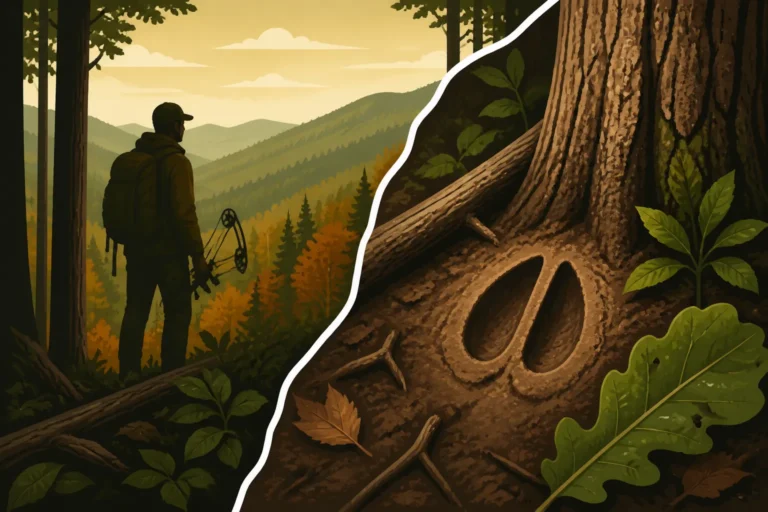
Finding a scrape is exciting, but finding an active scrape is where the real magic happens. There's nothing more disheartening than setting up on a scrape line only to realize it's weeks old and the buck has long since moved on. So, how do you tell the difference? An active scrape will look fresh, almost "wet" or disturbed, especially after a rain. The dirt will be soft, and you'll often see distinct hoof prints – big ones, hopefully! – pressed into the exposed earth. The real giveaway, though, is the smell. Active scrapes have a distinct musky odor, a potent mix of urine and glandular secretions that signals a buck's recent presence. Give it a sniff, carefully, of course.
Contrast that with an old scrape. These will be crusted over, hard, and often overgrown with leaves or pine needles. The exposed dirt will be dry and compact, and any hoof prints will be faded or filled in. There won't be that strong, pungent scent. While old scrapes can tell you where a buck was, they don't tell you where he is. Your focus should always be on the freshest sign. If you find multiple scrapes along a logging road, check each one. Often, a buck will "re-open" a favorite scrape, so even if some look old, a keen eye might spot a freshly pawed patch within a larger, older scrape. This nuance is key to understanding the current movement patterns, especially when you're Scouting West Virginia Public Land Before Season.
The Significance of Overhanging Branches
Every self-respecting scrape, especially those made by a mature buck, will have an overhanging branch – often called a "licking branch" or "saliva branch" – above it. This branch isn't just for aesthetics; it's a critical component of the buck's communication system. Bucks will rub their preorbital glands on it, chew on it, and sometimes even urinate on it, all to deposit their scent and hormones. Think of it as a community bulletin board for deer. When you're looking at a scrape, pay close attention to this branch.
An active licking branch will show signs of recent use. You'll see frayed bark where a buck has rubbed his forehead, or fresh chew marks. It might even be visibly wet or discolored from saliva or urine. If the branch is intact, covered in lichen, or simply looks untouched, the scrape beneath it is likely old or inactive. The height of this branch can also give you a clue to the size of the buck. A licking branch that's noticeably high off the ground often indicates a taller, more mature deer has been tending to it. These little details can make all the difference in deciding where to commit your precious hunting time, especially when you're trying to figure out Where Monongahela Forest Bucks Bed.
When and Where to Find Prime Scrape Lines
Scrapes, particularly those along logging roads, are most prevalent during the pre-rut and peak rut phases of the deer season. In West Virginia, this often means late October through mid-November. Bucks are ramping up their breeding activity, actively seeking does, and using scrapes to advertise their presence and assess the reproductive status of does. When you're Hunting the West Virginia Rut in November, these scrape lines become particularly hot. While you might find a few early scrapes in late September or early October, these are usually "signpost" scrapes, not actively maintained like those you'll encounter closer to the breeding window.
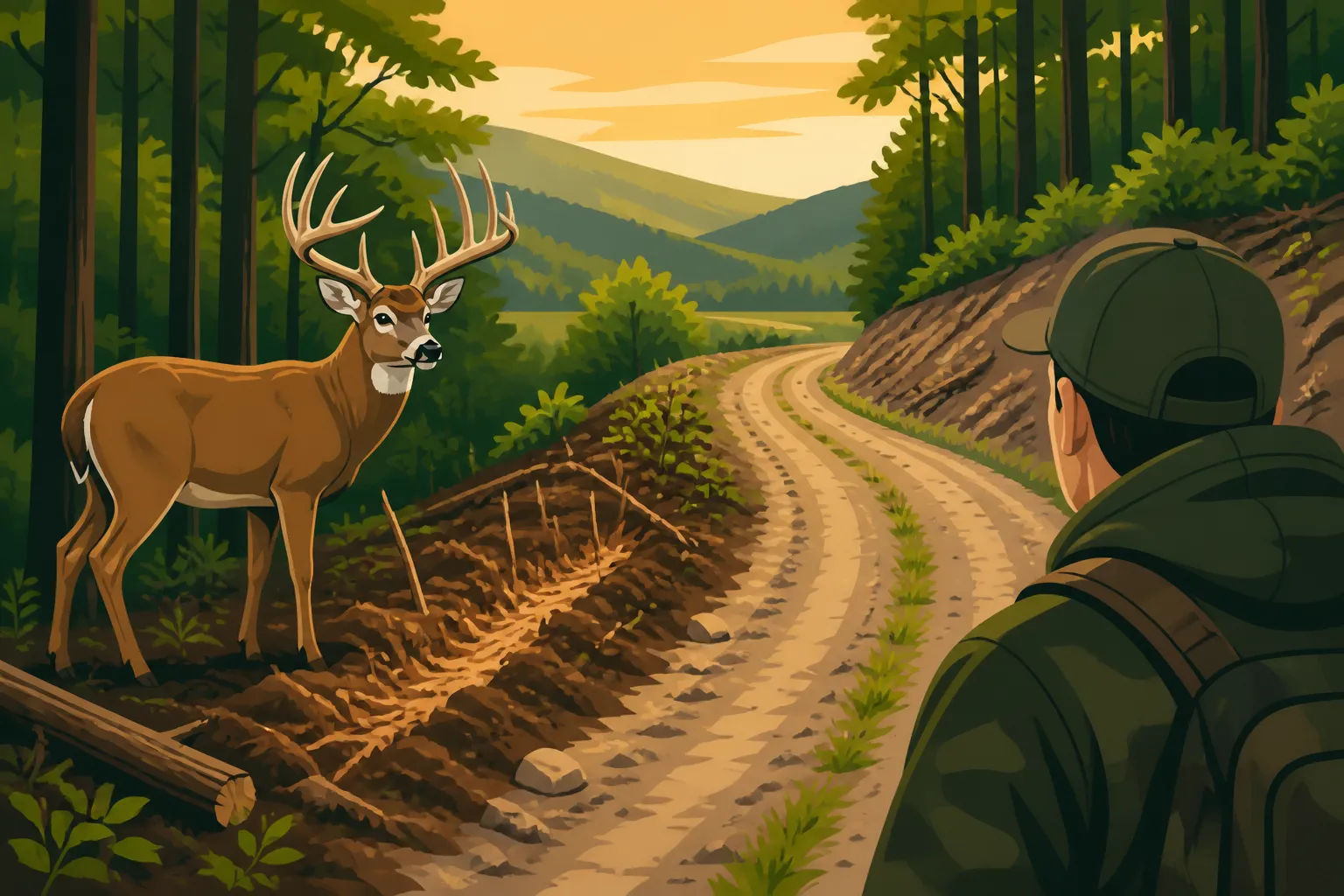
As for where along a logging road, look for transitional areas. Scrapes rarely appear in the middle of a wide-open section of road. Instead, they'll often be found where the road narrows, where it passes through a funnel point between two hollows, or where it runs alongside a particularly thick patch of cover. These are the spots where deer feel a bit more secure and where they naturally bottleneck. Look for scrape lines just inside the timber edge, maybe 5-10 yards off the road, or sometimes directly on the road itself where it's overgrown or less traveled. Creek crossings, old logging decks, or where a faint deer trail merges with the logging road are also prime locations. Deer love to leave their mark at these natural intersections, making them perfect spots for a well-placed stand.
Strategic Hunting Tactics for Logging Road Scrapes
Stand Placement Near Scrape Lines
The biggest mistake hunters make when targeting logging road scrapes is setting up directly on top of them. Remember, deer on these roads are wary. Your goal isn't just to see the scrape; it's to see the buck using the scrape, and often, that means catching him before he gets to it, or as he leaves. I've had success by setting up downwind (or crosswind, depending on thermals) 30-50 yards away, positioning myself to catch the buck as he approaches or departs the scrape line. You want to be far enough away that your scent doesn't blow directly into the scrape, but close enough for a confident shot.
Consider the terrain. Are you on a steep ridge in the Allegheny Mountains? Then you need to account for Wind and Thermals on a Steep Ridge. Thermals will often pull your scent up in the morning and down in the evening. Position your stand so your scent cone drifts away from the scrape and any likely approach routes. Look for a large tree that offers good cover and a clear shooting lane to the scrape, but also allows you to see potential approach trails. When placing your treestand, always prioritize safety and consider the tree's bark for quiet climbing. If you're on public land, remember that Treestand Setups in Monongahela National Forest outlines rules that may restrict certain types of stands or require them to be removed annually.
Sometimes, especially if the logging road is heavily used or very open, a ground blind can be more effective. Brushing in a blind along the edge of the timber, 15-20 yards off the road, can provide excellent concealment, especially if you set it up well in advance to allow deer to get used to it. This can be a great tactic for a less-used logging road that has a distinct scrape line, particularly when trying to catch deer moving through a specific funnel point or working a field edge from a distance. You can read more about Using a Ground Blind on West Virginia Public Land for tips on concealment.
Using Scent and Calls Effectively
When you're hunting scrape lines, you're essentially trying to communicate with bucks on their turf. This is where scents and calls can become powerful tools, but they need to be used judiciously. For scrapes, deer urine or synthetic buck and estrus doe scents can be very effective. I prefer to use a dripper that slowly releases scent throughout the day, mimicking a deer actively urinating. Place it directly over the licking branch, allowing the scent to drip into the freshly pawed earth. A little goes a long way; you don't want to douse the entire area, but rather simulate a natural event. Refreshing scrapes with a bit of scent, especially during the rut, can pique a buck's curiosity and draw him in.
Calling can also be a game-changer, but again, timing is everything. During the peak rut, a series of soft grunts using a call similar to those discussed in Grunt Calls in Mature West Virginia Timber can mimic a buck tending a scrape or a doe nearby, drawing a curious buck in for a closer look. A few light rattles, perhaps like those used for Rattling Volume in Thick Laurel Cover, can also suggest two bucks sparring, which might entice an intruder to investigate. However, be cautious not to overcall, especially on pressured public land. Deer learn quickly, and an unnatural sequence of calls can send them running. Often, less is more; a few soft calls, followed by a period of silence, can be incredibly effective.
Approaching and Exiting Undetected
This is perhaps the most critical, and often most overlooked, aspect of hunting logging road scrapes. If deer know you're there, your chances of success plummet. Your approach and exit strategy needs to be meticulously planned. Always consider the wind direction, not just at your stand, but also along your entire path to and from your spot. Even a slight swirl of wind carrying your scent across the logging road can alert deer. Using mapping tools, like those available through GoHunt, can help you identify terrain features that might block your scent, or help you plan a route that keeps you downwind of your target area.
Try to use natural cover to mask your approach. Walk inside the timber, parallel to the logging road, staying out of sight. If you must walk on the road, do it slowly and quietly, stopping frequently to scan ahead. Early morning and late evening movements are when deer are most active, so try to be in your stand well before first light and stay until after dark, allowing the woods to settle down before you move. On your exit, if you believe a buck is still in the area, consider waiting an extra 30 minutes in your stand after shooting light fades. This allows any nearby deer to move off naturally, without being spooked by your departure. Never walk out through an area you expect a buck to use, if possible. Planning your entry and exit routes using terrain features and wind direction is paramount to consistently hunting these scrape lines successfully, particularly when you're targeting a natural feature like Hunting a Funnel Between Two Hollows.
Common Mistakes and How to Avoid Them
Overhunting and Educating Deer
We've all been there: you find a hot scrape line, you hunt it, and maybe you don't see anything on the first sit. So you go back the next day, and the next. Before you know it, you've spent three days hammering the same spot, and now the scrape isn't getting hit anymore, or the buck is showing up only in the middle of the night. This is a classic case of overhunting, and it's one of the quickest ways to educate deer, especially on logging roads that already see some human activity. Deer, particularly mature bucks, are incredibly intelligent and sensitive to pressure. They will adjust their patterns faster than you can say "whitetail."
To avoid this, treat prime scrape locations like precious resources. Don't hunt them more than once or twice a week, at most. Only hunt them when the wind and conditions are absolutely perfect. If you hunt a scrape line and the wind swirls or you make too much noise, consider that spot "burnt" for a few days. Instead of forcing it, have multiple backup spots or other areas you can utilize, perhaps by Reading a Ridge for Eastern Panhandle Deer for alternative sign. Rotate your hunting spots to spread out your pressure and keep deer guessing. The goal is to be a ghost in the woods, not a persistent disturbance.
Ignoring Wind and Thermals
I can't stress this enough: wind and thermals are everything, especially in West Virginia's hilly and mountainous terrain. You might find the perfect scrape line on a logging road, but if you don't account for how air currents move your scent, you might as well be waving a giant "hunter here" flag. Wind direction is fairly straightforward, but thermals, which are localized air movements influenced by temperature changes, add another layer of complexity. In the morning, as the sun warms the earth, air tends to rise (updrafts). In the evening, as the air cools, it tends to sink (downdrafts). This means your scent can be carried uphill in the morning and downhill in the evening, regardless of the prevailing wind.
On a logging road, especially one that follows a contour or traverses a hollow, these thermals can be incredibly strong and unpredictable. Always carry a wind checker – a small bottle of powder or milkweed seeds works great – and use it constantly. Before you even get to your stand, check the thermals. As you sit, check them periodically. If the wind or thermals shift and start carrying your scent into the area you expect deer to approach from, it's often best to get down and move to a different location, or at least be prepared for a very low chance of success. Understanding Wind and Thermals on a Steep Ridge is not just good advice for ridges, but for any terrain where elevation changes influence air movement, which includes almost all logging roads in West Virginia. Respecting the wind and thermals is the single most important factor in staying undetected.
Active vs. Inactive Scrape Characteristics
| Characteristic | Active Scrape | Inactive Scrape |
|---|---|---|
| Ground Condition | Freshly pawed, soft, moist earth, distinct hoof prints | Crusted over, hard, dry, possibly overgrown with debris |
| Scent | Strong, musky odor from urine and glandular secretions | Little to no discernible scent |
| Licking Branch | Frayed bark, fresh chew marks, wet/discolored | Intact bark, no fresh marks, may be lichen-covered |
| Overall Look | "New" and well-defined, looks recently disturbed | Faded, often partially filled in by leaves/dirt |
| Buck Activity | Indicates current or very recent buck presence | Indicates past buck presence, likely moved on |
Disclaimer
Please be aware that hunting regulations, seasons, and licensing requirements can change. Always consult the latest official West Virginia Division of Natural Resources (WVDNR) hunting regulations guide before planning any hunting activity. This guide is for informational purposes only and does not supersede state law or official regulations.