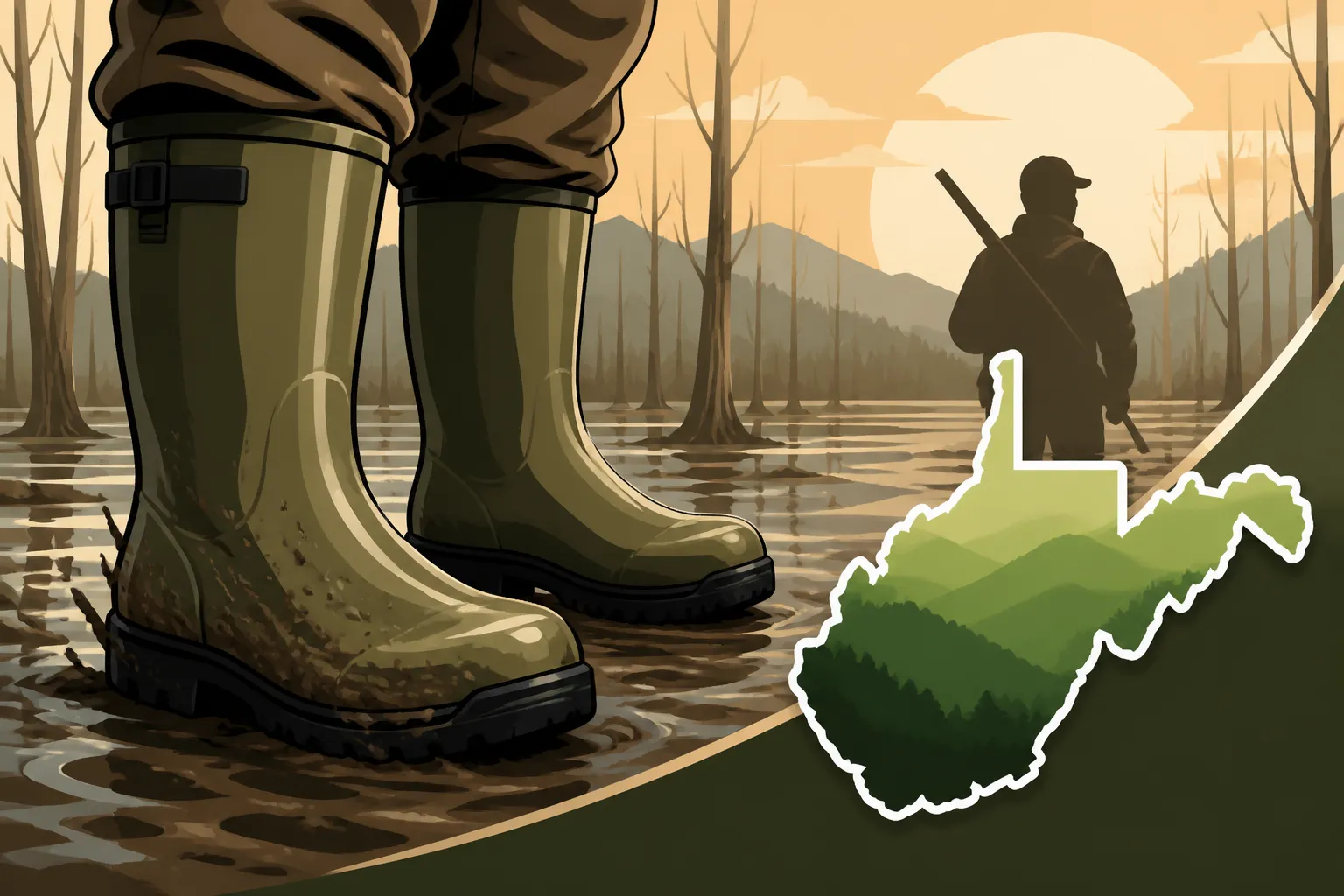
Rubber Boots for Bottomland Walking
There's nothing quite like the feeling of stepping into a promising patch of West Virginia bottomland, only to have your socks instantly soaked by an unexpected bog, a hidden creek, or just plain old marshy ground. It's a frustrating reality for many hunters who want to access those prime, low-lying areas where deer, turkeys, and even bears love to roam, especially when seeking out late-season food sources or bedding down in thick cover. This guide is all about helping you conquer those wet environments by diving deep into the world of rubber boots, ensuring your feet stay dry, comfortable, and scent-free on your next hunt.
Why Rubber Boots Are a Game-Changer for West Virginia Bottomlands
West Virginia's diverse landscape, from the steep Allegheny ridges to the meandering river valleys, often means navigating wet, swampy, or just plain muddy terrain. While a good pair of leather hiking boots might serve you well on a dry ridge, they're often a liability when you drop into a creek bottom or a flooded area. This is where rubber boots truly shine, offering a critical advantage that goes beyond just keeping your feet dry.
The Persistent Problem of Wet Feet
Let's be honest, we've all been there. You lace up your favorite leather or fabric hunting boots, feeling ready to tackle the day, only to find yourself sinking into a mud hole up to your ankles, or worse, wading through an unexpected stream crossing. The immediate discomfort of cold, wet feet is bad enough, but it quickly leads to blisters, pruned skin, and a general misery that can cut your hunt short. In West Virginia, especially in the river bottoms of the Ohio River Valley or along the countless creek drainages that crisscross the state, wet conditions aren't just a possibility – they're often a guarantee. Rubber boots provide an impenetrable barrier, allowing you to walk directly through standing water, mud, and slush without a second thought. This means you can access areas that others might avoid, giving you an edge in finding undisturbed game. Think about Hunting Ohio River Valley Bottomland or trying to get into those remote pockets where Working a Creek Bottom for Late-Season Deer could be incredibly productive. Without the right footwear, these spots become no-go zones.
Scent Control in Sensitive Areas
Beyond keeping your feet dry, rubber boots offer a significant advantage in scent control, a factor that is often underestimated by many hunters. Traditional boots, especially those with fabric or leather uppers, absorb and retain human odor. Every step you take leaves a trail of your scent on the ground, which can easily be picked up by a whitetail deer's incredibly sensitive nose. When you're trying to sneak into a bedding area or set up on a travel corridor, minimizing your scent signature is paramount. Rubber boots, with their non-porous surface, don't absorb odor in the same way. While you still need to be mindful of overall hygiene and scent management, wearing rubber boots significantly reduces the amount of ground-level human scent you leave behind. This makes them an invaluable tool when still-hunting through thick cover or approaching a field edge where deer might be feeding, allowing you to get closer to game without giving yourself away. This is particularly important when targeting wary animals that have been pressured.
Durability Against Bottomland Hazards
West Virginia's bottomlands are not just wet; they're often thick with briars, thorns, downed timber, and hidden stumps. A lesser boot might get snagged, torn, or punctured, leading to immediate failure and, you guessed it, wet feet. High-quality rubber boots are designed to withstand these abuses. Their thick rubber construction offers a level of puncture and abrasion resistance that many other boot materials simply cannot match. This durability means you can push through dense multiflora rose thickets, navigate tangled grapevine bottoms, and clamber over sharp, broken branches with greater confidence. They're built to take a beating, which is exactly what you need when you're exploring the wilder, less-traveled parts of the Appalachian foothills or the remote sections of Hunting New River Gorge Adjacent Ground. Investing in a good pair means fewer worries about your footwear failing you in the middle of a remote hunt.
Key Features to Look for in West Virginia Rubber Boots
Choosing the right pair of rubber boots isn't just about grabbing the first pair you see. There are several critical features that West Virginia hunters should prioritize to ensure comfort, performance, and longevity in our unique terrain. Consider the specific conditions you'll face before making your selection.
Insulation and Temperature Regulation
West Virginia's hunting seasons can span a wide range of temperatures, from early archery hunts in warm September to late-season muzzleloader treks in frigid December. The amount of insulation in your rubber boots will directly impact your comfort. For early season, you might prefer uninsulated or lightly insulated boots (around 400-800 grams of Thinsulate or equivalent) to prevent your feet from overheating and sweating, which can ironically lead to cold feet later on. However, if you plan on doing a lot of Cold-Weather Sitting Strategy in the Mountains or late-season deer drives, heavily insulated boots (1200-2000 grams) are often a necessity. Excessive insulation in warm weather can be as detrimental as too little in the cold, so consider what time of year you'll be using them most. Many hunters opt for two pairs—one for warmer weather and another for deep winter—or choose a moderately insulated pair (800-1000 grams) that can be adapted with different sock systems. For comprehensive information on balancing warmth and mobility, you might find valuable insights when looking for gear on platforms like GoHunt, which often details insulation levels.
Traction for Slippery Terrain
The phrase "slippery as West Virginia mud" exists for a reason! Our wet bottomlands, combined with steep slopes leading into them, can create treacherous footing. Good traction is non-negotiable. Look for rubber boots with aggressive, multi-directional tread patterns that can shed mud and grip well on wet leaves, slick rocks, and steep, muddy banks. A deep lug pattern will give you the bite you need to climb out of a hollow or traverse a tricky creek crossing. Boots designed with self-cleaning soles are a huge bonus, as they prevent mud from caking up and turning your treads into smooth skis. While not always directly comparable to mountain hiking boots, the sole pattern should still be robust enough to give you confidence, especially if you're Reading West Virginia Mud for Fresh Deer Movement and trying to stay upright while doing it. The stability provided by excellent traction can prevent falls and injuries, keeping you safer and more effective in the field.
Fit and Comfort for Long Days
A rubber boot that doesn't fit well is a miserable experience, plain and simple. You'll be walking miles in these boots, often through challenging conditions, so comfort is paramount. Look for boots that fit snugly around your ankle and calf to prevent heel slip, which causes blisters. However, they shouldn't be so tight that they restrict circulation or make it difficult to pull them on and off. Many models feature adjustable gussets or buckles to customize the fit around your calf, which is particularly useful if you wear bulky pants or want to tuck them in. Arch support is another critical, often overlooked, factor. While rubber boots aren't typically known for their orthopedic qualities, some brands offer better arch support or allow for aftermarket insoles. Try on boots with the thickest socks you plan to wear, and walk around the store to simulate field conditions. Don't underestimate the importance of a comfortable boot, especially when you're covering ground during a long day of Squirrel and Small Game Hunting in West Virginia or tracking a deer.
Top Brands and How They Stack Up for WV Hunters
When it comes to rubber boots, the market offers a wide variety, each with its own strengths and weaknesses. For West Virginia hunters, the choice often comes down to balancing weight, insulation, durability, and cost. Understanding some of the leading options can help you make an informed decision.
Lightweight and Packable Options
For early-season scouting or hunting in warmer conditions, or when you need to cover significant ground, lightweight rubber boots are a blessing. These boots prioritize mobility and reduced bulk, making them easier to walk in for longer distances and less tiring on your legs. They often feature less insulation, which is ideal for September and October hunts when temperatures can still be quite warm. Brands focusing on this category might use lighter rubber compounds or incorporate neoprene for flexibility without adding excessive weight. While they might not be built for deep winter sits, their ease of movement makes them perfect for still-hunting or running and gunning for turkeys in wet spring conditions. If you're comparing options, a tool like GoHunt might offer user reviews and specifications that highlight the weight and packability of different models, helping you identify those best suited for covering miles in moderate weather.
Heavy-Duty, Cold-Weather Workhorses
When the mercury drops and the ground freezes, thaws, and then refreezes, you need a different kind of rubber boot. These heavy-duty options are built for extreme cold and often feature significant insulation, thick soles, and robust construction. They are designed to keep your feet warm even during prolonged stationary periods, which is essential for treestand hunting in late November or December. The trade-off is often increased weight and less flexibility, but the warmth and protection they offer are unmatched. These boots are your go-to for situations where Hunting the West Virginia Rut in November means sitting still for hours in freezing temperatures, or when the snow starts to fly. While they might feel a bit clunky for long treks, their ability to ward off frostbite and provide comfort in bitter cold makes them indispensable for dedicated late-season hunters. Remember, keeping your feet warm is not just about comfort; it's about safety and extending your time in the field, allowing you to patiently wait for that perfect shot.
| Feature | Lightweight/Packable Boots | Heavy-Duty/Cold-Weather Boots |
|---|---|---|
| Ideal Season | Early Archery, Spring Turkey, Scouting | Late Archery, Muzzleloader, Gun Season (late fall/winter) |
| Insulation | Minimal (0-800g) or uninsulated | Heavy (1200g+) |
| Weight | Lighter, more agile | Heavier, more substantial |
| Flexibility | More flexible, easier for long walks | Less flexible, built for warmth over mobility |
| Primary Benefit | Comfort on the move, scent control, dry feet in moderate conditions | Extreme warmth, deep snow/water protection, scent control in cold |
| Terrain | Mixed terrain, less extreme cold, shallower water | Deep mud, slush, standing water, extreme cold |
Maintenance and Care for Longevity
Even the toughest rubber boots need a little love to last through multiple West Virginia hunting seasons. Proper care isn't just about cleanliness; it's about preventing degradation of the rubber and insulation, ensuring they continue to perform when you need them most. Neglecting your boots can lead to cracking, leaks, and a much shorter lifespan for your investment.
Cleaning and Drying Routines
After a long day in the woods, especially if you've been navigating muddy creek bottoms or swampy areas, your boots will inevitably be covered in grime. The first step is to clean them thoroughly. Use a hose or a bucket of water and a stiff brush to remove all mud, dirt, and debris from the exterior, paying close attention to the tread pattern. Not only does this keep your boots looking good, but it also prevents caked-on mud from attracting pests or harboring bacteria. Once the exterior is clean, the interior needs attention. While rubber boots are waterproof on the outside, moisture can still get in from sweat, or from water splashing over the top if you misstep. It’s crucial to dry them thoroughly inside. Avoid direct heat sources like campfires or heaters, as extreme heat can dry out and crack the rubber. Instead, remove any insoles, and let them air dry in a well-ventilated area, preferably upside down to allow moisture to escape. You can stuff them with newspaper or specialized boot dryers to absorb moisture and speed up the process. This attention to detail can prevent that dreaded "funk" and ensure your boots are ready for the next adventure.
Storage Tips for the Off-Season
When hunting season wraps up, proper storage is key to extending the life of your rubber boots. Before putting them away, make sure they are completely clean and dry, both inside and out. Store them in a cool, dark, and dry place, away from direct sunlight and extreme temperature fluctuations. Sunlight, especially UV rays, can cause rubber to degrade, crack, and lose its elasticity over time. Avoid storing them near chemicals, solvents, or fuel, as these can also break down rubber compounds. If possible, store them upright to help maintain their shape. You can even stuff them loosely with newspaper or boot trees to prevent them from creasing or collapsing, which could lead to weak points in the rubber. A little foresight in storage can mean the difference between getting many seasons out of a quality pair of rubber boots and finding them cracked and unusable when you pull them out for next year's Bowhunting West Virginia's Long Archery Season. Remember, these boots are an investment in your comfort and success in the field, so treat them well!
Disclaimer
This article is for general informational purposes only and does not constitute professional advice. Laws, prices and regulations vary by location and change over time. Consult a qualified professional for guidance on your specific situation.