Boots for Walking West Virginia Ridges
There's nothing quite like the feeling of anticipation as you step out of the truck before dawn, the crisp West Virginia air filling your lungs. But that feeling can quickly turn to dread if your feet aren't up to the task of tackling our notoriously rugged and unforgiving terrain. Anyone who's spent time chasing deer or turkeys through the Monongahela National Forest or up a steep Allegheny ridge knows that the wrong boots can ruin a hunt faster than a missed shot. This guide is all about helping you pick the perfect footwear to keep you comfortable, supported, and silently moving through the unique challenges of West Virginia's hills and hollows.
The Unique Demands of West Virginia's Terrain
West Virginia isn't known as the Mountain State for nothing, and our hunting grounds present a specific set of challenges that your boots need to be ready for. This isn't flat-land hunting; this is vertical country, often wet, and almost always rocky.
Steep Inclines and Declines
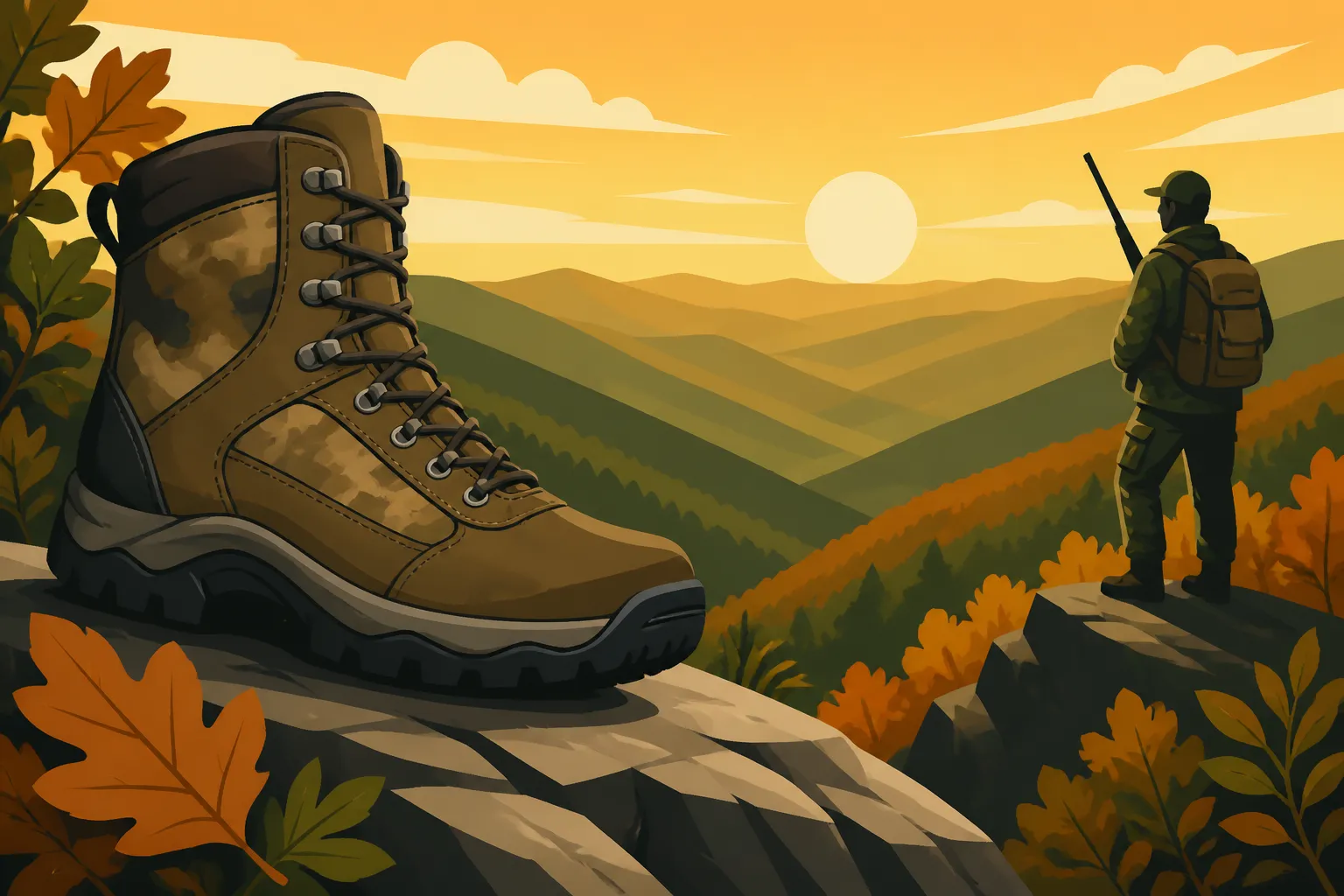
When you're Hunting Steep Allegheny Ridges, you're not just walking; you're often climbing, scrambling, and then carefully descending. This puts immense pressure on your ankles and the traction of your soles. A boot that feels fine on flat ground will quickly betray you when you're trying to maintain your footing on a 45-degree slope covered in wet leaves. You need a boot that grips like a mountain goat and provides the stability to prevent rolls and sprains, especially when carrying a pack full of gear or, even better, a harvested deer.
Imagine you've just spotted a beautiful buck on a bench below you. Getting to that buck quietly and safely, especially if you need to circle for the wind, means navigating steep, uneven ground. Your boots are the first point of contact, and their ability to bite into the earth and keep your foot from sliding inside the boot itself is paramount.
Rocky and Uneven Footing
Whether you're traversing a shale slide or picking your way through a creek bed, West Virginia's terrain is almost universally rocky. This means your boots need robust soles that can absorb impact and protect your feet from sharp edges. Thin-soled boots will leave your feet screaming in pain after just a few hours of navigating these unforgiving surfaces. Furthermore, the constant shifting of rocks underfoot demands a boot with excellent torsional rigidity—meaning it resists twisting—to prevent your foot from getting thrown off balance.
Think about still-hunting in areas like the Cranberry WMA, where the ground is a mix of exposed rock, slippery moss, and hidden roots. Every step is a test. You need boots that feel like an extension of your foot, allowing you to "feel" the ground just enough to be agile but robust enough to cushion against constant abuse. This is where a good quality boot truly shines, turning what could be a painful slog into a manageable trek.
Wet Conditions and Stream Crossings
It's West Virginia; it's going to rain, and you're going to encounter water. From dew-soaked early morning hunts to unexpected downpours, boggy areas, and countless stream crossings, keeping your feet dry is a constant battle. Nothing saps morale and comfort faster than cold, wet feet. Proper waterproofing is non-negotiable, but it needs to be breathable enough to prevent your feet from sweating profusely from the inside out, which also leads to discomfort and blisters.
Many hunting areas, especially if you're venturing off the beaten path, involve crossing small streams or navigating marshy sections. You might be Hunting Ohio River Valley Bottomland or moving through a drainage in the mountains; either way, water is present. A good pair of boots will have a reliable waterproof membrane and construction that ensures water stays out, allowing you to focus on the hunt, not on squishing through soaked socks.
Seasonal Variations
West Virginia's hunting seasons span a wide range of temperatures and conditions. Early archery season can be warm and humid, while late muzzleloader season can bring bitter cold and deep snow. Your choice of boot needs to reflect these changes. A heavily insulated boot will cook your feet in September, leading to blisters and discomfort. Conversely, uninsulated boots will leave your toes numb in December, making those long sits on a deer stand unbearable.
Understanding the specific conditions you'll be hunting in is crucial. For early season, breathability and light waterproofing might be key. For late season, insulation, aggressive traction for snow and ice, and extreme waterproofing become paramount. Sometimes, having a couple of different pairs of boots for different seasons is the smartest approach to ensure you're always prepared for what our mountains throw at you.
Key Features to Prioritize in West Virginia Hunting Boots
When you're trying to find that perfect pair of boots for our challenging West Virginia terrain, you really need to drill down on a few critical features. These aren't just nice-to-haves; they're essential for comfort, safety, and ultimately, your success in the field.
Ankle Support and Stability
This is probably the most critical feature for navigating West Virginia's uneven, rocky, and steep ground. Our ridges and hollows are notorious for surprise ankle-twisters. You might be focused on spotting a deer, only to step on a loose rock or a hidden root. Boots with a high cuff and rigid ankle support help prevent these painful and hunt-ending injuries. Look for boots that truly cradle your ankle, providing a sense of security without restricting your natural movement too much.
A good example is when you're carrying a heavy pack, perhaps a Packs for a Monongahela Forest Day Hunt. That extra weight significantly increases the strain on your ankles, making robust support even more vital. Boots that lace up snugly and feature stiff sidewalls around the ankle will give you the confidence to move deliberately and safely, even when you're Dragging a Deer Off a Steep Ridge. Don't underestimate the importance of this; a sprained ankle can put you out of the woods for weeks.
Aggressive Outsole and Traction
The outsole of your boot is your connection to the ground, and in West Virginia, you need a seriously aggressive grip. Look for deep, multi-directional lugs that can bite into soft earth, mud, loose gravel, and even wet rock. The rubber compound itself matters too; some are softer for better grip but wear faster, while others are harder for durability but might slip more on wet surfaces. A good balance is key.
When you're navigating a slippery laurel thicket or trying to gain purchase on a steep, leaf-covered slope, the difference between a good outsole and a mediocre one is immense. I've personally experienced sliding down slopes in boots that didn't have enough traction, which is not only frustrating but also dangerous. Pay attention to the heel brake, too—a defined heel helps prevent you from sliding forward on steep descents. Companies like GoHunt often review boots with excellent traction profiles suitable for this exact kind of environment.
Waterproofing and Breathability
As mentioned earlier, wet feet are miserable feet. A reliable waterproof membrane, like Gore-Tex or similar proprietary technologies, is a must. This membrane should be integrated throughout the boot, not just a coating. However, waterproofing alone isn't enough; breathability is equally important. Your feet sweat, especially when you're working hard climbing hills. If that sweat can't escape, it stays trapped inside, leading to dampness, blisters, and cold feet, even in dry conditions.
A quality waterproof-breathable boot creates a microclimate inside that keeps moisture out while allowing internal vapor to escape. This balance is critical for long days afield. Remember that even the best waterproof membrane needs proper care; regular cleaning and re-treatment can extend its life and effectiveness. Don't skimp here; investing in good waterproofing saves you from countless uncomfortable situations.
Insulation (Seasonal Consideration)
The amount of insulation you need depends entirely on when you plan to hunt. For early season archery or spring turkey, little to no insulation is ideal to prevent overheating. Lightweight, breathable boots are your friends then. However, for late season deer or bear hunting when temperatures can plummet and snow is on the ground, insulation becomes crucial.
Insulation is typically measured in grams (e.g., 200g, 400g, 800g, 1000g+).
- 200-400g: Good for cool to cold conditions, active hunting.
- 600-800g: Suitable for colder temperatures, less active hunting, or prolonged sits.
- 1000g+: Reserved for extreme cold and very static hunting, like sitting in a stand all day during Cold-Weather Sitting Strategy in the Mountains.
Consider your activity level and the lowest temperatures you expect to encounter. If you tend to run cold, err on the side of more insulation for late-season hunts. It's often better to have slightly too much insulation and vent than too little and freeze.
Fit and Comfort
This might seem obvious, but fit is king. Even the most technically advanced boot is useless if it doesn't fit your foot properly. A poor fit leads to hot spots, blisters, and overall discomfort, making every step a chore. Always try boots on at the end of the day when your feet are slightly swollen, and wear the type of socks you'd hunt in.
Walk around the store, especially on any inclined surfaces if available. Pay attention to heel lift, toe room (you should have about a thumb's width of space in front of your longest toe to prevent jamming on descents), and overall snugness. Your foot shouldn't slide around inside the boot, but it shouldn't feel cramped either. Different brands and models have different last shapes, so what fits one person perfectly might not work for another. Don't rush this process; your feet will thank you later. Checking reviews on platforms like GoHunt can also give you insights into how different boots fit various foot shapes.
Types of Boots for West Virginia Hunting
Navigating the diverse hunting landscapes of West Virginia means recognizing that one boot might not fit all scenarios. Just like you wouldn't use a squirrel rifle for bear hunting, you might need different boots for different seasons and types of terrain.
Lightweight Hikers and Early Season Boots
For the warmer days of early archery season or spring turkey, where temperatures can still be quite warm, lightweight hiking boots or less insulated hunting boots are often the best choice. These boots prioritize breathability and comfort over heavy insulation or extreme waterproofing (though some level of water resistance is still a good idea). They are designed for active hunting, covering a lot of ground, and keeping your feet cool and dry from sweat.
These boots usually feature more flexible soles, allowing for a natural gait, and are lighter, reducing fatigue over long distances. They might not offer the same bomb-proof ankle support as a heavy mountaineering boot, but they provide adequate support for typical mountain trails and less aggressive off-trail travel. Just ensure they still have decent traction for those inevitable steep sections. Brands like GoHunt often feature lighter models that are perfect for those comfortable early season days when you're Run-and-Gun Turkey Tactics on Public Land.
| Feature | Lightweight Hikers / Early Season Boots |
|---|---|
| Primary Use | Early archery, spring turkey, scouting, active hunting in warm weather |
| Insulation | Minimal to none |
| Waterproofing | Often water-resistant or light waterproof membrane |
| Ankle Support | Moderate (mid-cut) |
| Sole Flexibility | Flexible, good for long walks |
| Weight | Light to medium |
| Traction | Good, but not as aggressive for extreme mud/snow |
Mid-Weight All-Around Hunting Boots
This category is probably where most West Virginia hunters will find their primary pair of boots. Mid-weight hunting boots strike a balance between support, insulation, waterproofing, and comfort, making them versatile for a wide range of conditions from late archery through most of gun season. They typically feature higher ankle support than hikers, more robust soles for protection against rocks, and a reliable waterproof-breathable membrane.
Insulation levels usually range from 200g to 600g, making them suitable for cool to moderately cold temperatures. These boots are built to withstand the rigors of multi-day hunts, providing enough comfort for miles of walking while offering the stability needed for off-trail excursions. If you're looking for one pair of boots that can handle the majority of West Virginia's deer and bear seasons, a quality mid-weight boot is likely your best bet. They are ideal for Hunting the West Virginia Rut in November when conditions can vary wildly from crisp autumn days to early winter snow.
Heavy-Duty Mountain and Late Season Boots
When the mercury truly drops, and snow and ice become part of the equation, you'll want to reach for heavy-duty mountain or late-season boots. These are the tanks of the boot world, designed for maximum insulation, superior ankle support, and aggressive traction in the most challenging conditions. They often feature 800g to 1200g or more of insulation, robust full-grain leather or durable synthetic uppers, and extremely stiff soles for protection and stability on rugged, frozen terrain.
While heavier and less flexible, these boots are invaluable for long sits in a treestand during the colder parts of Hunting the Late-Season December Lull or for navigating deep snow while bear hunting in the mountains. Their stiff soles are also excellent for kicking steps into snow or shale on steep climbs, and the extreme ankle support minimizes the risk of injury when conditions are slick. They are less about covering vast distances quickly and more about enduring the elements and providing unwavering stability in harsh environments. When you're facing those truly brutal mountain conditions, these boots are what separate a successful, comfortable hunt from a miserable, potentially dangerous one.
Maintaining Your Boots for Longevity and Performance
You've invested in a good pair of boots, designed to tackle the gnarliest ridges and keep your feet dry. But even the best boots won't perform their best or last as long as they should if you don't give them a little love and care. Proper maintenance is absolutely crucial, especially with the abuse West Virginia hunting can dish out.
Cleaning After Every Hunt
This might seem basic, but it's often overlooked. After every hunt, especially if you've been slogging through mud, crossing creeks, or just walking through dusty fields, take a few minutes to clean your boots. Dirt and grime can degrade waterproof membranes, clog breathable fabrics, and cause leather to dry out and crack.
Use a brush and warm water to remove mud, dirt, and debris from the uppers and especially from the outsole. Pay close attention to the lugs, as packed mud can drastically reduce traction on your next outing. For stubborn dirt, a mild soap can be used, but avoid harsh detergents that can strip away natural oils or damage synthetic materials. Once clean, rinse them thoroughly to ensure no residue is left behind. This simple step can add years to the life of your boots. It’s a bit like field dressing a deer; a quick, clean job makes everything better down the line.
Proper Drying Techniques
Once your boots are clean, proper drying is paramount. Never, ever put wet boots directly onto a heat source like a campfire, radiator, or wood stove. Extreme heat can cause leather to crack, shrink, and delaminate, and it can also damage waterproof membranes and adhesives, essentially destroying your expensive footwear.
The best way to dry boots is slowly and naturally, in a well-ventilated area, away from direct heat. Remove the insoles and loosen the laces to allow maximum airflow. You can stuff them with newspaper or boot dryers (electric ones that circulate warm air, not direct heat) to help absorb moisture from the inside. Turning them upside down can also help air circulate. If you're at deer camp and need them ready for the next morning, a boot dryer is an excellent investment. Ensuring they are thoroughly dry before storing them also prevents mold and mildew from forming.
Re-Waterproofing and Conditioning
Over time, even the best factory waterproofing can diminish, and leather can dry out. Regularly re-treating your boots is vital for maintaining their performance. For leather boots, use a dedicated leather conditioner or wax, applying it evenly after cleaning and drying. This will keep the leather supple, prevent cracking, and restore its water resistance. There are many excellent products designed specifically for hunting and hiking boots that preserve breathability.
For boots with synthetic uppers or waterproof membranes, you'll want to use a spray-on or wash-in DWR (Durable Water Repellent) treatment. These products restore the external water-shedding properties, preventing the outer fabric from "wetting out" and allowing the internal waterproof membrane to do its job more effectively. Brands like GoHunt often have guides on specific re-waterproofing products and techniques to help you extend the life of your gear. Regular inspection of your boots for wear and tear, loose stitching, or developing cracks will help you address minor issues before they become major problems, keeping you on the trail and focused on the hunt.
Disclaimer
This article is for general informational purposes only and does not constitute professional advice. Laws, prices and regulations vary by location and change over time. Consult a qualified professional for guidance on your specific situation.