Climber Stands on Straight Trunks
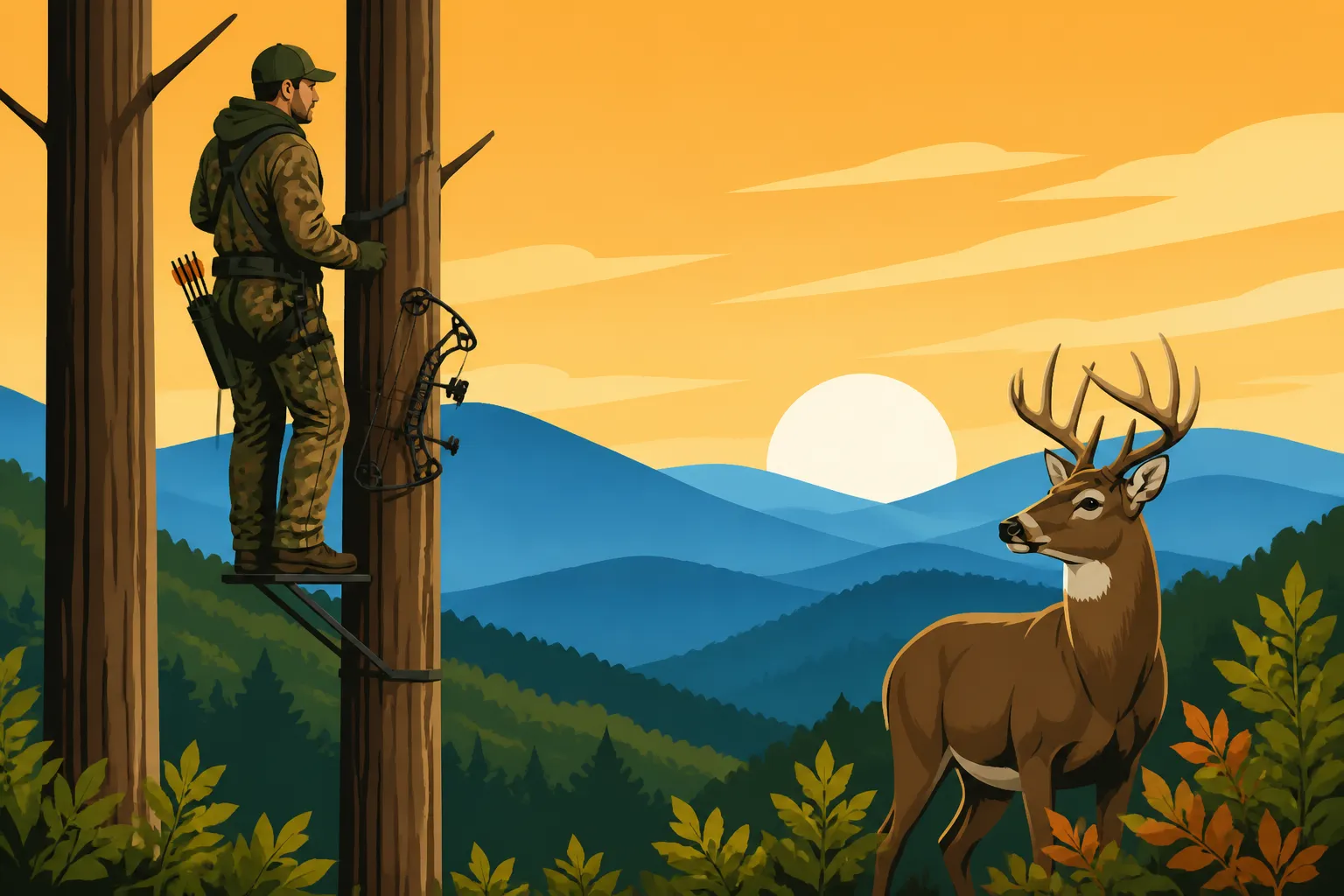
There's nothing quite like the freedom of being a mobile hunter in West Virginia, able to pick up and move your setup as the deer sign dictates. But let's be real, finding the perfect tree for your climber stand in our wild and wonderful landscape can sometimes feel like hunting for a unicorn. Between the thick laurel, the gnarled oaks, and the steep hillsides, it's easy to get frustrated when every tree seems to have a branch right where you need your platform to sit. This guide is all about cutting through that frustration, diving deep into how to effectively use climber stands specifically on those glorious, straight-trunked trees that West Virginia does offer, helping you master your setup for maximum mobility and success in our challenging, yet rewarding, woods.
The Appeal and Challenges of Climber Stands in West Virginia
Climber stands offer a level of adaptability that's hard to beat for the West Virginia deer hunter who values mobility. Being able to pack in, quickly set up, and quietly ascend a tree in a new spot can make all the difference in a successful hunt. However, our diverse topography and forest types also present unique challenges that every climber enthusiast needs to understand.
Why Climbers Are So Popular for Mobile Hunters
For many of us who hunt West Virginia, the idea of having a fixed stand location for an entire season is, frankly, a bit limiting. The deer move, the acorns drop in different areas, the rut heats up and then cools off, forcing deer into new patterns. This is where a good climber stand truly shines. You can strap it to your back, hike into a fresh area – maybe a ridge you just saw a great buck crossing, or a new clear-cut edge you've been wanting to check out – and be at hunting height within minutes of finding a suitable tree.
The beauty of a climber lies in its self-sufficiency. Unlike hang-on stands that require you to carry climbing sticks or an aiders rope, a well-designed climber is an all-in-one unit. This translates to less gear noise clanking around on your pack and fewer pieces to lose or forget. Imagine spotting fresh rubs and scrapes just off a logging road while scouting, and instead of wishing you had a pre-set stand, you can confidently know that if you find the right tree, you can be hunting that very spot the next morning. This kind of flexibility is invaluable when deer patterns shift with pressure or food availability, allowing you to react quickly rather than being tied to a single, potentially stale, location.
The Realities of West Virginia's Diverse Forests
While the mobility of a climber is a huge advantage, let's be honest, West Virginia's forests aren't always a perfect playground for them. We've all been there: you finally find that prime pinch point or an active travel corridor, only to look up and see nothing but trees that are either too small, too limby, or just plain crooked. Our state's hardwood forests, while beautiful and productive, present a mixed bag. You'll find plenty of magnificent oaks and maples, but also a fair share of gnarly hickories with their shaggy bark that can make climbing a nightmare, or dense thickets of young pines that offer no suitable trunk at all.
The frustration is real when you spend precious morning light trying to find a climbable tree, only to end up settling for a less-than-ideal spot or moving on, wasting valuable hunting time. Sometimes, you'll be on a Steep Allegheny Ridge and the only trees that offer concealment are leaning severely or have massive low limbs that make a safe ascent impossible. It's a constant balancing act between finding a strategic location and finding a tree that your stand can actually get a purchase on. Understanding these challenges upfront helps temper expectations and, more importantly, informs your scouting process so you can better identify areas with climber-friendly timber.
Identifying the Ideal Straight Trunks for Your Climber
Success with a climber stand in West Virginia hinges almost entirely on your ability to quickly identify and utilize the right kind of tree. It's not just about finding any tree; it's about finding the perfect tree that allows for a safe, quiet, and efficient climb.
Key Characteristics of a "Climbable" Tree
When you're out in the woods with your climber, you're essentially looking for a specific type of tree. First and foremost, you need a straight trunk. This might sound obvious, but many trees have a slight lean or curve that can make climbing difficult or even dangerous, causing the stand to bind or slip. The ideal tree will ascend vertically without significant bends or twists.
Next, consider the bark texture. Smooth-barked trees like Beech or Red Maple are generally fantastic for climbers because the stand's grippers can get a consistent bite. Trees with moderately furrowed bark, such as White Oak or Yellow Poplar, can also work well, but you need to ensure the grippers aren't getting hung up in deep crevices. Shaggy-barked trees like Hickory or highly textured pines can be problematic. The stand might not grip consistently, or bark fragments could break off during the ascent, leading to instability and noise.
Finally, trunk diameter is crucial. Most climber stands have a specified range of tree diameters they can accommodate. A tree that's too small might not allow the stand to get a secure grip, or the top and bottom sections could overlap too much, making climbing awkward. A tree that's too large will prevent the stand's arms from encircling the trunk properly. Aim for a tree within the recommended diameter of your stand, typically between 8 and 20 inches, without any major knots, burls, or low-hanging branches up to your desired hunting height. Remember, every branch you encounter means either having to saw it off (which is often against public land rules and makes noise) or try to climb around it, which is both noisy and unsafe.
Here's a quick reference table for common West Virginia tree types and their general suitability for climber stands:
| Tree Species | Bark Texture | Common Diameter Range (inches) | Low Limbs Tendency | Climber Suitability | Notes |
|---|---|---|---|---|---|
| Red Maple | Smooth to lightly furrowed | 10-20 | Moderate | Very Good | Excellent for climbing, common in many areas. |
| American Beech | Very Smooth | 8-18 | Moderate | Excellent | Superb climbing surface, but can be smaller diameter or clustered. |
| Yellow Poplar (Tulip Tree) | Smooth to ridged | 15-30 | High | Good | Tall and straight, but often has limbs high up. Watch for larger diameters. |
| White Oak | Furrowed | 12-24 | Moderate | Good | Sturdy, common food source, generally climbable. |
| Black Cherry | Smooth with horizontal lenticels | 10-20 | Moderate | Very Good | Often straight, good bark for climbing. |
| Sweet Birch | Peeling/Papery (young) | 8-16 | Low to Moderate | Good | Younger trees work well, older ones can be too shaggy. |
| Eastern White Pine (Mature) | Scaly/Rough | 15-30 | High | Poor to Fair | Rough bark, can be sappy, often limby and hard to grip. |
| Shagbark Hickory | Shaggy/Deep Furrowed | 10-20 | Moderate | Fair | Deep furrows can interfere significantly with stand grippers. |
Scouting for Climber-Friendly Locations
The best time to ensure you have a climbable tree for your hunt is long before opening day. Scouting West Virginia Public Land Before Season is not just about finding deer sign; it's about finding the right trees. During the off-season, when leaves are down, you can clearly see tree structure and identify promising locations. Walk potential routes, paying close attention to the timber. Use a tool like GoHunt to analyze aerial photos, looking for areas with a higher concentration of desirable timber types. Often, younger stands of hardwoods, especially in areas that were logged decades ago or fields that have reverted to forest, will have straighter, more uniform trees.
Don't just look for a tree, look for multiple options within a given area. If you find a perfect Red Maple in a great spot, try to locate a backup within a reasonable distance in case that prime spot gets pressured or the wind shifts. While Reading Aerial Photos for Eastern Panhandle Deer can help identify travel corridors and bedding areas, it also lets you zoom in and get a sense of timber density and type. Look for breaks in the canopy or areas that appear uniformly treed, as these might indicate straighter growth. Think about how the sun hits the canopy – trees that grow in competition for sunlight often grow taller and straighter.
Also, consider how accessible these trees are. Is the approach quiet? Can you get to them without busting deer? Even the best tree in the world is useless if you can't get to it undetected. Remember, the goal of a climber is mobility, so finding multiple suitable trees in various strategic locations within your hunting grounds will give you unparalleled flexibility when the season arrives.
Mastering the Art of Climbing: Techniques and Safety
Once you've found that perfect West Virginia tree for your climber, the next step is a safe and efficient ascent. Climbing effectively is a skill that improves with practice, and prioritizing safety is paramount.
Proper Setup and Ascent Techniques
Setting up your climber stand properly at the base of the tree is the foundation for a safe climb. First, choose a tree that is as straight as possible and within the recommended diameter range for your stand. Clear any brush or debris from the base of the tree to give you firm footing. Orient the stand so you're facing the tree, allowing you to use your body weight against the trunk for leverage.
Secure the lower platform section first. Many stands have a strap or chain system that locks around the tree. Make sure this is snug and properly cinched. The platform should be angled slightly upward as it sits on the ground. This upward angle is critical because as you ascend, the stand's weight will cause it to flatten out. If you start level, it might tilt downwards at height, making you feel unstable. Attach the upper section to the tree, ensuring its straps are also secure. Use a tether strap to connect the upper and lower sections, preventing the bottom from falling if you accidentally kick it loose during the climb.
When ascending, the technique involves a coordinated movement of your upper body and lower body. Most hunters will pull up on the hand section while pushing down with their feet on the platform, then slide the hand section up the tree, then slide the foot platform up. It's a rhythmic "sit, stand, slide" motion. Keep your feet spread on the platform for stability, and use your legs to do most of the work. Avoid trying to muscle your way up with just your arms; this leads to fatigue and potential slips. Keep your back straight and your movements controlled and deliberate. Practice this in your backyard a few times before taking it to the woods. You'll quickly find your rhythm, and with each climb, you'll get smoother and quieter. Always maintain three points of contact (two hands and one foot, or two feet and one hand) as you adjust your position.
Essential Safety Gear and Practices
I cannot stress this enough: safety is not optional when using a tree stand, especially a climber. West Virginia's rugged terrain and remote hunting areas mean that a fall can have catastrophic consequences, and help might be a long way off.
Your number one piece of safety gear is a full-body safety harness. This is non-negotiable. Wear it from the moment your feet leave the ground until they touch back down. While some older hunters might scoff, modern harnesses are comfortable and streamlined; there's no excuse not to wear one. The harness should be securely attached to the tree via a lifeline or safety rope before you start climbing. As you ascend, adjust your tether so you are always connected to the tree, maintaining a connection from the ground all the way to your hunting height. Many companies, including those you might find on GoHunt, sell complete lifeline systems that make this simple.
Before every hunt, inspect your stand's straps, cables, and connections for any signs of wear, fraying, or damage. Check the tree itself for any loose bark, dead branches above you, or insect activity that could compromise its integrity. Ensure all bolts are tight and moving parts are functioning smoothly. Never climb higher than necessary, and always choose a tree that feels stable and secure. On our Steep Allegheny Ridges, proper technique and unwavering focus become even more critical due to the uneven ground and potential for tricky approaches.
If you're hunting in a remote area, consider carrying a small, brightly colored flag or ribbon to mark your tree if you need to descend for any reason, especially when Blood Trailing After Dark in West Virginia. Also, let someone know where you're hunting and when you expect to return. Better safe than sorry, always.
Maximizing Your Hunt from a Climber Stand
Once you're safely perched high in your climber, the real hunting begins. Strategic placement, proper concealment, and understanding how your stand works can significantly increase your chances of success.
Strategic Placement and Concealment
Even if you've found the most climbable tree in West Virginia, its effectiveness is wasted if it's not in the right spot or if you're not properly concealed. When choosing your final height, aim for a position that gives you good visibility of your expected shooting lanes while also providing adequate cover from the deer's sightline. Often, this means positioning yourself just below the main canopy or using smaller branches around you to break up your outline. Don't be afraid to ascend higher than you might think necessary; sometimes an extra five feet of elevation makes all the difference in seeing over terrain features or catching deer before they scent you.
Always consider the wind and thermals, especially in West Virginia's rolling hills. Wind and Thermals on a Steep Ridge can be notoriously tricky, swirling and shifting throughout the day. Set your stand up so your scent cone is blowing away from your anticipated deer movement. This often means hunting crosswind or with a quartering wind, rather than a direct headwind or tailwind. Use the terrain to your advantage – a ridge-top saddle or a bench can create natural funnels, and positioning your climber slightly off to the side of the main trail can give you a better shot angle and keep you from being silhouetted directly over the deer's path. Hunting a Ridge-Top Saddle for Rutting Bucks often requires this kind of precise placement.
Concealment isn't just about height; it's also about your clothes and your stillness. Wear camo that blends with the tree and surrounding vegetation. Avoid fidgeting or making sudden movements. Your goal is to become an extension of the tree, invisible to the wary eyes below.
Climber Stand Features and Modifications
Climber stands come in a variety of designs, and understanding their features can help you choose the right one for West Virginia's specific demands. Some common designs include open-front models, which offer unrestricted shooting lanes for bowhunters, and sit-and-climb models, which provide a comfortable seat that doubles as the climbing aid. Both have their place, but an open-front might be preferred for those tricky angled shots you sometimes get in thick timber.
Platform size and seat comfort are huge factors, especially if you plan on all-day sits during the rut. A larger platform offers more room to maneuver and stretch your legs, but adds weight. A comfortable seat can make the difference between enduring a long hunt and packing up early due to discomfort. Brands like Summit, Lone Wolf (now Lone Wolf Custom Gear), and API Outdoors offer a range of models with different comfort levels and weight considerations. When scouting for a Portable Stands for Public Land Mobility, consider how far you'll be packing it in. Every ounce counts on a long hike up a mountain.
Many hunters also make small modifications to their climbers to enhance functionality or quietness. Aftermarket backpack straps with extra padding can vastly improve comfort during long treks. Silencing tape or rubber bushings can be added to metal-on-metal contact points to eliminate squeaks and clangs, which are crucial for quiet operation when deer are nearby. Accessories like bow holders, gear hooks, and small cargo nets can keep your equipment organized and within reach, reducing movement in the stand. Remember that every piece of gear, including your stand, should be checked for noise. A squeaky buckle or a loose cable can ruin a hunt when silence is key. Think about using a safety rope that also doubles as a pull-up rope for your bow or rifle, ensuring you're never climbing with a weapon in hand.
Disclaimer
This article is for general informational purposes only and does not constitute professional advice. Laws, prices and regulations vary by location and change over time. Consult a qualified professional for guidance on your specific situation.