Muzzleloaders Under West Virginia Rules
Oh, the muzzleloader season in West Virginia! It's a special time, isn't it? For many of us, it represents a quieter, more deliberate approach to deer hunting, a chance to extend our time in the woods after the hustle and bustle of rifle season, or even before it depending on the specific county. But if you've ever felt a bit overwhelmed trying to keep all the rules straight – from what kind of powder you can use to what caliber is actually legal – you're absolutely not alone. West Virginia has some specific regulations that can definitely trip up a new muzzleloader hunter, or even a seasoned one who's just looking for a refresher. This guide is going to break down everything you need to know to confidently and legally hunt with your muzzleloader in the Mountain State.
Understanding West Virginia's Muzzleloader Seasons
Let's talk about when you can actually load up that smokepole and head into the woods. West Virginia's hunting seasons are designed with a lot of thought, and the muzzleloader season often feels like a bridge, or a quieter, more reflective opportunity sandwiched between other hunts.
General Muzzleloader Deer Season Dates
For most of us, the dedicated muzzleloader deer season is the primary event. This season typically kicks in after the traditional buck gun season has wrapped up for a few weeks, or sometimes even runs concurrently in specific areas or through special regulations. It's a fantastic chance to get back out when the leaves are mostly down, the woods are a bit more open, and the temperatures are decidedly chillier. This timing often places it right in the sweet spot for tracking deer in light snow, and the deer, having been pressured by earlier seasons, are often moving more cautiously.
Hunting during this specific window offers a unique strategic advantage. The frantic energy of the rut is usually winding down, but deer are still very much focused on finding and utilizing available food sources before the deep winter sets in. This means you might find them in more predictable patterns around cutovers, standing crops, or natural mast. It can truly feel like a "second chance" at a deer, but it requires patience and a good understanding of post-rut deer behavior. Often, the woods are quieter too, with fewer hunters out than during the initial gun season, which can make for a more peaceful experience. If you’ve spent the general gun season chasing ghosts, the muzzleloader season can be a refreshing change of pace, offering a chance to reconnect with the slower rhythm of the woods. For more on strategies during this time, consider delving into Muzzleloader Deer Hunting in West Virginia.
Muzzleloaders During Other Seasons
Now, this is where it can get a little nuanced, and it’s important to clarify. Generally, West Virginia allows muzzleloaders that meet specific criteria to be used during the general firearms seasons for deer. This means if your muzzleloader is .38 caliber or larger for deer, or .45 caliber or larger for bear, and otherwise meets the legal definition of a firearm for that season, you can often use it during the statewide buck gun season. So, if you prefer the challenge and tradition of a muzzleloader but still want to hunt during the main gun season, you usually can, provided your weapon meets the general firearm requirements.
However, it's a completely different story for archery season. Muzzleloaders, regardless of how "primitive" they may seem, are generally not permitted during the statewide archery or crossbow seasons. These seasons are specifically designated for bowhunting equipment. There might be very specific, limited exceptions in unique circumstances or for certain disabled hunter permits, but as a rule of thumb, leave the muzzleloader at home during bow season. The intent of archery season is to provide a distinct hunting experience, and introducing firearms, even primitive ones, would alter that. Always double-check the current hunting proclamation for the specific season and county you plan to hunt to ensure you’re abiding by all regulations, as West Virginia Deer Season Structure Explained covers.
Legal Muzzleloader Types and Calibers
West Virginia has a fairly broad approach to muzzleloaders, accommodating both the deeply traditionalist hunter and those who prefer a more modern, technologically advanced "primitive" weapon. But there are still some key distinctions to understand.
Traditional Flintlock and Percussion Caps
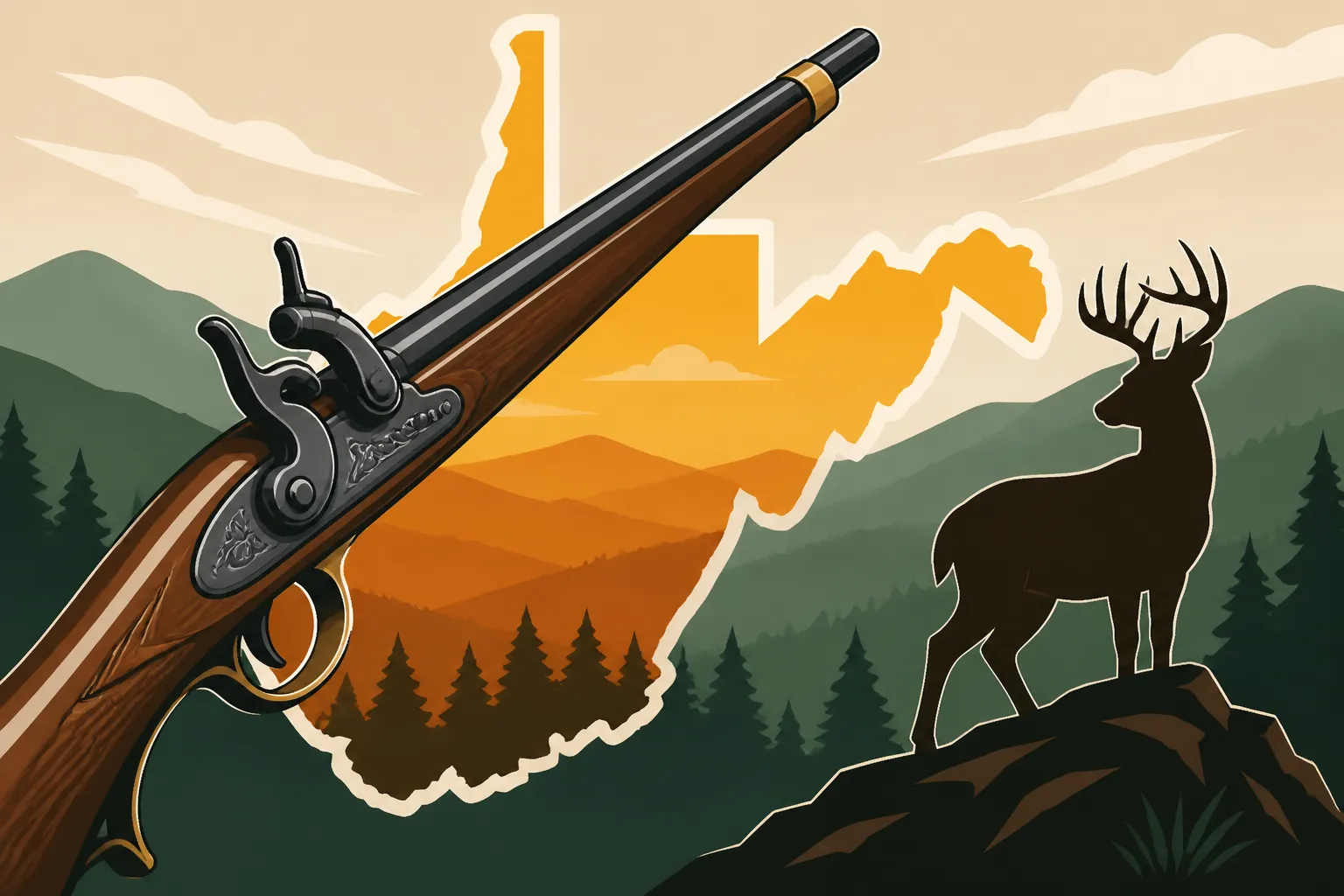
For many, the true spirit of muzzleloader hunting lies in the crack of a flintlock or the satisfying thump of a percussion cap. West Virginia embraces this tradition wholeheartedly. Both flintlock and percussion cap ignition systems are perfectly legal for hunting in the state, provided they meet the caliber requirements. Flintlocks, with their distinctive shower of sparks, ignite a pan of powder, which then flashes through a touchhole to the main charge. Percussion caps use a small, self-contained cap of explosive material placed over a nipple, which is struck by the hammer to ignite the powder.
Hunting with these traditional systems is an experience in itself. It demands a closer attention to detail: keeping your powder dry, ensuring your flint is sharp, and maintaining a clear nipple. The range is typically shorter, and the accuracy can be more dependent on external factors like wind and moisture, making the hunt more challenging and rewarding. It truly harks back to a bygone era of hunting, connecting you with the historical roots of the sport. While they might not have the same "point and shoot" feel as a modern rifle, mastering a traditional muzzleloader gives you a profound sense of accomplishment when you bring down an animal. Plus, the smell of black powder after a shot? Unmistakable and nostalgic!
Modern In-Line Muzzleloaders and Ignitions
On the flip side, West Virginia also fully permits modern in-line muzzleloaders. These are what most people think of when they hear "muzzleloader" today. They feature a more direct path for ignition, usually employing 209 shotgun primers, which are known for their reliability and hot, consistent flame. This "in-line" design means the primer is directly behind the main powder charge, leading to more consistent ignition and often, greater accuracy and extended effective range compared to their traditional counterparts.
The prevalence of in-line muzzleloaders has made the sport more accessible to a wider audience, as they can feel much more like a modern rifle in terms of handling and accuracy. Many feature scopes (which are legal in West Virginia for muzzleloaders), synthetic stocks, and rifled barrels designed to stabilize saboted projectiles. Speaking of sabots, which we'll discuss more in a moment, these devices allow you to shoot smaller-diameter, more aerodynamic bullets from a larger bore, further enhancing range and ballistic performance. When you're trying to reach out across a hollow on a West Virginia ridge, that extra reliability and accuracy can make all the difference. Just remember, even with modern advancements, it's still a single-shot affair, so every squeeze of the trigger counts.
Minimum Caliber Requirements
West Virginia has clear minimum caliber rules to ensure ethical hunting practices. For deer, your muzzleloader must be at least .40 caliber. For black bear, the minimum caliber jumps to .45 caliber. These regulations are in place to ensure that the projectile has sufficient energy and mass to humanely harvest the animal, preventing unnecessary suffering.
Most muzzleloader hunters opt for .50 caliber, as it easily satisfies both deer and bear requirements. The .50 caliber offers a wide range of projectile options, from round balls to heavy conical bullets and sabots. Some hunters still favor the larger .54 caliber, which delivers even more punch. While you might find older .45 caliber muzzleloaders perfectly suited for deer, if you intend to pursue West Virginia's Black Bear Comeback during muzzleloader season, you must be using at least a .45 caliber firearm. Choosing the right caliber is about more than just legality; it's about matching your equipment to the game you pursue and ensuring an ethical shot. Always make sure your chosen firearm and ammunition combination meet these minimums, and always consult the current WVDNR hunting regulations for any updates.
Ammunition and Propellant Regulations
Beyond the gun itself, what you put into it is just as crucial, and West Virginia has guidelines for that too. This ensures both safety and consistent hunting practices.
Approved Projectiles and Sabots
West Virginia is quite progressive when it comes to muzzleloader projectiles, allowing a variety of options that cater to different preferences and needs. You can use traditional round balls, which are often favored by flintlock and percussion cap enthusiasts for their simplicity and historical accuracy. Conical bullets, which are essentially elongated lead projectiles designed to fit the bore, are also very popular, offering increased weight and often better ballistic performance than round balls.
And yes, sabots are completely legal in West Virginia! Sabots are plastic sleeves that encase a smaller-diameter bullet, allowing a modern, high-performance rifle bullet (like a .45 caliber bullet) to be fired from a larger muzzleloader bore (like a .50 caliber). This combination allows for tighter groups, flatter trajectories, and often more devastating terminal performance. The plastic sabot peels away from the bullet shortly after it leaves the muzzle, allowing the bullet to fly true. The ability to use sabots has significantly extended the effective range and accuracy of muzzleloaders, making them formidable hunting tools, especially on the varied terrain of West Virginia. For a deeper dive into these options, check out Sabot Versus Conical for Deer.
Powder Types and Loading Limits
When it comes to powder, you're primarily looking at two categories: traditional black powder and modern black powder substitutes. Both are legal in West Virginia.
- Black Powder: This is the original, classic propellant. It comes in different granulations, typically designated by "F" ratings (e.g., FFFg for pistols and smaller bores, FFg for rifles, Fg for cannons). For most muzzleloading rifles, FFg is the go-to. Black powder burns dirty and produces a significant amount of smoke, but it has a consistent, reliable ignition.
- Black Powder Substitutes: These are modern propellants designed to mimic black powder's performance while being cleaner, less corrosive, and often more consistent. Popular brands include Pyrodex, Triple Seven, and Hodgdon's "777." These substitutes are measured volumetrically like black powder but often have different weight-for-volume ratios, so always follow the manufacturer's recommendations for equivalent loads.
As for loading limits, West Virginia regulations typically defer to the manufacturer's recommendations for the specific muzzleloader and powder being used. There isn't a statewide "maximum grain charge" set by the state, but rather an expectation of safe and responsible loading. Overloading can be extremely dangerous, so always start with reduced loads during practice and work your way up to a safe and accurate charge within your firearm's specifications. Consistency is key, so measuring your powder accurately with a volumetric measure each time is paramount.
Primer Types and Storage
The primer is the spark that ignites your powder, and its reliability is absolutely crucial. As we touched on earlier, traditional percussion caps (typically #10 or #11) are used for older style muzzleloaders. Flintlocks, of course, use a pan charge ignited by a flint. Modern in-line muzzleloaders almost universally use 209 shotgun primers, known for their strong, reliable ignition, even in adverse weather.
Regardless of the type, proper storage of primers and caps is vital for safety and performance. They should always be kept in their original packaging, away from extreme temperatures, moisture, and any potential sources of impact or ignition. A damp or old primer is a common culprit for a misfire, which can be incredibly frustrating when you finally get a shot opportunity. Consider carrying a small, waterproof container for your spare caps or primers when hunting, especially during the often-damp West Virginia late season. Keeping your ignition system dry and well-maintained is a fundamental aspect of successful muzzleloader hunting, a lesson many of us have learned the hard way after a missed opportunity in a misty hollow. When you're Keeping Powder Dry in Wet Snow, don't forget the primers!
| Feature | Traditional Muzzleloader (Flintlock/Percussion) | Modern In-Line Muzzleloader |
|---|---|---|
| Ignition | Flintlock or Percussion Cap | 209 Shotgun Primer |
| Accuracy | Good, but can be more variable | Excellent, often rifle-like |
| Effective Range | Shorter (50-100 yards typical) | Longer (150-200+ yards typical) |
| Projectile Types | Round Balls, Conical Bullets | Conical Bullets, Sabots |
| Powder Type | Black Powder, Substitutes | Black Powder, Substitutes |
| Maintenance | More intensive, especially after firing | Easier, often simpler breech plug removal |
| Weather Impact | More susceptible to moisture issues | More resistant to moisture |
| Optics | Open sights common, some scope options | Scopes very common |
Hunter Requirements and Safety
Hunting with a muzzleloader comes with its own set of safety considerations and responsibilities, many of which align with general firearms hunting but also some unique aspects.
Blaze Orange Requirements
Safety is always paramount, and in West Virginia, that often means wearing blaze orange, especially during gun seasons or when there's an overlap of different hunting methods. During the dedicated muzzleloader deer season, blaze orange is mandatory. This typically means wearing an outer garment (like a jacket or vest) with at least 400 square inches of blaze orange, visible from all sides, and a blaze orange hat.
The reason for this is simple: visibility. Even though muzzleloader season might see fewer hunters than the initial firearms season, it's still crucial to be seen by other hunters. You want to distinguish yourself clearly from game animals, reducing the risk of accidental shootings. Always err on the side of caution. A well-placed piece of blaze orange doesn't just protect you; it helps ensure everyone else in the woods goes home safe too. It's a non-negotiable part of hunting attire, and ignoring it could lead to fines and, more importantly, put yourself and others at risk. For specific requirements on coverage, refer to How Much Blaze Orange West Virginia Requires.
Carrying Loaded Muzzleloaders
This is a critical safety and legal point that often confuses new muzzleloader hunters. In West Virginia, a muzzleloader is considered "loaded" once the powder and projectile have been placed in the barrel, even if the percussion cap is not on the nipple or the flintlock pan is not primed. This is a common interpretation across many states and is crucial for safety.
The general rule in West Virginia, similar to other firearms, is that you cannot transport a loaded muzzleloader in or on any motor vehicle. This includes cars, trucks, ATVs, and even UTVs. The only exception might be if you're a qualified disabled hunter with a specific permit, or on private land with landowner permission and explicit rules. This means before you get in your truck to move to a new spot, or drive out of the woods, you must unload your muzzleloader. Unloading typically involves removing the cap/primer and then discharging the firearm safely into a backstop, or using a CO2 discharger or de-capping tool to remove the projectile and powder. Never just assume it's safe because there's no cap; treat it as loaded once the components are in the barrel. This strict rule is for public safety and your own.
Hunter Education and Apprentice Licenses
Just like with any other form of hunting in West Virginia, participating in muzzleloader season requires compliance with the state's hunter education requirements. If you were born on or after January 1, 1975, you must successfully complete a hunter education course. This course covers everything from firearm safety and wildlife identification to ethical hunting practices and conservation principles. It's designed to ensure all hunters possess a foundational knowledge of responsible hunting.
For those who are new to hunting or haven't yet completed the full course, West Virginia offers an Apprentice Hunter License program. This allows an individual to hunt under the direct supervision of a licensed, experienced hunter without first completing hunter education. It’s an excellent way to get hands-on experience and learn the ropes in the field. However, there are strict rules regarding the proximity and supervision required of the mentor. Whether you're a seasoned veteran with your hunter education card or hunting under an apprentice license, understanding and adhering to all safety regulations is paramount, especially with a unique firearm like a muzzleloader. These programs ensure that new hunters are introduced to the sport responsibly. You can find more details at West Virginia Hunter Education Requirements and West Virginia Apprentice Hunter License Rules.
Preparing Your Muzzleloader for West Virginia Hunting
Just like tuning up your vehicle before a long road trip, your muzzleloader needs attention and practice before you hit the West Virginia woods. Proper preparation can make all the difference between a successful hunt and a frustrating experience.
Pre-Season Cleaning and Maintenance
The first step in getting your muzzleloader ready is a thorough cleaning and inspection. Even if you cleaned it meticulously after last season, moisture or residual fouling can cause issues. Start with a completely spotless bore. Use a good muzzleloader cleaning solvent and a brass brush, followed by patches until they come out absolutely white. A clean bore is crucial for consistent accuracy. Then, make sure your breech plug (on in-lines) or nipple (on percussion guns) is completely clear and free of any debris or corrosion. The ignition channel must be unobstructed.
After cleaning, many hunters "season" their barrel by firing a few shots with just powder and a patched ball, or even just powder, followed by a light cleaning. This helps to condition the barrel for consistent performance. Finally, inspect all components: ensure screws are tight, sights are secure, and the stock is free of cracks. If you have an optic on your muzzleloader, check its mounts. A well-maintained muzzleloader is a reliable muzzleloader, and reliability is key when you only get one shot. You don't want to be troubleshooting a jammed breech plug or a slow ignition when that buck of a lifetime steps out.
Range Practice and Sighting In
This is perhaps the most critical step. You simply cannot expect to be an effective and ethical hunter without extensive range practice. Muzzleloaders, especially with different powder charges and projectiles, can behave very differently from shot to shot. You need to find the specific load combination that your gun likes best. Start with a clean bore and shoot several groups, adjusting your sights (or scope) until you're consistently hitting your target at your chosen zero range, typically 50 or 100 yards.
Once sighted in, practice from various positions you might encounter in the field: standing, kneeling, and using a tree or pack as a rest. Understanding your bullet's trajectory is crucial, especially when hunting in terrain like West Virginia's steep ridges and hollows, where shots can vary greatly in distance and angle. Rifle Ranges Realistic in Steep Terrain can offer insights into what to expect. Don't just fire one shot and assume you're good; shoot enough to understand how your muzzleloader fouls and how that affects accuracy over several shots. Many hunters will fire one shot, swab the barrel, fire another, and so on, to replicate cleaning in the field. When planning your hunt, use tools like GoHunt to study the topography of your desired hunting area, which can help you anticipate likely shot distances and angles, and plan accordingly during your range sessions.
Field Carry and Loading Techniques
Once your muzzleloader is sighted in, you need to think about how you'll handle it in the field. Protecting the muzzle from moisture and debris is paramount. A simple piece of electrical tape or a balloon stretched over the muzzle can prevent rain, snow, or dirt from entering the bore, which can lead to a misfire or even a dangerous obstruction. Also, consider how you'll carry your powder, projectiles, and primers. They need to be kept dry and organized for quick, quiet reloading. Small, waterproof containers are ideal for pre-measured powder charges and individual projectiles.
Practicing your reloading technique at home, even in the dark or with cold hands, is incredibly valuable. You might only get one chance to reload in the field, and fumbling with powder or a ramrod could cost you an opportunity. Learn to reload smoothly and efficiently, minimizing noise and movement. Always ensure your ramrod is fully seated after loading, and never leave it in the barrel while walking. Many hunters tie a small piece of brightly colored tape to their ramrod so it's easy to spot if it gets dropped in the leaf litter. These small details, practiced repeatedly, build confidence and ensure you're ready when the moment of truth arrives.
Common Misconceptions and Troubleshooting
Muzzleloaders, despite their relative simplicity compared to modern firearms, can still present unique challenges and spark misconceptions. Understanding these can save you a lot of grief in the field.
"Hang Fires" and "Misfires"
These two terms are often used interchangeably, but there's a crucial difference, and knowing it can impact your safety.
- Misfire: This is when the primer or cap ignites, but the main powder charge does not ignite, resulting in only a click or a pop, but no shot. This is often caused by a damp primer, insufficient powder, a blocked flash hole/nipple, or a cap that simply failed.
- Hang Fire: This is arguably more dangerous. A hang fire is when the primer or cap ignites, but there's a noticeable delay (from a fraction of a second to several seconds) before the main powder charge ignites and the gun actually fires. This delay can occur due to damp powder, a weak primer, or an obstruction in the flash channel causing a slow ignition.
What to do: In the event of either a misfire or a hang fire, always keep the muzzle pointed in a safe direction and remain in your shooting position for at least 30 to 60 seconds. With a hang fire, the round could still go off at any moment during this delay. After the waiting period, safely unload the muzzleloader according to its specific instructions. Never, ever immediately open the breech or look down the barrel after a misfire, as a delayed ignition could be catastrophic. These issues underscore the importance of clean components, fresh powder, and proper storage of all ammunition.
Cleaning in the Field
Many new muzzleloader hunters wonder if they need to clean their gun after every shot in the field. The answer is: it depends, but usually not for deer hunting. For target shooting, especially if you're trying to achieve maximum accuracy, swabbing the barrel between shots is common to remove fouling. However, in a hunting scenario, especially for single-shot deer hunting, you typically don't need to do a full cleaning after your first shot. Most muzzleloaders will maintain sufficient accuracy for a second shot (if needed, or if you reload for a second opportunity) without immediate deep cleaning.
The bigger concern in the field is often moisture. If you're out in the rain or snow, or if your muzzleloader takes a tumble in the mud, then a quick field strip and wipe-down of critical areas (like the primer pocket, nipple, or flash channel) might be necessary to ensure reliable ignition for any subsequent shots. The key is prevention: protect your muzzle, keep powder dry, and ensure a clean start to the day. For multi-day hunts where you might fire several times, a quick swab with a patch soaked in a water-based solvent followed by a dry patch and then a lightly oiled patch can keep things running smoothly, but avoid extensive cleaning that might leave the bore damp. Remember, when you're hunting in West Virginia, you're often in remote areas, so be prepared for rudimentary field maintenance if absolutely necessary.
Ethical Considerations and Shot Placement
Hunting with a muzzleloader is inherently a game of precision and patience. Unlike a repeater, you usually get one, maybe two, well-placed shots. This makes ethical shot placement even more critical. Muzzleloader projectiles, whether round balls, conicals, or sabots, often have a more pronounced trajectory arc compared to high-velocity rifle cartridges. This means understanding your gun's ballistics at various ranges is absolutely vital. You need to know your effective range – the maximum distance at which you can consistently place a shot into a vital zone. For many muzzleloaders, this is typically within 100-150 yards, though some modern in-lines with good optics can stretch that further.
Never take a shot beyond your comfortable and practiced ethical range. A wounded animal that escapes is a tragedy no hunter wants. Focus on broadside or slightly quartering-away shots that offer a clear path to the heart-lung vitals. Learn deer anatomy and visualize the target area before you squeeze the trigger. Using tools like GoHunt to understand the topography of your hunting ground can help you anticipate likely shot distances and avoid scenarios where you might be tempted to take an unethical shot. The power and simplicity of a muzzleloader demand respect and a heightened sense of responsibility. Your commitment to a quick, clean kill is the highest form of respect for the game you pursue.
Disclaimer
This article is for general informational purposes only and does not constitute professional advice. Laws, prices and regulations vary by location and change over time. Consult a qualified professional for guidance on your specific situation.