Clothing for a West Virginia Late Season
There’s nothing quite like the raw, untamed beauty of West Virginia during the late hunting season. The mountains shed their fiery autumn colors, revealing a stark, skeletal landscape, often dusted in snow or shrouded in a bone-chilling mist. While the deer, bear, and even late-season turkeys are still out there, the biggest challenge you’ll face isn’t always the game itself, but the relentless elements. This comprehensive guide will walk you through everything you need to know about dressing for success and survival when Mother Nature truly shows her teeth in the Mountain State's late season.
The Unique Challenges of West Virginia's Late Season Weather
Hunting in West Virginia during the late season, typically from late November through December and into January, is a different beast entirely from the mild days of early archery. The weather becomes incredibly unpredictable and often downright brutal. If you're not prepared, a day in the woods can quickly turn from an adventure into a hypothermic nightmare.
Volatile Temperature Swings
One of the most frustrating aspects of late-season hunting in West Virginia is the dramatic temperature swings you'll encounter. You might start your morning hike in the pre-dawn darkness with temperatures well below freezing, frost crunching underfoot, and your breath pluming in the frigid air. By midday, if the sun breaks through, it could warm up significantly, leaving you sweating profusely in your heavy gear. Then, as the sun begins to dip behind a ridge in the late afternoon, the mercury can plummet again with startling speed. This constant fluctuation means you need clothing that can adapt, allowing you to regulate your body temperature without constantly shedding and donning layers. For instance, imagine still-hunting a ridge in Monongahela National Forest. You might be climbing steadily, working up a sweat, only to reach a exposed knob where a biting wind instantly chills you to the bone if you don't have the right insulation ready.
Precipitation and Penetrating Dampness
It's not just the cold; it's the wet cold. West Virginia is known for its damp climate, and this is amplified in the late season. You could experience anything from a light drizzle that soaks through inadequate rain gear, to a freezing rain that coats every branch in a slick, icy shell, or heavy, wet snow that clings to your clothing and chills you to the core. Fog often blankets the hollows, saturating the air and making everything feel colder than the thermometer indicates. Hunting in conditions like these, whether you're sitting patiently in a stand or still-hunting Cranberry WMA ridges, demands outer layers that are truly waterproof and breathable. There's nothing worse than feeling that insidious dampness seep through to your skin, turning your once-warm layers into cold, clammy rags. This can not only ruin your hunt but also put your safety at risk.
Wind and Exposure on Mountain Ridges
The West Virginia landscape is defined by its rugged mountains and deep hollows, and these features play a huge role in late-season comfort. When you're tucked down in a protected creek bottom, the wind might be barely a whisper. But venture up to a high ridge top, a saddle between two peaks, or a powerline cut, and you'll often encounter relentless winds that dramatically increase the windchill factor. These exposed areas, while often prime spots for catching deer movement, can be brutally cold. Your clothing needs to offer robust wind resistance, especially on your outer shell, to prevent the wind from stripping away the insulating air layers that keep you warm. Ignoring the wind's power on these exposed high points is a common mistake that can send even the most seasoned hunters back to the truck early. Understanding wind and thermals on a steep ridge is just as important for your comfort as it is for scent control.
The Core Principle: Layering for Success
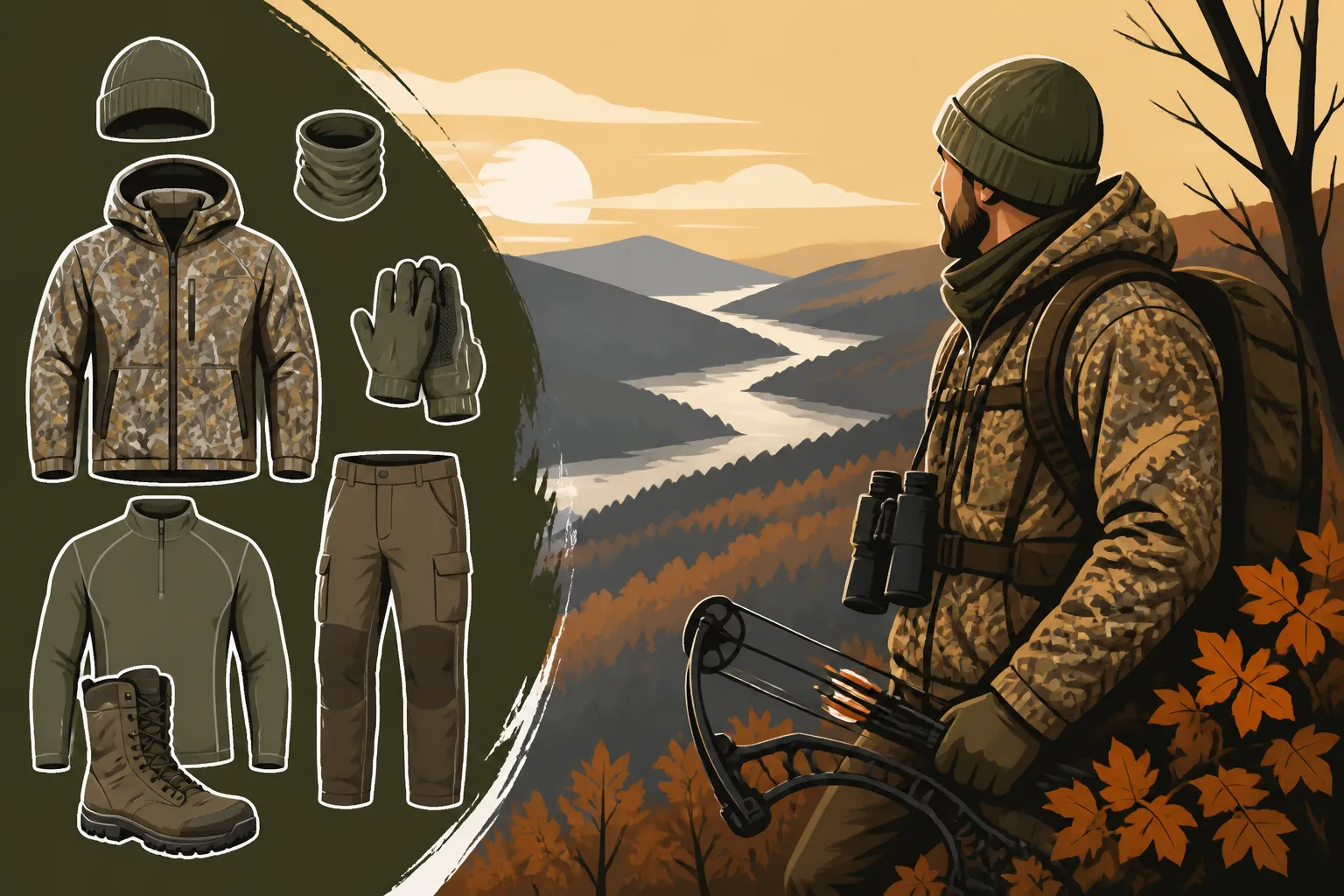
If there's one golden rule for dressing for West Virginia's late season, it's layering. Forget about one heavy, bulky coat. That's a recipe for either sweating buckets or freezing solid. A well-executed layering system is your secret weapon against the unpredictable Mountain State weather, allowing you to adapt to changing temperatures and exertion levels throughout your hunt.
Understanding the Three-Layer System
At its heart, the layering system revolves around three primary types of layers, each with a distinct job:
- The Base Layer (Wicking): This is the layer directly against your skin. Its primary job is to wick moisture (sweat) away from your body, keeping you dry. Dry equals warm. If your base layer gets soaked with sweat, it will pull heat from your body, leading to a chill.
- The Mid Layer (Insulating): This is your warmth layer. It traps air close to your body, creating an insulating barrier against the cold. You might use one or multiple mid-layers depending on how cold it is.
- The Outer Layer (Protective Shell): This is your shield against the elements. Its job is to protect you from wind, rain, and snow, while also allowing moisture vapor from your inner layers to escape.
Think of it like building a house: the foundation (base layer) keeps things dry, the walls (mid-layer) keep it warm, and the roof (outer layer) keeps out the storm. Neglect any one of these, and your whole system falters.
The Importance of Vetting Materials
Not all fabrics are created equal when it comes to battling cold and wet conditions. Cotton, for instance, is the enemy of the late-season hunter. It absorbs moisture and holds it, losing all its insulating properties and feeling like a cold, wet rag against your skin. This is why you'll often hear the mantra, "cotton kills" in the hunting and outdoor community.
Instead, you want to focus on materials designed to perform in challenging environments:
- Merino Wool: Nature's wonder fabric. It's excellent at wicking moisture, insulates even when wet, naturally resists odor, and is surprisingly comfortable against the skin. It comes in various weights, making it versatile for wool versus synthetics in mountain cold.
- Synthetics (Polyester, Polypropylene): These technical fabrics are engineered to wick moisture aggressively and dry quickly. They're often more affordable than merino and very durable. They might not insulate quite as well when wet as wool, but their quick-drying properties are a huge advantage.
- Fleece: A classic mid-layer material, fleece (usually polyester) is soft, traps air well, and insulates effectively. It dries relatively quickly but isn't windproof or waterproof on its own.
- Down: The king of warmth-to-weight ratio. Down offers incredible insulation by trapping vast amounts of air. However, its major weakness is moisture; once wet, down loses most of its insulating power and takes a long time to dry.
- Primaloft/Other Synthetic Insulations: These are designed to mimic down's insulating properties but perform much better when wet. They're an excellent choice for mid-layers or insulated outer shells, particularly in West Virginia's damp environment.
When selecting your gear, pay close attention to the fabric composition. A well-researched purchase can make all the difference in your comfort and endurance. Platforms like GoHunt often provide detailed gear reviews and material breakdowns that can help you make informed decisions about what fabrics will best suit your late-season hunts.
Adapting Layers to Activity Levels
This is where the magic of layering truly comes into play. A typical late-season hunt might involve:
- A strenuous uphill hike in the dark: You'll be working hard, generating a lot of body heat and sweat. You'll want to start with minimal mid-layers to avoid overheating.
- A long, static sit in a treestand: Once you're settled, your body will cool down rapidly. This is when you'll want to add extra mid-layers to maximize insulation, perhaps a packable puffy jacket you carried in.
- Slow, deliberate still-hunting: This involves moderate exertion, so you might need to find a balance—enough insulation to stay warm, but not so much that you sweat with every step.
The key is to proactively manage your layers. If you feel yourself starting to sweat, stop and shed a layer before you're soaked. If you're getting chilly, add a layer before you're shivering uncontrollably. It's a constant adjustment, but it's vital for maintaining core body temperature and staying comfortable for the long haul. Remember, staying warm and dry isn't just about comfort; it's about staying focused and safe.
Your Foundation: Base Layers
The base layer is arguably the most critical component of your late-season hunting wardrobe. It's the layer that directly interacts with your skin, managing moisture and setting the stage for the rest of your system to perform. Get this wrong, and the most expensive outer shell won't save you from feeling clammy and cold.
Material Deep Dive: Merino Wool vs. Synthetics
When it comes to base layers, the debate often boils down to merino wool versus synthetic fabrics. Both are excellent choices, but they excel in different areas, and understanding these nuances will help you choose what's best for your style of hunting.
-
Merino Wool: This natural fiber from merino sheep is celebrated for its incredible performance properties. It's soft, itch-free, and incredibly effective at regulating body temperature. Perhaps its most lauded feature is its ability to insulate even when wet. This means if you do work up a sweat or get caught in a light drizzle, merino will continue to provide warmth, unlike cotton. It's also naturally odor-resistant, which is a huge bonus on multi-day hunts where laundry isn't an option. The downside? Merino can be more expensive than synthetics, and it's not as durable against abrasion. For a hunter who values natural performance, scent control, and warmth in damp conditions, wool versus synthetics in mountain cold often leans towards merino.
-
Synthetics (e.g., Polyester, Polypropylene): These man-made fibers are designed to wick moisture aggressively and dry incredibly fast. They are typically more durable and often more affordable than merino wool. They're a fantastic choice for high-exertion activities where quick drying is paramount, like a steep climb up a mountain. While they don't insulate quite as well when wet as merino, their rapid drying time can still keep you comfortable if you're actively moving. Some hunters find that synthetics can retain odor more easily over time, but many modern technical fabrics incorporate antimicrobial treatments to combat this. For an aggressive, high-activity hunter who prioritizes quick-drying and durability, synthetics are a strong contender.
Ultimately, both have their place. Many hunters even combine them, using a synthetic base for high-exertion days and merino for more static, colder sits.
| Feature | Merino Wool | Synthetic (Polyester, Polypropylene) |
|---|---|---|
| Wicking Ability | Excellent | Excellent (often slightly faster drying) |
| Warmth When Wet | Excellent (retains warmth) | Good (dries fast, but less insulating when actively wet) |
| Odor Resistance | Excellent (natural antimicrobial properties) | Good (often treated with antimicrobials, but can hold odor) |
| Comfort | Very Soft, itch-free | Soft, smooth |
| Durability | Good (can be prone to holes with heavy use) | Excellent (more resistant to abrasion) |
| Price | Higher | Lower to Moderate |
| Best For | Static hunting, multi-day hunts, scent control | High-exertion activities, quick drying |
Weight and Fit Considerations
Base layers come in various weights—lightweight, midweight, and heavy/expedition weight—each suited for different conditions:
- Lightweight: Ideal for mild-to-cool conditions or as a next-to-skin layer under heavier mid-layers when high exertion is expected. Think early morning hikes when the temperature will rise quickly.
- Midweight: The most versatile option for West Virginia's late season. It provides substantial warmth and wicking without being overly bulky. This is often the go-to for most cold-weather hunting days.
- Heavy/Expedition Weight: Reserved for truly frigid temperatures and static hunting, such as cold-weather sitting strategy in the mountains during a deep freeze.
Regardless of weight, the fit of your base layer is crucial. It should be snug against your skin, but not uncomfortably tight or restrictive. A snug fit maximizes the wicking action, allowing the fabric to efficiently pull moisture away from your body. If it's too loose, air gaps can reduce wicking efficiency and allow cold air to circulate. Conversely, if it's too tight, it can restrict blood flow and actually make you colder. Think of it as a second skin—comfortable, form-fitting, and working hard to keep you dry.
Managing Moisture: The Wicking Factor
The primary function of a base layer is moisture management, often referred to as "wicking." When you exert yourself, your body sweats to cool down. If this sweat stays on your skin, it cools through evaporation, rapidly pulling heat away from your body. In cold weather, this can lead to hypothermia. A good wicking base layer draws that moisture away from your skin and transfers it to the outer surface of the fabric, where it can evaporate more easily or be passed to the next layer in your system.
This is why "cotton kills" is such a prevalent saying in the outdoors. Cotton absorbs moisture like a sponge and holds it against your skin, becoming cold and clammy. Modern technical fabrics, both merino and synthetics, are designed with capillary action that actively moves moisture outwards. When you're dragging a deer off a steep ridge or doing any strenuous activity, you will sweat, even in freezing temperatures. Having a base layer that manages this moisture efficiently is paramount to staying warm and safe throughout your hunt.
The Insulators: Mid Layers
Once your base layer is taking care of moisture, your mid-layers step up to the plate to provide the crucial warmth needed to endure the chilly West Virginia late season. These layers are all about trapping body heat, creating a warm pocket of air around you.
Fleece and Synthetic Puffs for Warmth
Fleece and synthetic insulated garments are the workhorses of the mid-layer world, offering excellent warmth and versatility.
-
Fleece: Made from polyester, fleece fabrics are spun to create a soft, lofty texture that excels at trapping air. They come in various thicknesses, often referred to as 100-weight, 200-weight, or 300-weight, with higher numbers indicating more warmth. Fleece is breathable, dries relatively quickly, and maintains some insulating properties even when damp, making it a reliable choice for West Virginia's often-wet conditions. A good fleece jacket or vest can be worn directly over a base layer or under a heavier insulating layer, making it incredibly adaptable. For example, a mid-weight fleece vest might be perfect for an active hike, while a thicker full-zip fleece jacket could be added once you settle into your stand for hunting the late-season December lull. Its major drawbacks are that it's not windproof and can be bulky compared to other insulators.
-
Synthetic Puffy Jackets (e.g., Primaloft, Coreloft, Thinsulate): These jackets and vests use man-made fibers to mimic the loft and insulating power of down, but with one critical advantage: they retain most of their warmth even when wet. This makes them an exceptional choice for the unpredictable dampness of West Virginia. They offer a fantastic warmth-to-weight ratio and are often highly compressible, meaning you can pack them down small into your hunting pack and pull them out when you stop moving and the chill sets in. Imagine glassing a powerline cut at last light; slipping on a synthetic puffy over your fleece can make those last minutes infinitely more comfortable. Look for jackets with durable water repellent (DWR) finishes for added protection against light precipitation.
Down for Static Cold, With Caveats
Down insulation, typically from ducks or geese, is renowned for offering the best warmth-to-weight ratio of any material. It's incredibly light, highly compressible, and provides unparalleled warmth for its bulk. If you're planning a truly static hunt in extremely cold, dry conditions, a high-quality down jacket can be a game-changer for cold-weather sitting strategy in the mountains.
However, down comes with a significant caveat, especially for West Virginia: its performance degrades drastically when wet. Once down feathers get saturated, they clump together, lose their loft, and consequently, their insulating ability. They also take a very long time to dry. In a state known for its humidity, rain, and wet snow, down can be a risky choice for an outer layer. If you choose to incorporate down into your system, it's best reserved for mid-layers that are protected by a truly waterproof outer shell, or for extremely cold days where precipitation is not a factor. Many hunters use a lightweight down puffy as a "sit jacket" that only comes out of the pack when they reach their stand and are protected from the elements.
Strategic Layering for Core and Extremities
Mid-layers aren't just about jackets. Strategic insulation of your core and extremities is vital for overall comfort.
- Vests: An insulated vest is an incredibly versatile mid-layer. It keeps your core warm without adding bulk to your arms, allowing for greater freedom of movement when shooting a bow or shouldering a rifle. It's perfect for those days when you need a little extra warmth but don't want to overheat.
- Pants: Don't forget your legs! Insulated hunting pants or separate insulated pants worn over your base layer are crucial. Your legs can get just as cold as your torso, especially during long sits. Look for options with side zippers for easy on/off over boots, and consider a pair of boots for West Virginia hollows and ridges with good insulation.
- Layering Multiple Mid-Layers: On truly frigid days, you might employ more than one mid-layer. This could look like a lightweight fleece vest over your base, topped with a mid-weight fleece jacket, and then an additional synthetic puffy jacket for maximum warmth when you're stationary. The beauty of this system is its modularity – you can add or remove pieces as conditions or your activity level change, maintaining optimal comfort throughout the day.
The Shield: Outer Layers
Your outer layer, often called your shell, is your first and last line of defense against the relentless West Virginia weather. Its job is to protect your inner layers and your body from wind, rain, and snow, while still allowing the moisture you generate to escape.
Waterproof and Windproof Shells
This is where you absolutely cannot compromise. A cheap "water-resistant" shell won't cut it when a freezing rain decides to roll in. You need truly waterproof and windproof protection.
- Waterproof Membranes: Look for outer layers that incorporate advanced waterproof/breathable membranes, such as Gore-Tex, eVent, or proprietary brand technologies. These membranes have microscopic pores that are too small for liquid water droplets (rain, snow) to pass through, but large enough for water vapor (sweat) to escape. This is the holy grail: keeping external moisture out while allowing internal moisture to vent.
- Hardshell vs. Softshell:
- Hardshells are typically stiffer, more crinkly, and offer maximum waterproof and windproof protection. They are excellent for torrential downpours or heavy snow. Their primary drawback is often less breathability and can be noisy in quiet woods.
- Softshells are more flexible, quieter, and offer better breathability and stretch. They provide excellent wind resistance and often good water resistance (DWR finish), but they are usually not fully waterproof in prolonged heavy rain. They are fantastic for active hunting in cold, windy, but not necessarily soaking wet conditions.
- Many late-season West Virginia hunters opt for a versatile system: a breathable softshell for most days, with a lightweight, packable hardshell rain gear for a West Virginia downpour kept in the pack for emergencies or unexpected heavy precipitation.
- Durable Water Repellent (DWR): Most outer fabrics have a DWR coating applied to their exterior. This causes water to bead up and roll off the fabric, preventing it from saturating the face fabric. Over time, DWR wears off, so it's important to reapply DWR treatments periodically to maintain your garment's performance.
Remember, even the best waterproof layer won't keep you dry if you're sweating profusely underneath it and the moisture can't escape. Proper layering beneath the shell is key to its overall effectiveness.
Durable Fabrics for Mountain Brush
Hunting in West Virginia often means navigating through thick laurel thickets, briar patches, and dense rhododendron. Your outer layer needs to be able to stand up to this abuse without tearing or snagging. Thin, delicate fabrics might be great for mountaineering, but they won't last long in the Mountain State's rugged terrain.
Look for fabrics that are:
- Abrasion-Resistant: Materials like reinforced nylon, tough polyester blends, or even CORDURA fabrics on high-wear areas (shoulders, elbows, knees) will significantly extend the life of your gear.
- Quiet: While durability is important, so is stealth. Some extremely durable fabrics can be noisy, making a rustling sound with every movement. Balance durability with quietness, especially for bowhunting or close-range rifle hunting. Modern hunting-specific outerwear often uses brushed fabrics or quieter laminates that offer both.
- Integrated Features: Consider outer layers with features like reinforced seat and knee patches, articulated elbows for ease of movement, and robust zippers that won't fail in cold, wet conditions. For longer treks with a pack, shoulder and hip belt areas should be reinforced to prevent wear.
Investing in a high-quality outer layer built to withstand the rigors of the West Virginia backcountry will save you money and frustration in the long run.
Camouflage and Hunter Orange Requirements
Beyond functionality, your outer layer also needs to address visibility for both game and safety.
- Camouflage: While many hunters obsess over specific camo patterns, remember that breaking up your silhouette and remaining still are far more critical than the pattern itself. Look for patterns that blend well with the late-season West Virginia woods—think muted browns, grays, and whites to mimic barren trees, rock faces, and snow.
- Blaze Orange/Pink: Safety is paramount. West Virginia law requires hunters to wear at least 400 square inches of blaze orange or florescent pink material during certain firearm seasons, visible from all directions. This means your outer layer will need to incorporate this safety color, either as a full garment, a vest, or strategic panels. Never skimp on hunter orange, especially when hunting the West Virginia youth deer weekend or in areas with high hunting pressure. Options like blaze orange jackets versus vests allow for flexibility, but ensure you meet the minimum requirements. Even during archery seasons where orange isn't mandated, many still choose to wear it while walking to and from their stand, shedding it only once settled. It’s a smart habit for safety on public lands.
Protecting Your Extremities
It’s easy to focus on your core, but your head, hands, and feet are often the first to get cold, and neglecting them can quickly lead to discomfort or even dangerous situations. Proper protection for these areas is absolutely essential for late-season success in West Virginia.
Head and Neck: Hats, Balaclavas, and Gaiters
Your head is a major source of heat loss—estimates suggest you can lose a significant percentage of your body heat through an uncovered head.
- Hats: A warm, insulated hat is a non-negotiable item. Fleece beanies, wool hats, or insulated caps that cover your ears are excellent choices. Look for hats that are wind-resistant, as a biting wind can penetrate even thick materials if they aren't designed for it.
- Balaclavas and Neck Gaiters: These pieces provide crucial protection for your face and neck, areas often exposed to the wind and cold. A balaclava can be pulled up over your nose and mouth when the wind is howling, protecting delicate skin from frostbite and helping to warm the air you breathe. A neck gaiter provides similar protection for your neck and can be pulled up over your chin or mouth as needed. They're particularly useful for bowhunters who need an unobstructed anchor point but still want facial protection. Choose materials like merino wool or soft synthetics that are comfortable against your skin and can wick moisture from your breath.
Hands: Gloves, Mittens, and Liners
Cold hands can make it impossible to perform basic tasks like loading a rifle, nocking an arrow, or using binoculars. The key is finding a system that provides warmth without sacrificing dexterity.
- Layering for Hands: A common and effective strategy is to use a layering system for your hands.
- Thin Liner Gloves: These are worn directly against your skin, providing a bit of warmth and wicking sweat. They're thin enough to allow for good dexterity for finer tasks.
- Insulated Gloves: Worn over the liners, these provide the bulk of your warmth. Look for gloves that are insulated but still allow for reasonable dexterity. Options with fold-back finger caps or a trigger finger opening are popular for hunters.
- Mittens (or Over-Mittens): For extremely cold and static sits, mittens are superior to gloves for warmth because they allow your fingers to share warmth. You can often wear a thin liner glove inside a large mitten. Many hunters will keep a pair of large, heavily insulated mittens in their pack and only put them on when they are completely settled in the stand for hunting the rut in mid-November. Some even use large "muffs" that attach to their treestand to keep their hands warm between movements.
- Material Choice: Again, look for wool or synthetic insulations, and an outer shell that is waterproof and windproof. Avoid cotton gloves at all costs.
Feet: Socks and Boots
Cold, wet feet are a surefire way to end your hunt early. Your footwear system needs to be carefully considered.
- Socks: Just like base layers, forget cotton socks. They will absorb sweat and make your feet cold and clammy.
- Merino Wool Socks: These are outstanding for warmth, moisture wicking, and odor control. They come in various thicknesses, from thin liners to heavy expedition socks.
- Synthetic Socks: Good for wicking and durability, often a more affordable option.
- Layering Socks: On very cold days, you might wear a thin wicking liner sock under a thicker, insulated wool or synthetic sock. Ensure this combination doesn't make your boots too tight, which can restrict blood flow and make your feet colder.
- Boots: Your boots are crucial.
- Insulation: For late-season West Virginia, insulated boots are a must. Look for ratings like 800g, 1000g, or even 1200g of Thinsulate (or equivalent). The amount of insulation you need depends on your activity level and how cold your feet tend to get. For insulated boots for all-day sits during colder weather, more insulation is better.
- Waterproofness: Your boots absolutely must be waterproof. Look for Gore-Tex or similar waterproof membranes. West Virginia's terrain is often wet, with muddy trails, stream crossings, and damp leaf litter.
- Fit and Support: Choose boots that fit well, provide good ankle support for navigating uneven terrain, and are comfortable for long walks. Remember to try them on with the socks you intend to wear while hunting. Consider options specifically designed as boots for West Virginia hollows and ridges for optimal performance.
- Rubber Boots: For particularly wet areas or stand hunting in soggy ground, knee-high rubber boots with insulation can be an excellent choice. They offer impenetrable waterproof protection.
Essential Accessories for Late-Season Comfort
While your core clothing system forms the backbone of your late-season defense, a few key accessories can dramatically enhance your comfort and extend your time in the field, turning a good hunting day into a great one.
Hand and Foot Warmers
These small, often overlooked items can be a complete game-changer when temperatures plummet and you're trying to stay still for hours.
- Chemical Warmers: The most common type, these single-use pouches activate when exposed to air and provide hours of consistent heat. Tuck them into your gloves or mittens, and place larger adhesive ones on the top or bottom of your socks. They are relatively inexpensive and lightweight, making them easy to carry a supply for multiple days. For a truly frigid sit, putting one on your chest (over your base layer) and another on your lower back can provide surprising core warmth.
- Rechargeable Warmers: These battery-powered devices offer heat on demand and can be recharged via USB. While heavier than chemical warmers, they provide a consistent, controllable heat source over several hours and can be reused repeatedly. They are an excellent investment if you hunt frequently in cold weather.
- Effective Use: Don't wait until your hands or feet are completely numb to deploy warmers. Be proactive. Slip them into your gloves or boots before you start to get uncomfortably cold. They are most effective when used to maintain warmth rather than trying to recover from severe cold.
Sit Pads and Ground Insulation
The ground, especially in late-season West Virginia, is a notorious thief of body heat. Whether you're sitting on a cold rock, a damp log, or the frozen earth, radiant cold will seep into your body, making you uncomfortable regardless of your clothing layers.
- Insulated Sit Pads: A simple, lightweight foam or inflatable sit pad can make a world of difference. When perched on a treestand seat or hunkered down on the forest floor, placing an insulating pad beneath you prevents that direct conduction of cold. Look for closed-cell foam pads that don't absorb water. They're cheap, light, and packable, offering incredible comfort for their size.
- Insulated Cushions: For more comfort in a ground blind or a spacious treestand, a thicker, insulated cushion provides superior thermal barrier and padding. Some even have straps to secure them to a treestand seat.
- Ground Blinds and Mats: If you're using a ground blind, laying down an insulated mat or even a few layers of cardboard can create a much warmer floor, especially on frozen or damp ground. This creates an additional layer of insulation between you and the earth, which is vital when you're using a ground blind on West Virginia public land.
Emergency Rain Gear
Even if your primary outer shell is waterproof, carrying a lightweight, packable set of emergency rain gear is a smart move for any late-season West Virginia hunt. The weather can change on a dime, and a sudden, unexpected downpour can drench you if your main shell isn't up to the task or gets compromised.
- Lightweight and Compact: Look for rain jackets and pants made from very thin, packable waterproof fabrics. These aren't meant for extreme durability or breathability over extended periods, but rather as a backup to keep you dry in a pinch. They should be able to compress down to the size of a water bottle or smaller, fitting easily into your packs for a Monongahela Forest day hunt.
- Quick Deployment: The best emergency rain gear is easy to pull on quickly over your other layers, even with boots on. Look for pants with full-length leg zippers for this purpose.
- Peace of Mind: Knowing you have an extra layer of protection against a sudden storm can provide immense peace of mind, allowing you to stay in the field longer and more comfortably. It's an investment in safety and endurance, preventing that miserable, shivering walk back to the truck.
Maintenance and Preparation
Your late-season hunting clothing is an investment in your comfort, safety, and hunting success. Proper care and preparation are just as important as the initial selection of your gear. Neglecting maintenance can compromise performance and shorten the lifespan of your expensive technical apparel.
Proper Washing and Storage
How you wash and store your hunting clothes directly impacts their ability to perform.
- Follow Care Labels: Always, always check the care labels on your garments. Technical fabrics and waterproof membranes often require specific washing instructions.
- Use the Right Detergent: Avoid conventional laundry detergents, especially those with harsh chemicals, brighteners, or scent additives. These can strip DWR coatings, clog the pores of waterproof/breathable membranes, and leave behind scent that can spook game. Use detergents specifically designed for hunting apparel (often scent-free) or technical outerwear (like Nikwax or Granger's).
- Gentle Cycle and Cold Water: Wash on a gentle cycle with cold water to protect the fabrics and membranes.
- Air Dry or Low Heat: Tumble dry on low heat or, ideally, hang dry. High heat can damage waterproof membranes and synthetic fibers.
- Storage: Store your hunting clothes clean and dry in an airtight container or scent-free bag to prevent them from absorbing household odors. Keep them in a cool, dark place away from direct sunlight, which can degrade fabrics over time. This also prevents insect damage during the off-season.
Repairing and Waterproofing
Even the best gear will eventually show wear and tear. Knowing how to repair and re-waterproof your clothing can extend its life and save you money.
- Patching Tears: Small tears or snags are inevitable when scouting West Virginia public land before season or pushing through thick cover. Carry a small repair kit with adhesive patches designed for technical fabrics. Apply them promptly to prevent the tear from enlarging and compromising your garment's integrity.
- Reapplying DWR: The Durable Water Repellent (DWR) coating on your outer layers will wear off over time, causing water to "wet out" the face fabric instead of beading up. When water no longer beads, it's time to reapply. Use a wash-in or spray-on DWR product from brands like Nikwax or Granger's. These are easy to use and restore your garment's ability to shed water, which in turn helps the waterproof membrane underneath work more effectively. Pay particular attention to high-wear areas like shoulders and elbows.
- Seam Sealing: Over time, the factory seam tape on older waterproof garments can delaminate. If you notice water seeping through seams, you can re-seal them using a liquid seam sealer, available at most outdoor gear shops.
Pre-Season Testing and Practice
Don't wait until opening day of the late season to discover your gear isn't performing.
- Test Your System: Go for a long hike in your full late-season setup on a cold, damp day before you hunt. This "shakedown hike" will reveal any hot spots in your boots, areas where layers bunch up, or if your system isn't warm enough for static periods. It's much better to discover these issues on a practice hike than when you're miles deep in the backcountry with a storm rolling in.
- Check Fit and Movement: Ensure all your layers allow for a full range of motion without restricting your ability to draw a bow, shoulder a rifle, or climb into a stand. A new puffy jacket might feel great for warmth, but if it's too bulky to swing your rifle effectively, it's not the right choice for hunting. This is particularly important for archery hunters; make sure your bowstring doesn't catch on bulky sleeves.
- Practice with Accessories: Practice putting on and taking off your gloves and mittens, especially with cold hands. Get familiar with your hand warmers. Knowing how to efficiently manage your gear in the field is a skill that comes with practice. Even simple things like ensuring your zippers are easy to operate with gloved hands can prevent frustration when it matters most. Using resources like the GoHunt gear guides can help you research specific products and user experiences before you even buy.
By diligently maintaining and preparing your late-season hunting clothing, you're not just taking care of gear; you're investing in successful, comfortable, and safe experiences in the beautiful, but challenging, West Virginia woods.
Disclaimer
This article is for general informational purposes only and does not constitute professional advice. Laws, prices and regulations vary by location and change over time. Consult a qualified professional for guidance on your specific situation.