Optics for Steep Allegheny Terrain
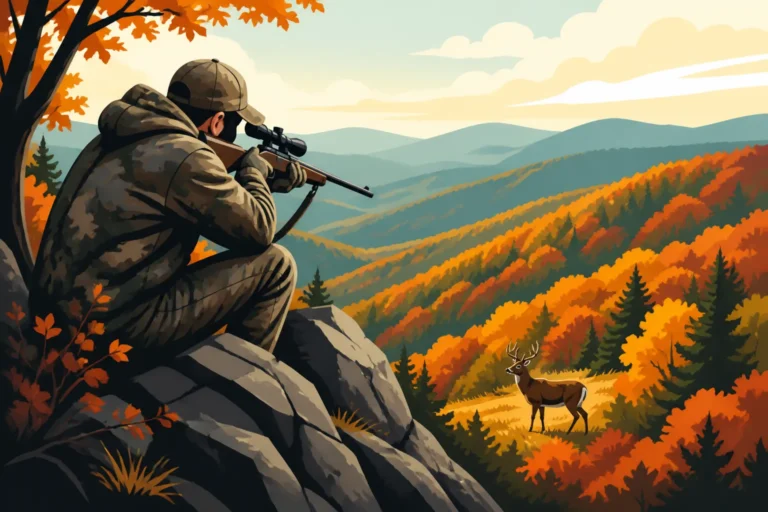
Hunting in West Virginia's Allegheny Mountains is an experience unlike any other, but let's be honest, it's also incredibly demanding. The steep grades, the dense timber, and those famously deep, dark hollows don't just test your lungs and your legs—they put your optics to the ultimate test too. You find yourself squinting into shadows, guessing distances across gaping ravines, and often, realizing too late that what looked like a chip shot from your stand is actually a quarter-mile descent. This guide is dedicated to helping you navigate those visual challenges, ensuring your optics are perfectly suited to the unique, rugged beauty of the Mountaineer State. We're going to dive deep into how the right glass can transform your experience, helping you spot game earlier, range with precision, and make ethical shots in conditions that constantly try to fool your eyes.
The Unique Demands of Allegheny Terrain on Your Optics
When you're perched on a ridge overlooking a vast expanse of West Virginia timber, or trying to peer into the inky blackness of a deep hollow, you quickly realize that standard optical advice often falls short. This isn't flat-land hunting where every deer is within 200 yards on a level field. Here, the very landscape itself conspires to make sighting and ranging a complex puzzle, demanding more from your binoculars, rangefinders, and rifle scopes than anywhere else.
Distances That Deceive
The topography of the Allegheny Mountains is breathtaking, but it's also a master of deception when it comes to judging distance. What looks like a manageable shot across a hollow can easily be 300 or 400 yards, especially when you factor in the elevation changes. Your eyes, accustomed to judging distances on relatively flat ground, struggle immensely when presented with severe vertical changes. A deer silhouetted on a distant bench below you might seem close, but your brain can't easily compute the true distance without a reliable aid. This mental trickery is a common frustration for hunters new to the mountains and even for seasoned veterans.
Moreover, the dense tree cover, especially the thick stands of evergreens and laurel thickets, further complicates things. These visual barriers can make an animal appear closer than it actually is, or conversely, blend it into the background so effectively that you can't get a clear line of sight to range. You might get a momentary glimpse of a buck moving through a clear-cut, only to have it disappear behind a screen of saplings, leaving you to guess its exact position and distance. This is where the importance of precision ranging becomes glaringly obvious. Relying on an educated guess in these conditions isn't just risky; it's unethical. For anyone who has spent time Hunting Steep Allegheny Ridges, you know this struggle intimately.
Low-Light Challenges in Deep Hollows
If you've ever stood on an eastern-facing slope in a West Virginia hollow just before sunrise, you know how incredibly dark it can be. The towering hardwood trees, the narrow valleys, and the often-overcast skies combine to create a low-light environment that extends well past legal shooting hours in other regions. This is particularly true in the prime hunting hours of dawn and dusk, when deer are most active. A buck might step out into a small clearing in a laurel patch, but if your optics can't gather enough light, that trophy animal remains a dark, indistinct blob.
The problem isn't just about visibility; it's about extending your effective hunting time. Every minute gained at the start and end of the day is precious. Quality optics, designed to transmit maximum light, can reveal details that cheaper glass simply can't. They can turn that indistinct blob into a clear image of an antler, a leg, or a distinct body profile, giving you the confidence to make a shot or pass on an animal. Hunting these dark, shaded areas, especially the north-facing slopes that rarely see direct sunlight, demands optics that perform flawlessly in the absolute lowest light. Without it, you might as well pack up and head back to camp an hour early.
Binoculars: Your Essential Scouting and Glassing Tool
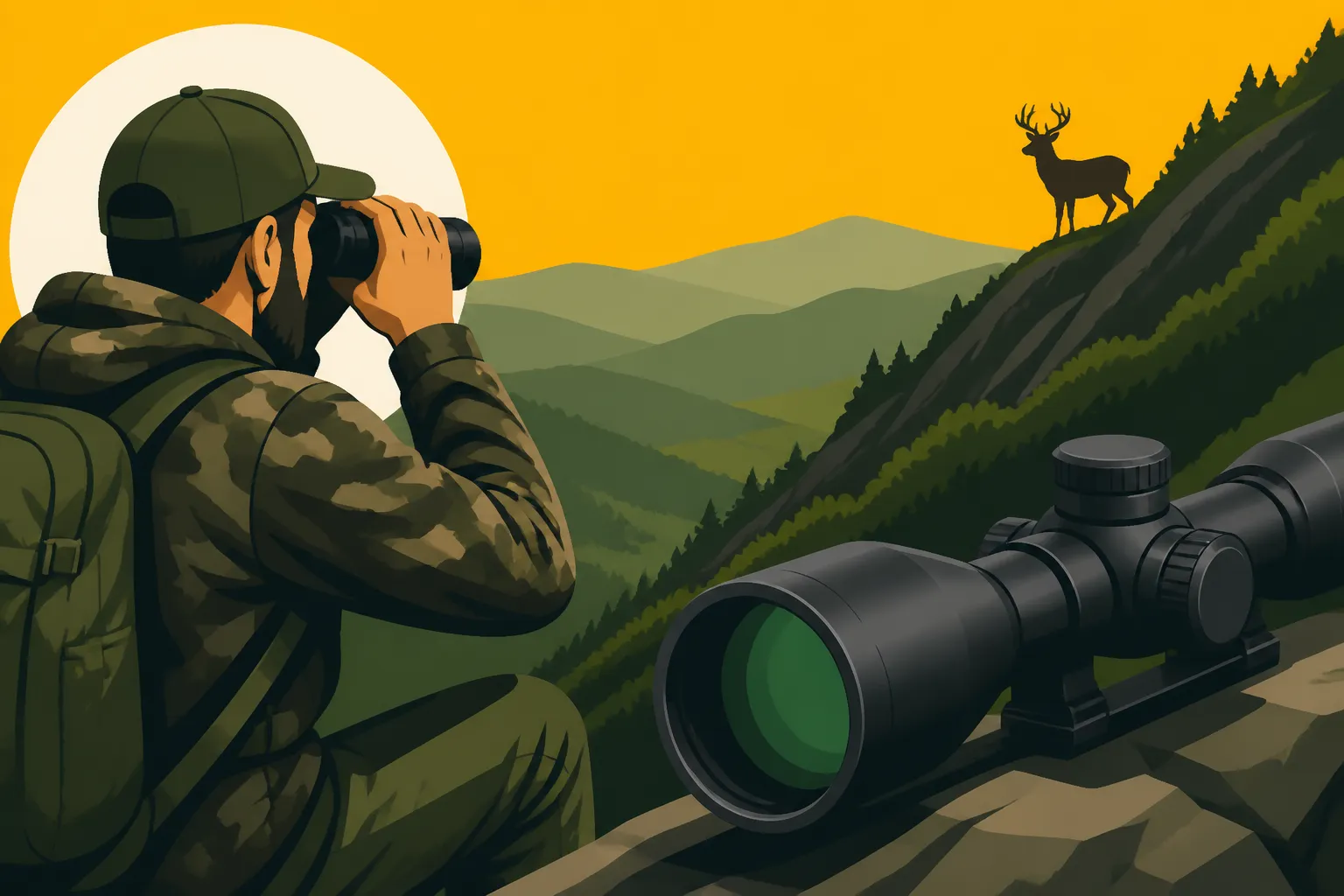
In the vast, unbroken forests of West Virginia, your binoculars aren't just an accessory; they're an extension of your eyes, crucial for breaking down distant landscapes and spotting game that would otherwise go unnoticed. Unlike rifle scopes, which you only use at the moment of truth, binoculars are constantly at work, helping you pick apart terrain, identify distant movement, and confirm what you're seeing.
Magnification and Objective Lens Size for West Virginia
Choosing the right binocular magnification and objective lens size for West Virginia hunting is a delicate balancing act. You need enough power to reach out across those deep hollows and distant ridges, but not so much that the image becomes shaky or the binoculars too heavy to carry comfortably up and down mountains all day. For many hunters, a 10×42 binocular hits that sweet spot. The 10x magnification provides a good balance of reach and stability, allowing you to discern details at hundreds of yards. The 42mm objective lens gathers a respectable amount of light, offering a bright image in most conditions without adding excessive bulk or weight.
However, some hunters opt for an 8×42 or even an 8×32 if they primarily hunt dense, close-quarter cover where a wider field of view and better stability are prioritized over raw magnification. An 8x binocular is fantastic for tracking deer in thick timber or for better hand-holdability during a long glassing session. Conversely, if your hunting primarily involves vast, open clear-cuts or looking over expansive valleys, a 12x magnification might be considered. But be warned: the added power of a 12x will make any hand shake much more pronounced, often requiring a tripod for extended viewing. The objective lens size, like a 50mm, will pull in more light, but it also means a heavier, bulkier binocular—a significant consideration when every ounce counts on those steep climbs. When you're constantly on the move, picking your way through rough terrain, the weight and ergonomics of your binoculars become a huge factor in overall comfort and fatigue.
Optical Quality and Coatings: Why It Matters
This is where the rubber meets the road. All binoculars magnify, but how they magnify, and the quality of the image they deliver, varies wildly. In West Virginia's challenging light conditions, optical quality isn't just a nicety; it's a necessity. High-quality glass, often referred to as ED (Extra-low Dispersion) or HD (High Definition) glass, significantly reduces chromatic aberration. This means less color fringing around objects, resulting in a crisper, clearer image with truer colors. Imagine trying to identify a brown deer against a brown oak tree at last light – superior glass can make the difference between seeing antlers and seeing a shadow.
Lens coatings are equally critical. Fully multi-coated lenses, meaning every air-to-glass surface has multiple layers of anti-reflective coatings, drastically improve light transmission. This is paramount for gathering every photon of light in those deep, dark hollows or at the edges of legal hunting time. Without these coatings, light is reflected and scattered, leading to a dimmer, less distinct image. Prism type also plays a role; most modern hunting binoculars use roof prisms, which are more compact and durable than porro prisms. However, higher-end roof prism designs incorporate phase-correction coatings to enhance resolution and contrast. Investing in good optical quality means you'll spend less time straining your eyes and more time confidently identifying game. It truly makes a significant difference in what you can discern in the demanding visual environment of the West Virginia mountains, enhancing your chances of success during hunts like Hunting the Mountaineer Heritage Season.
Rangefinders: Precision in Unforgiving Terrain
In the varied, undulating landscapes of West Virginia, a rangefinder isn't just helpful; it's absolutely non-negotiable for ethical hunting. The terrain, with its dramatic elevation changes and often deceptive visual cues, makes guessing distances a recipe for disaster. A reliable rangefinder eliminates guesswork and ensures you know the exact, compensated distance to your target, no matter the angle.
Angle Compensation: A Non-Negotiable Feature
If there's one feature your rangefinder must have for hunting West Virginia, it's angle compensation. When shooting uphill or downhill, gravity affects a bullet's trajectory differently than on level ground. If you range a deer that's 300 yards straight-line distance away, but it's significantly downhill, your bullet will impact higher than if you shot at a level 300 yards. Without angle compensation, your rangefinder will give you the actual line-of-sight distance, which, for angled shots, is not the "hold-over" distance you need for your bullet's trajectory.
An angle-compensating rangefinder, sometimes called an "equivalent horizontal range" or "true ballistic range" device, calculates the effective horizontal distance that gravity acts upon. For example, that 300-yard downhill shot might present an effective ballistic distance of, say, 250 yards. If you were to hold for 300 yards, you'd likely shoot right over the animal's back. Modern rangefinders use internal inclinometers to measure the angle and proprietary algorithms to display the corrected distance. Whether you're in a treestand high above a hollow or looking up at a buck on a distant bench, angle compensation takes the guesswork out of holdovers. This feature is particularly vital when Wind and Thermals on a Steep Ridge are already challenging your shot placement, adding another layer of complexity that your optics need to help you overcome. For anyone serious about hunting these mountains, ensuring your rangefinder has this capability is a top priority.
Speed and Readout in Tough Conditions
Imagine this scenario: you've been sitting for hours, the light is fading, and suddenly a nice buck steps out of a thicket on a distant slope. It pauses for a moment, then starts to move. You need a fast, accurate range reading right now. This is where the speed of your rangefinder becomes critical. A sluggish rangefinder that takes several seconds to acquire a target and display a reading can mean the difference between a shot opportunity and watching the animal disappear. Look for models with a quick refresh rate and instant readouts.
The display type also matters, especially in those low-light West Virginia hollows. Many budget rangefinders use an LCD (Liquid Crystal Display) that can be hard to see against dark backgrounds. OLED (Organic Light-Emitting Diode) displays, on the other hand, offer bright, clear, and adjustable readouts that stand out even in deep twilight, allowing you to quickly get your information without losing sight of your target. A "scan mode" is another valuable feature, allowing you to continuously range as you pan across terrain or track a moving animal. This is incredibly useful for getting multiple readings and understanding the changing distances as a deer navigates varied cover. For instance, if a buck is walking along a bench, scan mode can tell you if it's staying at a consistent 200 yards or if it's dropping into a dip that brings it closer to 175, or ascending to 220. Knowing your Rangefinders in Thick Highlands Cover capabilities can truly impact your hunting success.
| Feature | Standard Rangefinder (No Angle Comp.) | Angle-Compensating Rangefinder |
|---|---|---|
| Price Point | Lower | Higher |
| Accuracy on Flat Ground | Excellent | Excellent |
| Accuracy on Sloped Ground | Line-of-sight distance only | Ballistic-compensated distance |
| Ethical Shot Confidence (Slopes) | Low, requires mental calculation | High, direct hold-over reading |
| Typical Use Case | Flat open fields, target shooting | Mountain hunting, treestand hunting |
| Weight/Bulk | Generally lighter | Slightly heavier due to tech |
| Recommendation for WV | Not recommended for primary use | Highly Recommended |
Rifle Scopes: Clarity, Durability, and Low-Light Performance
Your rifle scope is the crucial link between your eye and the target. In West Virginia's rugged environment, it needs to do more than just magnify; it must provide exceptional clarity, withstand harsh conditions, and perform when light is at its absolute minimum. The wrong scope can turn a clean shot opportunity into a missed chance, or worse, an unethical hit.
Variable Power and Objective Size for Mixed Shots
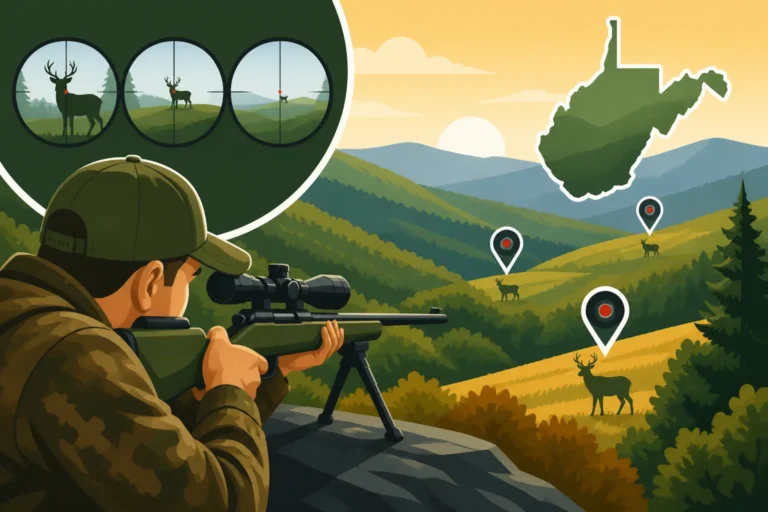
The diverse landscape of West Virginia means you could be taking a shot in thick, close-quarters timber one moment, and then need to reach across a wide-open logging road or an opposing ridgeline the next. This is why a variable power scope is absolutely essential. A common choice is a 3-9×40 or a 4-12×40, which offers a good balance. At the lower magnifications (3x or 4x), you get a wide field of view, making it easier to acquire a target quickly in dense woods or when a deer jumps close. At higher magnifications (9x or 12x), you have the power to precisely place a shot on a deer standing 200, 300, or even 400 yards away across a hollow.
The objective lens size (the front lens) also plays a critical role, particularly concerning light gathering. A 40mm objective lens is a great all-around choice, providing a bright image without making the scope overly bulky or heavy. However, some hunters opt for larger objectives, such as 50mm or even 56mm, to maximize light transmission during those deep twilight hours. While these larger lenses do gather more light, they also add significant weight and require higher rings to mount, which can affect your rifle's balance and cheek weld. The key is finding a balance for your specific hunting style and the distances you typically encounter. A scope with good Rifle Scope Magnification for West Virginia Deer will serve you well, but don't overdo the power if it means sacrificing low-light performance or adding excessive bulk for trekking through the mountains.
Reticles, Turrets, and Durability in the Backcountry
Beyond magnification and light gathering, the features and construction of your rifle scope are paramount for West Virginia hunting. Reticle choice is personal, but for these mountains, consider options beyond a basic duplex. A simple duplex is fast in thick cover, but for longer shots across varied terrain, a BDC (Bullet Drop Compensating) reticle or one with hash marks can provide quick holdovers without adjusting turrets. Even better, an illuminated reticle is a game-changer when trying to place a shot against a dark animal in dark timber, or when the crosshairs might otherwise disappear against a shadowy background. The ability to dial up a dim red dot in the center of your reticle can be the difference between a confident shot and passing up an opportunity.
Regarding turrets, many mountain hunters prefer capped turrets that are "set and forget." You zero your rifle, cap the turrets, and rely on holdovers or a BDC reticle for varying distances. Exposed tactical turrets, while great for dialing precise adjustments for every shot, can be inadvertently bumped or misaligned when navigating dense brush and steep grades. Durability, however, is non-negotiable. Your scope will take a beating. It needs to be fully waterproof, fog-proof (meaning it's nitrogen or argon purged to prevent internal fogging in temperature changes), and shockproof to withstand the bumps, scrapes, and occasional falls that come with hunting steep, rocky terrain. A robust, one-piece tube construction, typically aircraft-grade aluminum, is essential. When you're Low-Light Performance in a Scope is critical, you can't afford a scope that fogs up or loses zero after a short climb.
Accessorizing Your Optics for Mountain Hunting
Having top-tier optics is only part of the equation. How you carry, stabilize, and protect them in the demanding West Virginia backcountry can make all the difference in their usability and longevity. Neglecting these accessories is like buying a high-performance vehicle and then putting bald tires on it.
Harnesses, Tripods, and Stability
In West Virginia, your binoculars should almost never be dangling from a neck strap. A good binocular harness is an absolute game-changer. It distributes the weight across your shoulders and back, rather than concentrating it on your neck, which becomes incredibly uncomfortable after hours of hiking steep grades. More importantly, a harness keeps your binoculars secure against your chest, preventing them from swinging wildly, banging against trees, or getting snagged in dense cover. It also makes them instantly accessible when you need to quickly glass an area. No more fumbling around when that deer pops out unexpectedly.
For serious glassing sessions, especially if you're using higher magnification binoculars (like 12x or Binocular Power for Mountain Hunting above 10x) or a spotting scope, a lightweight, compact tripod is invaluable. Even a slight tremor in your hands is magnified at high powers, making it impossible to pick out fine details. A tripod eliminates this shake, allowing you to steadily scan hillsides, pick apart distant cover, and truly study an animal without fatigue. Many hunters also carry shooting sticks or use Trekking Poles for Steep Ridge Access that convert into shooting rests. Finding a stable shooting position on steep, uneven ground is often impossible without assistance, and shooting sticks provide that critical third point of contact for a solid, ethical shot.
Lens Protection and Cleaning
West Virginia weather can be unpredictable. You might start a morning hunt in fog, have it turn to rain, and then experience a sunny afternoon. All of these conditions are brutal on unprotected lenses. That's why high-quality lens caps are your first line of defense. Always keep them on when your optics aren't in active use. They protect against moisture, dust, dirt, and scratches from brush and clothing. Nothing is more frustrating than pulling up your binoculars only to find them covered in water droplets or mud.
Beyond caps, a dedicated lens cleaning kit is essential. This usually includes a lens pen (with a brush on one end and a carbon cleaning tip on the other), a high-quality microfiber cloth, and a small bottle of lens cleaning solution. Never, ever use your shirt, a paper towel, or anything abrasive to clean your lenses, as this will inevitably scratch the delicate coatings. Proper cleaning involves first brushing off any loose debris, then gently breathing on the lens or using a spray of solution, and finally wiping with the microfiber cloth from the center outwards. Treat your optics like the precision instruments they are, and they will serve you reliably for years in the rugged West Virginia environment.
Integrated Solutions and Modern Technology
The world of hunting optics isn't static; it's constantly evolving, with manufacturers integrating new technologies to make our gear more efficient and effective. For West Virginia hunters, these advancements can simplify decision-making and reduce the amount of gear you need to carry up and down those steep ridges.
Binocular Rangefinders: Two-in-One Efficiency
One of the most compelling advancements for mountain hunters is the binocular-rangefinder combination. Instead of carrying two separate units—a binocular for glassing and a rangefinder for ranging—these devices integrate both functions into a single, cohesive unit. The primary benefit is speed and efficiency. When you spot a deer through your binoculars, you simply press a button, and the compensated range appears in your field of view without having to drop one optic and raise another. This saves precious seconds, minimizes movement, and keeps your eyes locked on the target, which can be crucial when a deer is moving through timber or only offers a brief window.
While integrated binocular rangefinders often come with a higher price tag and can sometimes be a bit heavier than stand-alone binoculars, the convenience and streamlined operation are hard to beat. If you're looking to cut down on gear and simplify your process, they are a fantastic option. Many top optics brands now offer excellent binocular rangefinders, providing superior glass quality alongside highly accurate, angle-compensating rangefinding capabilities. GoHunt, for instance, frequently features reviews and guides on the latest and greatest in high-performance hunting optics, often highlighting these integrated solutions for their practical benefits in challenging terrain.
Digital Tools and Mapping Integration
While not optics in the traditional sense, modern digital tools and mapping applications are increasingly integral to how we use and interpret our optical information in the field. Apps like onX Hunt, BaseMap, or even GoHunt's proprietary mapping features, are powerful companions to your binoculars and rangefinder. These apps overlay detailed topographic maps with satellite imagery, showing you contour lines, elevation changes, and even potential shot distances. By understanding the terrain before you even get there, you can better anticipate where deer might move and where you'll need your optics to perform best.
Imagine ranging a distant rock outcropping at 350 yards. With your mapping app, you can confirm the contour of the land between you and the target, identifying potential obstacles or hidden dips that might affect a shot. You can scout likely bedding areas or travel corridors digitally, then use your binoculars to thoroughly glass those areas in person. These digital tools also help you manage property boundaries, which is crucial when Scouting West Virginia Public Land Before Season or ensuring you're not encroaching on private property. By combining the precision of your physical optics with the comprehensive understanding provided by digital mapping, you create a holistic system that dramatically improves your situational awareness and decision-making in the complex West Virginia landscape.
Preparing Your Optics for the Hunt
Even the best optics in the world are useless if they're not properly prepared and understood before you head into the field. The rugged nature of West Virginia hunting means you need to have absolute confidence in your gear. Preparation isn't just about packing your bag; it's about ensuring every piece of your optical system is dialed in and ready for action.
Pre-Season Zeroing and Testing
Before hunting season even begins, dedicating ample time to zeroing and testing your rifle scope is non-negotiable. This means more than just shooting a few groups at 100 yards on a flat bench. For West Virginia, try to find a range where you can practice at various distances and, if possible, at slight angles. Understand your rifle's trajectory and how your chosen ammunition performs. Confirm your scope's zero at your preferred distance, and then verify your holdovers or BDC reticle at longer ranges. Remember, a 200-yard shot across a deep hollow might require a slightly different hold than a flat 200-yard shot, even with an angle-compensating rangefinder, due to subtle variables.
It's also crucial to test your rangefinder against known distances, both level and angled. Does it consistently give you accurate readings? Does its angle compensation align with your ballistic calculations or BDC reticle? If you're using an integrated binocular-rangefinder, ensure both components are performing as expected. The goal is to build muscle memory and confidence. Can you smoothly raise your rifle, find your target, range it, and place the reticle correctly in under 10 seconds? You don't want to be fumbling with unfamiliar gear when that dream buck steps out. Don't wait until opening day to discover that your scope is off, your rangefinder is slow, or your understanding of holdovers is lacking. This dedicated practice is paramount for ethical hunting in challenging terrain and helps you refine your Zeroing a Rifle for Mixed Distances.
Field Practice and Ethical Considerations
Beyond the range, take your entire optical setup into the kind of West Virginia terrain you'll actually be hunting. Spend time walking, hiking, and practicing ranging various objects—trees, rocks, imaginary deer—at different angles and distances. This "field practice" helps you get accustomed to using your gear in real-world scenarios, under varying light conditions, and while your heart rate might be elevated from a steep climb. It's one thing to range a static target at a flat range; it's another to quickly acquire and range a deer moving through brush on a steep hillside.
Crucially, field practice helps you define your personal ethical shooting limits. Just because your rifle and scope can reach out to 500 yards doesn't mean it's an ethical shot in thick, steep West Virginia woods, especially if recovery would be nearly impossible. Poor visibility, dense cover, and extreme angles can drastically reduce your effective ethical range. Your optics are powerful tools designed to enhance precision and confidence, but they should never push you beyond your own capabilities or ethical boundaries. Always prioritize a clean, humane kill. This might mean passing on a shot that your optics could technically make, but your judgment tells you is too risky given the conditions. The right optics empower you to make informed decisions, ensuring every shot you take is made with the highest level of confidence and ethical consideration.
Disclaimer
This article is for general informational purposes only and does not constitute professional advice. Laws, prices and regulations vary by location and change over time. Consult a qualified professional for guidance on your specific situation.